Kirjojen hintavertailu. Mukana 11 717 486 kirjaa ja 12 kauppaa.

Kirjahaku

Etsi kirjoja tekijän nimen, kirjan nimen tai ISBN:n perusteella.

8 kirjaa tekijältä Yuval Levin

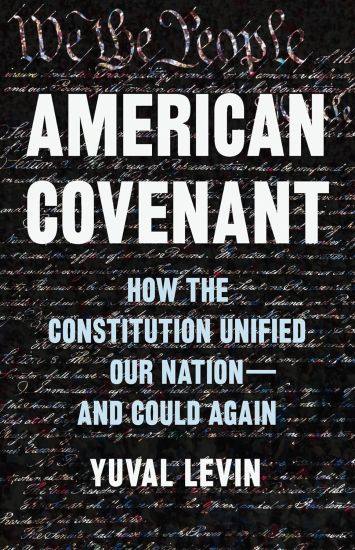
American Covenant

American Covenant

Yuval Levin

BASIC BOOKS
2024
sidottu
A top conservative scholar reveals the Constitution's remarkable power to repair our broken civic culture, rescue our malfunctioning politics, and unify a fractious America Common ground is hard to find in today's politics. In a society teeming with irreconcilable political perspectives, many people have grown frustrated under a system of government that constantly demands compromise. More and more on both the right and the left have come to blame the Constitution for the resulting discord. But the Constitution is not the problem we face; it is the solution. Blending engaging history with lucid analysis, conservative scholar Yuval Levin's American Covenant recovers the Constitution's true genius and reveals how it charts a path to repairing America's fault lines. Uncovering the framers' sophisticated grasp of political division, Levin showcases the Constitution's exceptional power to facilitate constructive disagreement, negotiate resolutions to disputes, and forge unity in a fractured society. Clear-eyed about the ways that contemporary politics have malfunctioned, Levin also offers practical solutions for reforming those aspects of the constitutional order that have gone awry. Hopeful, insightful, and rooted in the best of our political tradition, American Covenant celebrates the Constitution's remarkable power to bind together a diverse society, reassuring us that a less divided future is within our grasp.
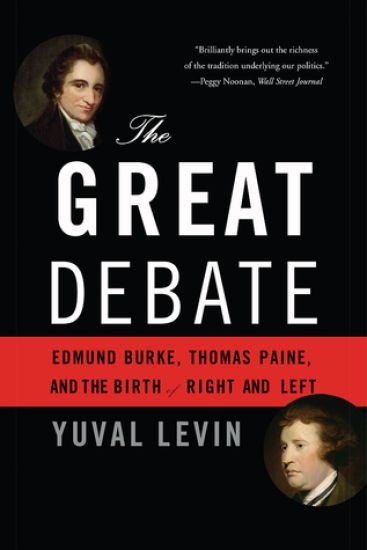
The Great Debate

The Great Debate

Yuval Levin

Basic Books
2014
pokkari
For more than two centuries, our political life has been divided between a party of progress and a party of conservation. In The Great Debate , Yuval Levin explores the origins of the left/right divide by examining the views of the men who best represented each side of that debate at its outset: Edmund Burke and Thomas Paine. In a ground-breaking exploration of the roots of our political order, Levin shows that American partisanship originated in the debates over the French Revolution, fueled by the fiery rhetoric of these ideological titans. Levin masterfully shows how Burke's and Paine's differing views, a reforming conservatism and a restoring progressivism, continue to shape our current political discourse,on issues ranging from abortion to welfare, education, economics, and beyond. Essential reading for anyone seeking to understand Washington's often acrimonious rifts, The Great Debate offers a profound examination of what conservatism, liberalism, and the debate between them truly amount to.
The Fractured Republic (Revised Edition)
Americans today are frustrated and anxious. Our economy is sluggish, political polarization is at an all-time high, our government seems paralyzed and our politics has failed to rise to these challenges. No wonder, then, that voters and politicians alike are nostalgic for a better time. The Left is attempting to recreate the middle of the twentieth century, when social movements and anti-poverty programs were at their height, while the Right pines for the Reagan Era, when taxes were low and Americans were optimistic. But America has changed over the past half century. The institutions that once dominated our economy, politics, and culture have fragmented and become smaller, more diverse, and personalized. Individualism, dynamism, and liberalization have come at the cost of dwindling solidarity, cohesion, and social order. This has left us with more choices in every realm of life but far less security, stability, and national unity. The Fractured Republic, Yuval Levin calls for a modernizing politics that can answer the dysfunctions of our fragmented national life. By embracing individualism and diversity and rejecting extremism and nostalgia, we can revive the middle layers of society and enable an American revival
Tyranny of Reason

Tyranny of Reason

Yuval Levin

University Press of America
2000
sidottu
The astonishing success of the natural sciences in the modern era has led many thinkers to assume that similar feats of knowledge and power should be achievable in human affairs. That assumption, and the accompanying notion that the methods of modern science ought to be applied to social and political questions, have been at the heart of a number of prominent philosophical schools in the modern age, and much of the politics of the past century. Is the application of scientific logic to the study of human affairs philosophically defensible? Does it aid or hinder our efforts at a genuine understanding of the human world? Why have so many modern ideologies, including those responsible for some of the greatest atrocities of the 20th century, advanced themselves under the banner of science? Why, in other words, do we assume that modern science holds the key to an understanding of human affairs? Are we right to make this assumption? And what does the assumption mean for contemporary society and politics? Tyranny of Reason, which is designed for the interested lay reader and for undergraduate or beginning graduate students in the social sciences, attempts to answer these important questions in the context of the history of philosophy.
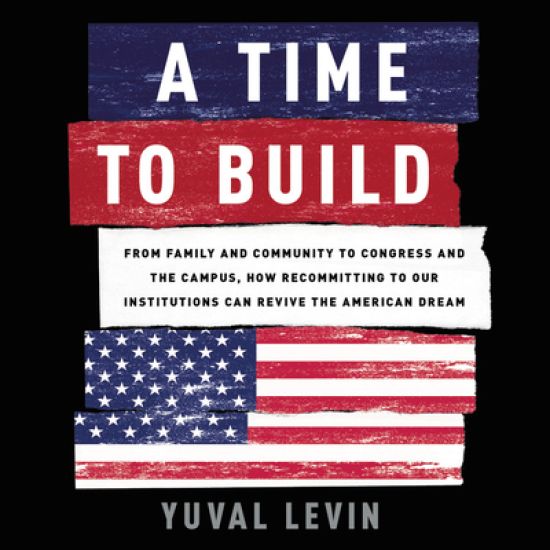
A Time to Build

A Time to Build

Yuval Levin

BASIC BOOKS
2023
pokkari
Americans are living through a social crisis. Our politics are polarized and bitterly divided. Culture wars rage on campuses, social media, and sometimes in the streets and public squares. And for too many Americans, alienation can descend into despair, weakening families and communities.Left and right alike have responded with anger at our institutions, and use only metaphors of destruction to describe the path forward: cancelling, defunding, draining the swamp. But, as Yuval Levin argues, this is a misguided prescription, rooted in a defective diagnosis. The social crisis we confront is defined not by an oppressive presence but by a debilitating absence of the forces that unite us and militate against alienation.In A Time to Build, now updated with a new epilogue, Levin argues that today is not a time to tear down, but rather to build and rebuild by committing ourselves to the institutions around us. From the military to churches, from families to schools, these institutions provide the forms and structures we need to be free. By taking concrete steps to help them be more trustworthy, we can renew the ties that bind Americans to one another.
A Time to Build

A Time to Build

Yuval Levin

Basic Books
2020
sidottu
Americans are living through a social crisis. Populist firebrands - on left and right alike - propose to address the crisis through acts of tearing down. They describe themselves as destroying oppressive establishments, clearing weeds, draining swamps. But, as acclaimed conservative intellectual Yuval Levin argues, this is a misguided prescription, rooted in a defective diagnosis. The social crisis we confront is defined not by an oppressive presence but by a debilitating absence of forces that unite us and militate against alienation.Both Republicans and Democrats overwhelmingly respond to crisis by threatening to dismantle institutions that they perceive as belonging to their political opponents. Both sides have turned "institution" into a pejorative. Levin argues that this is misguided - this is not a time to tear down, he says, but rather to build and rebuild by committing ourselves to the institutions around us and strengthening their capacity to shape and unite us. Institutions - from the military to churches to families and universities - give us the forms we require to be free. They give us a sense of community, shared identity and a sense of belonging to something greater than ourselves. What we perceive as a social crisis, Levin argues, is really an institutional crisis. By rebuilding and restoring collective trust in our institutions, we rebuild and restore trust in society.
A Time to Build: From Family and Community to Congress and the Campus, How Recommitting to Our Institutions Can Revive the American Dream
A leading conservative intellectual argues that to renew America we must recommit to our institutionsAmericans are living through a social crisis. Our politics is polarized and bitterly divided. Culture wars rage on campus, in the media, social media, and other arenas of our common life. And for too many Americans, alienation can descend into despair, weakening families and communities and even driving an explosion of opioid abuse. Left and right alike have responded with populist anger at our institutions, and use only metaphors of destruction to describe the path forward: cleaning house, draining swamps. But, as Yuval Levin argues, this is a misguided prescription, rooted in a defective diagnosis. The social crisis we confront is defined not by an oppressive presence but by a debilitating absence of the forces that unite us and militate against alienation.As Levin argues, now is not a time to tear down, but rather to build and rebuild by committing ourselves to the institutions around us. From the military to churches, from families to schools, these institutions provide the forms and structures we need to be free. By taking concrete steps to help them be more trustworthy, we can renew the ties that bind Americans to one another.
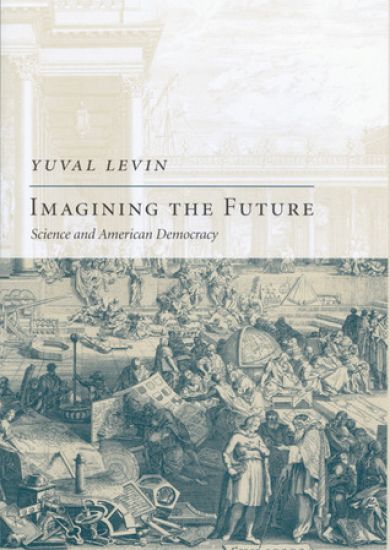
Imagining the Future

Imagining the Future

Yuval Levin

Encounter Books,USA
2008
sidottu
From stem cell research to global warming, human cloning, evolution, and beyond, political debates about science have raged in recent years - and, to the chagrin of most observers, have increasingly fallen into the familiar categories of America's culture wars. In Imagining the Future: Science and American Democracy, Yuval Levin explores the complicated meanings of science and technology in American politics and finds that the science debates have a lot to teach us about our political life. These debates, Levin argues, reveal some serious challenges to American self-government, and put on stark display the deepest strengths and greatest weaknesses of both the left and the right. "American life has been profoundly shaped by science and technology, and will be all the more so in the coming decades, making it crucial that we understand how to think and speak about science in politics. Yuval Levin's smart and eminently well-reasoned book makes the important point that the purpose of science is a moral one -- to improve human life -- and that judging what that involves is sometimes a job for more than science alone in a democratic society. Levin's insights speak directly to today's political debates and make his book a must-read for policymakers and all those who care about science and society." --Newt Gingrich, former Speaker of the House "Imagining the Future goes far beyond the contemporary polarized debates over science to unpack the moral premises of the modern scientific project and its consequences for American democracy. In the process, Yuval Levin provides us with a deep understanding of policy issues from genetic engineering to global warming." --Francis Fukuyama, Johns Hopkins University "This book is important to the thinking of both progressives and conservatives. Clearly and incisively, it shows how science and technology are shaping humanity's future and world views. Levin alerts democratic societies that human dignity and equality are imperiled unless we provide political and moral guidance to prevent the submergence of humanity in its own ingenuity." --Edmund Pellegrino, Chairman, President's Council on Bioethics