Kirjojen hintavertailu. Mukana 12 366 199 kirjaa ja 12 kauppaa.

Kirjahaku

Etsi kirjoja tekijän nimen, kirjan nimen tai ISBN:n perusteella.

4 kirjaa tekijältä Zhongjie Lin

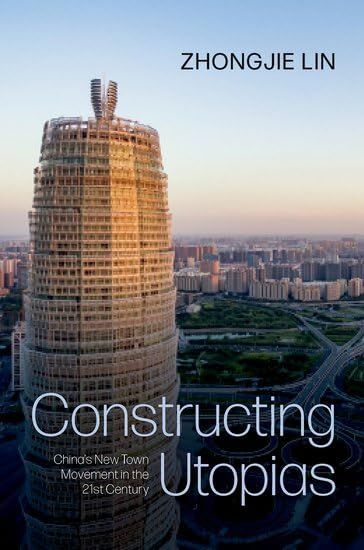
Constructing Utopias

Constructing Utopias

Zhongjie Lin

OXFORD UNIVERSITY PRESS INC
2025
sidottu
Amid its groundbreaking political reforms and "largest mass migration ever seen in human history," China created over 3,800 new towns to accommodate its burgeoning urban population and sustain economic growth. Economic marketization, global trade, inter-city competition, and the exponentially growing real estate industry have driven tremendous investment in infrastructure and large-scale developments, stimulating continuous urban expansion. Surpassing any urbanization initiatives in history, contemporary Chinese new towns emerged as the national campaign to reimagine Chinese cities while reshaping the global geo-economic landscape. Constructing Utopias examines four decades of Chinese urbanization through the lens of urbanism and utopianism. After exploring the theoretical foundations and historical precedents of new town development, the book delves into a series of "model new towns" that showcase innovative planning, design, technologies, policies, and China's broader vision for a modern urban nation. Case studies of the Suzhou Industrial Park, One City and Nine Towns in Shanghai, prototypical eco-cities, and the notorious "ghost towns" form the core of this book, highlighting fundamental issues in urbanization including economic vitality, cultural identity, environmental sustainability, and socio-spatial dynamics. The author scrutinizes these new towns not only as grand visions of governments, planners, and developers but also as physical spaces embodying the struggles and aspirations of residents and migrant workers. By examining both the successes and failures of Chinese new town planning and development, this book illuminates the complex interplay between space production and social transformation within the context of neoliberalism and globalization.
Constructing Utopias

Constructing Utopias

Zhongjie Lin

OXFORD UNIVERSITY PRESS INC
2025
nidottu
Amid its groundbreaking political reforms and "largest mass migration ever seen in human history," China created over 3,800 new towns to accommodate its burgeoning urban population and sustain economic growth. Economic marketization, global trade, inter-city competition, and the exponentially growing real estate industry have driven tremendous investment in infrastructure and large-scale developments, stimulating continuous urban expansion. Surpassing any urbanization initiatives in history, contemporary Chinese new towns emerged as the national campaign to reimagine Chinese cities while reshaping the global geo-economic landscape. Constructing Utopias examines four decades of Chinese urbanization through the lens of urbanism and utopianism. After exploring the theoretical foundations and historical precedents of new town development, the book delves into a series of "model new towns" that showcase innovative planning, design, technologies, policies, and China's broader vision for a modern urban nation. Case studies of the Suzhou Industrial Park, One City and Nine Towns in Shanghai, prototypical eco-cities, and the notorious "ghost towns" form the core of this book, highlighting fundamental issues in urbanization including economic vitality, cultural identity, environmental sustainability, and socio-spatial dynamics. The author scrutinizes these new towns not only as grand visions of governments, planners, and developers but also as physical spaces embodying the struggles and aspirations of residents and migrant workers. By examining both the successes and failures of Chinese new town planning and development, this book illuminates the complex interplay between space production and social transformation within the context of neoliberalism and globalization.
Kenzo Tange and the Metabolist Movement

Kenzo Tange and the Metabolist Movement

Zhongjie Lin

TAYLOR FRANCIS LTD
2023
nidottu
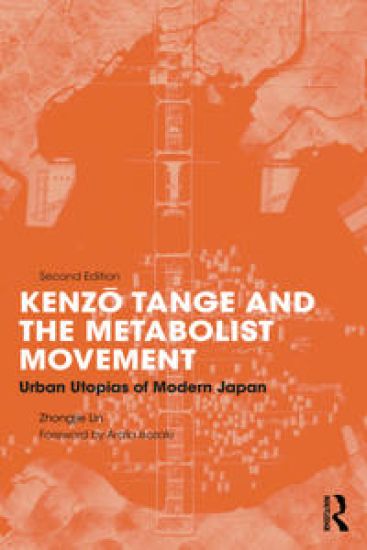
Amid Japan’s political turbulence in 1960, seven architects and designers founded Metabolism to propagate radical ideas of urbanism. Kenzo Tange’s Plan for Tokyo 1960 further celebrated urban expansion as organic processes and pushed city design to an unprecedented scale. Metabolists’ visionary schemes of the city gave birth to revolutionary design paradigms, which reinvented the discourse of modern Japanese architecture and propelled it through the years of Economic Miracle to a global prominence. Their utopian concepts, which often envisaged the sea and the sky as human habitats of the future, reflected fundamental issues of cultural transformation and addressed environmental crises of the postindustrial society.This new edition expands Zhongjie Lin’s pathbreaking account on Tange and Metabolism centered at the intersection of urbanism and utopianism. The thorough historical survey, from Metabolism’s inauguration at the 1960 World Design Conference to the apex of the movement at Expo ’70 and further to the recent demolition of Nakagin Capsule Tower, leads to a definition of three Metabolist urban paradigms – megastructure, group form, and ruins – which continue to inspire experiments in architecture, city design, and conservation.Kenzo Tange and the Metabolist Movement is a key book for architectural and urban historians, architects, and all those interested in avant-garde design, Japanese architecture, and contemporary urbanism.
Kenzo Tange and the Metabolist Movement

Kenzo Tange and the Metabolist Movement

Zhongjie Lin

TAYLOR FRANCIS LTD
2023
sidottu
Amid Japan’s political turbulence in 1960, seven architects and designers founded Metabolism to propagate radical ideas of urbanism. Kenzo Tange’s Plan for Tokyo 1960 further celebrated urban expansion as organic processes and pushed city design to an unprecedented scale. Metabolists’ visionary schemes of the city gave birth to revolutionary design paradigms, which reinvented the discourse of modern Japanese architecture and propelled it through the years of Economic Miracle to a global prominence. Their utopian concepts, which often envisaged the sea and the sky as human habitats of the future, reflected fundamental issues of cultural transformation and addressed environmental crises of the postindustrial society.This new edition expands Zhongjie Lin’s pathbreaking account on Tange and Metabolism centered at the intersection of urbanism and utopianism. The thorough historical survey, from Metabolism’s inauguration at the 1960 World Design Conference to the apex of the movement at Expo ’70 and further to the recent demolition of Nakagin Capsule Tower, leads to a definition of three Metabolist urban paradigms – megastructure, group form, and ruins – which continue to inspire experiments in architecture, city design, and conservation.Kenzo Tange and the Metabolist Movement is a key book for architectural and urban historians, architects, and all those interested in avant-garde design, Japanese architecture, and contemporary urbanism.