Kirjojen hintavertailu. Mukana 11 244 527 kirjaa ja 12 kauppaa.

Kirjahaku

Etsi kirjoja tekijän nimen, kirjan nimen tai ISBN:n perusteella.

3 kirjaa tekijältä Zoë Ryan

Konstantin Grcic

Konstantin Grcic

Zoë Ryan

Yale University Press
2009
pokkari
The hip, functional, and versatile furniture and products of Konstantin Grcic—widely recognized as one of the most important designers working today—are transforming the landscape of contemporary design. This book accompanies the first exhibition in North America of Grcic’s work, highlighting the innovative archetypes of form and concept that have marked his remarkable output since 2004. Grcic delights in creating fresh takes on familiar industrial objects, whether desks, chairs, benches, stools, a range of kitchen equipment, lamps, a set of salad servers, or Krups coffee makers. In his recent work, he has blended his characteristic simplicity and distinctiveness with the use of new technologies and materials—for example, a cantilevered stacking chair, Myto (2008), is made from a strong, fluid plastic typically used by the automotive industry.Distributed for the Art Institute of ChicagoExhibition Schedule:The Art Institute of Chicago (10/17/09 – 1/10/10)
Fashioning the Object

Fashioning the Object

Zoë Ryan

Yale University Press
2012
pokkari
The newest volume in the Art Institute of Chicago's successful A+D series, Fashioning the Object invites readers to visit three of the most visionary design studios at work today: Bless, Boudicca, and Sandra Backlund. Fiercely independent and far-reaching in their influences, these young designers from Berlin, London, Paris, and Stockholm are producing fashion objects that straddle the line between traditional craft and cutting-edge technique, both in their use of materials and in the promotion of their brands.Zoë Ryan establishes the context for understanding the exciting departures these design houses represent, as the young creators draw inspiration from an array of other disciplines, including architecture, performance, film, and fine art. From Bless's numbered editions, to Boudicca's graffiti-can perfume, to Backlund's ready-to-wear pieces of knitted copper, these designers adapt storied objects to new uses and break old conventions, promulgating their ideas in playful, groundbreaking ways.Distributed for the Art Institute of ChicagoExhibition Schedule:The Art Institute of Chicago04/14/12-09/13/12
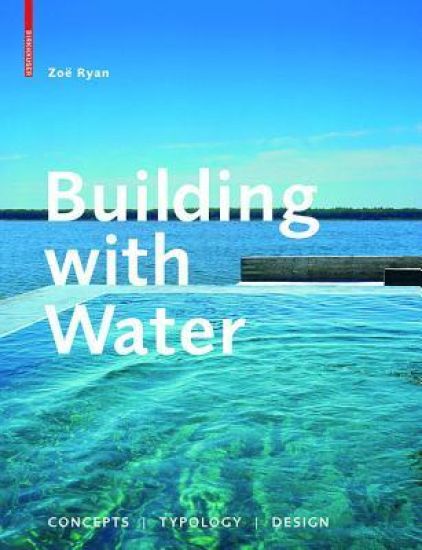
Building with Water

Building with Water

Zoë Ryan

Birkhauser
2010
sidottu
Water has been an important topic in architecture and urban planning for years. The revitalization of the waterfront has been a prevalent trend in cities around the world. On the other hand, architecture also had to respond to the threat of floods.The theme of Building with Water is the use of water in architecture. It presents buildings that explicitly refer to water in their design and form. It establishes a typology of building by the water: residential structures, recreation facilities, industry and infrastructure, buildings for culture and art. The various design parameters are explored in four essays. Subsequently, twenty-two international projects are presented, organized according to their locations by a river, a lake or the sea. The authors’ concern is not to show luxurious buildings in privileged locations but rather presenting projects that seriously grapple with the main criterion of the location—namely, water—in an ecologically sustainable way and respond to it with their design. Wasser ist seit Jahren ein wichtiges Thema in Architektur und Städtebau. «Building with Water» thematisiert die Verarbeitung von Wasser im architektonischen Entwurf; es werden Bauten vorgestellt, die sich in ihrer Gestaltung und Form ausdrücklich auf Wasser beziehen. Eine Typologie des Bauens am Wasser wird erstellt: Wohnbauten, Verkehrs- und Industriebauten, Bauten für Kultur und Freizeit. Ebenso werden einleitend klassische Beispiele des Bauens am/im/auf dem Wasser gezeigt, wie etwa Château de Chenonceaux an der Loire, Falling Water in Pennsylvania von Frank Lloyd Wright oder das Salk Institute in La Jolla, Kalifornien, von Louis I. Kahn. Geordnet nach ihren Standorten am Fluss, See oder Meer, werden dann etwa 20 internationale Projekte vorgestellt. Es geht den Autoren nicht darum, luxuriöse Bauten an privilegierten Plätzen zu zeigen, sondern Projekte darzustellen, deren Entwurf sich ernsthaft und ökologisch verträglich mit dem Hauptkriterium des Standortes – nämlich Wasser – auseinandersetzt und sich gestalterisch darauf bezieht