See the Holy Spirit at work in the world. The Holy Spirit is God's active presence and power at work in the world and in our lives. Through the Spirit, we are transformed, led, empowered, and guided in our faith journey. Jesus promised his followers that the Spirit would come alongside them as comforter and counselor, empowering them to transform the world. In The Holy Spirit, Adam Hamilton explores what Scripture teaches about God's Spirit--from the Hebrew Bible through Jesus' promises in the Gospels, the powerful Pentecost experience in Acts, and the rich teachings found in the New Testament letters. This accessible study helps believers understand and experience the Holy Spirit's presence and power in their daily walk with Christ. Perfect for small groups and individual study, this resource focuses on the Holy Spirit as revealed in the Gospels, Acts, and the Epistles. With the purchase of the book, you will also receive access to complimentary leader helps and video content. Each video session is approximately 5 minutes in length.
See the Holy Spirit at work in the world. The Holy Spirit is God's active presence and power at work in the world and in our lives. Through the Spirit, we are transformed, led, empowered, and guided in our faith journey. Jesus promised his followers that the Spirit would come alongside them as comforter and counselor, empowering them to transform the world. In The Holy Spirit, Adam Hamilton explores what Scripture teaches about God's Spirit--from the Hebrew Bible through Jesus' promises in the Gospels, the powerful Pentecost experience in Acts, and the rich teachings found in the New Testament letters. This accessible study helps believers understand and experience the Holy Spirit's presence and power in their daily walk with Christ. Perfect for small groups and individual study, this resource focuses on the Holy Spirit as revealed in the Gospels, Acts, and the Epistles. With the purchase of the book, you will also receive access to complimentary leader helps and video content. Each video session is approximately 5 minutes in length.
Confronting the Controversies is a 7-session group study of -tough issues- based on Adam Hamilton's sermons on these topics. The study is designed as a -fishing expedition, - with tools and helps that will enable congregations to make the study a church and community wide outreach event, including sermon starters and promotion aids. The seven sessions are: The Separation of Church and State Creation and Evolution in the Public Schools The Death Penalty Euthanasia Prayer in Public Schools Abortion Homosexuality The Leader's Guide gives tips on setting up and facilitating a group, getting the most out of each session, and coordinating with church-wide activities. Includes reproducible worksheets, brief summaries of session content, discussion questions, and activities.
Good pastoral leadership is not a "by the numbers" proposition. It is a matter of heart and soul, of devoting the whole self to the vision God gives for the congregation in which one serves. Yet neither is it purely intuitive; it requires hard, careful thinking about the directions and details of the path down which God calls. When Adam Hamilton became pastor of the United Methodist Church of the Resurrection, its membership consisted of himself and his family. Ten years later the church averages between five and six thousand worshipers per weekend. Throughout this remarkable period, Hamilton learned many serious lessons about both the broad visions and the specific details of pastoral leadership. Bringing a depth of analytical skills often lacking in visionary leaders, in this book he goes beyond simply telling the story of Church of the Resurrection. He shares the questions that he learned to ask about the largely unchurched population to which Church of the Resurrection has reached out. Further, he demonstrates what he learned by listening to the answers to these questions, and how doing so has made possible a number of strategically crucial decisions the church has made. One of those crucial decisions was to make more traditional forms of worship and praise the center of the congregation's life. The result is that the example of Church of the Resurrection offers pastors and church leaders (especially those in mainline denominations) the realization that they need not completely change their liturgical and theological identity in order to reach out to the unchurched. Drawing on his own experience, as well as the detailed research on the characteristics of highly successful congregations he undertook during a sabbatical leave, Hamilton offers pastors and other church leaders solid, substantive thinking on steps that congregations can take to become centers of vibrant outreach and mission.
Everyone agrees that America is polarized, with ever-hardening positions held by people less and less willing to listen to one another. No one agrees on what to do about it. One solution that hasn't yet been tried, says Adam Hamilton, is for thinking persons of faith to model for the rest of the country a richer, more thoughtful conversation on the political, moral, and religious issues that divide us. Hamilton rejects the easy assumptions and sloppy analysis of black and white thinking, seeking instead the truth that resides on all sides of the issues, and offering a faithful and compassionate way forward. He writes, "I don't expect you to agree with everything I've written. I expect that in the future even I won't agree with everything I've written here. The point is not to get you to agree with me, but to encourage you to think about what you believe. In the end I will be inviting those of you who find this book resonates with what you feel is true, to join the movement to pursue a middle way between the left and the right - to make your voices heard - and to model for our nation and for the church, how we can listen, learn, see truth as multi-sided, and love those with whom we disagree." Read more about this title Adam Hamilton's Seeing Gray Blog Now available Seeing Gray in a World of Black and White - DVD UPC: 843504001902 A five-session video resource featuring Adam Hamilton teaching these concepts on DVD for group or individual study. Includes leader's guide as well as bonus video. Click below to view a preview of each video session. Where Faith and Politics Meet Christ Christians and the Culture Wars How should we live, The Ethics of Jesus Spiritual Maturity and Seeing Gray What Would Jesus Say to America?
Adam Hamilton presents a generous, inspiring vision of eight Christian denominations and faith traditions. Comparing the Christian family to our own extended families, he contends that each denomination has a unique, valuable perspective to offer on the Christian faith. The traditions included in this eight-week video-and-print study are Orthodoxy, Catholicism, Lutheranism, Presbyterianism, Anglicanism, Baptists, Pentecostalism, and Methodism. For each group, Hamilton gives a brief history, outlines major beliefs, and describes some things we can learn from that tradition to strengthen our own Christian faith. As part of the study, he interviews a religious leader from each tradition. The Leader's Guide includes: Flexible session formats, to accommodate shorter or longer meeting times Helpful hints for facilitating group sessions Step-by-step session plans for each week, including goals, prayers, Scripture, discussion questions, activities, key insights, notable quotes, and leader "extras" Reproducible handouts for participants to take home and use during the week
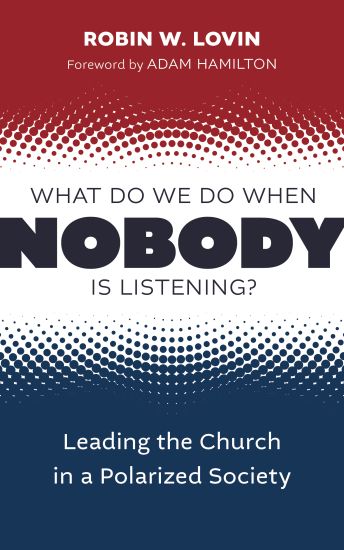
A trusted senior statesman in Christian ethics and ministry addresses the crisis of political polarization threatening the existence of the church. Polarization and political gridlock have been the norm in the United States for decades. As that reality seeps into every aspect of our society, churches find themselves not only affected, but often at the very center of the conflict. Rather than remaining places of inclusive community and generous dialogue, our sanctuaries have too often become ground zero of the culture wars. What can pastors do to restore the church's witness to the unity of all things in God--especially when it feels like members of the congregation would rather position the church's identity firmly on one side of the political spectrum or the other? And how can church leaders maintain peace while speaking the truth on important social issues--without either alienating parishioners who disagree or resorting to inane bothsiderism? Widely respected pastor and ethicist Robin Lovin offers sage counsel in this helpful book, arguing that to resist the trend of polarization in our church we must rediscover how the gospel teaches us to understand ourselves, our neighbors, and the purpose of politics. In part one, Lovin provides an overview of the situation in which we find ourselves, showing how polarization developed over recent decades and how, in both our society and our churches, we have adapted to division as the norm. In part two, he considers how Christians can shape a different response by learning to listen--to the Word of God, to the world, and to those who are not usually heard. With questions for discussion and reflection aligned with the content of each chapter, What Do We Do When Nobody Is Listening? provides an accessible roadmap for navigating out of the morass of polarization into a brighter future of church unity, during election seasons and beyond.
Two decades after the terrorist attacks on 9/11, America still is reeling from lingering trauma. Award-winning journalist Bill Tammeus was among those who suffered the personal loss of a relative that day. In this inspiring and hopeful book, Tammeus takes us to the heart of that gripping drama. He helps us to understand the many sources of religious extremism -- and what can be done to stop it. Finally, he invites us to reclaim core values that can help all of us become peacemakers in today's tumultuous world."The people who perished on 9/11 -- whether as airline passengers, first responders, office workers or others who simply were in the wrong place when catastrophe struck -- must be remembered and their legacies honored. One way that can happen is by each of us committing ourselves to being thoughtful, loving people who can help lead others away from violent extremism rooted in misguided theology. To make that commitment, start by reading this book. Then share it with others," writes best-selling author and pastor Adam Hamilton, whose Kansas City-based church has become the nation's largest United Methodist congregation.In the Foreword that introduces readers to this powerfully transformative book, Hamilton explains, "The loss of Bill's beloved nephew, who was just 31 years old at the time, sent waves of trauma through his family. It's painful to read his account of that, but because this is a story of resilience and hope, readers will come away not with a smothering sense of despair but, rather, with an understanding that even in the bleakest of times there is something real and generative, something divine, on which they can depend. We Christians are all about hope. But so are many other faith traditions, and Bill, who has worked on behalf of interfaith understanding and dialogue for decades, understands that and encourages all of us -- no matter what religion we claim as our own -- to seek peace and reconciliation and to oppose approaches to religion that lead vulnerable young men and women to murder in the name of God."In her Afterword to the book, peacemaker and community consultant Mindy Corporon puts it simply: "This book raises many questions about how humans choose to live either in healthy, generative ways or, by contrast, to murder others while, at the same time, losing their own lives. Such profound questions form the landscape of this book and they touch each of us because they are questions we cannot ignore. Bill's memoir teaches us that the depth of evil can and must be overshadowed with an even deeper love of one another and of life itself."Tammeus echoes that message in his conclusion: "Although I am familiar with the story of failure and evil in human history, my faith urges me not to let that overwhelm me but to keep hope alive -- and to do that by encouraging myself and others to live healthy, generous, redemptive lives. So I try. I try but fail regularly. And I hope you will try, too, perhaps by engaging in some of the behaviors and approaches that I outline in this book about how to stand against radical religious nonsense that leads to violence."
Two decades after the terrorist attacks on 9/11, America still is reeling from lingering trauma. Award-winning journalist Bill Tammeus was among those who suffered the personal loss of a relative that day. In this inspiring and hopeful book, Tammeus takes us to the heart of that gripping drama. He helps us to understand the many sources of religious extremism -- and what can be done to stop it. Finally, he invites us to reclaim core values that can help all of us become peacemakers in today's tumultuous world."The people who perished on 9/11 -- whether as airline passengers, first responders, office workers or others who simply were in the wrong place when catastrophe struck -- must be remembered and their legacies honored. One way that can happen is by each of us committing ourselves to being thoughtful, loving people who can help lead others away from violent extremism rooted in misguided theology. To make that commitment, start by reading this book. Then share it with others," writes best-selling author and pastor Adam Hamilton, whose Kansas City-based church has become the nation's largest United Methodist congregation.In the Foreword that introduces readers to this powerfully transformative book, Hamilton explains, "The loss of Bill's beloved nephew, who was just 31 years old at the time, sent waves of trauma through his family. It's painful to read his account of that, but because this is a story of resilience and hope, readers will come away not with a smothering sense of despair but, rather, with an understanding that even in the bleakest of times there is something real and generative, something divine, on which they can depend. We Christians are all about hope. But so are many other faith traditions, and Bill, who has worked on behalf of interfaith understanding and dialogue for decades, understands that and encourages all of us -- no matter what religion we claim as our own -- to seek peace and reconciliation and to oppose approaches to religion that lead vulnerable young men and women to murder in the name of God."In her Afterword to the book, peacemaker and community consultant Mindy Corporon puts it simply: "This book raises many questions about how humans choose to live either in healthy, generative ways or, by contrast, to murder others while, at the same time, losing their own lives. Such profound questions form the landscape of this book and they touch each of us because they are questions we cannot ignore. Bill's memoir teaches us that the depth of evil can and must be overshadowed with an even deeper love of one another and of life itself."Tammeus echoes that message in his conclusion: "Although I am familiar with the story of failure and evil in human history, my faith urges me not to let that overwhelm me but to keep hope alive -- and to do that by encouraging myself and others to live healthy, generous, redemptive lives. So I try. I try but fail regularly. And I hope you will try, too, perhaps by engaging in some of the behaviors and approaches that I outline in this book about how to stand against radical religious nonsense that leads to violence."
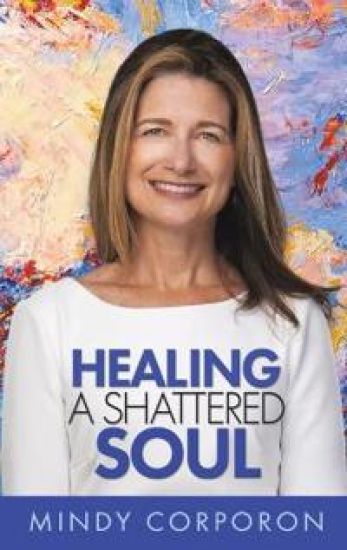
In Healing a Shattered Soul, Mindy Corporon invites readers to join her search for inspiration and hope after domestic terrorism took the lives of her father and son. Headlines about the attack circled the world. Now, Mindy takes readers inside her family's struggle, the support of their faith community and her commitment to courageous kindness.A popular speaker, teacher and writer, Mindy has dedicated her life to encouraging kindness, faith and healing in congregations, companies and communities. Among the programs she has co-founded with this vision are the Faith Always Wins Foundation and Workplace Healing, LLC. She has traveled widely to lead workshops and speak at conferences, and also works with online events.She explains that she wrote this book "for those who are seeking inspiration; for those who are searching for a glimmer of hope and faith; and for those in need of necessary, supportive relationships, even in the hardest times."In his Foreword, best-selling author and pastor the Rev. Adam Hamilton writes, "Mindy Corporon's story helps us understand how one survives tragedy, and says to the reader, 'If Mindy can survive this, and can do what she has done, then surely I can survive the adversity I face and can bring something good from it.' "The book's Preface is a heart-felt appeal to readers from another mother who suffered a tragic loss to domestic terrorism in recent years. Susan Bro is the mother of Heather Heyer, killed in Charlottesville, Virginia. In her Preface, Susan writes, "Mothers lose their children to violence every day, and yet many have no time to grieve and receive little to no public support or attention. We must hold space in our hearts and minds for them as we continue to overcome hate with love. People say, 'Love always wins.' I say that is true when we practice that love in meaningful ways that make a difference. I see Mindy Corporon as one of those mothers doing exactly that. We never want other mothers to experience the pain and loss of losing a loved one, especially a child, to hate. I am honored to call Mindy Corporon my friend. Her book offers hope in a time of pain, pointing the way forward with faith and love. Read it and be encouraged to find your own way forward through pain and loss."