Kirjojen hintavertailu. Mukana 11 342 296 kirjaa ja 12 kauppaa.

Kirjahaku

Etsi kirjoja tekijän nimen, kirjan nimen tai ISBN:n perusteella.

532 kirjaa tekijältä August Strindberg

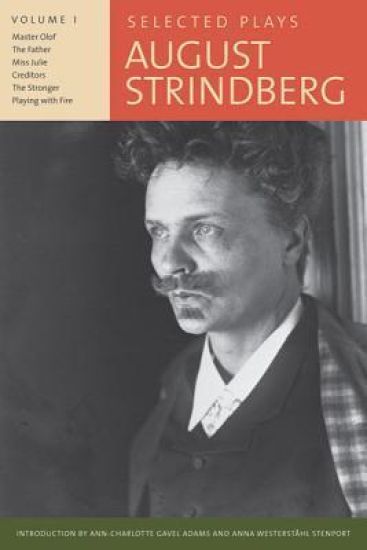
Selected Plays, Volume I

Selected Plays, Volume I

August Strindberg

University of Minnesota Press
2012
nidottu
August Strindberg is often considered the father of modern Swedish literature. His vast output of plays was innovative in style and form. Volume 1 of Selected Plays presents selections from the beginning of his career, before Strindberg’s period of psychotic attacks in the 1890s. Master Olof (1872) is a historical drama set in early Reformation Sweden, influenced by Ibsen and Shakespeare. Two of his most produced plays today, The Father (1887) and Miss Julie (1888), are examples of his naturalistic plays. Strindberg described Creditors (1888), a tragicomedy, as his “most mature work.” The Stronger (1889), a playlet, is a favorite in acting classes. Playing with Fire (1893) is one of his few comedies. These plays deal with Strindberg’s preoccupation with power struggles and sexual warfare.
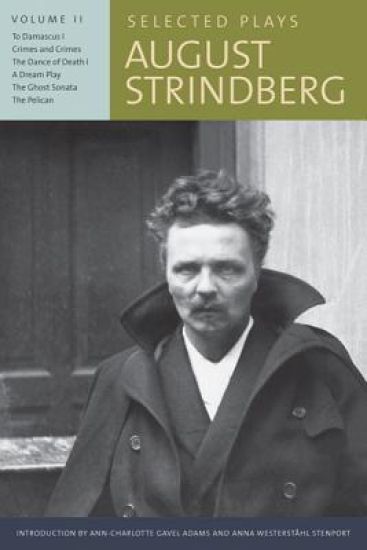
Selected Plays, Volume II

Selected Plays, Volume II

August Strindberg

University of Minnesota Press
2012
nidottu
This second volume of the great Swedish writer August Strindberg’s plays begins with To Damascus I (1898), the first of a trilogy. It mirrors his own departure from the naturalism he had explored in several of his earlier works, as he set forth on a spiritual odyssey. Crimes and Crimes (1899), from the beginning of his symbolist mode, is a lighter take on the themes in To Damascus I. The first of a two-part play, Dance of Death I (1900) depicts a dysfunctional marriage. A Dream Play (1901), which is one of Strindberg’s most influential, shows reality converted into a dream; many critics consider it his greatest play. In 1907, Strindberg founded the Intimate Theater in Stockholm; The Ghost Sonata (1907) and The Pelican (1907), which were written for its opening, are two examples of a chamber play, a genre that Strindberg helped to originate.
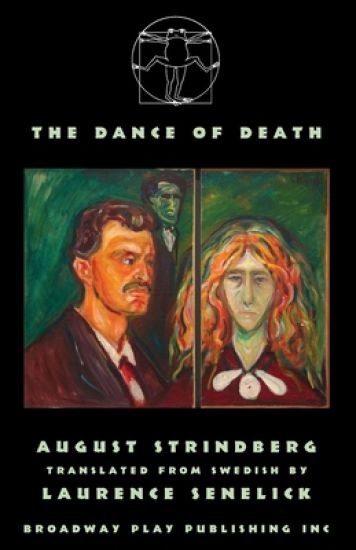
The Dance of Death

The Dance of Death

August Strindberg

Broadway Play Publishing
2020
pokkari
"The question is to know whether as a result of living together, one person's evil thoughts manage to be perceived by the other person, even before they are fully formed, and whether the other person intuits them as already at the conscious phase, deliberately trying to be realized. There is nothing more hurtful than to see someone read into your very depths and only a married couple is capable of it. They do not manage to conceal what is murky in the depths of their soul and they easily foresee each one's intention towards the other, which makes the clear impression of spying on one another which is what, in fact, they are doing. Fearing nothing so much as one's husband's or wife's watchfulness, they wind up disarmed in relation to one another. A judge is sitting beside them, who condemns in embryo every germinating evil desire, whereas, according to society's law, one cannot be held responsible for one's thoughts."Strindberg, The Quarantine Officer's Second Tale, 1902 "THE DANCE OF DEATH certainly exceeds the surface naturalism stressed by earlier critics. Being the fruit of Strindberg's harrowing personal suffering, the play expresses in many surrealistic ways the state of mind of persons engaged in elemental conflicts."Sister Corona Sharp "THE DANCE OF DEATH is a study of the horror of life's spiritual isolation-the loneliness that unhappy intimacy with another only accentuates."Charles Isherwood "In the case of Strindberg, the tragic strain does not exclude the comic, that the two in fact coalesce, become as it were one, in the manner of the modern as distinguished from the classical drama."Alrik Gustafson
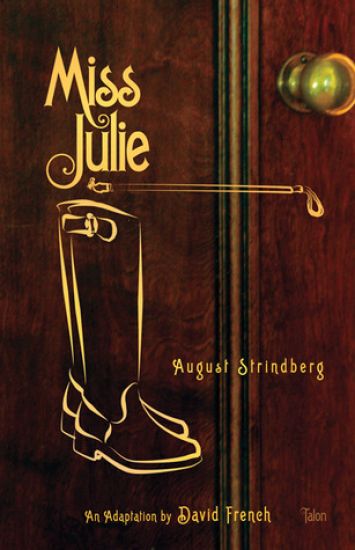
Miss Julie

Miss Julie

August Strindberg

Talonbooks
2006
pokkari
As all the great dramatists since the Greek tragedians have known, class and gender roles continue to remain the two fundamental determinants of the social fabric of any culture--even one, like our own, in which the boundaries of those identities have become fluid, situational and transitory. David French's adaptation of August Strindberg's disturbing and enduring drama of the transgressive affair between the daughter of a count and the count's man-servant has an eerie feel of the contemporary about it. In this adaptation of Miss Julie, French has sharpened the psychodramas of the original--scenes of conflict, desire, anger, jealousy, coercion, manipulation, exploitation, arrogance, dominance, submission and deceit--and backgrounded the historical elements of the play which have made it a favourite "period-piece" of the repertory theatre circuit. His revisioning of Miss Julie foregrounds the ruptures of identity and faith that ambition and desire eternally work in their rending of social norms, strictures and conventions, and he has re-enacted them in a contemporary idiom and vernacular that virtually cries out for the casting-call of a Paris Hilton to play the lead role.As with his adaptation of Chekhov's The Seagull, David French, one of Canada's best-loved playwrights, has here once again paid homage to one of the enduring masters who have brought to the stage the most elemental and universal dramas of the human condition.