The mortal conflict of the sexes, traced here by Strindberg in the clash between an aristocratic young woman and her valet. Ms. Stockenstrom's new translation retains the rhythm and emotional feel of the original while making the prose more playable for today's audiences.
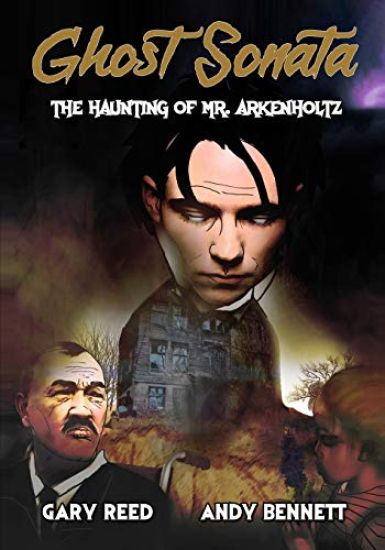
Based loosely on the work by August Strindberg, this is a surrealistic saga of a man who flashes back to the "defining moment" in his life where he found love, a future, terror and despair, all at the same time. A young man that finds himself on destiny's door as he is pulled into an ancient family feud and is surprised to find out that somehow he is involved. In Ghost Sonota, a young man named Isaac is born with a rare gift, the ability to sense the feelings and thoughts of others. It is because he is what, according to old wise-tales, is called a "Sunday Child". Isaac can almost tap into the minds of others around him and judge their emotions, their fears, and their doubts. But it is not a 'power' that he can simply control...it just washes over him. This is the story of that young man as he is plunged into a maze of secrets and despair from years gone past. For he ultimately becomes an unwillingly participant in the poisonous lies and deceit that have invaded the house. And when he falls in love with Adele, a girl living in the house, now he too becomes part of the legacy of torment that plagues the dwelling. Collects issues 1-4 of the comic book series. "There is superb human drama with unforgettable interactions between the characters in this story. This is a scary, but racy read, that skillfully combines old fashioned thrills, intrigue, murder, ambition and retribution " - Jazma Online. "Gary Reed's writing talent and creativity shine forth like a beacon on a dark foggy night..." - Independent Propaganda. "Gary Reed proves that he is the master of storytelling." - Paul Dale Roberts, Jazma. "Reed is one of the most underrated comic writers around." - The Comics Review.
Confessions of a Fool is a semi-autobiographical novel by Swedish playwright and author August Strindberg, recounting his tumultuous first marriage to Siri von Essen. The book is an intense and often bitter portrayal of love, jealousy, and psychological turmoil, reflecting Strindberg's personal struggles with paranoia and misogyny. Written in a raw and confessional style, the novel delves into themes of gender dynamics, artistic ambition, and the destructive nature of obsessive love, making it both a deeply personal and controversial work in Strindberg's literary career.
August Strindberg Gospođica Julija drama u jednom činu - M1, Z2 Nepremostive drustvene i osobne razlike postepeno pretvaraju naivni flert između koketne grofove kceri i markantnog sluge u neminovnu tragediju. Gospođica Julija jedno je od najznamenitijih djela svedskog dramatičara Augusta Strindberga. Drama je napisana 1888. i premijerno izvedena 1906. godine. Djelo odlikuje naturalistički pristup intrigantnoj temi, vjesta psiholoska iznijansiranost likova i suptilnost njihovih emocija.
Plays by August Strindberg: There are Crimes and Crimes: A Comedy. Johan August Strindberg; 22 January 1849 - 14 May 1912, was a Swedish playwright, novelist, poet, essayist and painter. Strindberg was fifty years old when he wrote "There Are Crimes and Crimes." In the same year, 1899, he produced three of his finest historical dramas: "The Saga of the Folkungs," "Gustavus Vasa," and "Eric XIV." Just before, he had finished "Advent," which he described as "A Mystery," and which was published together with "There Are Crimes and Crimes" under the common title of "In a Higher Court." Back of these dramas lay his strange confessional works, "Inferno" and "Legends," and the first two parts of his autobiographical dream-play, "Toward Damascus"-all of which were finished between May, 1897, and some time in the latter part of 1898. And back of these again lay that period of mental crisis, when, at Paris, in 1895 and 1896, he strove to make gold by the transmutation of baser metals, while at the same time his spirit was travelling through all the seven hells in its search for the heaven promised by the great mystics of the past.
Plays by August Strindberg: Miss Julia: A Naturalistic Tragedy. Johan August Strindberg; 22 January 1849 - 14 May 1912, was a Swedish playwright, novelist, poet, essayist and painter. Among more than half a hundred plays produced by Strindberg during his lifetime, none has won such widespread attention as "Miss Julia," both on account of its masterful construction and its gripping theme. Whether liking or disliking it, critics have repeatedly compared it with Ibsen's "Ghosts," and not always to the advantage of the latter work. It represents, first of all, its author's most determined and most daring endeavour to win the modern stage for Naturalism. If he failed in this effort, it must be recalled to his honour that he was among the first to proclaim his own failure and to advocate the seeking of new paths.
Plays by August Strindberg: Creditors: A Tragicomedy. Johan August Strindberg; 22 January 1849 - 14 May 1912, was a Swedish playwright, novelist, poet, essayist and painter. This is one of the three plays which Strindberg placed at the head of his dramatic production during the middle ultra-naturalistic period, the other two being "The Father" and "Miss Julia." It is, in many ways, one of the strongest he ever produced. Its rarely excelled unity of construction, its tremendous dramatic tension, and its wonderful psychological analysis combine to make it a masterpiece. In Swedish its name is "Fordringsagare." This indefinite form may be either singular or plural, but it is rarely used except as a plural. And the play itself makes it perfectly clear that the proper translation of its title is "Creditors," for under this aspect appear both the former and the present husband of Tekla. One of the main objects of the play is to reveal her indebtedness first to one and then to the other of these men, while all the time she is posing as a person of original gifts.
Plays by August Strindberg: Pariah: An Act. Johan August Strindberg; 22 January 1849 - 14 May 1912, was a Swedish playwright, novelist, poet, essayist and painter. Both "Creditors" and "Pariah" were written in the winter of 1888- 89 at Holte, near Copenhagen, where Strindberg, assisted by his first wife, was then engaged in starting what he called a "Scandinavian Experimental Theatre." In March, 1889, the two plays were given by students from the University of Copenhagen, and with Mrs. von Essen Strindberg as Tekla. A couple of weeks later the performance was repeated across the Sound, in the Swedish city of Malm , on which occasion the writer of this introduction, then a young actor, assisted in the stage management. One of the actors was Gustav Wied, a Danish playwright and novelist, whose exquisite art since then has won him European fame. In the audience was Ola Hansson, a Swedish novelist and poet who had just published a short story from which Strindberg, according to his own acknowledgment on playbill and title-page, had taken the name and the theme of "Pariah."
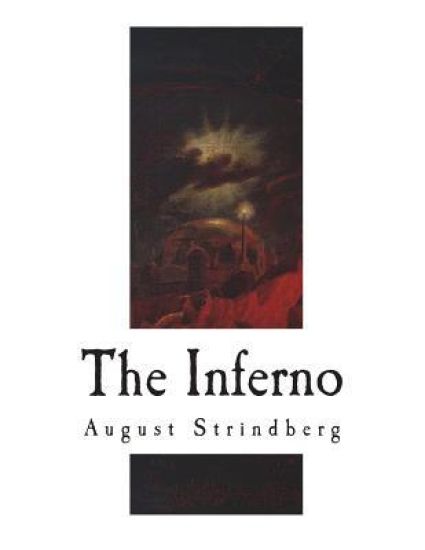
The Inferno by August Strindberg and translated by Claud Field. Inferno is an autobiographical novel by August Strindberg. Written in French in 1896-97 at the height of Strindberg's troubles with both censors and women, the book is concerned with Strindberg's life both in and after he lived in Paris, and explores his various obsessions, including alchemy, occultism, and Swedenborgianism, and shows signs of paranoia and neuroticism. An American critic says "Strindberg is the greatest subjectivist of all time." Certainly neither Augustine, Rousseau, nor Tolstoy have laid bare their souls to the finest fibre with more ruthless sincerity than the great Swedish realist. He fulfilled to the letter the saying of Robertson of Brighton, "Woman and God are two rocks on which a man must either anchor or be wrecked." His four autobiographical works, The Son of a Servant, The Confessions of a Fool, Inferno, and Legends, are four segments of an immense curve tracing his progress from the childish pietism of his early years, through a period of atheism and rebellion, to the sombre faith in a "God that punishes" of the sexagenarian. In his spiritual wanderings he grazed the edge of madness, and madmen often see deeper into things than ordinary folk. At the close of the Inferno he thus sums up the lesson of his life's pilgrimage: "Such then is my life: a sign, an example to serve for the improvement of others; a proverb, to show the nothingness of fame and popularity; a proverb, to show young men how they ought not to live; a proverb-because I who thought myself a prophet am now revealed as a braggart."
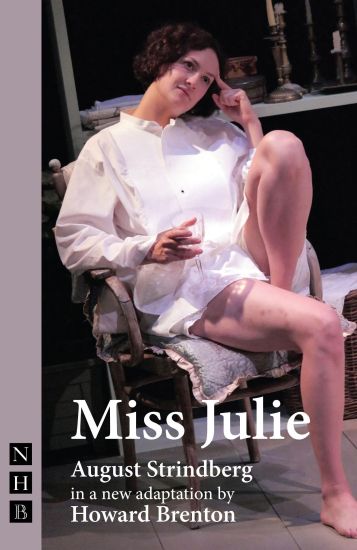
Midsummer's Eve, Sweden. A night when the sun doesn't set. A night of drinking and dancing. A night to break the rules. When Julie, alone on her father's estate, gatecrashes the servants' party, she finds herself in a dangerous tryst with her father's manservant, Jean. What begins as a flirtatious game gradually descends, over the course of a long and sultry night, into a savage fight for survival. Howard Brenton brings August Strindberg's genius to life in this brilliant adaptation of Miss Julie. It premiered at Theatre by the Lake, Keswick, in 2017, before transferring to Jermyn Street Theatre, London.
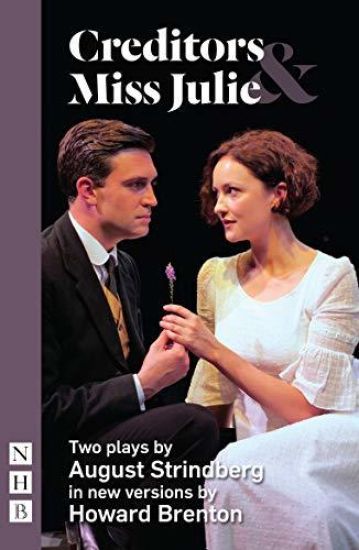
August Strindberg's classic portrayals of secrets and lies, seduction and power – both written in the summer of 1888 – in brilliant new versions by Howard Brenton. Miss Julie begins as a flirtatious game between the daughter of a wealthy landowner and her father's manservant, and gradually descends, over the course of a long and sultry Midsummer's Eve, into a savage fight for survival. In Creditors, young artist Adolf is deeply in love with his new wife Tekla – but a chance meeting with a suave stranger shakes his devotion to the core. Passionate, dangerously funny, and enduringly perceptive, Strindberg considered this wickedly enjoyable black comedy his masterpiece. Both plays premiered in co-productions between Jermyn Street Theatre, London, and Theatre by the Lake, Keswick, directed by Jermyn Street's Artistic Director Tom Littler.
Drama Classics: The World's Great Plays at a Great Little Price Bored with her sheltered existence, Miss Julie attempts to seduce the footman, but gets far more than she bargained for... August Strindberg's classic naturalistic play Miss Julie was written in 1888, and first performed at Strindberg's experimental theatre in Copenhagen, Denmark, in 1889, despite being banned by the censor. This English version, translated and introduced by Kenneth McLeish, is published in the Nick Hern Books Drama Classics series. The volume also includes Strindberg's Preface.
Drama Classics: The World's Great Plays at a Great Little Price Strindberg's chilling anatomy of a marriage, in which the two partners duel with each other until one is utterly defeated. Edgar and Alice, embittered husband and wife, live on an army base on a Swedish island. Alice calls it 'Little Hell', and it's about to get worse. Written in 1900 and consisting of two full-length plays, August Strindberg's The Dance of Death is full of destruction and bitterness, laced with grim humour. Both parts are included in this volume – though usually only the first is staged. This English version of The Dance of the Death in the Nick Hern Books Drama Classics series is translated and introduced by Stephen Mulrine.
Caryl Churchill's spare and resonant version of Strindberg's enigmatic masterpiece. Written in 1901, a mysterious amalgam of Freud, Alice in Wonderland and Strindberg's own private symbolism, A Dream Play follows the logic of a dream: A young woman comes from another world to see if life is really as difficult as people make it out to be. Characters merge into each other, locations change in an instant and a locked door becomes an obsessive recurrent image. As Strindberg wrote in his preface, he wanted 'to imitate the disjointed yet seemingly logical shape of a dream. Everything can happen, everything is possible and probable. Time and place do not exist.' This version of A Dream Play, from a literal translation by Charlotte Barslund, is by leading playwright Caryl Churchill. It was first performed in the Cottesloe auditorium of the National Theatre, London, in February 2005, in a production directed by Katie Mitchell, with additional material by Katie Mitchell and the company. Also included is an introduction by Caryl Churchill.
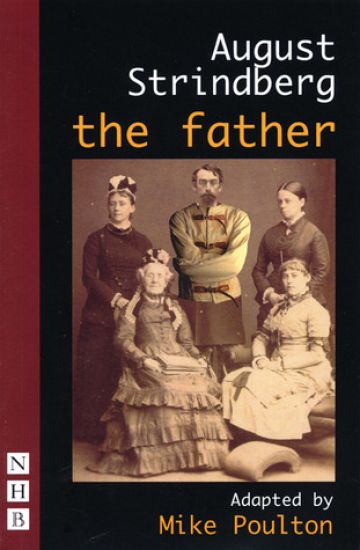
August Strindberg's gripping psychological drama about the battle of the sexes, in a version by Mike Poulton. Strindberg's play The Father is about a marriage wrecked by the parents' need to claim exclusive rights to their daughter's love, and to determine her future. By turns comic and deeply tragic, it shows an affable, scholarly father fall victim to a once loving wife who will stop at nothing to do what she thinks is right for her child. The only possible outcome is a grim, yet thrilling fight to the death in circumstances of almost unbearable tension. Written in 1887, The Father was first staged in Berlin in 1890. This English version by Mike Poulton was first staged at the Minerva Theatre, Chichester, in 2006.