Kirjojen hintavertailu. Mukana 11 627 467 kirjaa ja 12 kauppaa.

Kirjahaku

Etsi kirjoja tekijän nimen, kirjan nimen tai ISBN:n perusteella.

132 kirjaa tekijältä Auguste Comte

Discours sur l'esprit positif: ou traité du positivisme
Le v ritable esprit positif consiste surtout voir pour pr voir, tudier ce qui est, afin d'en conclure ce qui sera, d'apr s le dogme g n ral de l'invariabilit des lois naturelles... Apr s avoir consid r l'esprit positif relativement aux objets ext rieurs de nos sp culations, il faut achever de le caract riser en appr ciant aussi sa destination int rieure, pour la satisfaction continue de nos propres besoins, soit qu'ils concernent la vie contemplative, ou la vie active. La nature et la destination de ce Trait ne sauraient tre suffisamment appr ci es, si ce pr ambule n cessaire n' tait pas surtout consacr d finir convenablement le v ritable esprit fondamental de cette philosophie, dont l'installation universelle doit, au fond, devenir le but essentiel d'un tel enseignement. Comme elle se distingue principalement par une continuelle pr pond rance, la fois logique et scientifique, du point de vue historique ou social, je dois d'abord, pour la mieux caract riser, rappeler sommairement la grande loi que j'ai tablie, dans mon Syst me de philosophie positive, sur l'enti re volution intellectuelle de l'Humanit , loi laquelle d'ailleurs nos tudes astronomiques auront ensuite fr quemment recours.
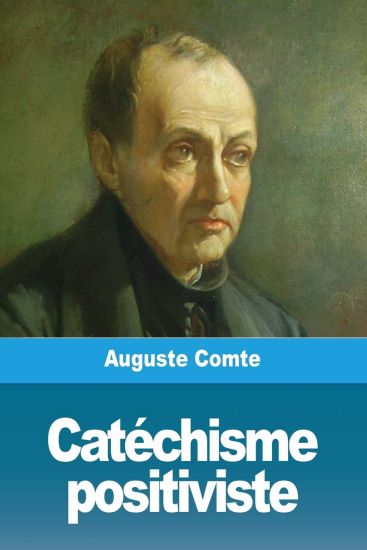
Catéchisme positiviste

Catéchisme positiviste

Auguste Comte

Prodinnova
2019
pokkari
Apres avoir pleinement satisfait l'intelligence et l'activite, la religion positive, toujours poussee par sa realite caracteristique, s'est convenablement etendue jusqu'au sentiment, qui desormais forme son principal domaine et devient la base de son unite...
A General View of Positivism

A General View of Positivism

Auguste Comte

Les Prairies Numeriques
2020
pokkari
In A General View of Positivism French philosopher Auguste Comte gives an overview of his social philosophy known as Positivism. Comte, credited with coining the term 'sociology' and one of the first to argue for it as a science, is concerned with reform, progress and the problem of social order in society. In this English edition of the work, published in 1865, he addresses the practical problems of implementing his philosophy or doctrine, as he also refers to Positivism, into society. He believes that society evolves through a series of stages that are ruled by social laws and culminate in a superior form of social life. During this reorganisation of society, which will find its greatest supporters among women and the working class, a 'new moral power' will emerge. Under the motto 'love, order and progress' Comte wishes humanism to replace organised religion as the object of spiritual worship.Auguste Comte, considered by some to be the first "philosopher of science," was perhaps most famous for founding the theory of Positivism: a framework of thinking and living meant to engdender unity across humanity, backed by love, science, and intellect.Positivism itself is a combination philosophy and way of life. Here Comte lays down the various tenents of the philosophy, describing what he views as the six major characteristics of the system. Comte goes into surprising detail, going so far as to describe minutae like how children should be educated, the structure of a unified global committee of nations, new flags, calendars, the role of the arts, and so on. He ends the book with what he calls the "Religion of Humanity," a secular religion meant to replace the traditional religions that people of the time were becoming disillusioned with.The book and the theory are both very much products of the time. Comte was born around the end of the French Revolution, and lived in Paris during that time when republican ideas, respect for science, and a revolutionary and forward-thinking spirit made fertile ground for change. He viewed Positivism as the single solution to most of the problems of the day, including Communism, the plight of the working class, the shift away from traditional religion, and the constant war and strife that had plagued humanity.Comte's theories gained a huge following: you might even recognize the Positivist motto, "Order and Progress," inscribed on Brazil's national flag. While Positivism and its executive arm, the Church of Humanity, today only seem to survive in any significant number in Brazil-and even there in a greatly declined state-its theories were hugely influential in the emergence of many "ethical societies" and secular church movements around the globe.
Einleitung in die positive Philosophie

Einleitung in die positive Philosophie

Auguste Comte

Antigonos Verlag
2024
pokkari
Unver nderter Nachdruck der Originalausgabe von 1880. Der Verlag Antigonos spezialisiert sich auf die Herausgabe von Nachdrucken historischer B cher. Wir achten darauf, dass diese Werke der ffentlichkeit in einem guten Zustand zug nglich gemacht werden, um ihr kulturelles Erbe zu bewahren.
Rede über den Geist des Positivismus

Rede über den Geist des Positivismus

Auguste Comte

Felix Meiner
1994
sidottu
Im Discours sur l'esprit positif (1844) begündet Auguste Comte (1798-1857) seinen utopischen Entwurf einer von wissenschaftlichen Prinzipien geleiteten und auf positive Erkenntnisse (wahrgenommene Tatsachen) gestützten zivilisatorischen Erneuerung der bürgerlichen Gesellschaft. Comte untermauert und bestärkt hier den Fortschrittsglauben des frühen 19. Jahrhunderts. Somit gilt der Text als Programm- und Hauptschrift des >klassischen Positivismus