
Kirjahaku
Etsi kirjoja tekijän nimen, kirjan nimen tai ISBN:n perusteella.
180 kirjaa tekijältä Bertolt Brecht
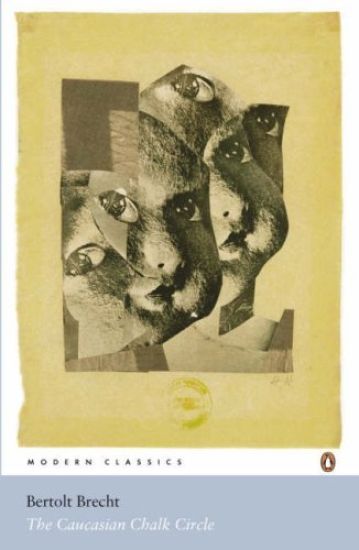
The play is a parable inspired by the Chinese play Chalk Circle. Written at the close of World War II, the story is set in the Caucasus mountains of Georgia, and retells the tale of King Solomon and a child claimed by two mothers. A chalk circle is metaphorically drawn around a society misdirected in its priorities. Brecht's statements about class are cloaked in the innocence of a fable that whispers insistently to the audience.
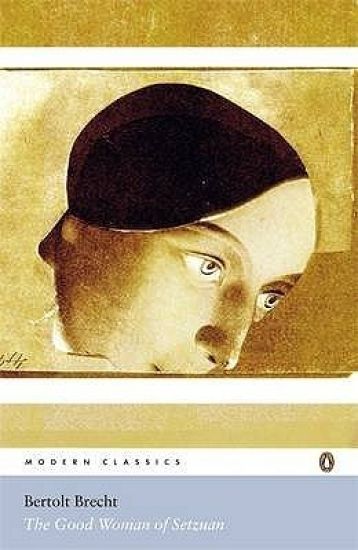
This play, written during Brecht's exile to the United States and set in pre-Communist China, is a parable of a young woman torn between obligation and reality, between love and practicality, and between her own needs and those of her friends and neighbours.
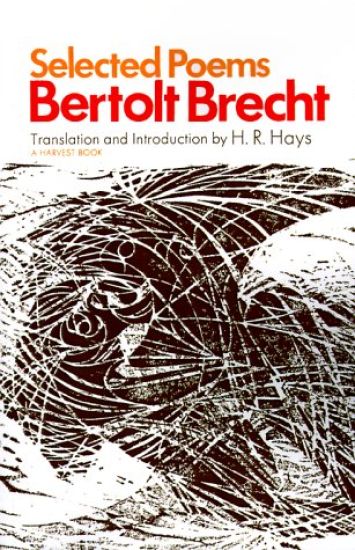
Designed to make Bertolt Brecht's work accessible for today's audience, this bilingual collection shows the range of the German poet's insightful and compelling poetry.Bertolt Brecht is counted as one of the most influential poets and playwrights of the 20th century. Selected Poems features works from Brecht's early Manual of Piety to the late Songs, Poems, and Choruses, including songs from his theater works. Translated from German and introduced by poet H.R. Hays.
"A major Brecht play in an outstanding translation with an expert and up-to-date preface." -Eric Bentley "...a fine translation...Jones has handled Brecht's meters with great skill." -Choice
Written in exile during the Second World War, the story of Brecht's classic play subverts an ancient Chinese tale - echoed in the Judgement of Solomon - in which two women claim the same child. The message of Brecht's parable is that resources should go to those who will make best use of them. Thanks to the rascally judge, Azdak, one of Brecht's most vivid creations, this story has a happy outcome: the child is entrusted to the peasant Grusha, who has loved and nurtured it.Published in Methuen Drama's Modern Classics series, this edition features an extensive introduction, Brecht's own notes on the play and a full appendix of textual variants. It is the standard critical edition of the work in an acclaimed translation by James and Tania Stern with W. H. Auden.
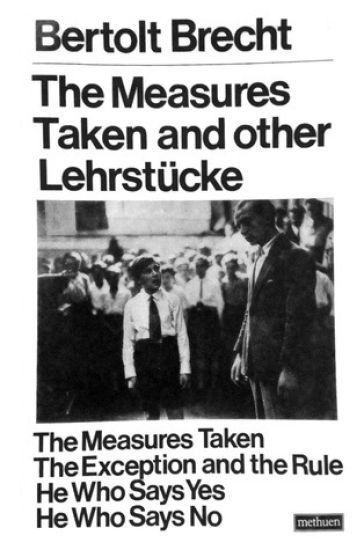
The Lehrstucke (or 'learning-plays') lie at the heart of Brechtian theatre. Written during 1929 and 1930, years of far-reaching political and economic upheaveal in Germany and the period of Brecht's most sharply Communist works, these short plays show an abrupt rejection of most of the trappings of conventional theatre. The Lehrstucke are spare and highly formalized pieces intended for performance by amateurs, on the principle that the moral and political lessons contained in them can best be taught by participation in an actual production. There is nothing in the drama of the twentieth century to match the precision of their language and the economy of their theatrical technique.
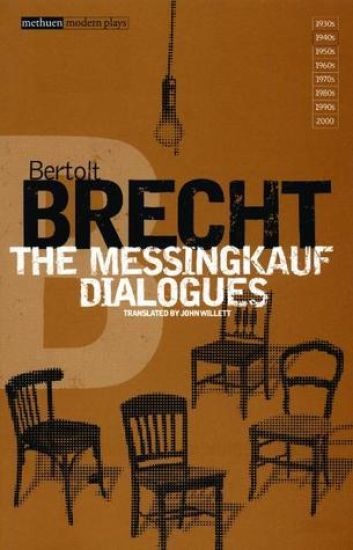
Written between 1939-1942 "The Messingkauf Dialogues" are among the most concise, witty and light-hearted of all Brecht's theoretical discussions of theatre.
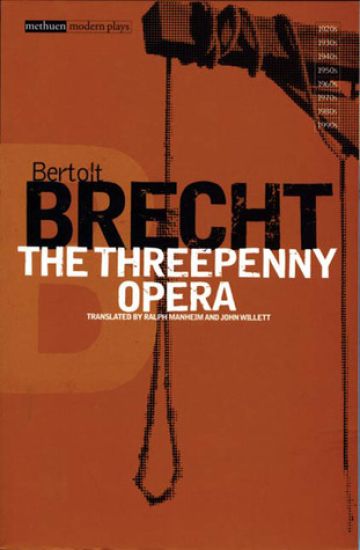
Repackaged and reissued, this is Brecht's classic interpretation of John Gay's "The Beggars Opera". It is a vicious satire on the bourgeois capitalist society of the Weimar Republic, married with the jazz music of Kurt Weill. The text is accompanied by Brecht's original notes.
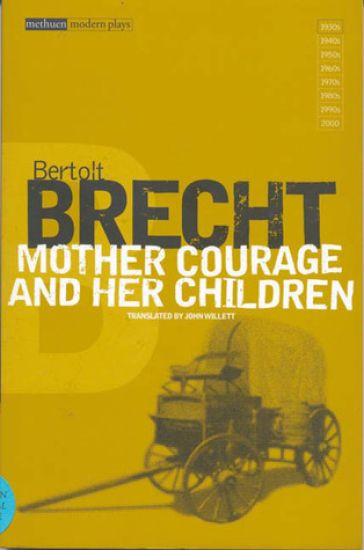
Part of the "Methuen Modern Plays" series aimed at the burgeoning readership of young theatregoers, this title and five others are reissued, representing the range and vitality of the list of 170 titles in print .
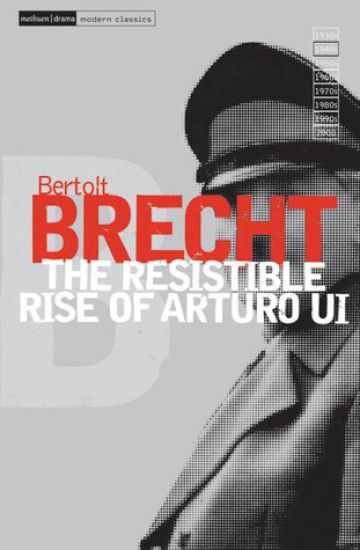
Described by Brecht as 'a gangster play that would recall certain events familiar to us all', Arturo Ui is a witty and savage satire of the rise of Hitler - recast by Brecht into a small-time Chicago gangster's takeover of the city's greengrocery trade. Using a wide range of parody and pastiche - from Al Capone to Shakespeare's Richard III and Goethe's Faust - Brecht's compelling parable continues to have relevance wherever totalitarianism appears today. Written during the Second World War in 1941, the play was one of the Berliner Ensemble's most outstanding box-office successes in 1959, and has continued to attract a succession of major actors, including Leonard Rossiter, Christopher Plummer, Antony Sher and Al Pacino. Presented in Methuen Drama's Modern Classics series, this is the standard critical edition of the play featuring extensive editorial notes and an introduction.
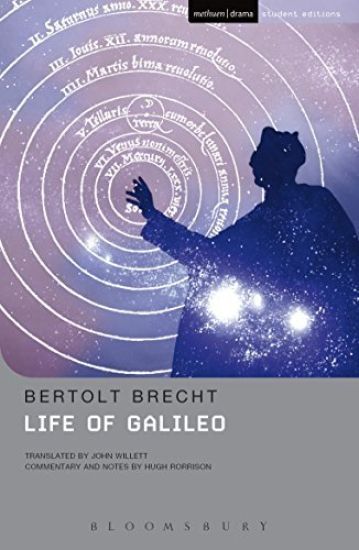
This Student Edition of Brecht's classic dramatisation of the conflict between free enquiry and official ideology features an extensive introduction and commentary that includes a plot summary, discussion of the context, themes, characters, style and language as well as questions for further study and notes on words and phrases in the text. It is the perfect edition for students of theatre and literature Along with Mother Courage, the character of Galileo is one of Brecht's greatest creations, immensely live, human and complex. Unable to resist his appetite for scientific investigation, Galileo's heretical discoveries about the solar system bring him to the attention of the Inquisition. He is scared into publicly abjuring his theories but, despite his self-contempt, goes on working in private, eventually helping to smuggle his writings out of the country.As an examination of the problems that face not only the scientist but also the whole spirit of free inquiry when brought into conflict with the requirements of government or official ideology, Life of Galileo has few equals. Written in exile in 1937-9 and first performed in Zurich in 1943, Galileo was first staged in English in 1947 by Joseph Losey in a version jointly prepared by Brecht and Charles Laughton, who played the title role. Printed here is the complete translation by John Willett.
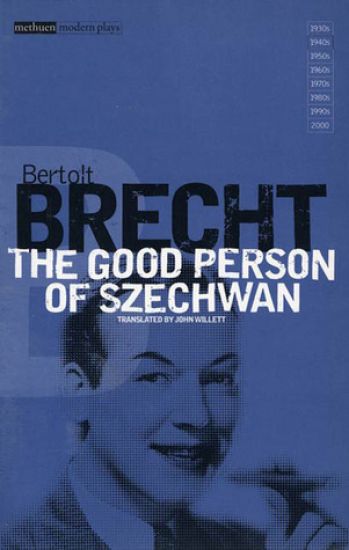
Brecht's famous parable, written in exile in 1939-41, shows that in an unjust society good can only survive by means of evil. In it, the gods come to earth in search of enough good people to justify their existence. They find Shen Teh, a good-hearted but penniless prostitute, and make her a gift that enables her to set up her own business. But her goodness brings ruin and she must disguise herself as a man in order to muster sufficient ruthlessness to survive. Published in Methuen Drama's Modern Classics series, this edition features an introduction and extensive notes and textual variants.

In this version of the story of Joan of Arc, Brecht transforms her into 'Joan Dark', a member of the 'Black Straw Hats' (a Salvation Army-like group) in twentieth century Chicago. The play charts Joan's battle with Pierpont Mauler, the unctuous owner of a meat-packing plant. Like her predecessor, Joan is a doomed woman, a martyr and (initially, at least) an innocent in a world of strike-breakers, fat cats, and penniless workers. Like many of Brecht's plays it is laced with humor and songs as part of its epic dramaturgical structure. The play, which was never staged in Brecht's lifetime, is published here with a new translation, a full introduction and Brecht's own notes on the text.
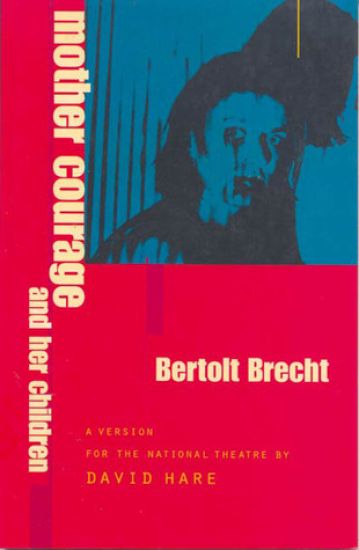
This version of Brecht's great anti-war play by playwright David Hare was premiered by the National Theatre, London, in November 1995. It adopts a freer approach to the text than many editions, adapting the original rather than offering a close translation. In this chronicle of the Thirty Years War, Mother Courage follows the armies back and forth across Europe, selling provisions and liquor from her canteen wagon. One by one she loses her children to the war but will not part with her livelihood - the wagon. The Berlin production of 1949, with Helene Weigel as Mother Courage, marked the foundation of the Berliner Ensemble. Considered by many to be one of the greatest anti-war plays ever written and Brecht's masterpiece, it remains a powerful example of Brecht's Epic Theatre and pioneering theatrical style.
Along with Mother Courage, the character of Galileo is one of Brecht's greatest creations, immensely live, human and complex. Unable to resist his appetite for scientific investigation, Galileo's heretical discoveries about the solar system bring him to the attention of the Inquisition. He is scared into publicly abjuring his theories but, despite his self-contempt, goes on working in private, eventually helping to smuggle his writings out of the country.As an examination of the problems that face not only the scientist but also the whole spirit of free inquiry when brought into conflict with the requirements of government or official ideology, Life of Galileo has few equals.Written in exile in 1937-9 and first performed in Zurich in 1943, Galileo was first staged in English in 1947 by Joseph Losey in a version jointly prepared by Brecht and Charles Laughton, who played the title role. Printed here is the complete translation by Brecht scholar John Willett. The much shorter Laughton version is also included in full as an appendix, along with Brecht's own copious notes on the play making this the most trusted scholarly edition of the text.
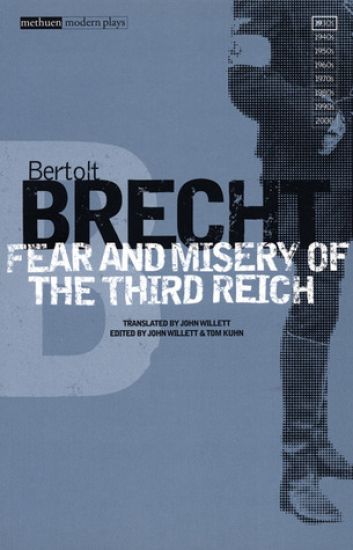
Also known as The Private Life of the Master Race, this is a sequence of twenty-four realistic sketches showing how "ordinary" life under the Nazis was subtly permeated by suspicion and anxiety. Written in exile in Denmark and first staged in 1938 it was inspired in part by his recent trip to Moscow where he had been researching tasks for the anti-Nazi effort.
Includes the full German text, accompanied by German-English vocabulary. Notes and a detailed introduction in English put the work in its social and historical context.
Mother Courage and Her Children is widely regarded as Brecht's best work, a theatrical landmark and one of the most powerful anti-war plays in history. This translation by Michael Hofmann was published to coincide with the UK tour by English Touring Theatre in 2006. In this chronicle of the Thirty Years War of the seventeenth century, Mother Courage follows the armies back and forth across Europe, selling provisions and liquor from her canteen wagon. As the action of the play progresses between the years 1624 and 1646 she loses her children to the war but remains indomitable, refusing to part with her livelihood - the wagon. The play is one of the most celebrated examples of Epic Theatre and of Brecht's use of alienation effect to focus attention on the issues of the play above the individual characters. It remains regarded as one of the greatest plays of the twentieth century and one of the great anti-war plays of all time. The Berlin production of 1949, with Helene Weigel as Mother Courage, marked the foundation of the Berliner Ensemble. Translated by the celebrated, German-born translator Michael Hofmann who has won multiple awards for his translation of works from German into English, the stage production was acclaimed for his 'gutsy,colloquial translation' (The Stage).