Kirjojen hintavertailu. Mukana 12 016 292 kirjaa ja 12 kauppaa.

Kirjahaku

Etsi kirjoja tekijän nimen, kirjan nimen tai ISBN:n perusteella.

61 kirjaa tekijältä Boethius

The Consolation of Philosophy

The Consolation of Philosophy

Boethius

WW Norton Co
2009
nidottu
The Consolation of Philosophy occupies a central place in the history of Western thought. Its author, Anicius Manlius Severinus Boethius (ca. 476–526 c.e.), was a Roman philosopher, scholar, and statesman who wrote The Consolation of Philosophy while in a remote prison awaiting his execution on dubious political charges. The text of this Norton Critical Edition is based on the translation by Richard H. Green. It is accompanied by the editor’s preface and full-scale introduction to the work, the translator’s preface, and explanatory annotations. “Contexts” reprints selections from the texts that Boethius drew upon for his own work. These include excerpts from two of Plato’s Dialogues (Gorgias and Timaeus), from Aristotle’s Nicomachean Ethics, and from Augustine’s On Free Choice of the Will. “Criticism” collects five wide-ranging essays by major scholars of Boethius. Henry Chadwick presents a general introduction to Boethius’s life and works. Nelson Pike presents a clear and insightful interpretation of what Boethius means by writing that God is eternal (timeless). The final three essays—by William Bark, Edmund Reiss, and John Marenbon—all depart from traditional readings of The Consolation of Philosophy in significant ways and are sure to stimulate classroom discussion. A Chronology of Boethius’s life and work and a Selected Bibliography are also included.
The Consolation of Philosophy

The Consolation of Philosophy

Boethius

Harvard University Press
2010
nidottu
In this highly praised new translation of Boethius’s The Consolation of Philosophy, David R. Slavitt presents a graceful, accessible, and modern version for both longtime admirers of one of the great masterpieces of philosophical literature and those encountering it for the first time. Slavitt preserves the distinction between the alternating verse and prose sections in the Latin original, allowing us to appreciate the Menippian parallels between the discourses of literary and logical inquiry. His prose translations are lively and colloquial, conveying the argumentative, occasionally bantering tone of the original, while his verse translations restore the beauty and power of Boethius’s poetry. The result is a major contribution to the art of translation. Those less familiar with Consolation may remember it was written under a death sentence. Boethius (c. 480–524), an Imperial official under Theodoric, Ostrogoth ruler of Rome, found himself, in a time of political paranoia, denounced, arrested, and then executed two years later without a trial. Composed while its author was imprisoned, cut off from family and friends, it remains one of Western literature’s most eloquent meditations on the transitory nature of earthly belongings, and the superiority of things of the mind. In an artful combination of verse and prose, Slavitt captures the energy and passion of the original. And in an introduction intended for the general reader, Seth Lerer places Boethius’s life and achievement in context.
Theological Tractates. The Consolation of Philosophy
A Christian polymath embraces reason against misfortune in poetry and prose.Boethius (Boetius)—Anicius Manlius Severinus—Roman statesman and philosopher (ca. AD 480–524), was son of Flavius Manlius Boetius, after whose death he was looked after by several men, especially Memmius Symmachus. He married Symmachus’ daughter, Rusticiana, by whom he had two sons. All three men rose to high honors under Theodoric the Ostrogoth, but Boethius fell from favor, was tried for treason, wrongly condemned, and imprisoned at Ticinum (Pavia), where he wrote his renowned Consolation of Philosophy. He was put to death in 524, to the great remorse of Theodoric. Boethius was revered as if he were a saint and his bones were removed in 996 to the Church of S. Pietro in Ciel d’Oro, and later to the Cathedral. The tower in Pavia where he was imprisoned is still venerated.Boethius was author of Latin translations of Aristotle, commentaries on various philosophical works, original works on logic, five books on music, and other works. His Consolation of Philosophy is the last example of purely literary Latin of ancient times—a mingling of alternate dialogue and poems. His Theological Tractates are also included in this volume.
How to Cope

How to Cope

Boethius

PRINCETON UNIVERSITY PRESS
2025
sidottu
A vivid and accessible new translation of essential selections from Boethius’s Consolation of Philosophy—a moving classic about facing life’s worst events with courage and hopeWhat do you do when your life has fallen apart? Fifteen hundred years ago, a Roman nobleman named Boethius (ca. 480–524 CE) asked this question as he was sitting in a prison cell waiting to die, accused—probably unjustly—of treason. Boethius had been a rich and powerful man with all a person could want in life, but now he had lost everything. Shaken, he wondered how such terrible misfortune could have happened to him and why life was so unfair. When Philosophy herself appears in his cell and confronts Boethius, the conversation that follows between the two on the nature of evil and why humans suffer is as powerful and inspiring today as it was to its first readers. In How to Cope, Philip Freeman presents a lively modern translation of essential selections from Boethius’s classic, complete with an introduction and the original Latin on facing pages.This translation vividly captures Boethius’s journey from bitterness and anger to reconciliation and peace, showing how ancient philosophy, especially Stoicism, can help readers deal with adversity in their own lives. The book reveals the qualities that have made The Consolation of Philosophy one of the most popular and influential works of classical and world literature, and an inspiration to countless writers, including Thomas Aquinas, Dante, and Chaucer.
Consolation of Philosophy

Consolation of Philosophy

Boethius

Hackett Publishing Co, Inc
2001
pokkari
Entirely faithful to Boethius' Latin; Relihan's translation makes the philosophy of the Consolation intelligible to readers; it gives equal weight to the poetry--in fact, Relihan's metrical translation of Boethius' metro are themselves contributions of the first moment to Boethian studies. Boethius finally has a translator equal to his prodigious talents and his manifold vision. --Joseph Pucci, Brown University
Anicii Manlii Severini Boetii consolationis philosophiae libri quinque.
The 18th century was a wealth of knowledge, exploration and rapidly growing technology and expanding record-keeping made possible by advances in the printing press. In its determination to preserve the century of revolution, Gale initiated a revolution of its own: digitization of epic proportions to preserve these invaluable works in the largest archive of its kind. Now for the first time these high-quality digital copies of original 18th century manuscripts are available in print, making them highly accessible to libraries, undergraduate students, and independent scholars.The Age of Enlightenment profoundly enriched religious and philosophical understanding and continues to influence present-day thinking. Works collected here include masterpieces by David Hume, Immanuel Kant, and Jean-Jacques Rousseau, as well as religious sermons and moral debates on the issues of the day, such as the slave trade. The Age of Reason saw conflict between Protestantism and Catholicism transformed into one between faith and logic -- a debate that continues in the twenty-first century.++++The below data was compiled from various identification fields in the bibliographic record of this title. This data is provided as an additional tool in helping to insure edition identification: ++++John Rylands University Library of ManchesterT149298With a final advertisement leaf. Also issued in octavo.Glasguae: in aedibus academicis excudebant Robertus et Andreas Foulis, 1751. 4],157, 3]p.; 4
Anicius Manlius Torquatus Severinus Boetius his Consolation of Philosophy, in Five Books Translated Into English
The 18th century was a wealth of knowledge, exploration and rapidly growing technology and expanding record-keeping made possible by advances in the printing press. In its determination to preserve the century of revolution, Gale initiated a revolution of its own: digitization of epic proportions to preserve these invaluable works in the largest archive of its kind. Now for the first time these high-quality digital copies of original 18th century manuscripts are available in print, making them highly accessible to libraries, undergraduate students, and independent scholars.The Age of Enlightenment profoundly enriched religious and philosophical understanding and continues to influence present-day thinking. Works collected here include masterpieces by David Hume, Immanuel Kant, and Jean-Jacques Rousseau, as well as religious sermons and moral debates on the issues of the day, such as the slave trade. The Age of Reason saw conflict between Protestantism and Catholicism transformed into one between faith and logic -- a debate that continues in the twenty-first century.++++The below data was compiled from various identification fields in the bibliographic record of this title. This data is provided as an additional tool in helping to insure edition identification: ++++Trinity College Library Watkinson CollectionT143750Titlepage in red and black. With a list of subscribers. Pp. xv-xvi omitted from the pagination; text is continuous. Translated by William Causton.London: printed for the author, 1730. 8], xxxv i.e. xxxiii], 1],161, 1]p.; 8
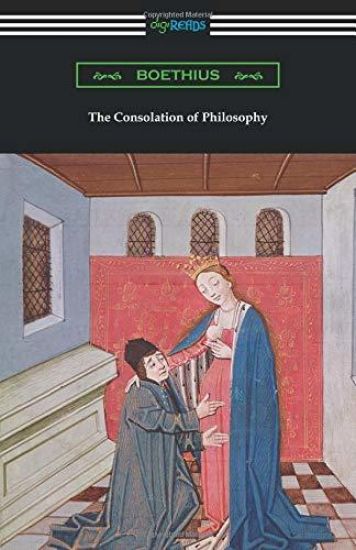
The Consolation of Philosophy

The Consolation of Philosophy

Boethius

Digireads.com
2018
pokkari
Born in the late 5th century AD, Boethius was a Roman statesman and philosopher who would come into the service of the Ostrogothic ruler of Italy, Theodoric the Great. Ultimately he would rise to the position of magister officiorum, the head of all the government and court services. In 523 AD he would find himself accused of treasonous correspondence with Justin I, a charge that would land him in prison and ultimately lead to his execution. During Boethius's year-long imprisonment leading up to his execution he wrote "The Consolation of Philosophy," a work that would become regarded as one of the most important and influential works from medieval times. "The Consolation of Philosophy" is a classical exposition of human nature as Boethius reflects on the treacherous betrayal that led to his fall from favor with his lord. In it he ponders the universal question of Theodicy, or why a benevolent and all powerful God allows evil to manifest in the world, and on the transitory nature of fortune. Meant to provide himself with some solace in the face of his fated execution, Boethius' "The Consolation of Philosophy" is a work that has provided spiritual guidance to those in despair ever since its first appearance. This edition is printed on premium acid-free paper.
De diuisione

De diuisione

Boethius

Createspace Independent Publishing Platform
2014
nidottu
"De diuisione" from Boethius. Anicius Manlius Severinus Bo thius, commonly called Boethius (480-525), was a philosopher of the early 6th century.