
Kirjahaku
Etsi kirjoja tekijän nimen, kirjan nimen tai ISBN:n perusteella.
32 kirjaa tekijältä Boris Groys
A prominent critic and theorist considers the criteria of value for collecting and storing works of art. In modernity, the museum was the institution that made art accessible to the broader public. An artwork was collected if it was considered beautiful, passionate, engaged, or critical--and primarily if it was deemed historically relevant. But today, with the total availability and saturation of images, the museum has lost its privileged status as the exclusive place for the display of art. In our age of digital media, how does a particular artwork get selected for a museum collection? Which symbolic criteria must this artwork satisfy for it to obtain value? And in what ways does the institution of the museum remain relevant? Logic of the Collection is framed by Boris Groys's original and provocative proposition: an artwork is considered historically relevant if it fits the logic of the museum collection. In these critical essays, the distinguished philosopher and theorist of art and media analyzes the relationship between the logic of the collection and various modern ideologies. He reflects on the explosion of art production and distribution through the ascendency of digital media as well as the ways in which the accumulated artworks will be collected and preserved in the future, as the potential limits of public and private collections are reached.
Museum for fremtiden
Boris Groys; Madame Nielsen; Ida Marie Hede; Center for Militant Futurologi; Françoise Vergès; Mela Dávila Freire; Tobias Rahim; Petra Kleis; Ferdinand Ahm Krag; Helene Nymann; Studio ThinkingHand; Christian Lollike; Anders Thrue Djurslev
Antipyrine, Forlaget
2022
nidottu
Museum for fremtiden er en umulig titel. Den fremlægger et paradoks, en selvmodsigelse. Et museum har sædvanligvis med fortiden at gøre. På et museum udlægges historien om fortiden. Museet har som regel kun med fremtiden at gøre i det omfang, at det anviser den som en logisk konsekvens af og brud med fortidens kultur, teknologi, design, videnskab og kunst. Museet skaber med andre ord en særlig fornemmelse af historisk tid som en samlet, kausal bevægelse. At udstille en genstand på et museum betyder i den forstand at præsentere den som et stykke overstået fortid, som død kultur. Hvad vil det så betyde at udstille fremtiden på museum? Museum for fremtiden er resultatet af et møde mellem scene- og billedkunst, mellem et teater og en samtidskunstinstitution. Kunsthal Aarhus og Sort/Hvid er gået sammen om at skabe et værk mellem kunstudstilling og teaterforestilling. Formålet er ikke at grundlægge et fremtidsmuseum eller at arkivere en samling genstande af historisk betydning for fremtiden. Det er snarere at konfrontere kunstarterne, kunstinstitutionerne, os selv og publikum med spørgsmålet om, hvad der betinger vores politiske forestillingsevne i dag – og hvad der skal til for at overkomme, udfordre eller komplicere samtidens vilkår. Bogen her fungerer som katalog for Museum for fremtiden, sådan som værket er udviklet på Sort/Hvid og i Kunsthal Aarhus. Her udfoldes og diskuteres de tidsundersøgelser, som de bidragende kunstnere bringer med sig ind i projektet. I den forbindelse fortæller Ferdinand Ahm Krag, Helene Nymann, Mikkel Dahlin Bojesen og Rhoda Ting fra Studio ThinkingHand, samt instruktør og dramatiker Christian Lollike fra Sort/Hvid, om, hvilken rolle tid spiller i deres kunst; om deres forskelligartede praksisser, om deres bidrag til Museum for fremtiden og om kompositionen af det samlede, sammenfiltrede værk. Fra hver deres position udfordrer kunstnerne de både kulturelle, psykologiske og biologiske mekanismer, som vi bruger til at forstå samtiden og forestille os fremtiden med. Hertil præsenteres skitser og eksempler, inspirationsmateriale, modeltegninger og endelig manuskriptet til forestillingen, i dets ufærdige form her en måned før premieren. For det andet har vi i udgivelsen inviteret andre til at tænke og digte med og imod og videre fra titlens umulige sammensætning af “museum” og “fremtid.” Originale tekster af Madame Nielsen, Ida Marie Hede og Center for Militant Futurologi, samt en kopi af en såkaldt NFT (et unikt kodet digitalt værk gennem blockchain-teknologi) af popsangeren Tobias Rahim, konfronterer sammen med tre oversatte teoretiske tekster, af kunstteoretiker Boris Groys, den postkoloniale tænker Françoise Vergès og kurator Mela Dávila Freire, det tidslige paradoks, der er indlejret i udstillingen af kunst. Det er igen ikke udvalgets formål at formulere en samlende eller udtømmende vision for, hvad et museum for fremtiden er, kan eller bør være. Snarere er det ønsket at udstikke nogle af de forskellige potentialer, positioner, faldgruber, eksempler, kritikker og mulige betydningsdannelser, som konstellationen giver anledning til. Udgivelsen bevæger sig derfor frem og tilbage mellem formater og genrer. Bidragene tæller skitser, fiktioner, manifestationer, kunstnersamtaler, museologiske analyser og filosofiske ekskurser. Med dens eklektiske sammensætning, forsøger vi med bogen at give form til det, vi kan kalde en samtidighed af forskellige tidsligheder og modsatrettede tidsopfattelser, som opstår i krydset mellem at udstille samtiden og forestille sig fremtider, og som måske betinger den tid, om og i hvilken vi laver samtidskunst. @font-face {font-family:"Cambria Math"; panose-1:2 4 5 3 5 4 6 3 2 4; mso-font-charset:0; mso-generic-font-family:roman; mso-font-pitch:variable; mso-font-signature:-536870145 1107305727 0 0 415 0;}@font-face {font-family:Calibri; panose-1:2 15 5 2 2 2 4 3 2 4; mso-font-charset:0; mso-generic-font-family:swiss; mso-font-pitch:variable; mso-font-signature:-536859905 -1073732485 9 0 511 0;}@font-face {font-family:Cambria; panose-1:2 4 5 3 5 4 6 3 2 4; mso-font-charset:0; mso-generic-font-family:roman; mso-font-pitch:variable; mso-font-signature:-536869121 1107305727 33554432 0 415 0;}@font-face {font-family:"Krabbesholm Serif"; panose-1:0 0 0 0 0 0 0 0 0 0; mso-font-charset:77; mso-generic-font-family:auto; mso-font-format:other; mso-font-pitch:variable; mso-font-signature:-2147483609 1073750090 0 0 147 0;}p.MsoNormal, li.MsoNormal, div.MsoNormal {mso-style-unhide:no; mso-style-qformat:yes; mso-style-parent:""; margin:0cm; mso-pagination:widow-orphan; font-size:12.0pt; font-family:"Calibri",sans-serif; mso-ascii-font-family:Calibri; mso-ascii-theme-font:minor-latin; mso-fareast-font-family:Calibri; mso-fareast-theme-font:minor-latin; mso-hansi-font-family:Calibri; mso-hansi-theme-font:minor-latin; mso-bidi-font-family:"Times New Roman"; mso-bidi-theme-font:minor-bidi; mso-fareast-language:EN-US;}.MsoChpDefault {mso-style-type:export-only; mso-default-props:yes; font-family:"Calibri",sans-serif; mso-ascii-font-family:Calibri; mso-ascii-theme-font:minor-latin; mso-fareast-font-family:Calibri; mso-fareast-theme-font:minor-latin; mso-hansi-font-family:Calibri; mso-hansi-theme-font:minor-latin; mso-bidi-font-family:"Times New Roman"; mso-bidi-theme-font:minor-bidi; mso-fareast-language:EN-US;}div.WordSection1 {page:WordSection1;}
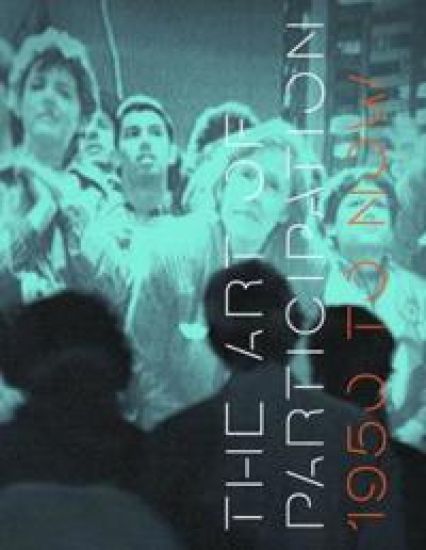
The Art of Participation
Rudolf Frieling; Boris Groys; Robert Atkins; Lev Manovich
Thames Hudson Ltd
2008
sidottu
This new survey covers the rich and varied history of participatory art, from early happenings and performances to current practices that demand audience interaction. As the internet mindset – browsing, sharing, collecting, producing – increasingly permeates every aspect of society, this timely project reveals the ways in which artists and viewers have approached the creation of open works of art. Original essays identify seminal moments in participatory practice from the 1950s to the present day, while a rich array of plates reproduces the work of the movement’s major figures in vivid detail.
Tegningens semiotik
Claus Carstensen; Boris Groys; Maurice Merleau-Ponty; Jacques Lacan; Per Aage Brandt mf.
-
2022
sidottu
Antologi

Jeff Wall
Thierry Duve; Arielle Pelenc; Boris Groys; Jean-Francois Chevrier
Phaidon Press Ltd
2009
sidottu
Jeff Wall (b.1946) adopts the nineteenth-century poet Baudelaire's famous description of one of his contemporaries as 'a painter of modern life' to describe his own very different work: huge transparencies mounted on to light boxes that diffuse a brilliant glow of white light evenly through his photographs of contemporary urban scenes and 'constructed' social situations. Wall is foremost among the pioneering artists who since the late 1960s have brought photography to the forefront of contemporary art. His constructed images employ the latest sophisticated technology in the creation of compelling tableaux, which are evocative of subjects ranging from Hollywood cinema to nineteenth-century history painting. When exhibited in their glowing light boxes they evoke both the seduction of the cinema screen and the physical presence of minimalist sculptures such as Dan Flavin's fluorescent light installations or Donald Judd's metal and Perspex wall reliefs. All of these elements - traditional figurative painting, cinema, Minimalism, Conceptual art, documentary photography - are consciously evoked and explored in Wall's work. Associated closely since the late 1960s with Conceptual artists such as Dan Graham, with whom he collaborated on The Children's Pavilion (1988-93), Wall has engaged at a sophisticated level with theories of representation and its social dimensions both as an artist and as a theoretical writer on contemporary art and culture.
Project Europa
Kerry Oliver-Smith; Marius Babias; Boris Groys
Samuel P Harn Museum of Art
2010
nidottu
Twenty years after the fall of the Berlin wall, Project Europaconsiders the relationship of art and artists to democracy. What is the role of art in the public sphere? In what ways do artists mediate the vital and critical political issues of their time? What is the emancipator potential of art? In the exhibition, nineteen artists from the British Isles to Turkey challenge the collective imagination of Europe while confronting a paradox: Europe as the site of possibility and impossibility for creating an egalitarian society.Europe is a name, a continent, and an abstract idea. Europe was the center of Judeo-Christian tradition and, later, the beacon of the Enlightenment's universal values of equity, tolerance, and reason. Nevertheless, Europe has also given rise to xenophobia and racism, religious intolerance, and the hardening of immigration policies.This thought-provoking, visually dynamic exhibition includes poetry, photography, prints, paintings, video, installations, and wall drawings, and features an international roster of artists. In the debate between the separation of art from everyday life or the immersion of art into everyday life, these artists stake a claim at the intersection of both sides.Project Europa: Imagining the (Im)Possible, appeared at the Samuel P. Harn Museum of Art February 7-May 9, 2010. A preview of the exhibition appeared in Art Forum;reviews will appear in the June issues of Art in Americaand Camera Austriamagazines.The exhibition travels to the Miriam and Ira D. Wallach Art Gallery at Columbia University January 25-March 19, 2011.
Cosmic Shift
Bart de Baere; Ilya Kabakov; Emilia Kabakov; Boris Groys; Pavel Pepperstein; Dmitri Prigov; Anton Vidokle; Andrey Monastyrsky; Arseny Zhilyaev
Zed Books Ltd
2017
nidottu
A TLS Book of the Year 2017In this, the first anthology of Russian contemporary art writing to be published outside Russia, many of the country’s most prominent contemporary artists, writers, philosophers, curators and historians come together to examine the region’s contemporary art, culture and and theory.With contributions from Ilya and Emilia Kabakov, Boris Groys, Dmitri Prigov, Anton Vidokle, Keti Chukhrov, Oxana Timofeeva, Pavel Pepperstein, Arseny Zhilyaev and Masha Sumnina amongst many others, this definitive collection reveals a compelling portrait of a vibrant and complex culture: one built on a contradicting dialectic between the material and the ideal, and battling its own histories and ideologies.