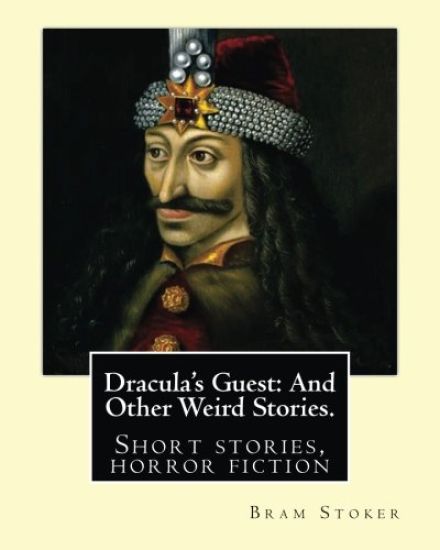
Dracula's Guest and Other Weird Stories is a collection of short stories by Bram Stoker, first published in 1914, two years after Stoker's death. The same collection has been issued under short titles including simply Dracula's Guest. Meanwhile collections published under Dracula's Guest and longer titles contain different selections of stories. Plot summary "Dracula's Guest" follows an Englishman (whose name is never mentioned but is presumed to be Jonathan Harker) on a visit to Munich before leaving for Transylvania. It is Walpurgis Night, and in spite of the hotelier's warning to not be late back, the young man later leaves his carriage and wanders toward the direction of an abandoned "unholy" village. As the carriage departs with the frightened and superstitious driver, a tall and thin stranger scares the horses at the crest of a hill. After a few hours, as he reaches a desolate valley, it begins to snow; as a dark storm gathers intensity, the Englishman takes shelter in a grove of cypress and yew trees. The Englishman's location is soon illuminated by moonlight to be a cemetery, and he finds himself before a marble tomb with a large iron stake driven through the roof, the inscription reads: Countess Dolingen of Gratz / in Styria / sought and found death / 1801. Inscribed on the back of the tomb "graven in great Russian letters" is: 'The dead travel fast.' which was an ode to the fable Lenore. The Englishman is disturbed to be in such a place on such a night and as the storm breaks anew, he is forced by pelting hail to shelter in the doorway of the tomb. As he does so, the bronze door of the tomb opens under his weight and a flash of forked lightning shows the interior - and a "beautiful woman with rounded cheeks and red lips, seemingly sleeping on a bier". The force of the following thunder peal throws the Englishman from the doorway (experienced as "being grasped as by the hand of a giant") as another lightning bolt strikes the iron spike, destroying the tomb and the now screaming woman inside. The Englishman's troubles are not quite over, as he painfully regains his senses from the ordeal, he is repulsed by a feeling of loathing which he connects to a warm feeling in his chest and a licking at this throat. The Englishman summons courage to peek through his eyelashes and discovers a gigantic wolf with flaming eyes is attending him. Military horsemen are the next to wake the semi-conscious man, chasing the wolf away with torches and guns. Some horsemen return to the main party and Harker after the chase, reporting that they had not found 'him' and that the Englishman's animal is "a wolf - and yet not a wolf". They also note that blood is on the ruined tomb, yet the Englishman's neck is unbloodied. "See comrades, the wolf has been lying on him and keeping his blood warm". Later, the Englishman finds his neck pained when a horseman comments on it. When the Englishman is taken back to his hotel by the men, he is informed that it is none other than his expectant host Dracula that has alerted his employees, the horsemen, of "dangers from snow and wolves and night" in a telegram received by the hotel during the time the Englishman was away.... Abraham "Bram" Stoker (8 November 1847 - 20 April 1912) was an Irish author, best known today for his 1897 Gothic novel Dracula. During his lifetime, he was better known as the personal assistant of actor Henry Irving and business manager of the Lyceum Theatre in London, which Irving owned.
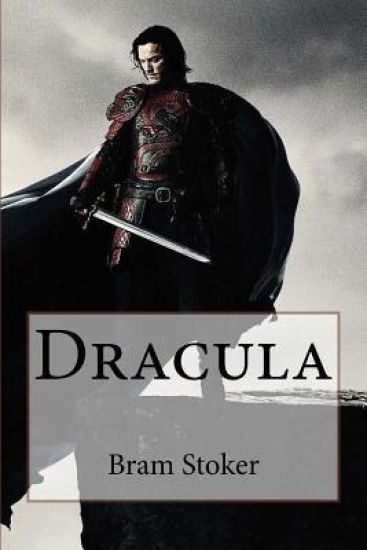
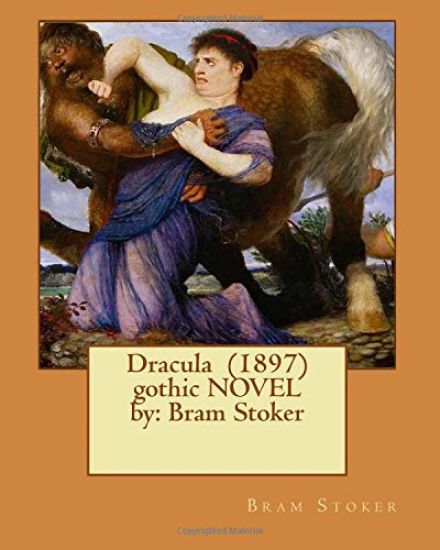
Dracula is an 1897 Gothic horror novel by Irish author Bram Stoker, famous for introducing the character of the vampire Count Dracula.The novel tells the story of Dracula's attempt to move from Transylvania to England so that he may find new blood and spread the undead curse, and of the battle between Dracula and a small group of men and women led by Professor Abraham Van Helsing. Dracula has been assigned to many literary genres including vampire literature, horror fiction, the gothic novel, and invasion literature. Stoker did not invent the vampire but he defined its modern form, and the novel has spawned numerous theatrical, film, and television interpretations.The story is told in epistolary format, as a series of letters, diary entries, newspaper articles, and ships' log entries, whose narrators are the novel's protagonists, and occasionally supplemented with newspaper clippings relating events not directly witnessed. The events portrayed in the novel take place chronologically and largely in England and Transylvania during the 1890s and all transpire within the same year between the 3rd of May and the 6th of November. A short note is located at the end of the final chapter written 7 years after the events outlined in the novel. The tale begins with Jonathan Harker, a newly qualified English solicitor, visiting Count Dracula in the Carpathian Mountains on the border of Transylvania, Bukovina, and Moldavia, to provide legal support for a real estate transaction overseen by Harker's employer. At first enticed by Dracula's gracious manners, Harker soon realizes that he is Dracula's prisoner. Wandering the Count's castle against Dracula's admonition, Harker encounters three female vampires, called "the sisters," from whom he is rescued by Dracula. After the preparations are made, Dracula leaves Transylvania and abandons Harker to the sisters. Harker barely escapes from the castle with his life. Not long afterward, a Russian ship, the Demeter, having weighed anchor at Varna, runs aground on the shores of Whitby in the east coast of England. The captain's log narrates the gradual disappearance of the entire crew, until the captain alone remained, himself bound to the helm to maintain course. An animal resembling "a large dog" is seen leaping ashore. The ship's cargo is described as silver sand and 50 boxes of "mould," or earth, from Transylvania. It is later learned that Dracula successfully purchased multiple estates under the alias 'Count De Ville' throughout London and devised to distribute the 50 boxes to each of them utilizing transportation services as well as moving them himself. He does this to secure for himself "lairs" and the 50 boxes of earth would be used as his graves which would grant safety and rest during times of feeding and replenishing his strength.Soon Dracula is indirectly shown to be stalking Lucy Westenra, who happens to live in Whitby. As time passes she begins to suffer from episodes of sleepwalking and dementia, as witnessed by her friend Mina Murray, the fiancee of Jonathan Harker. Lucy receives three marriage proposals from Dr. John Seward, Quincey Morris, and Arthur Holmwood (the son of Lord Godalming who later obtains the title himself. Lucy accepts Holmwood's proposal while turning down Seward and Morris, but all remain friends. Dracula communicates with Seward's patient Renfield, an insane man who wishes to consume insects, spiders, birds, and rats to absorb their "life force." Renfield is able to detect Dracula's presence and supplies clues accordingly... Abraham "Bram" Stoker (8 November 1847 - 20 April 1912) was an Irish author, best known today for his 1897 Gothic novel Dracula. During his lifetime, he was better known as the personal assistant of actor Henry Irving and business manager of the Lyceum Theatre in London, which Irving owned....
Dracula's Guest and Other Weird Stories is a collection of short stories by Bram Stoker, first published in 1914, two years after Stoker's death. The same collection has been issued under short titles including simply Dracula's Guest. Meanwhile collections published under Dracula's Guest and longer titles contain different selections of stories.
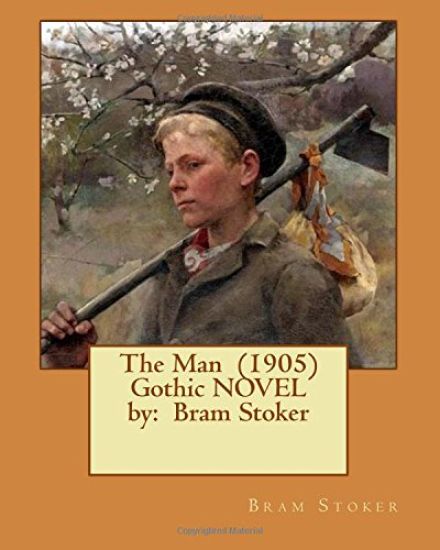
The Man is a 1905 Victorian novel by Bram Stoker, best known for Dracula. A typical Gothic novel, it features horror and romance. The Man has also been published as The Gates of Life.The Victorian Era, the reign of Queen Victoria from her coronation on 20 June 1837 to her death on 22 January 1901, is known as a long period of peace, prosperity and national pride for the British Empire. It was a bold transition from the Georgian era, largely defined by logic, rationalism and a progression towards romanticism and mysticism in religion, societal values and the arts. In international relations, the Georgian era was widely regarded as a period of peace and Britain involved themselves in little external conflict. However, within the American colonies there was much unrest. In British domestic relations, the political agenda became increasingly liberal and was marked by shifts toward political, industrial and social reform. During the Victorian era, Britain experienced an unprecedented economic and population growth. The end of the era, when The Man was written, coincided with Europe's Belle poque. Like Britain's Victorian era, the period was characterized by optimism, peace, advances in technology and scientific discoveries
Dracula is an 1897 Gothic horror novel by Irish author Bram Stoker, famous for introducing the character of the vampire Count Dracula.The novel tells the story of Dracula's attempt to move from Transylvania to England so that he may find new blood and spread the undead curse, and of the battle between Dracula and a small group of men and women led by Professor Abraham Van Helsing. Dracula has been assigned to many literary genres including vampire literature, horror fiction, the gothic novel, and invasion literature. Stoker did not invent the vampire but he defined its modern form, and the novel has spawned numerous theatrical, film, and television interpretations.The story is told in epistolary format, as a series of letters, diary entries, newspaper articles, and ships' log entries, whose narrators are the novel's protagonists, and occasionally supplemented with newspaper clippings relating events not directly witnessed. The events portrayed in the novel take place chronologically and largely in England and Transylvania during the 1890s and all transpire within the same year between the 3rd of May and the 6th of November. A short note is located at the end of the final chapter written 7 years after the events outlined in the novel. The tale begins with Jonathan Harker, a newly qualified English solicitor, visiting Count Dracula in the Carpathian Mountains on the border of Transylvania, Bukovina, and Moldavia, to provide legal support for a real estate transaction overseen by Harker's employer. At first enticed by Dracula's gracious manners, Harker soon realizes that he is Dracula's prisoner. Wandering the Count's castle against Dracula's admonition, Harker encounters three female vampires, called "the sisters", from whom he is rescued by Dracula. After the preparations are made, Dracula leaves Transylvania and abandons Harker to the sisters. Harker barely escapes from the castle with his life. Not long afterward, a Russian ship, the Demeter, having weighed anchor at Varna, runs aground on the shores of Whitby in the east coast of England. The captain's log narrates the gradual disappearance of the entire crew, until the captain alone remained, himself bound to the helm to maintain course. An animal resembling "a large dog" is seen leaping ashore. The ship's cargo is described as silver sand and 50 boxes of "mould", or earth, from Transylvania. It is later learned that Dracula successfully purchased multiple estates under the alias 'Count De Ville' throughout London and devised to distribute the 50 boxes to each of them utilizing transportation services as well as moving them himself. He does this to secure for himself "lairs" and the 50 boxes of earth would be used as his graves which would grant safety and rest during times of feeding and replenishing his strength............ Abraham "Bram" Stoker (8 November 1847 - 20 April 1912) was an Irish author, best known today for his 1897 Gothic novel Dracula. During his lifetime, he was better known as the personal assistant of actor Henry Irving and business manager of the Lyceum Theatre in London, which Irving owned.Stoker was born on 8 November 1847 at 15 Marino Crescent, Clontarf, on the northside of Dublin, Ireland His parents were Abraham Stoker (1799-1876) from Dublin and Charlotte Mathilda Blake Thornley (1818-1901), who was raised in County Sligo. Stoker was the third of seven children, the eldest of whom was Sir Thornley Stoker, 1st Bt.Abraham and Charlotte were members of the Church of Ireland Parish of Clontarf and attended the parish church with their children, who were baptised there. Stoker was bedridden with an unknown illness until he started school at the age of seven, when he made a complete recovery. Of this time, Stoker wrote, "I was naturally thoughtful, and the leisure of long illness gave opportunity for many thoughts which were fruitful according to their kind in later years." He was educated in a private school run by the Rev. William Wood
The Mystery of the Sea, a novel by Bram Stoker, was originally published in 1902. Stoker is best known for his 1897 novel Dracula, but The Mystery of the Sea contains many of the same compelling elements. It tells the story of an Englishman living in Aberdeenshire, Scotland, who meets and falls in love with an American heiress. She is involved with the intrigues of the Spanish-American War, and a complex plot involving Second Sight, kidnapping, and secret codes unfolds over the course of the novel. The Mystery of the Sea contains supernatural elements, but is in many respects a political thriller. Stoker draws from personal experience and incorporates historical strands from the Spanish-American War as well as the sixteenth-century conflict between Spain and Elizabethan England, using these events to explore important themes of his time such as national identity and changing concepts of womanhood. Although The Mystery of the Sea received many favorable reviews when it was published (and many of the criticisms it received could be equally well applied to Dracula), it has been significantly overshadowed in scholarship and criticism by Dracula. Bram Stoker was born on November 8, 1847 in Dublin, Ireland. He was brought up in a Protestant middle-class household, and was a sickly child. 1] 2] However, Stoker eventually grew out of his illnesses and attended Trinity College, where he studied science and mathematics. Stoker became a civil service clerk in Dublin for a short time, but was always interested in literature. He wrote short fiction and edited an Irish newspaper, publishing his first story, "The Crystal Cup", in 1872. He also submitted work to a magazine called the Shamrock, based in Dublin. 2] In 1876, while volunteering as a drama critic for the Dublin Evening Mail, 2] met actor Henry Irving. In 1878, Stoker moved to London to serve as manager for Irving's Lyceum Theatre. 1] 2] Stoker was an adept administrator and introduced a number of new practices into the theatre, including numbering seats and advertising a season or selling tickets for shows in advance.Stoker was quite busy while he worked for Irving, and much of his writing had to be done on holidays and in his spare time. However, Stoker's business often proved to be helpful to his writings. Stoker's position at the Lyceum had a direct influence on his novels, particularly in terms of travel and setting. Company tours between 1883 and 1904 took him to America regularly. 2] 3] Although The Mystery of the Sea takes place in Scotland, Stoker's travels to America are important considering that the main female character of The Mystery of the Sea is American. The Lyceum tours likely provided some background information (and stereotypes) for the character of Marjory, as well as for some of Stoker's other notable American characters like Quincey Morris in Dracula. Stoker also was drawing form personal experience when he wrote about Cruden Bay, being a frequent visitor there. Abraham "Bram" Stoker (8 November 1847 - 20 April 1912) was an Irish author, best known today for his 1897 Gothic novel Dracula. During his lifetime, he was better known as the personal assistant of actor Henry Irving and business manager of the Lyceum Theatre in London, which Irving owned.Stoker was born on 8 November 1847 at 15 Marino Crescent, Clontarf, on the northside of Dublin, Ireland His parents were Abraham Stoker (1799-1876) from Dublin and Charlotte Mathilda Blake Thornley (1818-1901), who was raised in County Sligo. Stoker was the third of seven children, the eldest of whom was Sir Thornley Stoker, 1st Bt.Abraham and Charlotte were members of the Church of Ireland Parish of Clontarf and attended the parish church with their children, who were baptised there....