Kirjojen hintavertailu. Mukana 11 699 587 kirjaa ja 12 kauppaa.

Kirjahaku

Etsi kirjoja tekijän nimen, kirjan nimen tai ISBN:n perusteella.

26 kirjaa tekijältä Cecil Touchon

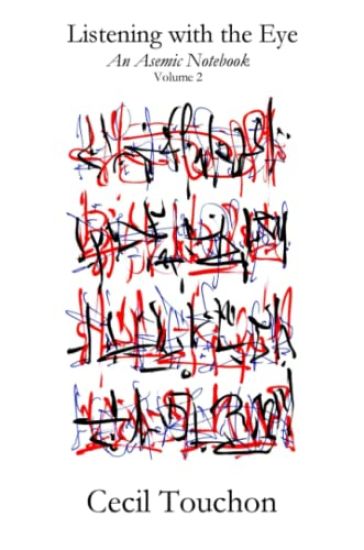
Listening with the Eye - An Asemic Notebook - Volume 2
These works might be called automatic writing or visual writing or asemic writing. There is no intention to tell a story or to use any recognizable language or symbols. Rather the works function freely with intuition rather than thought, allowing the hand to just do what the hand does; make marks. There is a kind of visual vocabulary however, such as letter-like marks, punctuation-like marks such as chevrons, commas, accents, dashes and dots, the organization for the most part is in lines of markings to suggest a reading of progression. Some are lyrical and look almost like what a visual music score might look like.I experimented with different rhythmic motions, different ways of holding the tool, sometimes in silence and at other times while listening to music. Sometimes I would watch closely as the work unfolded and at other times allowing my hand to move along the page unobserved in order to see what would happen.
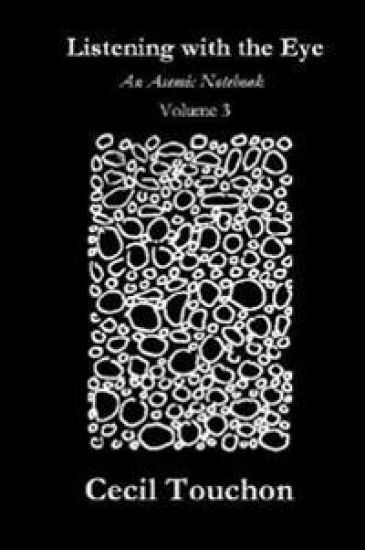
Listening with the Eye - An Asemic Notebook - Volume 3
This is volume three in a set of asemic notebooks. Like volume one, these poems or texts or drawings depending on how you think about them were all made with an ink marker on 6x4 inch smooth, glossy photographic paper. My idea was to have the works function as if they were plates of texts in a book so that the image would appear without a visible background. In this way the writing or text uses the page itself as background in the typical way that print functions in a book.These works might be called automatic writing or visual writing or asemic writing. There is no intention to tell a story or to use any recognizable language or symbols. Rather the works function in free flow with intuition rather than thought, allowing the hand to just do what the hand does; make marks. I prefer a more improvisational approach as if I am playing an instrument that records in marks what might otherwise be heard as notes of music.This is the natural realm of the arts; to work in a state of mindfulness or meditation.
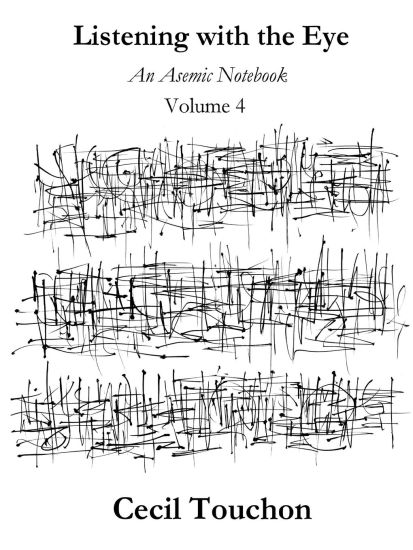
Listening with the Eye - An Asemic Notebook - Volume 4
This work is intended to be purely visual with no reference to literary content or convey any sort of symbols. There is an interest however in musicality, of moving the focal point of the eye along during the reading through repetition, cadence, movement, etc. It is a form of listening with the eye as the title of the book suggests. The idea behind asemic writing is to create artworks that are based on the act of mark making similar to handwriting but without reference to semantic content or literary meaning. Hence each 'writer' has a unique way of writing or making marks. When we look at handwriting, even if we are unable to decipher it, we are getting some sort of visual content out of it from looking at the marks and rhythms or distributions of the markings on the page. You might say this is the body language of the writing beyond the message conveyed. This body language is the part that is of interest in this work.
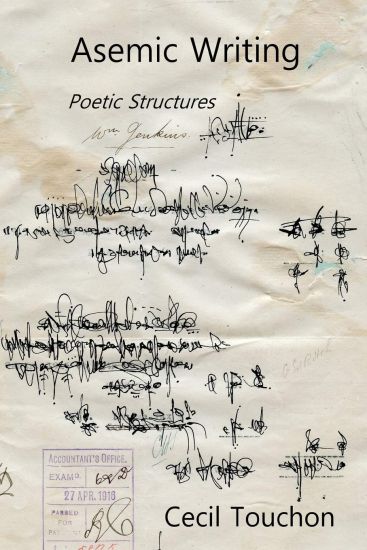
Asemic Writing - Poetic Structures
These poems are created using vernacular sources for materials such as restaurant receipts, poetic structures Touchon made with spam email, pages of lists from magazines as palimpsests to then overwrite the texts on the pages using the existing texts as prompts for his asemic writing. Touchon also used various authors' poems whose structures he liked in the same way by printing out the poems on white sheets and then overwriting the texts. Some of the poets included e. e. commings, David Drew, Vito Acconti, documents from Sigmund Freud, some pages from Mathematical Manuscripts of Karl Marx, etc. In short, any sort of page composition that Touchon could exploit with the use of asemic writing.
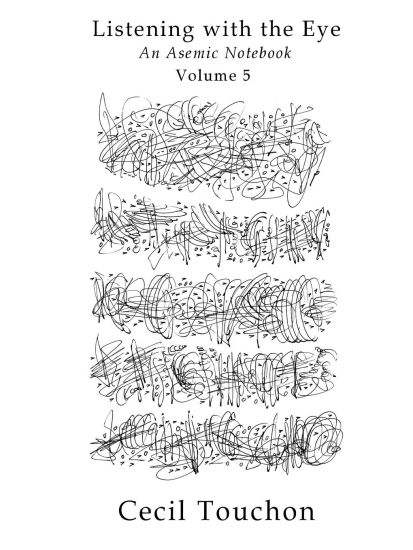
Listening with the Eye - An Asemic Notebook - Volume 5
The idea behind asemic writing is to create artworks that are based on the act of mark making similar to handwriting but without reference to semantic content or literary meaning. I suppose you could call it a form of literary abstraction or perhaps non-objective literature. Hence each 'asemic writer' has a unique way of writing or making marks. When we look at handwriting, even if we are unable to decipher it, we are getting some sort of visual content out of it from looking at the marks and rhythms or distributions of the markings on the page. We can get a feeling of order or discipline or perhaps a frenetic energy, or playful or sloppy or it might seem confused or muddled. You might say this is the body language of the handwriting beyond the message conveyed. This body language is the part that is of interest in this work and to asemic writers in general.