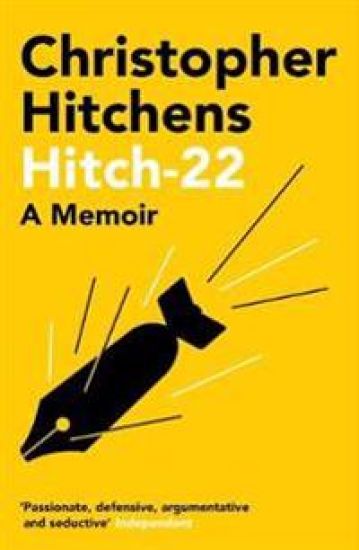
Nominated for the National Book Critics Circle AwardIn this long-awaited and candid memoir, Hitchens re-traces the footsteps of his life to date, from his childhood in Portsmouth, with his adoring, tragic mother and reserved Naval officer father; to his life in Washington DC, the base from which from he would launch fierce attacks on tyranny of all kinds. Along the way, he recalls the girls, boys and booze; the friendships and the feuds; the grand struggles and lost causes; and the mistakes and misgivings that have characterised his life.Hitch-22 is, by turns, moving and funny, charming and infuriating, enraging and inspiring. It is an indispensable companion to the life and thought of our pre-eminent political writer.
Love, Poverty and War: Journeys and Essays showcases the Hitchens' rejection of consensus and cliché, whether he's reporting from abroad in Indonesia, Kurdistan, Iraq, North Korea, or Cuba, or when his pen is targeted mercilessly at the likes of William Clinton, Mother Theresa ("a fanatic, a fundamentalist and a fraud"), the Dalai Lama, Noam Chomsky, Mel Gibson and Michael Bloomberg. Hitchens began the nineties as a "darling of the left" but has become more of an "unaffiliated radical" whose targets include those on the "left," who he accuses of "fudging" the issue of military intervention in the Balkans, Afghanistan and Iraq. Yet, as Hitchens shows in his reportage, cultural and literary criticism, and opinion essays from the last decade, he has not jumped ship and joined the right but is faithful to the internationalist, contrarian and democratic ideals that have always informed his work.
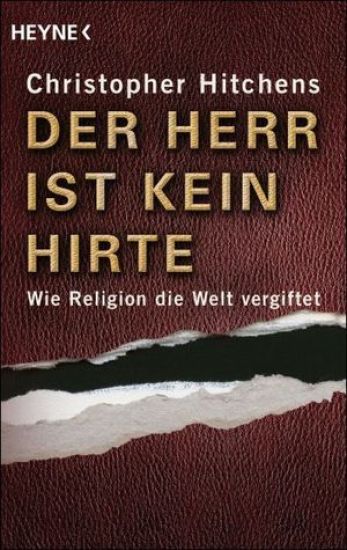
Das Kultbuch für Ungläubige und alle, die es werden wollen Religion und der Glaube an Gott sind von Menschen gemachte Dinge, die "alles vergiften". Christopher Hitchens, erfolgreicher Journalist und bekennender Atheist, beschreibt prägnant und schonungslos, wie Religion zur Gewalttätigkeit gegen Andersgläubige und Ungläubige führt. In seinem fulminanten Rundumschlag beleuchtet er Entstehung, Verbreitung und Wirkung von Glaubensgemeinschaften und macht deutlich, wie verheerend ihr Einfluss auf Politik und Gesellschaft gerade heute (wieder) ist. DIE Antwort auf das Thema Glauben: informativ, unterhaltsam, provokant. "Operation gelungen. Gott ist tot." WELT online
Är Henry Kissinger vinnare av Nobels fredspris, USA:s utrikesminister under Nixon och Ford och den mest ryktbare diplomaten i sin generation också krigsförbrytare? Den frågan ställer författaren Christopher Hitchens i den här uppmärksammade boken. Med hjälp av ögonvittnesskildringar och tidigare opublicerat material porträtterar Christopher Hitchens en man vars hänsynslösa ambitioner resulterat i både lönnmord och folkmord. Hitchens spårar Kissingers framfart från Sydostasien till Cypern, från Östtimor till Chile. Tvärs genom ett tjockt nät av lögner och mörkläggning frilägger han den fasansfulla verklighet som är en del av usa:s utrikespolitik under 1970-talet. Arresteringen av Pinochet och Milosevic ökar möjligheten för en global lagstiftning att komma åt internationella brottslingar. Henry Kissinger har anledning att vara nervös. Rättvisan står för dörren. Cristopher Hitchens, född 1949 i engelska Portsmouth, är bland annat verksam som kolumnist på Vanity Fair och The Nation. Han har skrivit en lång rad böcker, bl a om Bill Clinton, moder Teresa, Cypern och Irakkriget. Henry Kissinger inför rätta (2001) är den första av Cristopher Hitchens böcker som ges ut på svenska. Översättning: C-M Edenborg
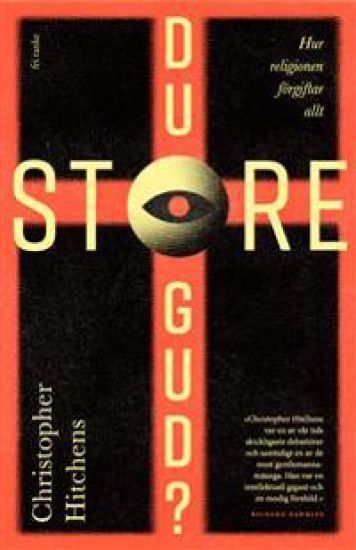
Du store Gud? är en svidande uppgörelse med religionens inflytande över människors livsvillkor hela världen. Christopher Hitchens budskap är tydligt och enkelt: Religionen förgiftar allt.I Du store Gud? kombinerar Hitchens personliga historier, historiska anekdoter och kritiskanalys för att belysa hur religiösa yttringar skadar såväl den enskilda människan som samhället i stort.Boken är ett skarpt argument mot organiserad religion. Utifrån religiösa texter visar Hitchens hur religionen uppmanar oss att förhålla oss till världen på ett fullständigt felaktigt sätt. Hans analys är ett försvarstal för det sekulära samhället som står på vetenskaplig grund.Med förord av Dilsa Demirbag-Sten.
The Parthenon Marbles (formerly known as the Elgin Marbles), designed and executed by Pheidias to adorn the Parthenon, are perhaps the greatest of all classical sculptures. In 1801, Lord Elgin, then ambassador to the Turkish government, had chunks of the frieze sawn off and shipped to England, where they were subsequently seized by Parliament and sold to the British Museum to help pay off his debts. This scandal, exacerbated by the inept handling of the sculptures by their self-appointed guardians, remains unresolved to this day. In his fierce, eloquent account of a shameful piece of British imperial history, Christopher Hitchens makes the moral, artistic, legal and political case for re-unifying the Parthenon frieze in Athens. The opening of the New Acropolis Museum emphatically trumps the British Museum's long-standing (if always questionable) objection that there is nowhere in Athens to house the Parthenon Marbles. With contributions by Nadine Gordimer and Professor Charalambos Bouras, The Parthenon Marbles will surely end all arguments about where these great treasures belong, and help bring a two-centuries-old disgrace to a just conclusion.
In 2007, Christopher Hitchens, Richard Dawkins, Sam Harris, and Daniel Dennett filmed a landmark discussion about modern atheism. The video went viral. Now in print for the first time, the transcript of their conversation is illuminated by new essays from three of the original participants and an introduction by Stephen Fry.At the dawn of the new atheist movement, the thinkers who became known as the four horsemen, the heralds of religions unravelingChristopher Hitchens, Richard Dawkins, Sam Harris, and Daniel Dennettsat down together over cocktails. What followed was a rigorous, pathbreaking, and enthralling exchange, which has been viewed millions of times since it aired. This is intellectual inquiry at its best: exhilarating, funny, and unpredictable, sincere and probing, reminding us just how varied and colorful the threads of modern atheism are.Here is the transcript of that conversation, in print for the first time, augmented by material from the living participants: Dawkins, Harris, and Dennett. These new essays, introduced by a sparkling foreword from Stephen Fry, mark the evolution of their thinking and highlight particularly resonant aspects of this epic exchange. Each of these men contends with the most fundamental questions of human existence as they challenge one another to articulate their own stance on god and religion, cultural criticism, spirituality, debate with people of faith, and work to articulate the path to a truly ethical life.
Bristling with inspired observations and wild anecdotes, this first collection offers a unique insight into the voice and mind of the inimitable Hunter S. Thompson, as recorded in the pages of Playboy , The Paris Review , Esquire , and elsewhere. Fearless and unsparing, the interviews detail some of the most storied episodes of Thompson's life: a savage beating at the hands of the Hells Angels, talking football with Nixon on the 1972 Campaign Trail ( the only time in 20 years of listening to the treacherous bastard that I knew he wasn't lying"), and his unlikely run for sheriff of Aspen. Elsewhere, passionate tirades about journalism, culture, guns, drugs, and the law showcase Thompson's voice at its fiercest. Arranged chronologically, and prefaced with Anita Thompson's moving account of her husband's last years, the interviews present Hunter in all his fractured brilliance and provide an exceptional portrait of his times.
For half a century, the United Nations building in New York has been the focus of international inspiration. Its podium has seen petitioners for peace, for independence, for justice. Its murals and statuary express the loftiest ideals. Born of World War II and the struggle against fascism, the UN has been the parent body of many small states, and an arena for the peaceful composition of disputes between the powers. Yet, under its flag, wars have been fought and imperfect compromises brokered. The high language of its universal declarations on human rights and dignities has become cheapened by cynicism. Its servants and institutions have been exposed to decay and corruption. Meanwhile, the filiations of power and alignment which created the world body have been radically altered, while the hierarchy of the UN itself has not.These and other ironies and contradictions are visible in the Headquarters Building on the East River of Manhattan-a building that enshrined the most optimistic elements of modernism in design and symbolized them in function but which was also, from the first, an occasion of dispute between the Rockefellers and Le Corbusier and thus, indirectly, between two conceptions of world order. In a series of photographs, Adam Bartos affirms the beauty of the UN's modern architecture, while capturing the wear and tear of an idealism thwarted by decades of diplomatic compromise. The text, by Christopher Hitchens, explores the themes of utopia and the limits of governmental good intentions.In a striking series of colour photographs, Adam Bartos affirms the beauty of the UN's modern architecture while capturing the wear and tear of an idealism thwarted by decades of diplomatic compromise. The accompanying text, written with characteristic wit and acuity by Christopher Hitchens, explores the themes of Utopia and the limits of governmental good intentions.
Throughout history, arguments for and against the existence of God have been largely confined to philosophy and theology, while science has sat on the sidelines. Despite the fact that science has revolutionized every aspect of human life and greatly clarified our understanding of the world, somehow the notion has arisen that it has nothing to say about the possibility of a supreme being, which much of humanity worships as the source of all reality. This book contends that, if God exists, some evidence for this existence should be detectable by scientific means, especially considering the central role that God is alleged to play in the operation of the universe and the lives of humans. Treating the traditional God concept, as conventionally presented in the Judeo-Christian and Islamic traditions, like any other scientific hypothesis, physicist Stenger examines all of the claims made for God's existence. He considers the latest Intelligent Design arguments as evidence of God's influence in biology. He looks at human behavior for evidence of immaterial souls and the possible effects of prayer. He discusses the findings of physics and astronomy in weighing the suggestions that the universe is the work of a creator and that humans are God's special creation. After evaluating all the scientific evidence, Stenger concludes that beyond a reasonable doubt the universe and life appear exactly as we might expect if there were no God. This paperback edition of the New York Times bestselling hardcover edition contains a new foreword by Christopher Hitchens and a postscript by the author in which he responds to reviewers' criticisms of the original edition.