There is no proof of a God. Read with an open mind, and you will be transformed forever. Christianity and other religions have many edits over time for their group purpose to control mankind. Religious studies have traditionally been unscientific, using methods corrupted by faith and make believe.
Christianity and other religions have many edits over time for their group purpose to control mankind. In the times of Gods they believed that the sun died each day, and was reborn the next morning. Religious studies have traditionally been unscientific, using methods corrupted by faith. The educated do not believe in Adam, Eve, Noah, the Flood, or traditional concepts of God and Heaven. This book will state there is no historical proof other than several archaic books written of mythical stories of many unknown authors.
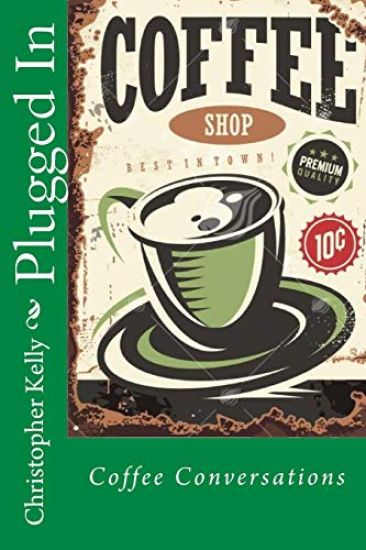
Coffee Conversations and the social issues that come with technology. What other people are saying at the coffee shops. Heads down, no one communicating, wired into virtual reality, and pretentious claims of success.
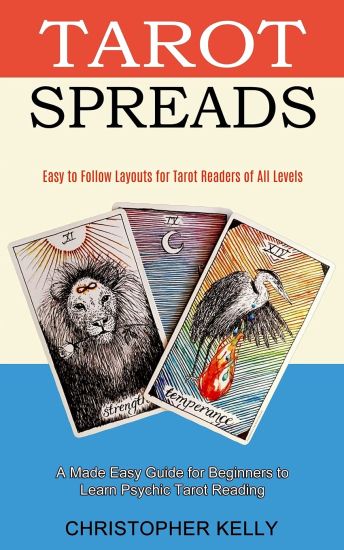
Tarot for beginners introduces a new perspective to tarot and explains each card of tarot cards deck as it relates to your life today. From fortune-telling device to spiritual tool, this up-to-date beginner's guide provides you with exercises and a clear method for connecting the themes of or your life with your day-to-day experience. Key concepts discussed in this book: - Introduction and history of tarot - Tarot symbols decoded: discover what each tarot card means - Master your psychic ability and give accurate professional level readings- Apply tarot to receive guidance in many areas of your life - love, career, finance, work & more- Tarot deck structure and its relation to astrology, kabbala, & numerology- Connect with your intuition - no hocus pocus involved- ...and much, much more Tarot cards have been used for over five hundred years, for gameplay, divination, creative inspiration and spiritual practice. The practice of reading tarot comes with a rich, complex history, full of mystical, philosophical, and religious mystery. As old as the art form may be, its popularity in modern culture is growing rapidly- tarot decks and cartomancy play a significant role in many present-day metaphysical healing practices, spiritual training, as well as artistic and creative circles.
Featured on CBS This Morning, Men’s Health, The Washington Post, Buzzfeed, and The Dr. Oz ShowTwo top doctors present a comprehensive, light-hearted guide for the hypochondriac in all of us.Christopher Kelly, MD, and Marc Eisenberg, MD, FACC, are both highly accomplished physicians and health experts from UNC Health and Columbia University Medical Center. In Am I Dying?!, Dr. Kelly and Dr. Eisenberg walk you through common symptoms and medical myths to provide a helpful, conversational guide on what to do when you experience symptoms – offering advice on whether to chill out, make a doctor’s appointment, or go to the hospital.Most new symptoms turn out to be minor. Most likely, a stuffy nose isn’t a sign of cancer. But sometimes a headache isn’t just a temporary nuisance and could be a sign of a serious condition. The internet can offer a wealth of data, but it can also be a source of harmful misinformation. So if you have a new symptom, how worried should you be?This down-to-earth, humorous symptom guide covers over forty different symptoms, organized into eight body areas – including head/neck, chest/back, belly, skin, and more. Some examples include:Belly: When is bloating a sign of a serious problem? Why do some people feel nauseated all the time?Lady Parts: How often do you really need a mammogram? When is a lump likely to be serious?Bathroom Trouble: Why do some people pee so often (and can a bladder explode from holding it)? Packed with practical information and organized in a fun, easy-to-access format, Am I Dying?! is a perfect gift, medical resource, and must-have addition to your home library.
In this pioneering book, four senior managers of the global consultancy Booz Allen Hamilton show how leaders in business, government, and civil society can reach across national and sector divisions, forming collaborative 'megacommunities' that are directed toward a common goal. The authors share the success stories of megacommunities already at work today, looking at examples that range from tackling monopolies to urban revitalization to conservation efforts. They also explain to leaders how to achieve balance between organizational differences and be able to operate optimally. What Megacommunities around the globe can achieve: IMPROVING ENERGY AVAILABILITY AROUND THE WORLD In order to tackle one of today's major problems, local companies need to be working with national energy providers, residents, government bodies, NGOS, and universities HELPING COMMUNITIES GROW In changing neighborhoods like Harlem, the megacommunity includes local small businesses, community groups, global companies, and foundations like Bill Clinton's CONSERVING THE ENVIRONMENT In saving the world's rainforests, providers, distributors, sellers, and consumers of lumber team up with local communities, the World Wildlife Fund, and Goldman Sachs PREVENTING THE SPREAD OF HIV/AIDS In India, a megacommunity brings together both public, private, and civil-sector organizations, including PepsiCo, the Gates Foundation, U.S. healthcare experts, UN development programs, and local NGOs
The new urbanisation necessitates the upgrading of urban governance and spatial planning and design. Landscape Architecture Frontiers accentuates the intelligence on urban growth and physical construction for years. In this issue, LA Frontiers focuses on the topics about urban governance and spatial quality improvement under the promotion of inventory planning and governance refinement, including: 1) Urban village (micro-) renewals, waterfront revitalisation, and industrial, cultural, and historical heritage regeneration; 2) Public participation, community engagement, and other polycentric urban governance modes and inclusive design approaches; 3) The resilience of urban planning and design against sudden disasters and public health emergencies and crises; 4) Diagnoses on the working systems/mechanisms that support the upgrades of urban governance and public space construction, through lenses of Economic Sociology. By gathering cutting edge research with international outlooks and presenting latest practice examples among China and abroad, LA Frontiers might offer a new prospective that helps professionals interpret associated governance and planning policies, inform practitioners the goals and roadmaps of public empowerment, navigate planners and designers with flexible implementation and management guidelines, to eventually improve the spatial quality of public places, as well as the overall benefits in society, ecology, and economy.