In December 2012 Magnus Carlsen won the prestigious London Chess Classic and in doing so he became the highest-rated chess player in the history of the game, beating Garry Kasparov's 13-year-old record. Carlsen followed up this performance with another phenomenal tournament win at Wijk aan Zee, pushing his peak rating to an astronomical 2872. He didn't lose a single game in either tournament. What is Carlsen's secret? How did an already world-class player succeed in reaching this unprecedented level where he was regularly beating the world's strongest grandmasters? In this book, International Master Colin Crouch provides answers to these questions. Crouch studies Carlsen's progress in recent years and demonstrates how he learned lessons from previous setbacks, turned weaknesses into strengths, losses into draws, and draws into wins. By doing so Carlsen was able to elevate his play to a stratospheric level, but any aspiring chess player can use similar methods to improve their game. *The story of Carlsen's record-breaking performances *In-depth analysis of Carlsen's games *Learn from the World's number one player
In this precisely argued book, Colin Crouch questions the current meaning of political parties for citizens in Western Europe given that the identities on which they are based were the product of past conflicts over industrialization and religion. Crouch asks whether the issues confronting post and ex-industrial societies can develop their own political identities among citizens? And, if so, how far do these identities relate to the inheritance of the past?Applying a theory of political identity, Crouch analyses voting behaviour across Europe and presents an in-depth historical analysis of the key political parties. He traces the content of party manifestos and the geographical and industrial status of parties’ support. He argues that, far from following a model provided by the West, the faltering party systems in Central and Eastern Europe offer insights as to how western systems may develop in the future. Looking ahead, Crouch considers the viability of democratic politics, assessing the roles of gender, environmentalism and xenophobia in generating effective modern political identities.Rethinking Political Identity is an invaluable resource for academics and researchers specialising in comparative European politics, political science, sociology and social policy, human geography and social history. It will also be of value to public policymakers and think tank professionals across Europe.
In this precisely argued book, Colin Crouch questions the current meaning of political parties for citizens in Western Europe given that the identities on which they are based were the product of past conflicts over industrialization and religion. Crouch asks whether the issues confronting post and ex-industrial societies can develop their own political identities among citizens? And, if so, how far do these identities relate to the inheritance of the past?Applying a theory of political identity, Crouch analyses voting behaviour across Europe and presents an in-depth historical analysis of the key political parties. He traces the content of party manifestos and the geographical and industrial status of parties’ support. He argues that, far from following a model provided by the West, the faltering party systems in Central and Eastern Europe offer insights as to how western systems may develop in the future. Looking ahead, Crouch considers the viability of democratic politics, assessing the roles of gender, environmentalism and xenophobia in generating effective modern political identities.Rethinking Political Identity is an invaluable resource for academics and researchers specialising in comparative European politics, political science, sociology and social policy, human geography and social history. It will also be of value to public policymakers and think tank professionals across Europe.
Leading chess author Colin Crouch selects and explains over 30 sensational games, all from the new millennium. By studying battles between the world's best players, Crouch examines in detail all the key areas of modern chess. Powerful attacking and resourceful defending, bloodthirsty tactical battles, profound positional mastery, deep opening preparation and superb endgame play are all in evidence here, while Crouch also explores the ever-increasing role of computers and the way human imagination can work in harness with them. There is something for everyone in this book: aspiring players will benefit greatly from the clear explanations of the fundamentals, while stronger players will gain considerably from Crouch's deep insight and analysis in more complex positions. This book reflects the continuing changes in modern chess, and how you can use the lessons learned to great effect in your own games.
The main reason why we lose at chess is no big secret: we all make unnecessary mistakes! But simply acknowledging this fact isn't enough to help us improve. The big question is, how can we eliminate these mistakes from our game, or at least keep them to an absolute minimum? Colin Crouch tackles this vital subject face-to-face. Drawing upon his considerable experience, he looks back at critical moments within games where mistakes are made, and examines how we can recognise the danger signs and avoid making impulsive decisions. The reader is constantly challenged by exercises, which provide perfect training for real over-the-board battles.
Leading chess author Colin Crouch believes that the key to sustained chess improvement lies in the critical analysis and assessment of your own games. Each and every game you play provides a significant learning opportunity, and this opportunity should never be squandered. In this sequel to his acclaimed Why We Lose at Chess, Crouch examines what we should do to maximize our chess results and ratings, how to turn losses into draws, and draws into wins. Here he focuses on key issues such as improving decision making, how to plan after the opening, how to maintain objectivity, improving endgame skills, the psychological aspects of the game, and much more. Read this book, analyse your chess, and get ready to improve your results! *An indispensible guide to chess improvement *Key advice on planning, strategy and tactics *Covers opening, middlegame and endgame play
What separates the best chess players from the rest? What gives them the edge over their rivals? Chess legend Vladimir Kramnik believes it's their fighting skills and the ability to continuously find ways to keep a game alive. Colin Crouch agrees, and is fascinated that the world's strongest players seem almost unbeatable, even when games appear sharp and double-edged. In this book Crouch examines the tremendous fighting qualities of today's top grandmasters. Analysing key games from 2012, Crouch demonstrates how they give nothing away to opponents but are always alert to punish any slight errors, and crucially, how we can apply these lessons to help us in our own games. Move by Move provides an ideal platform to study chess. By continually challenging the reader to answer probing questions throughout the book, the Move by Move format greatly encourages the learning and practising of vital skills just as much as the traditional assimilation of knowledge. Carefully selected questions and answers are designed to keep you actively involved and allow you to monitor your progress as you learn. This is an excellent way to improve your chess skills and knowledge.
There is increasing evidence of widespread disillusion with the major shift to neoliberal economic policies that has taken place across much of the world. In this account of neoliberalism's failings, Colin Crouch recognises some of its positive contributions but also notes conflicts within the neoliberal camp - particularly those between 'market' and 'corporate' forms of the strategy. Finally, he considers to what extent those behind the great experiment are now capable of accepting its reform.
"Postdemokratie": Dieser Begriff des Politikwissenschaftlers Colin Crouch wurde nach dem Erscheinen der Originalausgabe seines Buches zum Kristallisationspunkt der Debatte um Politikverdrossenheit, Sozialabbau und Privatisierung. Crouch hat dabei ein politisches System im Auge, dessen demokratische Institutionen zwar weiterhin formal existieren, das von Bürgern und Politikern aber nicht länger mit Leben gefüllt wird. Der polemische Essay, der in Italien und Großbritannien bereits als Klassiker der Gegenwartsdiagnose gilt, liegt nun endlich auch in deutscher Übersetzung vor.
The European Union is excellently equipped to pursue the most urgent issues facing the advanced world: combating environmental damage and climate change, coping with the massive aftermath of the coronavirus crisis, reforming globalisation, regulating financialised capitalism, reducing material inequalities and reconciling the future of work in a rapidly changing economy with workers' needs for secure lives. The EU's leading role as global standard-setter, and the potential of the social-investment welfare state, are among the instruments at its disposal.But, argues Colin Crouch in this manifesto for a return to the 'social Europe' agenda, to achieve these goals the EU needs to face the two menaces stalking today's politics: neoliberalism and xenophobic nationalism. To do so it must confront the weakness of social democracy, historically the main political protagonist of the causes of co-operation and inclusion on which the strategy depends.
Boken Postdemokrati utkom på engelska och italienska 2004. Därefter har den översatts till spanska, kroatiska, grekiska, tyska, japanska, koreanska, ryska och nu till svenska. Med postdemokrati förstår Crouch ett politiskt system där politikerna blir alltmer inneslutna i sin egen värld och knyter an till allmänheten framför allt genom manipulationsmetoder som baserar sig på reklam och marknadsundersökningar, alltmedan demokratins yttre former tycks oförändrade. En sådan utveckling orsakas av två slags krafter: Dels förändringar i det postindustriella samhällets klasstruktur, som har skapat många nya yrkesgrupper som till skillnad från äldre grupper inte har utvecklat egna organisationer som kan företräda deras politiska intressen. Dels en enorm koncentration av makt och rikedom till de multinationella företagen, som kan utöva politiskt inflytande utan att egentligen delta i den demokratiska processen i något land men med mycket goda förutsättningar att styra den allmänna opinionen om så krävs. Crouch påstår inte att de etablerade demokratierna i Västeuropa och Nordamerika redan har gått in i en postdemokratisk period. De politiska systemen kan fortfarande alstra folkrörelser som agerar blåslampa på den politiska klassen och tvingar den att uppmärksamma deras frågor, oavsett partistrategernas och medierådgivarnas beräknande planer. Crouch menar heller inte att det postdemokratiska samhället inte längre skulle vara demokratiskt; då hade det inte varit postdemokratiskt utan odemokratiskt. Post används på samma sätt som i sammansättningen postindustriell. Det postindustriella samhället gör alltjämt bruk av alla de varor som började produceras i industrisamhället; det är bara det att innovationerna och den ekonomiska energin inte längre är inriktade på industriproduktion, utan på andra typer av verksamhet. Likadant förhåller det sig med det postdemokratiska samhället, där alla de demokratiska institutionerna består: fria val, konkurrerande partier, fri offentlig debatt, mänskliga rättigheter, en viss grad av transparens i den offentliga förvaltningen. Men politikens energi och drivkraft går tillbaka till de krafter som härskade i fördemokratisk tid, nämligen små förmögna eliter som samlar sig kring maktcentra, där de söker skaffa sig egna privilegier. Colin Crouch är professor vid universitetet i Warwick och har tidigare varit professor vid Europauniversitetet i Florens och i Oxford. »Håkan Juholt borde ha den under huvudkudden, om den inte redan ligger där.» /Lars Linder i DN »Det är en intressant skrift, dessutom väl översatt och smakfullt förpackad.» / John Lapidus i Btj
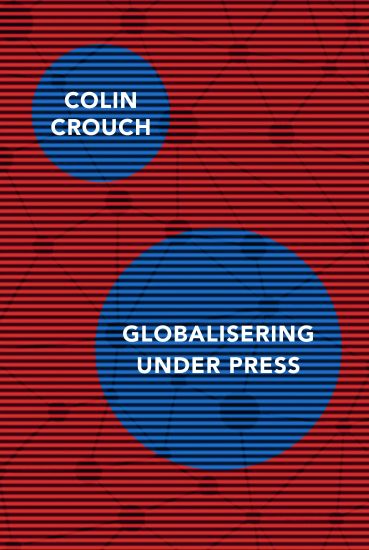
Knappast något begrepp i den nyare politiska historien är så omstritt som globalisering. Dagens reaktioner mot globaliseringen kommer från både höger och vänster, och det är inte alltid så lätt att urskilja vad som är vad i detta motstånd. I denna bok försöker Colin Crouch bringa reda i striden om globaliseringen. Han beskriver hur nyliberalismen utmanas på högersidan av konservativa krafter som värnar om nation och tradition, och kosmopolitismen på vänstersidan utmanas av ett värnande av nationalstaten som en förutsättning för välfärdsstaten. Crouch argumenterar för att det varken är möjligt eller önskvärt att reversera globaliseringen. Utan globaliseringen hade världen varit fattigare och de internationella relationerna mindre fredliga. Men en oreglerad globalisering är ohållbar. Globaliseringen måste räddas från sig själv genom övernationella institutioner som kan bringa marknaderna under politisk kontroll, när nationalstaterna inte kan göra det. Det krävs också nationella reformer som motverkar social ojämlikhet, främjar solidaritet och gör att städer och regioner som varit globaliseringens förlorare inte lämnas i sticket och kan återvinna sin stolthet. Ekonomisk nationalism resulterar i ett nollsummespel, den enda farbara vägen är att nationerna samfällt reglerar flödena av varor, kapital och människor. Colin Crouch är författare till den uppmärksammade boken "Postdemokrati" (2011). Han är professor emeritus i statsvetenskap vid universitetet i Warwick.
Colin Crouch argues that at the base of all political conflicts are struggles over which types of people should be included in and which excluded from various rights, including the right to exist at all within a particular society. This is more fundamental than any conflict between left and right or between classes, and it gives rise to tropes of inclusionary and exclusionary rhetoric that can be transferred across issues – from ethnicity to gender and sexual orientation, and including demands for nations to isolate themselves as much as possible from contacts with others. Today the forces seeking exclusions of many kinds are gaining ground in the strategies of many governments, parties and movements. Drives to exclude lead rapidly to the incitement of hatred, which leads in turn to acts of performative cruelty and physical violence. Deeply opposed as he is to the politics of exclusion, Crouch seeks to understand and explain its rationality. He passionately advocates a politics of inclusion but, at the same time, he recognises the real obstacles that a commitment to inclusion must confront. While not optimistic about how these struggles will play out in the coming years, he seeks a path through which campaigns for openness and welcome could still triumph in dark times.
This study of the problems confronting institutions for the creation of occupational skills in seven advanced industrialized countries contributes to two different areas of debate. The first is the study of the diversity of institutional forms taken by modern capitalism, and the difficulties currently surrounding the survival of that diversity. Most discussions of this theme analyse economic institutions and governance in general. The authors of this book are more specific, focusing on the key area of skill creation. The second theme is that of vocational education and training in its own right. While sharing the consensus that the advanced countries must secure competitive advantage in a global economy by developing highly skilled work-forces, the authors draw attention to certain awkward aspects of this approach that are often glossed over in general debate: The employment-generating power of improvements in skill levels is limited: employment policy cannot depend fully on education policies While the acquisition of skills has become a major public need, there is increasing dependence for their provision on individual firms, which can have no responsibility for general needs, with government action being restricted to residual care for the unemployed rather than contributing at the leading edge of advanced skills policy. The authors argue that public agencies must find new ways of working with the business sector, acquiring expertise and authority through such means as supporting skills standards and taking the lead in the certification of employers as trainers. There must also be reconsideration of the former role of public-service employment as a provider of secure if poorly paid employment for low-productivity workers. The countries covered are France, Germany, Italy, Japan, Sweden, the UK and the USA.
An analysis of the policies and provision of vocational education in advanced industrial countries against a backdrop of changing labour markets. The text challenges assumptions about skills and employment growth, and explores the roles that government and the private sector could play in developing advanced skills policies and initiatives.
A systematic analysis of specialized clusters of small manufacturing enterprises in the main European economies. Combining case-study literature with analyses of statistical data enables the authors to show the role of these "clusters" and the considerable diversity of forms they take.
This book examines patterns of economic governance in three specific, contrasting, contexts: machinery-producing districts; declining steel cities; and clusters of high-technology activities. Building on the work of their previous book (Local Production Systems in Europe: Rise or Demise? OUP 2001), which charted the recent development of local clusters of specialized manufacturing among small and medium-sized enterprises (SMEs) in France, Germany, Italy, and the United Kingdom, the authors find patterns of economic governance far more complex and dynamic than usually described in a literature which insists on identifying simple national approaches. The machinery industries were often identified in the literature of the 1980s as prominent cases of industrial district formation, which were then considerably weakened by the crises of the mid-1990s. Did clustering help these industries and their associated districts to respond to challenge, or only weaken them further? The case studies focus on the Bologna and Modena area of Emilia-Romagna, Stuttgart in Baden-Württemberg, Birmingham and Coventry in the English west midlands, but generally in France where there are very few local concentrations. Even while some thought local production systems were in crisis, national governments and the European Commission continued to recommend their approach to areas experiencing economic decline. This was particularly the case for cities that had been dependent on a small number of large corporations in industries that would no longer be major employers. Political and business leaders in these areas were encouraged to diversify, in particular through SMEs. Could this be done in response to external pressure, given that successful local production systems depend on endogenous vitality? The authors ask these questions of former steel-producing cities St. Etienne, Duisburg, Piombino, and Sheffield. The idea that local production systems had had their day was challenged by clear evidence of clustering among SMEs in a number of flourishing high-tech industries in parts of the USA and western Europe. Why do scientists, other specialists and firms actively embedded in global networks, bother with geographical proximity? This question is addressed by examining the software firms at Grenoble, the mass media cluster in Cologne, the information technology sector around Pisa, and the Oxfordshire biotechnology region.