Kirjojen hintavertailu. Mukana 11 627 624 kirjaa ja 12 kauppaa.

Kirjahaku

Etsi kirjoja tekijän nimen, kirjan nimen tai ISBN:n perusteella.

30 kirjaa tekijältä Colin McGinn

Mental Content

Mental Content

Colin McGinn

Blackwell Publishers
1989
sidottu
Aimed at philsophy graduates this book investigates mental content in a systematic way and advances a number of claims about how mental content states are related to the body and the world. Internalism is the thesis that they are; externalism is the theory that they are not.
The Problem of Consciousness

The Problem of Consciousness

Colin McGinn

Blackwell Publishers
1992
nidottu
Can consciousness be fitted into a naturalistic worldview or is it inherently mysterious? In virtue of what does a physical organism come to have an inner conscious life? This book argues that we are not equipped to understand the workings of conciousness, despite its objective naturalness. Introspection does not reveal the hiddent structure of consciousness and it is this that joins experience to the material world.
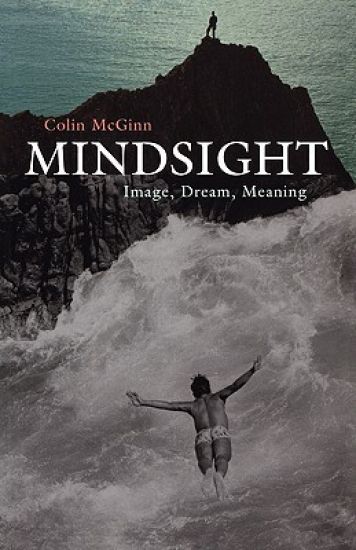
Mindsight

Mindsight

Colin McGinn

Harvard University Press
2006
nidottu
How to imagine the imagination is a topic that draws philosophers the way flowers draw honeybees. From Plato and Aristotle to Wittgenstein and Sartre, philosophers have talked and written about this most elusive of topics--that is, until contemporary analytic philosophy of mind developed. Perhaps it is the vast range of the topic that has scared off our contemporaries, ranging as it does from mental images to daydreams.The guiding thread of this book is the distinction Colin McGinn draws between perception and imagination. Clearly, seeing an object is similar in certain respects to forming a mental image of it, but it is also different. McGinn shows what the differences are, arguing that imagination is a sui generis mental faculty. He goes on to discuss the nature of dreaming and madness, contending that these are primarily imaginative phenomena. In the second half of the book McGinn focuses on what he calls cognitive (as opposed to sensory) imagination, and investigates the role of imagination in logical reasoning, belief formation, the understanding of negation and possibility, and the comprehension of meaning. His overall claim is that imagination pervades our mental life, obeys its own distinctive principles, and merits much more attention.
Moral Literacy

Moral Literacy

Colin McGinn

Hackett Publishing Co, Inc
1993
nidottu
"A great resource for beginning ethics courses. The book is short and yet it richly embodies the methods of ethical thinking about practical moral problems that are hard for students to learn unless they see them in action. McGinn perspicuously sets out a small set of basic principles and then attacks the problems of our treatment of animals, abortion, sex, censorship, and so on, with a masterful blend of attention to real-life cases and imaginary thought experiments. McGinn hardly claims to have the last word on the complex issues he discusses, and students will find many exciting problems and points to take up." —Owen Flanagan, Duke University
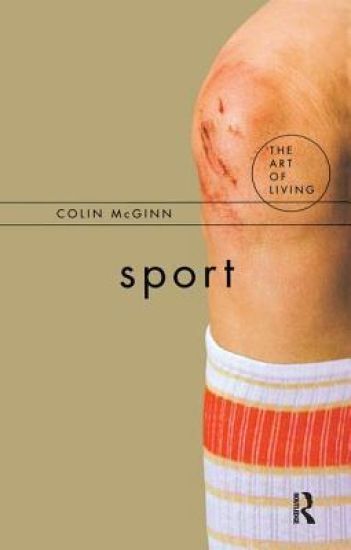
Sport

Sport

Colin McGinn

Routledge
2016
sidottu
Whether it's conkers in the schoolyard, kicking a football in the park, or playing tennis on Wimbledon Centre Court, sport impacts all of our lives. But what is sport and why do we do it? Colin McGinn, renowned philosopher (and kiteboarder), reflects on our love of sport and explores the value it has for us and the part it plays in a life lived well. Written in the form of a memoir, McGinn discusses many of the sports he has engaged in - from pole-vaulting and gymnastics to windsurfing and tennis - and describes the athletic experience from the inside, as a participant, articulating what is uniquely valuable about sport as an activity. Sport, argues McGinn, takes us to our fullest potential as human beings, it's what we fling at mortality to keep it at bay, a holiday from the Unbearable Heaviness of Being. "Sport" expresses our nature, it bears upon our self-realization. If a happy life consists in one that expresses fully our natural faculties, then sports must play an essential role in our lifes. Mind-body unity, the nature of practical knowledge and physical skill, success and failure, the ethics of competition, peak experiences, the spectacle of professional sport, aesthetics and death, McGinn discusses these and many other issues while telling of his own sporting mishaps and adventures. To use the vernacular of philosophy, "Sport" captures the phenomenology of sport - what it's like to do it - and in doing so shows how sport is a way of expressing and understanding who and what we are, way beyond whether we are a good sportsman, a bad loser or a team-player. For anyone who has ever thought that there must be less humiliating ways to enjoy yourself than being thrashed on the tennis court, "Sport" will reassure you that it's time not wasted.
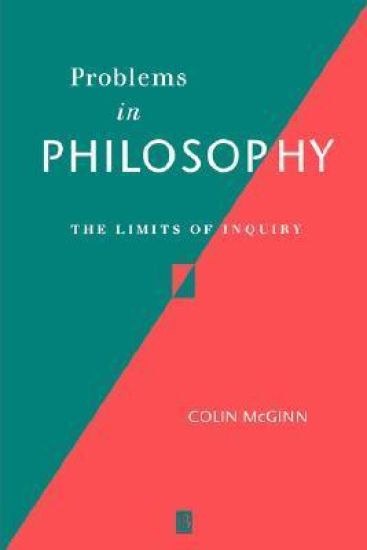
Problems in Philosophy

Problems in Philosophy

Colin McGinn

JOHN WILEY AND SONS LTD
1993
nidottu
This advanced introductory text offers a synoptic view of philosophical inquiry, discussing such topics as consciousness, the self, meaning, free will, the a priori, and knowledge. The emphasis is on the fundamental intractability of these questions, and a theory is proposed as to why the human mind has so much difficulty in resolving them. This theory turns upon a naturalistic picture of the scope and limits of human intelligence.
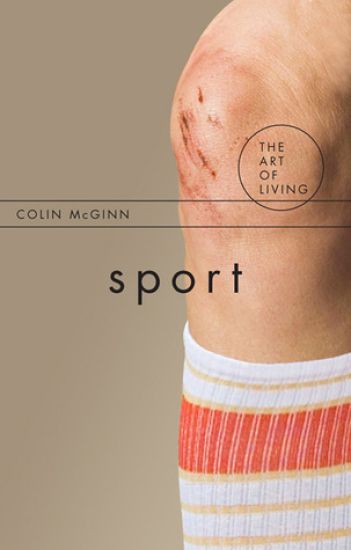
Sport

Sport

Colin McGinn

Acumen Publishing Ltd
2008
nidottu
Whether it's conkers in the schoolyard, kicking a football in the park, or playing tennis on Wimbledon Centre Court, sport impacts all of our lives. But what is sport and why do we do it? Colin McGinn, renowned philosopher (and kiteboarder), reflects on our love of sport and explores the value it has for us and the part it plays in a life lived well. Written in the form of a memoir, McGinn discusses many of the sports he has engaged in - from pole-vaulting and gymnastics to windsurfing and tennis - and describes the athletic experience from the inside, as a participant, articulating what is uniquely valuable about sport as an activity. Sport, argues McGinn, takes us to our fullest potential as human beings, it's what we fling at mortality to keep it at bay, a holiday from the Unbearable Heaviness of Being. "Sport" expresses our nature, it bears upon our self-realization. If a happy life consists in one that expresses fully our natural faculties, then sports must play an essential role in our lifes. Mind-body unity, the nature of practical knowledge and physical skill, success and failure, the ethics of competition, peak experiences, the spectacle of professional sport, aesthetics and death, McGinn discusses these and many other issues while telling of his own sporting mishaps and adventures. To use the vernacular of philosophy, "Sport" captures the phenomenology of sport - what it's like to do it - and in doing so shows how sport is a way of expressing and understanding who and what we are, way beyond whether we are a good sportsman, a bad loser or a team-player. For anyone who has ever thought that there must be less humiliating ways to enjoy yourself than being thrashed on the tennis court, "Sport" will reassure you that it's time not wasted.