Kirjojen hintavertailu. Mukana 12 439 528 kirjaa ja 12 kauppaa.

Kirjahaku

Etsi kirjoja tekijän nimen, kirjan nimen tai ISBN:n perusteella.

38 kirjaa tekijältä Daniel C. Dennett

Content and Consciousness

Content and Consciousness

Daniel C. Dennett

Routledge
2010
nidottu
Content and Consciousness is an original and ground-breaking attempt to elucidate a problem integral to the history of Western philosophical thought: the relationship of the mind and body. In this formative work, Dennett sought to develop a theory of the human mind and consciousness based on new and challenging advances in the field that came to be known as cognitive science. This important and illuminating work is widely-regarded as the book from which all of Dennett’s future ideas developed. It is his first explosive rebuttal of Cartesian dualism and one of the founding texts of philosophy of mind.
Content and Consciousness

Content and Consciousness

Daniel C. Dennett

Routledge
2016
sidottu
First published in 2002. In this pioneering book, Daniel Dennett sets out clearly what he believed constituted a genuine analysis of the mind. His work over the last twenty years and more, culminating in his major study, Consciousness Explained, has increased rather than diminished the power of his first book. This edition also includes the 1986 preface which places the book in the context of recent work in the area.
Content and Consciousness

Content and Consciousness

Daniel C. Dennett

Routledge
2015
sidottu
Content and Consciousness is an original and ground-breaking attempt to elucidate a problem integral to the history of Western philosophical thought: the relationship of the mind and body. In this formative work, Dennett sought to develop a theory of the human mind and consciousness based on new and challenging advances in the field that came to be known as cognitive science. This important and illuminating work is widely-regarded as the book from which all of Dennett’s future ideas developed. It is his first explosive rebuttal of Cartesian dualism and one of the founding texts of philosophy of mind.
I've Been Thinking

I've Been Thinking

Daniel C. Dennett

W. W. Norton Company
2025
nidottu
Daniel C. Dennett, preeminent philosopher and cognitive scientist, has spent his career considering the thorniest, most fundamental mysteries of the mind. Do we have free will? What is consciousness and how did it come about? What distinguishes human minds from the minds of animals? Dennett's answers have profoundly shaped our age of philosophical thought. In I've Been Thinking, he reflects on his amazing career and lifelong scientific fascinations.Dennett's relentless curiosity has taken him from a childhood in Beirut and the classrooms of Harvard, Oxford, and Tufts, to "Cognitive Cruises" on sailboats and the fields and orchards of Maine, and to laboratories and think tanks around the world. Along the way, I've Been Thinking provides a master class in the dominant themes of twentieth-century philosophy and cognitive science--including language, evolution, logic, religion, and AI--and reveals both the mistakes and breakthroughs that shaped Dennett's theories.Key to this journey are Dennett's interlocutors--Douglas Hofstadter, Marvin Minsky, Willard Van Orman Quine, Gilbert Ryle, Richard Rorty, Thomas Nagel, John Searle, Gerald Edelman, Stephen Jay Gould, Jerry Fodor, Rodney Brooks, and more--whose ideas, even when he disagreed with them, helped to form his convictions about the mind and consciousness. Studded with photographs and told with characteristic warmth, I've Been Thinking also instills the value of life beyond the university, one enriched by sculpture, music, farming, and deep connection to family.Dennett compels us to consider: What do I really think? And what if I'm wrong? This memoir by one of the greatest minds of our time will speak to anyone who seeks to balance a life of the mind with adventure and creativity.
Från bakterier till Bach och tillbaka: Medvetandets evolution
Hur blev vi medvetna varelser? Denna fråga har gäckat psykologer, fysiker, poeter och filosofer i århundraden. Hur har människans hjärna utvecklat dess unika förmåga till att skapa, drömma och förklara? Darwins lärjungar har länge försökt förklara medvetandets, språkets och kulturens uppkomst genom naturligt urval i teorier som låter lovande men ofta är kontroversiella och förvirrande. Vår förståelse av hjärnans anatomi och funktion har aldrig varit bättre än nu, ändå förblir frågan om hur våra själar uppstår en obesvarad gåta. I Från bakterier till Bach, bygger Daniel Dennett på idéer från datavetenskapen och evolutionsbiologi för att visa hur en reflekterande hjärna kan ha uppstått genom naturligt urval. Dennett förklarar att en viktig förändring skedde när människor utvecklade förmågan att dela memer, eller sätt att göra saker som inte baseras på genetisk instinkt. Språket, laddat med memer, gav turbofart åt detta samspel. Konkurrens mellan memer en typ av naturligt urval resulterade i tankeverktyg som blev så effektiva att de tillät oss att utforma våra egna memer. Resultatet blev en hjärna som inte bara kan uppfatta och kontrollera, utan också skapa och förstå. Den här boken sätter agendan för en ny generation filosofer, forskare and tänkare. Boken kommer att underhålla och inspirera all de som vill veta mer om medvetandets existens och natur.
Lumous murtuu

Lumous murtuu

Daniel C. Dennett

Terra Cognita
2007
nidottu
Monille, kenties useimmille, uskonto on asioista tärkein. Se lohduttaa heitä kärsimyksessä, on olennainen osa heidän avioliittoaan ja lastensa kasvatusta ja vie yhteistyöhön, jonka tulokset ovat sekä ihmeellisiä että hirveitä.Uskonto on niin vahva voima maailmassamme, että sitä on yritettävä ymmärtää kaikessa monimutkaisuudessaan, mutta useimmat uskontojen kannattajat vastustavat jyrkästi jokaista, joka haluaa tutkia heidän käytäntöjään ja uskomuksiaan luonnontieteen menetelmin, parhailla käytössämme olevilla välineillä.Tässä teoksessa maineikas amerikkalainen filosofi Daniel C. Dennett pyrkii selvittämään uskontojen perheen hämmästyttävän ilmiömaailman. Miksi ja miten niillä on uskolliset kannattajansa? Mistä niiden voima nousee? Miksi ne muokkaavat niin monien elämää niin vahvasti?Mistä syntyy omistautuminen Jumalalle? Mikä oli psykologinen ja kulttuurinen maaperä, jossa uskonto syntyi? Onko se addiktio vai aito tarve, joka tulisi säilyttää hintaan mihin hyvänsä? Onko se sokean evolutiivisen vaiston tuote vai rationaalisen valinnan tulos? Onko Jumalaan uskovilla hyvä syy uskoonsa? Ovatko ihmiset oikeassa sanoessaan, että uskonto on paras tapa elää hyvä elämä? Ennen kaikkea onko uskonto moraalin perusteiden välttämätön edellytys?Tässä haastavassa teoksessa Daniel C. Dennett väittää, että uskonnon perimmäisiä kysymyksiä ympäröivästä salamyhkäisyydestä on luovuttava, jotta uskonto ymmärrettäisiin nykyistä paremmin ja jotta näihin kysymyksiin saataisiin rationaalinen vastaus.Uskonto on aivan liian tärkeä asia luonnontieteellisen tarkastelun ulkopuolelle jätettäväksi.
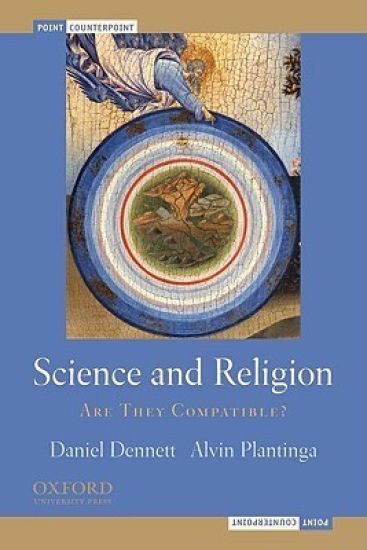
Science and Religion

Science and Religion

Daniel C. Dennett; Alvin Plantinga

Oxford University Press Inc
2011
nidottu
One of today's most controversial and heated issues is whether or not the conflict between science and religion can be reconciled. In Science and Religion: Are They Compatible?, renowned philosophers Daniel C. Dennett and Alvin Plantinga expand upon the arguments that they presented in an exciting live debate held at the 2009 American Philosophical Association Central Division conference. An enlightening discussion that will motivate students to think critically, Science and Religion: Are They Compatible? opens with Plantinga's assertion that Christianity is compatible with evolutionary theory because Christians believe that God created the living world, and it is entirely possible that God did so by using a process of evolution. Dennett vigorously rejects this argument, provoking a reply from Plantinga, another response from Dennett, and final statements from both sides. As philosophers, the authors possess expert skills in critical analysis; their arguments provide a model of dialogue between those who strongly disagree. Ideal for courses in philosophy of religion, science and religion, and philosophy of science, Science and Religion is also captivating reading for general readers.
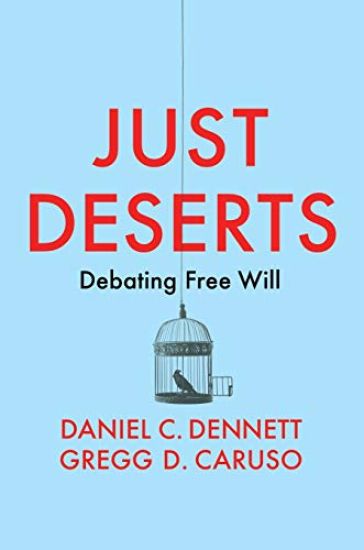
Just Deserts

Just Deserts

Daniel C. Dennett; Gregg D. Caruso

Polity Press
2021
sidottu
The concept of free will is profoundly important to our self-understanding, our interpersonal relationships, and our moral and legal practices. If it turns out that no one is ever free and morally responsible, what would that mean for society, morality, meaning, and the law? Just Deserts brings together two philosophers – Daniel C. Dennett and Gregg D. Caruso – to debate their respective views on free will, moral responsibility, and legal punishment. In three extended conversations, Dennett and Caruso present their arguments for and against the existence of free will and debate their implications. Dennett argues that the kind of free will required for moral responsibility is compatible with determinism – for him, self-control is key; we are not responsible for becoming responsible, but are responsible for staying responsible, for keeping would-be puppeteers at bay. Caruso takes the opposite view, arguing that who we are and what we do is ultimately the result of factors beyond our control, and because of this we are never morally responsible for our actions in the sense that would make us truly deserving of blame and praise, punishment and reward. Just Deserts introduces the concepts central to the debate about free will and moral responsibility by way of an entertaining, rigorous, and sometimes heated philosophical dialogue between two leading thinkers.
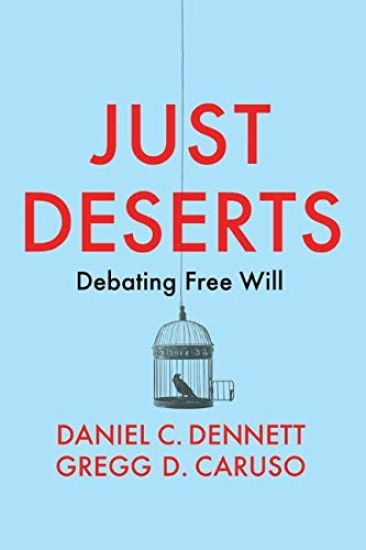
Just Deserts

Just Deserts

Daniel C. Dennett; Gregg D. Caruso

Polity Press
2021
nidottu
The concept of free will is profoundly important to our self-understanding, our interpersonal relationships, and our moral and legal practices. If it turns out that no one is ever free and morally responsible, what would that mean for society, morality, meaning, and the law? Just Deserts brings together two philosophers – Daniel C. Dennett and Gregg D. Caruso – to debate their respective views on free will, moral responsibility, and legal punishment. In three extended conversations, Dennett and Caruso present their arguments for and against the existence of free will and debate their implications. Dennett argues that the kind of free will required for moral responsibility is compatible with determinism – for him, self-control is key; we are not responsible for becoming responsible, but are responsible for staying responsible, for keeping would-be puppeteers at bay. Caruso takes the opposite view, arguing that who we are and what we do is ultimately the result of factors beyond our control, and because of this we are never morally responsible for our actions in the sense that would make us truly deserving of blame and praise, punishment and reward. Just Deserts introduces the concepts central to the debate about free will and moral responsibility by way of an entertaining, rigorous, and sometimes heated philosophical dialogue between two leading thinkers.
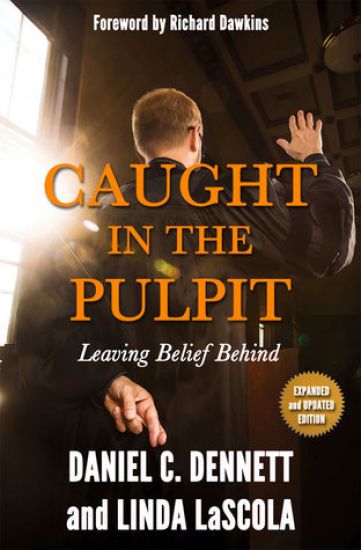
Caught in the Pulpit

Caught in the Pulpit

Daniel C. Dennett; Linda LaScola; Richard Dawkins

Pitchstone Publishing
2015
pokkari
What is it like to be a preacher or rabbi who no longer believes in God? In this expanded and updated edition of their groundbreaking study, Daniel C. Dennett and Linda LaScola comprehensively and sensitively expose an inconvenient truth that religious institutions face in the new transparency of the information age—the phenomenon of clergy who no longer believe what they publicly preach. In confidential interviews, clergy from across the ministerial spectrum—from liberal to literal—reveal how their lives of religious service and study have led them to a truth inimical to their professed beliefs and profession. Although their personal stories are as varied as the denominations they once represented, or continue to represent—whether Catholic, Baptist, Episcopalian, Methodist, Mormon, Pentecostal, or any of numerous others—they give voice not only to their own struggles but also to those who similarly suffer in tender and lonely silence. As this study poignantly and vividly reveals, their common journey has far-reaching implications not only for their families, their congregations, and their communities—but also for the very future of religion.
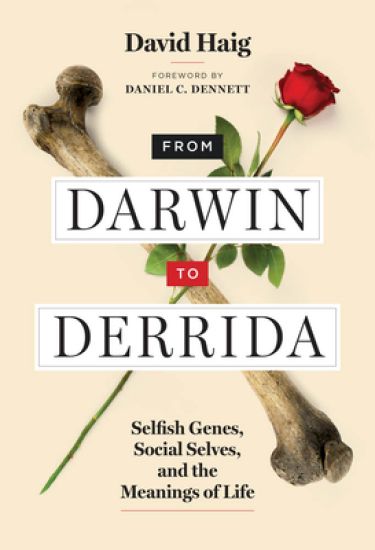
From Darwin to Derrida

From Darwin to Derrida

David Haig; Daniel C. Dennett

MIT Press
2020
sidottu
How the meaningless process of natural selection produces purposeful beings who find meaning in the world.In From Darwin to Derrida, evolutionary biologist David Haig explains how a physical world of matter in motion gave rise to a living world of purpose and meaning. Natural selection, a process without purpose, gives rise to purposeful beings who find meaning in the world. The key to this, Haig proposes, is the origin of mutable "texts"-genes-that preserve a record of what has worked in the world. These texts become the specifications for the intricate mechanisms of living beings.Haig draws on a wide range of sources-from Laurence Sterne's Tristram Shandy to Immanuel Kant's Critique of the Power of Judgment to the work of Jacques Derrida to the latest findings on gene transmission, duplication, and expression-to make his argument. Genes and their effects, he explains, are like eggs and chickens. Eggs exist for the sake of becoming chickens and chickens for the sake of laying eggs. A gene's effects have a causal role in determining which genes are copied. A gene (considered as a lineage of material copies) persists if its lineage has been consistently associated with survival and reproduction. Organisms can be understood as interpreters that link information from the environment to meaningful action in the environment. Meaning, Haig argues, is the output of a process of interpretation; there is a continuum from the very simplest forms of interpretation, instantiated in single RNA molecules near the origins of life, to the most sophisticated. Life is interpretation-the use of information in choice.
Feeling Pain and Being in Pain

Feeling Pain and Being in Pain

Nikola Grahek; Daniel C. Dennett

Bradford Books
2011
pokkari
An examination of the two most radical dissociation syndromes of the human pain experience-pain without painfulness and painfulness without pain-and what they reveal about the complex nature of pain and its sensory, cognitive, and behavioral components.In Feeling Pain and Being in Pain, Nikola Grahek examines two of the most radical dissociation syndromes to be found in human pain experience: pain without painfulness and painfulness without pain. Grahek shows that these two syndromes-the complete dissociation of the sensory dimension of pain from its affective, cognitive, and behavioral components, and its opposite, the dissociation of pain's affective components from its sensory-discriminative components (inconceivable to most of us but documented by ample clinical evidence)-have much to teach us about the true nature and structure of human pain experience.Grahek explains the crucial distinction betweenfeeling pain and being in pain, defending it on both conceptual and empirical grounds. He argues that the two dissociative syndromes reveal the complexity of the human pain experience: its major components, the role they play in overall pain experience, the way they work together, and the basic neural structures and mechanisms that subserve them.Feeling Pain and Being in Pain does not offer another philosophical theory of pain that conclusively supports or definitively refutes either subjectivist or objectivist assumptions in the philosophy of mind. Instead, Grahek calls for a less doctrinaire and more balanced approach to the study of mind-brain phenomena.
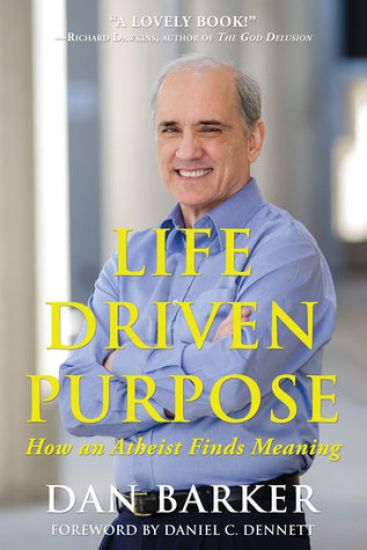
Life Driven Purpose

Life Driven Purpose

Dan Barker; Daniel C. Dennett

Pitchstone Publishing
2015
nidottu
Every thinking person wants to lead a life of meaning and purpose. For thousands of years, holy books have told us that such a life is available only through obedience and submission to some higher power. Today, the faithful keep popular devotionals and tracts within easy reach on bedside tables and mobile devices, all communicating this common message: “Life is meaningless without God.” In this volume, former pastor Dan Barker eloquently, powerfully, and rationally upends this long-held belief. Offering words of enrichment, emancipation, and inspiration, he reminds us how millions of atheists lead happy, loving, moral, and purpose-filled lives. Practicing what he preaches, he also demonstrates through his own personal journey that life is valuable for its own sake—that meaning and purpose come not from above, but from within.
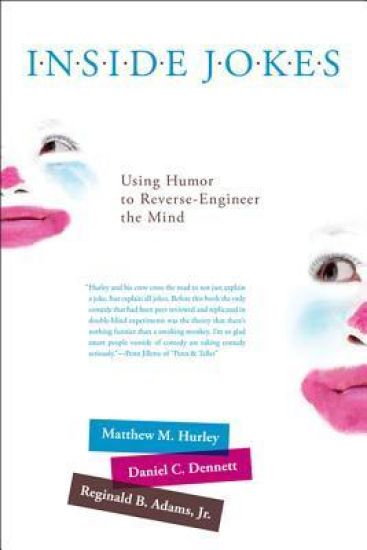
Inside Jokes

Inside Jokes

Matthew M. Hurley; Daniel C. Dennett; Reginald B. Adams Jr.

MIT Press
2013
pokkari
An evolutionary and cognitive account of the addictive mind candy that is humor.Some things are funny-jokes, puns, sitcoms, Charlie Chaplin, The Far Side, Malvolio with his yellow garters crossed-but why? Why does humor exist in the first place? Why do we spend so much of our time passing on amusing anecdotes, making wisecracks, watching The Simpsons? In Inside Jokes, Matthew Hurley, Daniel Dennett, and Reginald Adams offer an evolutionary and cognitive perspective. Humor, they propose, evolved out of a computational problem that arose when our long-ago ancestors were furnished with open-ended thinking. Mother Nature-aka natural selection-cannot just order the brain to find and fix all our time-pressured misleaps and near-misses. She has to bribe the brain with pleasure. So we find them funny. This wired-in source of pleasure has been tickled relentlessly by humorists over the centuries, and we have become addicted to the endogenous mind candy that is humor.