The third in David Edgar's post-Cold War trilogy, which also includes Pentecost and The Shape of the Table. An urgently topical account of a bloody conflict on Europe's Eastern borders. Beginning in early 1989 and spanning some twelve years, the play follows a team of peace negotiators attempting to resolve an ethnic conflict occurring within a fictional former Soviet republic. The Prisoner's Dilemma was first performed by the Royal Shakespeare Company at The Other Place, Stratford-upon-Avon, in July 2001, transferring to the Pit Theatre, Barbican, London, in January 2002.
Two linked plays - Mothers Against and Daughters of the Revolution - by the UK's leading political playwright, investigating the machinations of the Democratic and Republican parties in America. In this two-play cycle set against the background of a bitterly fought American governor's election, David Edgar explores what has happened to the revolutionary fervour which took hold of both the Right and the Left in the 1960s, and how it has been carried over into the politics of today. The plays were jointly commissioned and produced by Berkeley Repertory Theatre and the Oregon Shakespeare Festival. They were first performed in Ashland, Oregon, as part of the Oregon Shakespeare Festival in March 2003 before transferring to Berkeley Repertory Theatre in November 2003. Continental Divide received its UK premiere at Birmingham Repertory Theatre in March 2004. It subsequently played at the Barbican, London, as part of the BITE Festival, in March 2004.
An epic and provocative play about multi-racial Britain, from the UK's leading political playwright. When the District Council of Wyverdale fails to satisfy a government audit, New Labour high-flyer Alex Clifton is despatched from the capital to formulate a robust recovery plan. But racial tensions soar and good intentions have fatal consequences, as what begins as a comedy of misunderstanding soon becomes a chilling drama about multicultural Britain. David Edgar's play Playing With Fire was first staged at the National Theatre, London, in 2005. This edition includes an Afterword by the author.
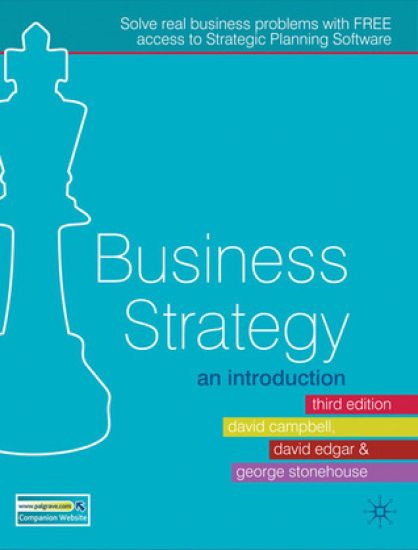
Business Strategy is a compact, plain-speaking textbook for those approaching strategy for the first time. Key features include: international case studies; chapters on current issues such as CSR, emerging markets and new technologies; hot topics: research project areas to investigate, and guru guides: bite-sized bios of key thinkers in the field.Accompanying online resources for this title can be found at bloomsburyonlineresources.com/business-strategy-3e. These resources are designed to support teaching and learning when using this textbook and are available at no extra cost.
Latin America represents one of the most dynamic business regions in the world. Innovation Support in Latin America and Europe explores the need for training innovation professionals, identifies appropriate strategies and best practice for ensuring its delivery, and reflects the outcomes of a major innovation and knowledge transfer project. Academics, business professionals, policy makers, and trade representatives, all contribute to review the literature and existing practices of innovation, and explore the often misunderstood and contested terrain that surrounds innovation theory, policy and practice. In this book you will find a comparative insight into Latin American and European approaches to innovation management and innovation in practice, and an examination of how innovative ideas are exploited for a specifically Latin American context. With chapters which offer insights from both academics and practitioners, the text offers a refreshing, contemporary and trans-national perspective and a clear, concise and enriching discussion on the interplay between research, policy and practice. Innovation Support in Latin America and Europe will appeal to academics and researchers, higher level students, policy makers and business leaders, particularly those with any interest in Latin America.
Latin America represents one of the most dynamic business regions in the world. Innovation Support in Latin America and Europe explores the need for training innovation professionals, identifies appropriate strategies and best practice for ensuring its delivery, and reflects the outcomes of a major innovation and knowledge transfer project. Academics, business professionals, policy makers, and trade representatives, all contribute to review the literature and existing practices of innovation, and explore the often misunderstood and contested terrain that surrounds innovation theory, policy and practice. In this book you will find a comparative insight into Latin American and European approaches to innovation management and innovation in practice, and an examination of how innovative ideas are exploited for a specifically Latin American context. With chapters which offer insights from both academics and practitioners, the text offers a refreshing, contemporary and trans-national perspective and a clear, concise and enriching discussion on the interplay between research, policy and practice. Innovation Support in Latin America and Europe will appeal to academics and researchers, higher level students, policy makers and business leaders, particularly those with any interest in Latin America.
A large-scale historical romp in the terrain between Jane Austen and Charles Dickens. Set against the backdrop of the threatened Napoleonic invasion of 1804, David Edgar and Stephanie Dale's play A Time to Keep is the story of an unlikely but passionate romance between a well-born but feisty young woman and the youngest son of a family of notorious smugglers. With over 100 characters, from George III and his court to the criminal classes, the play is a rollicking example of the community play, originally written for the Dorchester Community Players but easily adaptable for smaller (and larger!) companies alike.
Merely in the last two decades, the prominence of managerial competencies was appreciated and academics commenced reviewing the essential competencies to be successful and operative executives. There are merely insufficient practical studies on this topic and those are generally in the areas of universities, banks, and multinational enterprises. The managerial competencies and their impact on management capabilities on dissimilar management positions might differ through organizations, business professionals, and academics, however these papers targets to draw overall frameworks for the competencies required to be successful organizations and executives. It also purposes to outline the influence of those competencies on dissimilar levels of management.
Combining a rich blend of research, best practice and policy, Strategic Information Systems Management is the eagerly awaited new introduction to the interconnected world we live and work in. A top-ranked team of global experts combine both industrial and scholarly perspectives, bringing a wealth of experience to make this the complete introduction for 21st century business. This textbook is essential reading for all Information Systems modules with a strategic focus and for broader Strategic Management, Information Management and professional courses. Contributions come from these global experts: David Avison ESSC, France; Peter Baloh, Ljubljana University, Slovenia & University of Washington, USA; Alexis Barlow Glasgow Caledonian University, UK; Egon Berghout University of Groningen, Netherlands; Colin Combe, Glasgow Caledonian University, UK; Thomas Connolly, University of the West of Scotland, UK; David Coss, Virginia Commonwealth University, USA; Kevin Desouza, University of Washington, USA; Gurpreet Dhillon, Virginia Commonwealth University, USA; David Duncan, Wolters Kluwer, UK; Peter Duncan, Glasgow Caledonian University, UK; David Edgar, Glasgow Caledonian University, UK; Guy Fitzgerald, Brunel University, UK; Stuart Fitz-Gerald, Kingston University, UK; Arnoud Franken, Cranfield University, UK; Tom Fuller, Deloitte Touche Tohmatsu, UK; Robert Galliers, Bentley University, USA; Merlin Gardner, Deloitte Touche Tohmatsu, UK; Kevin Grant, Glasgow Caledonian University, UK; Ray Hackney, Brunel University, UK; Feng Li, University of Newcastle, UK; Laszlo Nemeth, Dex, Hungary; Sue Newell, Bentley University, USA; David Paton, Deloitte MCS Limited, UK; Philip Powell, Birkbeck, University of London, UK; Vivien Reid, Glasgow Caledonian University, UK; Mark Stansfield, University of the West of Scotland, UK; Anne Wiggins, UNCTAD, Switzerland; John Wright, NHS Ayrshire and Arran, UK.