Kirjojen hintavertailu. Mukana 12 595 353 kirjaa ja 12 kauppaa.

Kirjahaku

Etsi kirjoja tekijän nimen, kirjan nimen tai ISBN:n perusteella.

24 kirjaa tekijältä David Farrell Krell

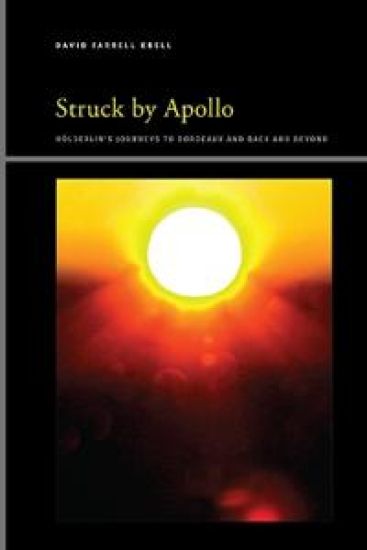
Struck by Apollo

Struck by Apollo

David Farrell Krell

STATE UNIVERSITY OF NEW YORK PRESS
2024
pokkari
Retraces Hölderlin's journeys to Bordeaux and back in 1801–02, explaining why they are turning points in the great poet's life.2024 CHOICE Outstanding Academic TitleIn the winter of 1801–02, Friedrich Hölderlin traveled more than one thousand kilometers from his home near Stuttgart to Bordeaux, partly on foot, partly by post coach. It took him two months. Then, after four months serving as a tutor, he inexplicably decided to return home. Not long after he set out, his coach was held up by highwaymen, and, with no money, he had to walk the rest of the way. By the time he arrived, he was so disheveled and disoriented his friends did not recognize him. Though Hölderlin was just thirty-two years old, the trip marked the beginning of the end of his active life as one of Germany's greatest poets and thinkers.With more than sixty black-and-white photographs by the author and eighteen historical route maps, Struck by Apollo follows Hölderlin to Bordeaux and back and beyond. David Farrell Krell retraces the journeys in striking detail, reflecting on their significance for Hölderlin's life and work in ways that will interest a wide swath of fellow thinkers and travelers.
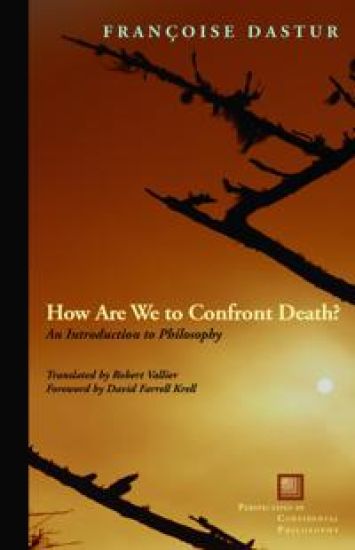
How Are We to Confront Death?

How Are We to Confront Death?

Françoise Dastur; David Farrell Krell

Fordham University Press
2012
sidottu
Confronting death means looking it squarely in the face. Contemporary society refuses to do so, preferring to hide it and hide from it. Funeral rites no longer function as a way to mediate death or to maintain a link between the living and dead. Today the disappearance of certain funerary practices attests to the denial of death as such. They reflect a preference for focusing on remembering the life of the deceased in order to neutralize death, thus displacing the value of mourning, now viewed as something to be done as quickly as possible. Moreover, science, like religion before it and like the contemporary "cult of the body," has fed our fantasies about immortality, promising us longer lives of better quality, and even the possibility of conquering death altogether. Despite all these attempts to overcome or neutralize death, humanity has been unable to eliminate its anxiety about death and nothingness. True to her roots in phenomenology, Dastur not only examines these contemporary tendencies with a critical eye but also argues that we must once again learn to assume death, to become mortal, to learn how to die. Death is not the last moment of human life, but rather its essential attribute. Dastur's skill as a "translator" of phenomenology into accessible and clear prose is nowhere more apparent than in her "little book on death"—indeed, the intended audience is less those who specialize in phenomenology or academic philosophy than a nonspecialist public hungry for philosophical reflection on what is closest to us. And nothing is closer to us than the ever-present possibility of our own imminent death. As its subtitle suggests, this book is an "introduction to philosophy," one that obliges the reader to ask what it means to be human and to embrace death and mortality as the defining essence of our humanity.
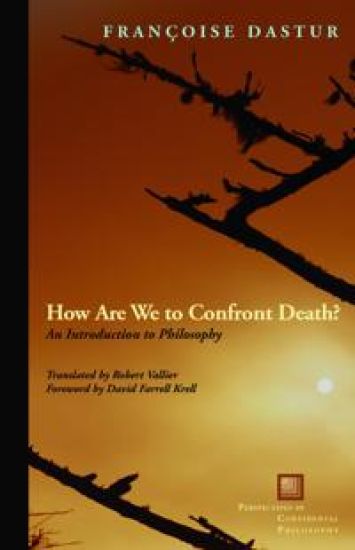
How Are We to Confront Death?

How Are We to Confront Death?

Françoise Dastur; David Farrell Krell

Fordham University Press
2012
pokkari
Confronting death means looking it squarely in the face. Contemporary society refuses to do so, preferring to hide it and hide from it. Funeral rites no longer function as a way to mediate death or to maintain a link between the living and dead. Today the disappearance of certain funerary practices attests to the denial of death as such. They reflect a preference for focusing on remembering the life of the deceased in order to neutralize death, thus displacing the value of mourning, now viewed as something to be done as quickly as possible. Moreover, science, like religion before it and like the contemporary "cult of the body," has fed our fantasies about immortality, promising us longer lives of better quality, and even the possibility of conquering death altogether. Despite all these attempts to overcome or neutralize death, humanity has been unable to eliminate its anxiety about death and nothingness. True to her roots in phenomenology, Dastur not only examines these contemporary tendencies with a critical eye but also argues that we must once again learn to assume death, to become mortal, to learn how to die. Death is not the last moment of human life, but rather its essential attribute. Dastur's skill as a "translator" of phenomenology into accessible and clear prose is nowhere more apparent than in her "little book on death"—indeed, the intended audience is less those who specialize in phenomenology or academic philosophy than a nonspecialist public hungry for philosophical reflection on what is closest to us. And nothing is closer to us than the ever-present possibility of our own imminent death. As its subtitle suggests, this book is an "introduction to philosophy," one that obliges the reader to ask what it means to be human and to embrace death and mortality as the defining essence of our humanity.