Kirjojen hintavertailu. Mukana 12 390 323 kirjaa ja 12 kauppaa.

Kirjahaku

Etsi kirjoja tekijän nimen, kirjan nimen tai ISBN:n perusteella.

31 kirjaa tekijältä David Loades

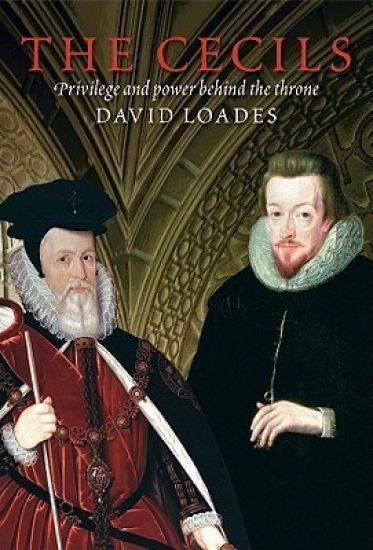
The Cecils

The Cecils

David Loades

The National Archives
2009
nidottu
For over 50 years one family dominated England's high offices of state. William and Robert Cecil, father and son, held unparalleled power as statesmen, diplomats, counsellors and spymasters throughout Elizabeth's reign and long beyond. From Privy Councillor to Chief Secretary of State and Lord High Treasurer, both exerted far-reaching influence to secure the Queen's realm and legacy. They enjoyed her reliance and trust, and Robert the gratitude of her successor James I, yet each inhabited a perilous world where favour brought enemies and a wrong step could lead to disaster. In "The Cecils", David Loades reveals the personal and political lives of these remarkable men. He shows how father and son negotiated volatile court life, battling flamboyant favourites like Robert Dudley and the ill-fated Earl of Essex and playing for time to stabilise a country still torn by religious divide. He discovers the contradictory characters of these advocates of caution who nevertheless took great personal risks, such as William's role in the execution of Mary Queen of Scots and Robert's secret negotiations with James VI of Scotland before Elizabeth's death. Yet these principled public servants - who put the interests of the State before their own - still amassed large personal wealth, and relished its display at their great houses of Burghley, Theobalds and Hatfield. From the early days of turmoil, when William escaped the fate of Thomas Seymour and honed his strategies for survival, to the shadowy intrigues of the Jacobean court, this is a fascinating portrait of men who shaped an extraordinary age.
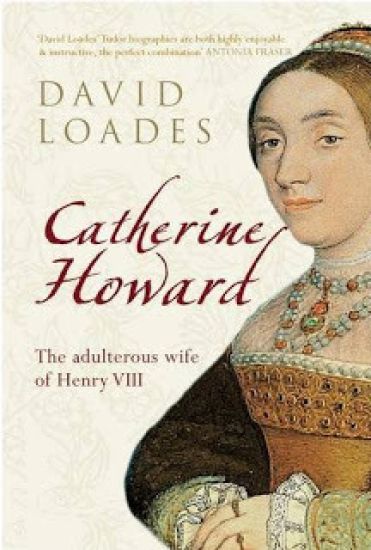
Catherine Howard

Catherine Howard

David Loades

Amberley Publishing
2012
sidottu
Henry's fifth Queen is best known to history as the stupid adolescent who got herself fatally entangled with lovers, and ended up on the block. However there was more to her than that. She was a symptom of the power struggle which was going on in the court in 1539-40 between Thomas Cromwell and his conservative rivals, among whom the Howard family figured prominently. The Howards were an ambitious clan, and Catherine's marriage to Henry appeared to signify their triumph. However her weakness ruined them in the short term, and undermined Thomas Howard, the 3rd Duke of Norfolk's power permanently. Catherine's advent has to be seen against the background of the failed Cleves marriage and the policy which that represented. Her downfall similarly should be seen in terms of the reformers fighting back against the Howards, and bringing down Jane Rochford with her. Politics and sexuality were inextricably mixed, especially when the King's potency was called in question. It is time to have another look at her brief but important reign.
The Boleyns

The Boleyns

David Loades

Amberley Publishing
2012
pokkari
A magnificent tale of family rivalry and intrigue set against Henry VIII's court. The fall of Anne Boleyn and her brother George is the classic drama of the Tudor era. The Boleyns had long been an influential English family. Sir Edward Boleyn had been Lord Mayor of London. His grandson, Sir Thomas had inherited wealth and position, and through the sexual adventures of his daughters, Mary and Anne, ascended to the peak of influence at court. The three Boleyn children formed a faction of their own, making many enemies: and when those enemies secured Henry VIII's ear, they brought down the entire family in blood and disgrace. George, Lord Rochfort, left no children. Mary left a son by her husband, William Carey - Henry Carey, Lord Hunsdon. Anne left a daughter, Elizabeth I - so like her in many ways and a sexual politician without rival. Includes 33 illustrations, 25 in colour.
Henry VIII

Henry VIII

David Loades

Amberley Publishing
2013
pokkari
As a youth, Henry VIII was a magnificent specimen of manhood, and in age a gargantuan wreck, but even in his prime he was never the 'ladies man' which legend, and his own imagination, created. Sexual insecurity undermined him, and gave his will that irascible edge which proved fatal to Anne Boleyn and Thomas Cromwell alike. Henry VIII dominated England during his lifetime and for many years thereafter, as a warrior, as a renaissance Prince, and as Supreme Head of the Church, but his personality is as controversial today as it was then. Professor David Loades has spent most of his life investigating the remains, literary, archival and archaeological, of Henry VIII, and this monumental new biography book is the result. His portrait of Henry is distinctive, he was neither a genius nor a tyrant, but a man 'like any other', except for the extraordinary circumstances in which he found himself.
Mary Rose

Mary Rose

David Loades

Amberley Publishing
2014
pokkari
'A paradise - tall, slender, grey-eyed, possessing an extreme pallor.' The contemporary view of Henry VIII's younger sister, Princess Mary Rose, as one of the most beautiful princesses in Europe, was an arresting one. Glorious to behold, this Tudor princess, with her red hair flowing loose to her waist, was also impossible for Henry to control. She first married the King of France, a match of great importance to Henry's diplomatic plans. He was dead within three months, 'danced to death' by his young bride according to the court gossip of the period. She then secretly married her long-time admirer, Charles Brandon, Duke of Suffolk, one of the more notorious lovers of the Tudor period. After some uncomfortable arguments with her brother, she was publicly wedded to Brandon in 1515, at Greenwich Palace. Henry remained deeply attached to his sister, and may have named his great warship after her. He continued to support her, in spite of her later opposition to his wishes. David Loades' biography, the first for almost 50 years, brings the princess alive once more. Of all Tudor women, this Queen of France and later Duchess of Suffolk remains an elusive, enigmatic figure.
Jane Seymour

Jane Seymour

David Loades

Amberley Publishing
2013
sidottu
Jane was Henry VIII's third Queen, and she was described by him as 'his first true wife', both his first two marriages having been annulled. She was twenty-seven when he married her, and came of a solid gentry family with good court connections. She had served both Catherine of Aragon and Anne Boleyn as a Lady of the Privy Chamber, and her failure to find a suitable marriage is something of a mystery. He was forty-four and desperate for the male heir who had so far eluded him, but which Jane's placid disposition and sexual availability seemed to promise. She was no great beauty, but came of a good breeding stock, and therein lay his hope. They married at the end of May 1536, and she became pregnant at about the end of the year, a condition which advanced normally, but which caused the King acute anxiety as the summer of 1537 advanced. Then in October 1537 Jane performed the great miracle, and bore Henry a son, who lived and flourished. Tragically she died of puerperal fever a few days later, leaving the court in mourning and the king devastated. Her obsequies were elaborate and prolonged, and Henry stayed in mourning for many weeks. The king's son, Prince Edward was carefully nurtured, and probably did not miss the mother he had never known. When the time came, his education was overseen by Henry's sixth Queen, Catherine Parr, and he seems not to have had much of the Seymour in his make up. He was very much his father's boy.
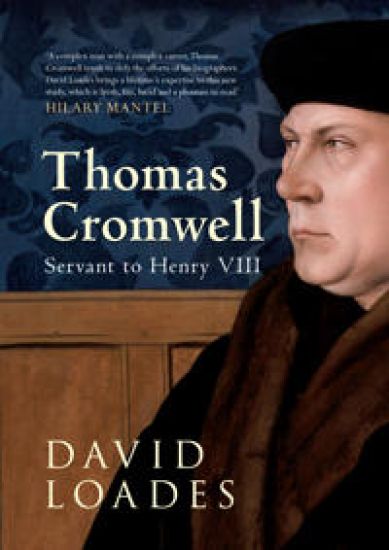
Thomas Cromwell

Thomas Cromwell

David Loades

Amberley Publishing
2013
sidottu
Thomas Cromwell was a selfmade lawyer who served first Cardinal Wolsey and then Henry VIII. His time with Wolsey was an apprenticeship which served him well in his work for the king after the cardinal's fall from power in 1529. Cromwell's time in office from 1530 until his execution in 1540 was one of the most crucial periods in English history. This biography explores how he tried to manage his relationship with Henry VIII and why he failed. It also shows how he manipulated the politics of the court that eventually destroyed him. The rise and fall of the Boleyns, the dominance of the Dukes of Norfolk and Suffolk, and the executions of Thomas More and John Fisher all play their part in Thomas Cromwell's life. Eventually he overreached himself in his patronage of evangelical preachers and in arranging Henry's marriage to Anne of Cleves, which played a crucial part in his fall and death in July 1540.
The Tudors For Dummies

The Tudors For Dummies

David Loades; Mei Trow

John Wiley Sons Inc
2010
nidottu
This entertaining guide covers the period from 1485 to 1603, exploring the life and times of everyday people (from famine and the flu epidemic, to education, witchcraft and William Shakespeare) as well as the intrigues and scandals at court. Strap yourself in and get ready for a rollercoaster ride through the romantic and political liaisons of Henry VIII and Elizabeth I - and that's not all! Information on surviving Tudor buildings, such as Hampton Court, adds a contemporary twist for readers wanting to bring history to life by visiting these historic sites. The Tudors For Dummies includes: Part I: The Early Tudors Chapter 1: Getting to Know the Tudors Chapter 2: Surveying the Mess the Tudors Inherited Chapter 3: Cosying Up With the First Tudor Part II: Henry VIII Chapter 4: What was Henry like? Chapter 5: How Henry Ran his Kingdom Chapter 6: Divorced, Beheaded, Died; Divorced, Beheaded, Survived: The Perils of Marrying Henry Chapter 7: Establishing a New Church: Henry and Religion Part III: Edward VI, Mary and Philip, and Queen Mary Chapter 8: Edward, the Child King Chapter 9: Establishing Protestantism Chapter 10: Northumberland, Lady Jane Grey and the Rise of Mary Chapter 11: What Mary Did Chapter 12: Weighing Up War and Disillusionment Part IV: The First Elizabeth Chapter 13: The Queen and her Team Chapter 14: Breaking Dinner Party Rules: Discussing Religion and Politics Chapter 15: Tackling Battles, Plots and Revolts Chapter 16: Making War with Spain Chapter 17: Understanding the Trouble in Ireland Chapter 18: Passing on the Baton - Moving from Tudors to Stewarts Part V: The Part of Tens Chapter 19: Ten top Tudor Dates Chapter 20: Ten Things the Tudors Did For Us Chapter 21: Ten (Mostly) Surviving Tudor Buildings
Letters from the Mary Rose

Letters from the Mary Rose

David Loades; C S Knighton

THE HISTORY PRESS LTD
2022
nidottu
‘The authors are to be congratulated on a book which merits usage in the national curriculum.’ - International Journal of Nautical ArchaeologyThe raising of the Tudor warship Mary Rose in 1982 has made her one of the most famous ships in history, though there is a good deal more to her story than its terminal disaster. She served successfully in the Royal Navy for more than thirty years before sinking, for reasons still uncertain, during a battle off Portsmouth in 1545. There have been many books published about Mary Rose but this is the only one written largely by those who sailed with her. It is based around original documents, including all the known despatches written aboard Mary Rose by the commanding admirals. Extracts from accounts and other papers illustrate the building, equipping and provisioning of the ship. Although this is primarily a view from the quarter-deck, there are occasional glimpses of life below. The collection concludes with reports of the sinking, and of the first attempts to salvage the ship and her ordnance.The documents are presented in modern spelling and are set in context through linking narratives. Technical terms are explained, and the principal characters introduced. The texts are supplemented by contemporary images, and by photographs of the preserved ship and recovered objects. A new range of illustrations has been added to this edition, published forty years on from the raising of the hull.
Elizabethan Naval Administration

Elizabethan Naval Administration

C.S. Knighton; David Loades

Routledge
2017
nidottu
This is the first general selection from the substantial body of surviving documents about Elizabeth’s navy. It is a companion to The Navy of Edward VI and Mary I (Vol.157 in the NRS Series), where the apparatus serving both volumes was printed, and it complements the other NRS volumes that deal specifically with the Spanish Armada. This collection concentrates (though not exclusively so) on the early years of Elizabeth’s reign when there was no formal war. From 1558-1585 the navy was involved in a number of small-scale campaigns, pursuit of pirates and occasional shows of force. The documents selected emphasize the financial and administrative processes that supported these operations, such as mustering, victualing, demobilisation, and ship maintenance and repair. The fleet varied in size from about 30 to 45 ships during the period and a vast amount of maintenance and repair was required. The main component of the volume is the massively detailed Navy Treasurer's account for 1562-3 which is followed by and collated with the corresponding Exchequer Account. The documents illustrate just how efficiently the dockyards functioned. They were one of the great early Elizabethan achievements.
Elizabethan Naval Administration

Elizabethan Naval Administration

C.S. Knighton; David Loades

Ashgate Publishing Limited
2013
sidottu
This is the first general selection from the substantial body of surviving documents about Elizabeth’s navy. It is a companion to The Navy of Edward VI and Mary I (Vol.157 in the NRS Series), where the apparatus serving both volumes was printed, and it complements the other NRS volumes that deal specifically with the Spanish Armada. This collection concentrates (though not exclusively so) on the early years of Elizabeth’s reign when there was no formal war. From 1558-1585 the navy was involved in a number of small-scale campaigns, pursuit of pirates and occasional shows of force. The documents selected emphasize the financial and administrative processes that supported these operations, such as mustering, victualing, demobilisation, and ship maintenance and repair. The fleet varied in size from about 30 to 45 ships during the period and a vast amount of maintenance and repair was required. The main component of the volume is the massively detailed Navy Treasurer's account for 1562-3 which is followed by and collated with the corresponding Exchequer Account. The documents illustrate just how efficiently the dockyards functioned. They were one of the great early Elizabethan achievements.