

Kirjahaku
Etsi kirjoja tekijän nimen, kirjan nimen tai ISBN:n perusteella.
48 kirjaa tekijältä David Mason


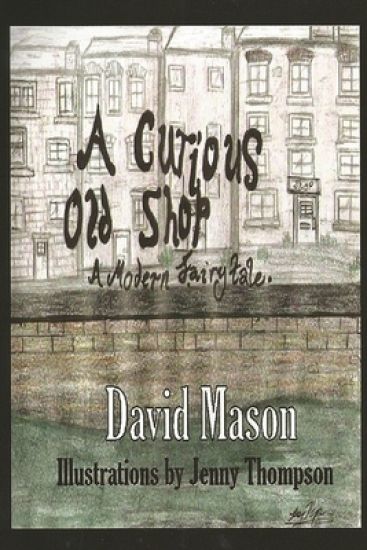
Fascinating drawings by Jennie are brought to life by David. Bored youngsters Kate and Joe decide to have another look into an old shop by the canal. It turns out to be a very Curious Old Shop indeed. This is a tale to awaken the imagination of any youngster, perfect for any age.

Penetrating overview of South Africa's complex history for visitors or anyone fascinated by its present and past.



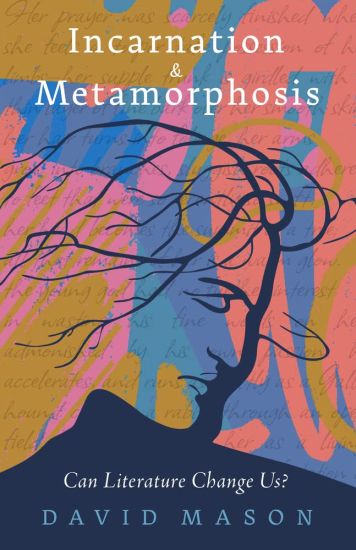
"Witty and heartfelt essays, shaken and stirred."--Kirkus Reviews"Mason's sharp interpretations make a persuasive case that great literature's complexity and ambiguity can, at its best, produce empathy and understanding in readers. Book lovers will find much to ponder."--Publishers Weekly"These essays are by turns expansive, sustaining and astringent, occasionally bromidic yet often incisive. One feels Mason hitting his stride as he enthuses infectiously over Tom Stoppard and Kay Ryan, Seamus Heaney and Sylvia Plath ('a lesson in critical circumspection'), fellow poet-critics Clive James and John Burnside, unfashionable writers such as Joyce Carey and Weldon Kees, and the Australian Helen Garner. He argues convincingly, if counterintuitively, for the outsider status of Dana Gioia, and laments that despite his 'mastery of dramatic voice' and 'comic melancholia, ' Michael Donaghy is 'yet to find a major American publisher.'"--Jaya Savige, Times Literary Supplement"Literary criticism," David Mason writes, "ought to entertain as well as illuminate." In these essays Mason tells stories about embodiment and change, incarnation and metamorphosis, drawing connections between art and life without confusing the two. Mason considers the many kinds of change we encounter in our lives, our desire for justice, and the ways great writers complicate that desire. He discusses the lives and works of Montaigne, Diderot, and Neruda, as well as his colorful father's fascination with a fictional character. He takes up such contemporary figures as the daring Australian writer Helen Garner, the playwright Tom Stoppard, and the poet-critic Dana Gioia; and he has fresh things to say about the perils of fame in the careers of Sylvia Plath and Seamus Heaney and mourns the loss of poet Michael Donaghy. Incarnation & Metamorphosis is a book about living with literature--Mason writes that literature tells "us that we are seen, warts and all. Criticism, such as the essays in this book, is a way of seeing back."
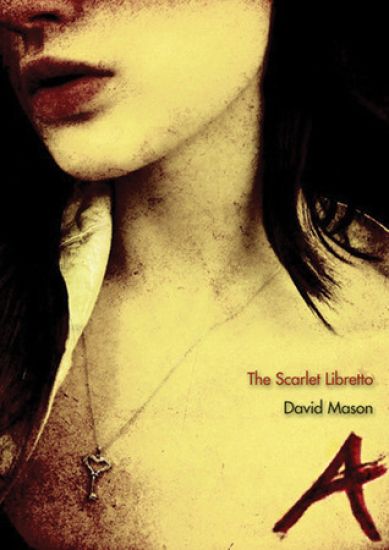
Words for Lori LaitmanÆs opera, The Scarlet Letter Based on the story by Nathaniel Hawthorne Award-winning poet and librettist David Mason, author of Ludlow and other books, has given new life in verse to HawthorneÆs classic novel. By distilling the bookÆs narrative line and adding a charged lyricism of his own, Mason has created another magnificent work in his ongoing poetic portrait of America. In old Boston, a young woman, Hester Prynne, has been charged with adultery and forced to wear the scarlet letter \u201cA\u201d embroidered on her breast. Just as she mounts the scaffold to receive her sentence, her husband, long presumed dead and newly escaped from captivity among the Indians, arrives and recognizes her. This man, renamed Roger Chillingworth, begins a quest to discover the father of HesterÆs child. As the community wrestles with whether or not to allow Hester to continue raising her daughter, Chillingworth moves in with the pale young minister, Arthur Dimmesdale, who hides the fact that he is the sought-after father. In a dark night of the soul, Arthur is taunted by a local witch, and it becomes clear that he is overcome with guilt and inner conflict about his past with Hester. The two lovers meet in the forest, plotting their escape, sure they can flee the laws and mores of men in this new world. But Dimmesdale cannot forget his guilt, and during an election day ceremony he confesses his sin to the crowd, exposing a branded letter \u201cA\u201d over his own heart. A tale of conflict between an astonishing woman and her thwarted and thwarting community, of a ministerÆs guilt and a husbandÆs vengeance, MasonÆs Scarlet Libretto casts new light on HawthorneÆs classic, on the tension between freedom and responsibility, and on the secrets in the human soul.
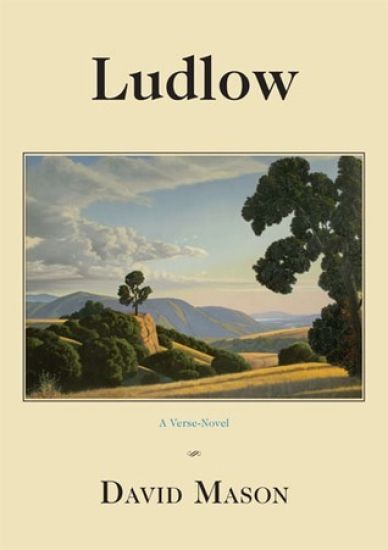
Language and landscape come alive in this remarkably colorful story of immigrants in southern Colorado. Among them are Greeks, Italians, Mexicans, Scots. Their struggle to survive is personal, yet they are caught up in larger events of American history in the second decade of the twentieth century, leading to the defining moment of the Ludlow Massacre in April 1914. David Mason's novel also steps back from the story, questioning whether we can know the truth about it, asking us why we want to know. Ultimately, in its charged and headlong verse, enriched by dialect and dream, Ludlow is about how we say the world, how we speak ourselves into being. Its characters, both fictional and historical figures, are intensely alive even as they are lost. Mason proves what the ancients knew—that verse remains a remarkable medium for the telling of the tale.

In The Sound acclaimed poet David Mason collects his best shorter work of the past forty years, including lyrics like “Song of the Powers” and darkly brilliant narratives “The Collector’s Tale” and “The Country I Remember,” which Anthony Hecht called “a welcome addition to the best that is now being written by American poets.” A poet of love and history and nature, Mason forges a language that can reconnect us to the world.
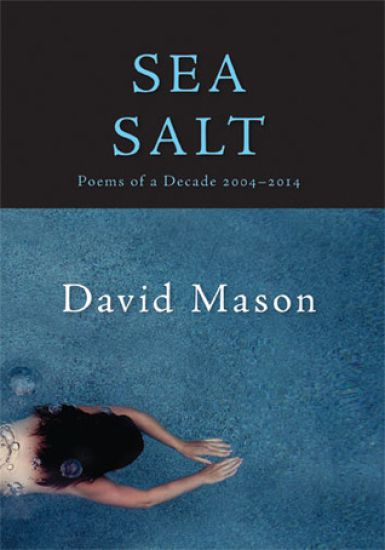
Long regarded as one of the best narrative and dramatic poets at work in the United States, David Mason has also been regularly producing soulful lyrics. In the ten years since the publication of his last collection of shorter poems, Mason has refined his art in the fires of wrenching personal change. The result is an almost entirely new poetic voice and his most rigorous and memorable book to date. Emotionally resonant and elegant in phrasing, the poems of Sea Salt, which have appeared in publications such as Best American Poetry, The New Yorker, Harper’s, and Poetry, are a powerful evocation of crisis and change. These “poems of a decade” demonstrate that the author of Ludlow: A Verse Novel and The Scarlet Libretto is also a lyric poet at the top of his game.

This volume seeks to understand more about the lives and histories of the general population of the Republic of Turkey during the years 1928 and 1945. During this period, concepts of Turkish nationalism were expounded in a top-down effort to rally the population to be united as Turks. Being a top-down effort, there needed to be mechanisms through which to transmit these concepts to the general population. This work assesses the level to which authors of indigenous Turkish detective fiction written between 1928 and 1945 attempted to aid in this process of transmission. Five series of this period are carefully analysed; the clear conclusion is that there was authorial intent to spread ideas of “Turkism” in each and every series.

David Mason was born in Washington State, forty-odd degrees north latitude, and now lives on the Australian island of Tasmania, forty-odd degrees south latitude. That Pacific crossing is the work of a lifetime of devotion and change. The rich new poems of Pacific Light explore the implications of the light as well as peace and its opposing forces. What does it mean to be an immigrant and face the ultimate borders of our lives? How can we say the word home and mean it? These questions have obsessed Mason in his major narrative works, The Country I Remember and Ludlow, as well as his lyric and dramatic writing. Pacific Light is a culmination and a deepening of that work, a book of transformations, history and love, endurance and unfathomable beauty, by a poet “at the height of his powers.”

"Early on in this rambling, easygoing account of his career, Mason mentions three outstanding classics of [the] subgenre: Charles Everitt's The Adventures of a Treasure Hunter, David Randall's Dukedom Large Enough, and David Magee's Infinite Riches. The Pope's Bookbinder belongs on the same shelf."?Michael Dirda, The Washington Post