Kirjojen hintavertailu. Mukana 11 627 488 kirjaa ja 12 kauppaa.

Kirjahaku

Etsi kirjoja tekijän nimen, kirjan nimen tai ISBN:n perusteella.

68 kirjaa tekijältä David Reisman

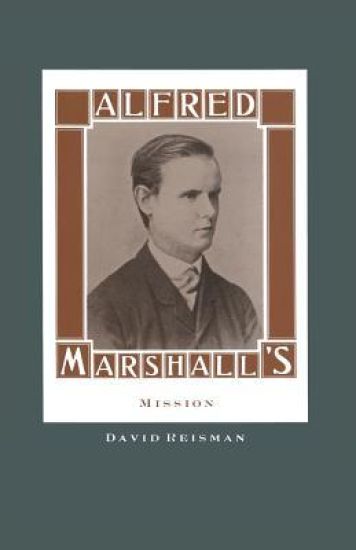
Alfred Marshall’s Mission

Alfred Marshall’s Mission

David Reisman

Palgrave Macmillan
1990
nidottu
Marshall's theories of economic and social advancement are explained with reference to the scientific and philosophical movements which influenced them: utilitarianism, evolutionism, mathematical marginalism and ethical idealism.
Trade in Health

Trade in Health

David Reisman

Edward Elgar Publishing Ltd
2014
sidottu
’Trade in Health is a timely reflection on the interface of economics with the ethics and public policy facets of the international movement of patients. Health issues such as these are at the forefront of modern political economy. "National" health is increasingly less so. Reisman’s previous scholarship in this area is brought to bear in an insightful and eminently readable and engaging fashion. In an area where uncovering the facts is more difficult than "deciphering the Dead Sea Scrolls", such a reflective work on the critical aspects of political economy helps to fill a void in considering whether such trade is likely to be in the interests of patients, nations and the global community. In addition to the rosy picture of healthy and wealthy tourists having a sojourn for medical care during a vacation, Reisman is not afraid to tackle the thorny issues concerning trade in organs, eggs and even death, in this sobering and comprehensive volume. It is a rare skill to bring the luminaries of Smith, Marshall, Mill and Confucius to bear on such a contemporary tale! International travel by patients is at the nexus of a revolution in global health. It is driving and affecting aspects of foreign investment, health worker migration and e-health provision. Reisman skilfully links these foundations of health care, and as such provides critical text for consideration by those seeking to build and strengthen future health systems. Trade in Health is an excellent overview. It provides critical insights for those new to the area as well as new information and challenges for those of us involved for a number of years.'–- Richard Smith, Professor of Health System Economics and Dean of Faculty of Public Health and Policy, London School of Hygiene & Tropical Medicine, UKOnce exports and imports meant agriculture and industry. In the global economy and the electronic age, trade is also expanding into the service sector. This timely book closely examines trade in health and documents the growth of a cross-national service that in the past was mainly consumed at home. Following from his highly successful book Health Tourism, Professor David Reisman offers a comprehensive and searching multidisciplinary account of the way in which medical services, patients, capital and professionals are making up a global healthcare economy that crosses borders. He reflects on their pursuit of lower prices, better quality and a differentiated product, and suggests that public policy is essential if the ethical capital of interdependent societies is not to be eroded by the international market in health and care.Written in a concise and lucid form, this original book will be of great interest to all people interested in the internationalization of health care. Combining theory and empirical evidence from economics, tourism and medical care, scholars involved in health policy and social administration will find much of significance in this authoritative study.
Health Policy

Health Policy

David Reisman

Edward Elgar Publishing Ltd
2016
sidottu
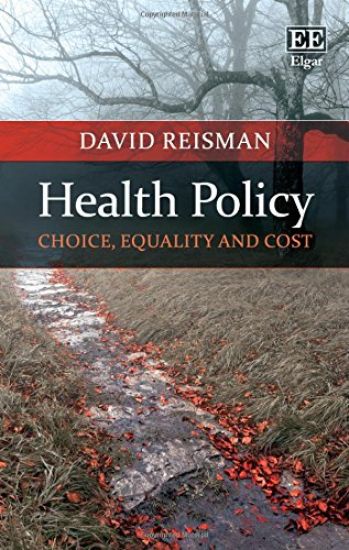
This lucid and comprehensive book explores the ways in which the State, the market and the citizen can collaborate to satisfy people's health care needs. It argues that health care is not a commodity like any other. It asks if its unique properties mean that there is a role for social regulation and political management. Apples and oranges can be left to the buyers and the sellers. Health care may require an input from the consensus, the experts, the insurers, the politicians and the bureaucrats as well.David Reisman makes a fresh contribution to the debate. He argues that the three policy issues that are of primary importance are choice, equality and cost. He explores the balance between the patient, the practitioner and public opinion; the disparities in outcome indicators and access to medical care; and the escalation in prices and quantities at the expense of other areas of social life. Reisman concludes that, despite its significance for the individual and the nation, there is no single definition of health or health care. The maximand is a mix. Yet decisions have to be made.This thought-provoking and insightful book will be of use to students and scholars of public policy, social policy and health economics. It will also be of interest to medical practitioners who want to situate hard choices about health and illness in a broad multidisciplinary context.
Health Policy

Health Policy

David Reisman

Edward Elgar Publishing Ltd
2017
nidottu
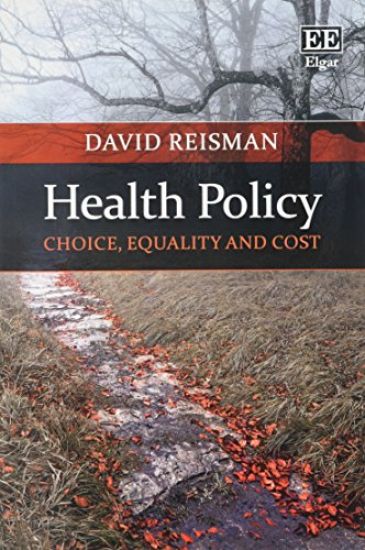
This lucid and comprehensive book explores the ways in which the State, the market and the citizen can collaborate to satisfy people's health care needs. It argues that health care is not a commodity like any other. It asks if its unique properties mean that there is a role for social regulation and political management. Apples and oranges can be left to the buyers and the sellers. Health care may require an input from the consensus, the experts, the insurers, the politicians and the bureaucrats as well.David Reisman makes a fresh contribution to the debate. He argues that the three policy issues that are of primary importance are choice, equality and cost. He explores the balance between the patient, the practitioner and public opinion; the disparities in outcome indicators and access to medical care; and the escalation in prices and quantities at the expense of other areas of social life. Reisman concludes that, despite its significance for the individual and the nation, there is no single definition of health or health care. The maximand is a mix. Yet decisions have to be made.This thought-provoking and insightful book will be of use to students and scholars of public policy, social policy and health economics. It will also be of interest to medical practitioners who want to situate hard choices about health and illness in a broad multidisciplinary context.
State and Trade

State and Trade

David Reisman

Edward Elgar Publishing Ltd
2017
sidottu
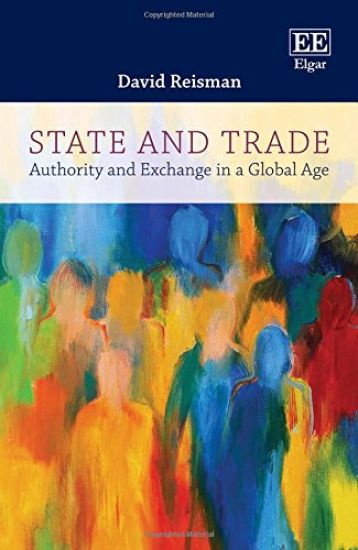
In the age of globalisation, goods, services, labour and capital are crossing international borders on a scale never before known. They are creating a nationless market. Governed by both the invisible hand of business and interest and the visible hand of authority and direction, a world market can be a free-for-all, but it can also be constrained by the national interest of countries that differ greatly in their social institutions and material circumstances. This book provides a lucid and comprehensive account of contemporary international political economy. Beginning with the ideological underpinnings, it examines the globalisation of trade in goods and services and labour and capital. It relates the free economic market to social consensus and political regulation, both within sovereign countries and at the supra-national level. The book is comprehensive and interdisciplinary, incorporating philosophical, political, social and economic insights on an international scale and applying them directly to the ongoing phenomenon of globalisation. Topical and non-nation specific, it covers the WTO, EU, the transfer of technology, the multinational corporation, the exchange rate, free versus regulated trade, the status of agreements and blocs, as well as contemporary issues such as populism, xenophobia and rapid economic growth in both rich and poor nations. Accessible to specialists, students and the informed reader alike, State and Trade offers wide-ranging analysis of the politics of trade in goods and services, international investment and the migration of labour across the globe.
State and Trade

State and Trade

David Reisman

Edward Elgar Publishing Ltd
2018
nidottu
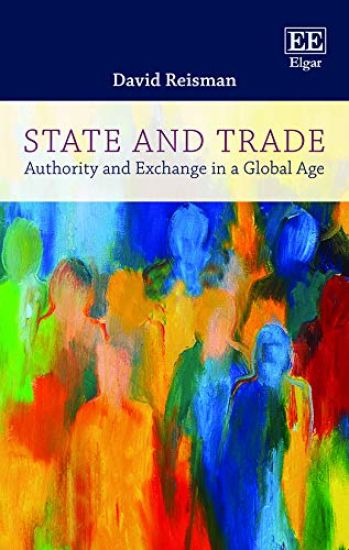
In the age of globalisation, goods, services, labour and capital are crossing international borders on a scale never before known. They are creating a nationless market. Governed by both the invisible hand of business and interest and the visible hand of authority and direction, a world market can be a free-for-all, but it can also be constrained by the national interest of countries that differ greatly in their social institutions and material circumstances. This book provides a lucid and comprehensive account of contemporary international political economy. Beginning with the ideological underpinnings, it examines the globalisation of trade in goods and services and labour and capital. It relates the free economic market to social consensus and political regulation, both within sovereign countries and at the supra-national level. The book is comprehensive and interdisciplinary, incorporating philosophical, political, social and economic insights on an international scale and applying them directly to the ongoing phenomenon of globalisation. Topical and non-nation specific, it covers the WTO, EU, the transfer of technology, the multinational corporation, the exchange rate, free versus regulated trade, the status of agreements and blocs, as well as contemporary issues such as populism, xenophobia and rapid economic growth in both rich and poor nations. Accessible to specialists, students and the informed reader alike, State and Trade offers wide-ranging analysis of the politics of trade in goods and services, international investment and the migration of labour across the globe.
Global Political Economy

Global Political Economy

David Reisman

Edward Elgar Publishing Ltd
2021
nidottu
Economics is business, and politics is power. In this insightful book, David Reisman explores the interaction between authority and exchange in a global village where individual nation states - once the pinnacle of political organisation - increasingly depend on each other for their material well-being. Taking a transnational and impartial perspective, the author builds a comprehensive and intricate narrative. He dissects the emergence of the contemporary global economy and explains its impact on the sovereignty and strength of nations. Reisman explores the ways in which liberals, socialists and nationalists can reach a viable consensus in a new social order where the national interest must be the global interest as well. Offering authoritative, integrated and critical guidance to a topic that is of ever greater importance, this book is crucial reading for students of global political economy and international politics.
Plato's Economics

Plato's Economics

David Reisman

Edward Elgar Publishing Ltd
2021
sidottu
Plato was the first of the great thinkers to integrate the economy into a wide-ranging synthesis of ethical absolutes and human interaction. In this original and stimulating book, David Reisman assesses his influential contribution to the political economy of production, consumption, distribution and exchange.Drawing on the whole of Plato's published work, this book explores Plato's insights into the core philosophical concerns of stability, hegemony, justice and balance. It situates Plato's economics in the context of fourth century Athens. It argues that the transition from oligarchy to democracy in the wake of the disastrous war with Sparta had reinforced the attraction of justice, moderation and the middle way to a political philosopher who wanted to reverse the decay in popular standards of right and wrong.Analytical but accessible, this book is crucial reading for students and scholars of economic and social thought. Researchers and practitioners interested in social and public policy will also benefit from this book's comprehensive and interdisciplinary approach.
The Institutional Economy

The Institutional Economy

David Reisman

Edward Elgar Publishing Ltd
2002
sidottu
The institutional economy is the economy of rules and laws, conventions and precedents. It is prices but also practices, change but also constancy, individual but also interdependence. David Reisman argues that conformity and repetition as well as new initiatives and mould-breaking departures constitute the essence of supply and demand. This thorough and comprehensive book examines the role that institutions play in economic life. The discussion begins with common values, shared traditions and individual habits which have their roots in the past. It goes on to consider consumer preferences, needs and wants, altruism, malevolence, intrinsic motivation, organisational memory and the social capital that is embedded in networks and communities. Its conclusion is that there is a case for a broadly-based economics which is a science of norms and standards as well as a theory of prices and costs. Culture is continuity and pattern. Precisely the same is true of supply and demand.The Institutional Economy deals with a topic that is of increasing importance in social economics and political economy. It will be of interest to all social scientists concerned to make demand and supply more relevant to the economic conditions of the present day.
Schumpeter’s Market

Schumpeter’s Market

David Reisman

Edward Elgar Publishing Ltd
2004
sidottu
Schumpeter was an interdisciplinary political economist who made institutional transformation the centrepiece of his theory of supply and demand. This comprehensive monograph reconstructs and assesses Schumpeter's contribution to the restless economics of entrepreneurship, disequilibrium and search.Examining the evidence from all of Schumpeter's published work, the book fills a significant gap in the literature of economic thought. Partly because Schumpeter was so prolific, partly because he touched on so many interrelated topics, there have been few books that have sought to span the whole of this important author's influential insights. This volume will appeal to scholars, students and researchers who are interested in exploring the complexities of Schumpeter's vision and his intellectual system. It will be entirely accessible to non-evolutionary economists. Historians of economic thought will find this a valuable and novel interpretation of Schumpeter's work.
Democracy and Exchange

Democracy and Exchange

David Reisman

Edward Elgar Publishing Ltd
2005
sidottu
Democracy is the rule of the people. Exchange is supply and demand. Individualism, agreement, tolerance and choice are the underlying values that make possible the productive collaboration of the market and the state. This book assesses the theories of democracy and exchange of five interdisciplinary thinkers who tried to unite political and economic reasoning into a single theory of moderation and pragmatic management.Democracy and Exchange is about the twin pillars of the consultative order. The subject is perennially topical and interesting, both in rich countries and in less-developed countries that are developing their own institutional mix. It also provides an in-depth analysis and comparison of the political economy of five seminal theorists: Adam Smith, Richard Titmuss, T.H. Marshall, J.K. Galbraith and Joseph Schumpeter.David Reisman's book will be of great interest to academics trying to understand the history of economic, political and social ideas, institutional economics, economic sociology and social policy. It is a comprehensive and novel interpretation of two related interrelated concepts, five difficult authors and some of the most pressing issues in present-day debates.
Health Care and Public Policy

Health Care and Public Policy

David Reisman

Edward Elgar Publishing Ltd
2007
sidottu
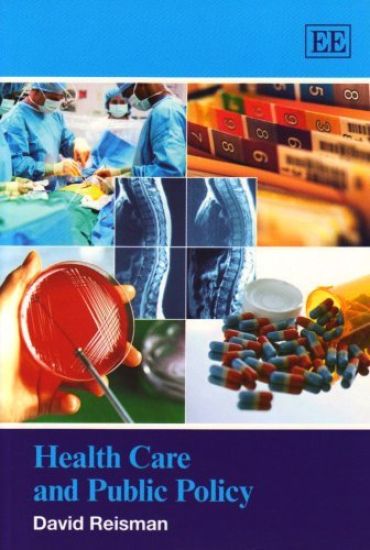
Health care is absorbing an increasing share of resources in all countries. It is the task of public policy to ensure that the nation secures good quality attention at an affordable price. This book, distinguishing clearly between health status and health care, examines the ways in which governments can keep down morbidity and mortality while also ensuring that treatments are medically justifiable, economically cost-effective and socially equitable. Ignorance, uncertainty, asymmetrical information, professional monopolies, insurance and poverty all mean that the market by itself is not enough. Pragmatic intervention is also required to ensure that well-being and social justice are delivered in combination with value for money.Health Care and Public Policy is a comprehensive and intelligible cross-disciplinary account of the objectives of health care policy (medical, social, economic) and of the policy-tools that government can employ (cost-benefit analysis, entry barriers, competition) in order to ensure that scarce resources are not wasted nor needy social groups deprived of basic and affordable care.Health policy is hotly debated in all countries. This cross-national book is timely and relevant. It will be of special interest to academics and students who want to deepen their understanding of health economics, social policy and administration, public policy and government, political economy and the logic of institutions.
Social Policy in an Ageing Society

Social Policy in an Ageing Society

David Reisman

Edward Elgar Publishing Ltd
2009
sidottu
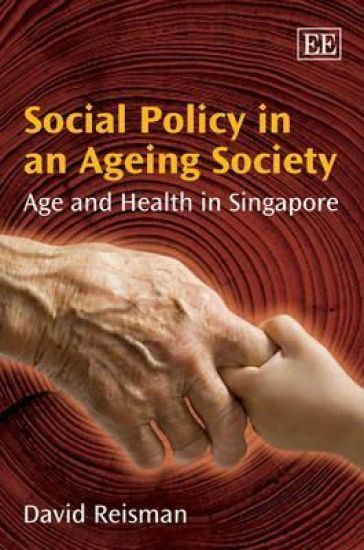
Around half the world's population live in countries where the fertility rate is far below the replacement rate and where life expectancy is increasing dramatically. Using Singapore as a case study, Social Policy in an Ageing Society explores what might happen in a dynamic and prosperous society when falling births, longer life expectancy and rising expectations put disproportionate pressure on scarce resources that have alternative uses.David Reisman investigates the challenges facing Singapore, where a rapidly rising median age and the growing pressure of the elderly upon medical attention are threatening to disrupt the economic and even the political status quo. The dependency of the old upon the young is becoming a financial and an emotional burden. Health care is swelling in quantity and price. Voluntary and compulsory savings are being used up. New demands for pensions and subsidies are challenging the national ideology of family network and self-reliance. Despite a wealth of prospective problems, the author argues that viable solutions can be found. Discretionary savings can increase. Reverse mortgages can monetise owner-occupied property. A higher participation rate can give the elderly the opportunity to earn a living for themselves. This book concludes that public policy must play its part in facilitating these solutions. It must ensure that the old retain their dignity. The old should not lie where they fall.This comprehensive, intelligible and highly original cross-disciplinary study will appeal to a wide-ranging audience. Readers will include academics, researchers and students with an interest in health economics, the economics of development, social policy and administration, public policy and the socio-economic aspects of medicine.
Health Care and Public Policy

Health Care and Public Policy

David Reisman

Edward Elgar Publishing Ltd
2009
nidottu
Health care is absorbing an increasing share of resources in all countries. It is the task of public policy to ensure that the nation secures good quality attention at an affordable price. This book, distinguishing clearly between health status and health care, examines the ways in which governments can keep down morbidity and mortality while also ensuring that treatments are medically justifiable, economically cost-effective and socially equitable. Ignorance, uncertainty, asymmetrical information, professional monopolies, insurance and poverty all mean that the market by itself is not enough. Pragmatic intervention is also required to ensure that well-being and social justice are delivered in combination with value for money.Health Care and Public Policy is a comprehensive and intelligible cross-disciplinary account of the objectives of health care policy (medical, social, economic) and of the policy-tools that government can employ (cost-benefit analysis, entry barriers, competition) in order to ensure that scarce resources are not wasted nor needy social groups deprived of basic and affordable care.Health policy is hotly debated in all countries. This cross-national book is timely and relevant. It will be of special interest to academics and students who want to deepen their understanding of health economics, social policy and administration, public policy and government, political economy and the logic of institutions.
Health Tourism

Health Tourism

David Reisman

Edward Elgar Publishing Ltd
2010
sidottu
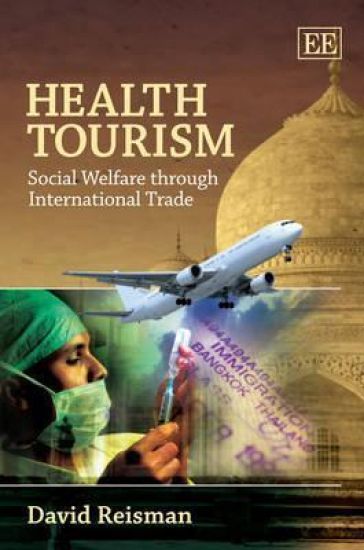
In this unique and pathbreaking book, David Reisman examines the relatively new phenomenon of health travel. He presents a multidisciplinary account of the way in which lower costs, shorter waiting times, different services, and the chance to combine recreational tourism with a check-up or an operation all come together to make medical travel a new industry with the potential to create jobs and wealth, while at the same time giving sick people high-quality care at an affordable price. The book illustrates that it is no longer the case that medical attention must be consumed at home. Patients are travelling to Mexico, India and Thailand for a heart bypass. They are going to Hungary, Poland and Malaysia for dentistry. Doctors are migrating to Britain, the USA and Canada for new challenges. Hospitals are opening subsidiaries in Dubai, the Philippines and Costa Rica to see overseas patients on the spot. Integrating academic perspectives from medicine, tourism, health economics, development studies and public policy, the author concludes that the benefits both to the importing and the exporting nations are considerable, but that there are also some costs. He suggests that the new industry should be regulated and supported in order that it can do its best both for the local population and for the sick people who travel abroad for treatment. This fascinating and highly original book will be of great interest to academics and researchers in areas such as health economics, tourism, social policy, development studies, Asian studies and public policy. It will also prove invaluable to practitioners actively involved in planning and delivering medical attention in the global economic order.
Theories of the Mixed Economy

Theories of the Mixed Economy

David Reisman

Pickering Chatto (Publishers) Ltd
1994
muu
A collection of ten classic texts of 20th-century British political economy. The texts deal with managed capitalism, the welfare state and the middle ground, and should promote readers' understanding of British politics and economic ideology in the years since the Great Depression.
Democratic Socialism in Britain

Democratic Socialism in Britain

David Reisman

Pickering Chatto (Publishers) Ltd
1996
muu
Socialists are united far more by their shared opposition to anomic individualism than by their commitment to any single interpretative scheme or body of beliefs. However, the 42 texts by the 27 socialists represented in this collection show that, in spite of the striking differences, there are certain crucial similarities and points of convergence. These volumes show that in Britain, at least in the years from 1825-1952, the democrats who called themselves socialists tended to concentrate their discussion around four common themes that served as the core of their common cause: quest for community, the institution of equality, the rehabilitation of the state, and transition by consent.The classic texts contained in these ten volumes, which encompass the Ricardian socialists, the Christian socialists, and the Fabian socialists, seek to make human interaction and social responsibility the centrepiece of economic debate from a variety of ideological perspectives. These key contributions to British thought between 1825 and 1952 are still a source of stimulus to students of political economy even as they have acquired the status of great historical works.
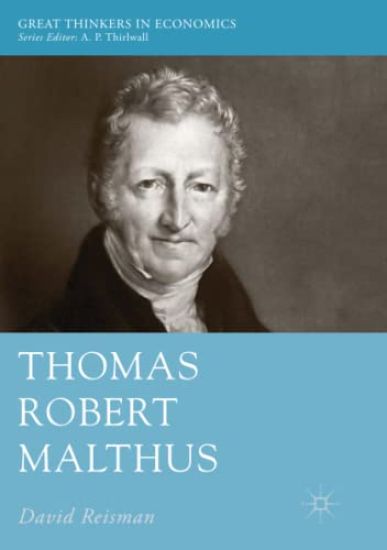
Thomas Robert Malthus

Thomas Robert Malthus

David Reisman

Springer Nature Switzerland AG
2018
sidottu
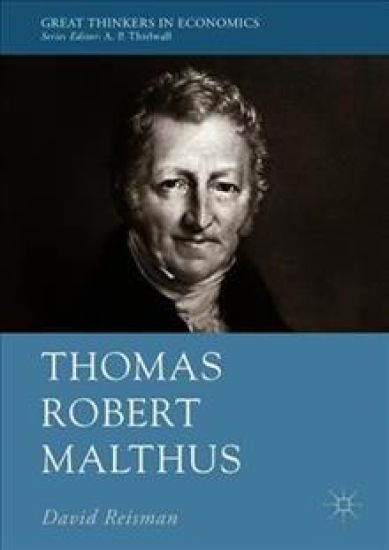
Thomas Robert Malthus (1766-1834) was a leading figure in the British classical school of economics, best-known for extending the insights of Adam Smith at a time of revolutionary improvements in agriculture and industry. This book explores the way in which he accounted for the tendency to overpopulation, the exhaustion of arable land and the deficiency of effective demand.Malthus relied on historical and empirical evidence in the spirit of Bacon and Hume, but also backed up his data with a priori hypotheses that link him to his contemporary, David Ricardo. Malthus was strongly in favour of free trade, the minimal State, the gold standard and the abolition of poverty relief. Always a pragmatist, however, he was just as much in favour of public education, contra-cyclical public works and a safety net of tariffs and bounties to encourage national self-sufficiency with regard to food. He was both an economist and a clergyman and saw the two roles as interconnected. Malthus believed that a benevolent Deity had created vice and misery in order to shake human beings out of their natural indolence that would otherwise have condemned them to still greater distress. This title provides a clear and comprehensive examination of Malthus’s economic and social thought. It will be of interest to students and scholars alike.
Thomas Robert Malthus

Thomas Robert Malthus

David Reisman

Springer Nature Switzerland AG
2019
nidottu
Thomas Robert Malthus (1766-1834) was a leading figure in the British classical school of economics, best-known for extending the insights of Adam Smith at a time of revolutionary improvements in agriculture and industry. This book explores the way in which he accounted for the tendency to overpopulation, the exhaustion of arable land and the deficiency of effective demand.Malthus relied on historical and empirical evidence in the spirit of Bacon and Hume, but also backed up his data with a priori hypotheses that link him to his contemporary, David Ricardo. Malthus was strongly in favour of free trade, the minimal State, the gold standard and the abolition of poverty relief. Always a pragmatist, however, he was just as much in favour of public education, contra-cyclical public works and a safety net of tariffs and bounties to encourage national self-sufficiency with regard to food. He was both an economist and a clergyman and saw the two roles as interconnected. Malthus believed that a benevolent Deity had created vice and misery in order to shake human beings out of their natural indolence that would otherwise have condemned them to still greater distress. This title provides a clear and comprehensive examination of Malthus’s economic and social thought. It will be of interest to students and scholars alike.