Kirjojen hintavertailu. Mukana 11 244 527 kirjaa ja 12 kauppaa.

Kirjahaku

Etsi kirjoja tekijän nimen, kirjan nimen tai ISBN:n perusteella.

53 kirjaa tekijältä David Simpson

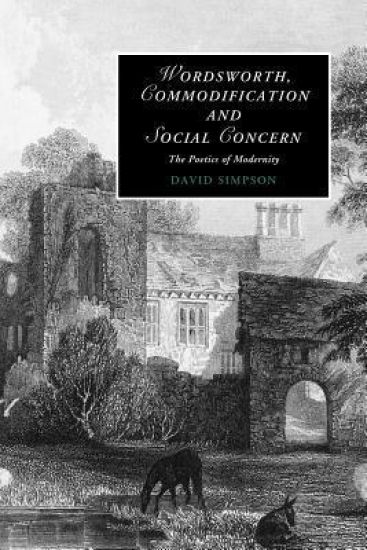
Wordsworth, Commodification, and Social Concern

Wordsworth, Commodification, and Social Concern

David Simpson

Cambridge University Press
2011
pokkari
This reading of Wordworth's poetry by leading critic David Simpson centres on its almost obsessive representation of spectral forms and images of death in life. Wordsworth is reacting, Simpson argues, to the massive changes in the condition of England and the modern world at the turn of the century: mass warfare; the increased scope of machine-driven labour and urbanisation; and the expanding power of commodity form in rendering economic and social exchange more and more abstract, more and more distant from human agency and control. Reading Wordsworth alongside Marx and Derrida, Simpson examines the genesis of an attitude of concern which exemplifies the predicament of modern subjectivity as it faces suffering and distress.
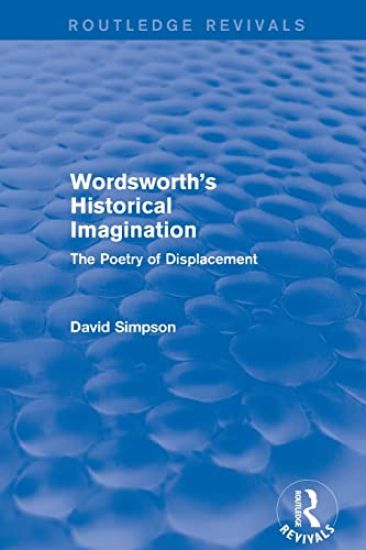
Wordsworth's Historical Imagination (Routledge Revivals)
Traditionally, Wordsworth’s greatness is founded on his identity as the poet of nature and solitude. The Wordsworthian imagination is seen as an essentially private faculty, its very existence premised on the absence of other people. In this title, first published in 1987, David Simpson challenges this established view of Wordsworth, arguing that it fails to recognize and explain the importance of the context of the public sphere and the social environment to the authentic experience of the imagination. Wordsworth’s preoccupation with the metaphors of property and labour shows him to be acutely anxious about the value of his art in a world that he regarded as corrupted. Through close examination of a few important poems, both well-known and relatively unknown, Simpson shows that there is no unitary, public Wordsworth, nor is there a conflict or tension between the private and the public. The absence of any clear kind of authority in the voice that speaks the poems makes Wordsworth’s poetry, in Simpson’s phrase, a ‘poetry of displacement’.
Wordsworth's Historical Imagination (Routledge Revivals)
Traditionally, Wordsworth’s greatness is founded on his identity as the poet of nature and solitude. The Wordsworthian imagination is seen as an essentially private faculty, its very existence premised on the absence of other people. In this title, first published in 1987, David Simpson challenges this established view of Wordsworth, arguing that it fails to recognize and explain the importance of the context of the public sphere and the social environment to the authentic experience of the imagination. Wordsworth’s preoccupation with the metaphors of property and labour shows him to be acutely anxious about the value of his art in a world that he regarded as corrupted. Through close examination of a few important poems, both well-known and relatively unknown, Simpson shows that there is no unitary, public Wordsworth, nor is there a conflict or tension between the private and the public. The absence of any clear kind of authority in the voice that speaks the poems makes Wordsworth’s poetry, in Simpson’s phrase, a ‘poetry of displacement’.
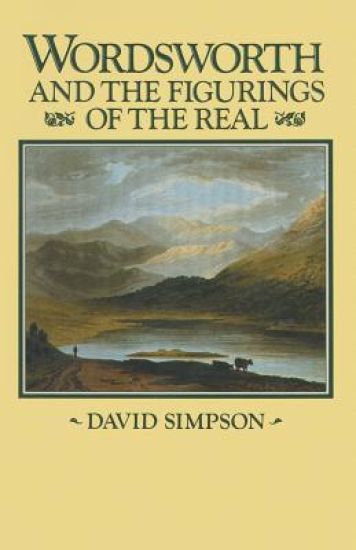
Wordsworth and the Figurings of the Real

Wordsworth and the Figurings of the Real

David Simpson

Palgrave Macmillan
1982
nidottu
Perhaps the most powerful feature of the Romantic imagination is its ability to dissolve existing form and order and create it anew. The Romantic investigation of the functions of the imagination also leads to important insights concerning its problems and dangers. Because it separates the person experiencing it from others around him, the imagination introduces ways of seeing which cannot be assumed to be simply communicable or easily shared, and which have as their objects different forms or 'things'. These forms, or figures, risk becoming for their originators both vehicles of power, in so far as they do convince others of their reality, and limiting constructs of prefigured order, inhibiting their users from the perception of new relations and alternative meanings. When the figured becomes the real, there thus arise difficulties in both individual and social perceptions. Arguing from the stance that all perception takes place by a creative (and hence potentially divisive) assembly of images or qualities into things, David Simpson shows that the analysis of figurative representation in Wordsworth's writing is of central importance to his idea of the human mind, and the way in which it is affected or allowed to function by its environment, both human and physical. In this way Wordsworth's ideas about the function of literature in society are seen to be more fully worked out than readers have often assumed them to be. Simpson pays particular attention to the ethical consequences of different ways of figuring the real, offering an explanation of Wordsworth's distinction between life in the town and life among the mountains and lakes of north-west England. In relating Wordsworth's poetry to important contemporary debates in political economy such as those concerning the division of labour and the evaluation of the advantages and disadvantages of commerce and luxury, he suggests that Wordsworth is a notable precursor of that nineteenth-century tradition which sees themind as open to critical determination by social and environmental factors.
A key to the Prophecies

A key to the Prophecies

David Simpson

Gale Ecco, Print Editions
2018
sidottu
The 18th century was a wealth of knowledge, exploration and rapidly growing technology and expanding record-keeping made possible by advances in the printing press. In its determination to preserve the century of revolution, Gale initiated a revolution of its own: digitization of epic proportions to preserve these invaluable works in the largest archive of its kind. Now for the first time these high-quality digital copies of original 18th century manuscripts are available in print, making them highly accessible to libraries, undergraduate students, and independent scholars.The Age of Enlightenment profoundly enriched religious and philosophical understanding and continues to influence present-day thinking. Works collected here include masterpieces by David Hume, Immanuel Kant, and Jean-Jacques Rousseau, as well as religious sermons and moral debates on the issues of the day, such as the slave trade. The Age of Reason saw conflict between Protestantism and Catholicism transformed into one between faith and logic -- a debate that continues in the twenty-first century.++++The below data was compiled from various identification fields in the bibliographic record of this title. This data is provided as an additional tool in helping to insure edition identification: ++++British LibraryT079222Macclesfield: printed and sold by Edward Bayley; sold also by Dilly, London; Fletcher, Oxford; Merril, Cambridge; Spence, York; Bulgin, Bristol; Swinney, Birmingham; Hazard, Bath; and Clarke, Manchester, 1795. XI, 5],462p.; 8
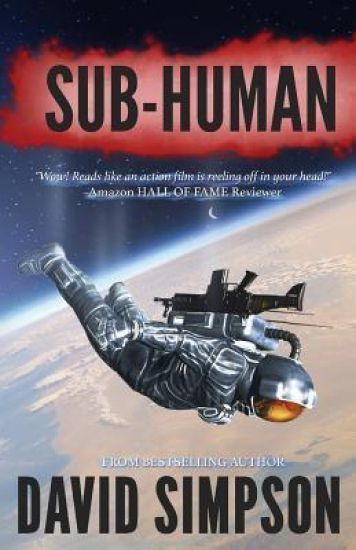
Sub-Human

Sub-Human

David Simpson

Createspace Independent Publishing Platform
2012
pokkari
Before he was Old-timer, he was Craig Emilson, a young doctor, sucked into military service at the outbreak of World War III. Enlisting to become a Special Forces suborbital paratrooper, Craig is selected to take part in the most important mission in American military history-a sortie into enemy territory to eliminate the world's first strong Artificial Intelligence. The mission is only the beginning of Craig's story, and for the story of humanity as well, as they accelerate towards a world that is post-human.
Trans-Human

Trans-Human

David Simpson

Createspace Independent Publishing Platform
2013
pokkari
In this sequel to Post-Human, humanity will be forced to face a future more advanced than it could have imagined if it wants to survive. Nineteen months have passed since the A.I. turned against humanity and was subsequently destroyed. In the meantime, James Keats has turned over the A.I.'s powers to a non-intelligent, easily controlled operating system. He and Thel have left the planet and spent six months vacationing on Venus, which has been newly terraformed without the consent or knowledge of the Governing Council. The A.I. has been deleted, but the message it sent out into the abyss of space in search of a companion has been answered. An alien force dwarfing the Earth is on its way to find out why the A.I. has stopped communicating. Keats and company can only assume its intentions will be hostile when it finds out the truth. Only one thing is for sure: nothing will ever be the same again. Welcome to the Trans-Human era. Welcome to the singularity."A thought-provoking, energetic sci-fi book, with a robust dose of high-octane exploits." -By A.F. Stewart, author of Chronicles of the Undead
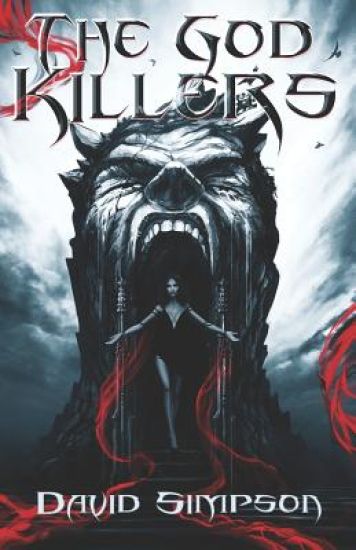
The God Killers

The God Killers

David Simpson

Createspace Independent Publishing Platform
2013
pokkari
In this edgy thriller, a creature pretending to be God tricks dying people with a heavenly white light - only to consume their souls forever. But Cipher, Han, Natalie, and Father Hurley know the truth - can they save humanity from its terrifying fate?
Engaging Violence

Engaging Violence

David Simpson

STANFORD UNIVERSITY PRESS
2022
sidottu
Recent thinking has resuscitated civility as an important paradigm for engaging with a violence that must be deemed endemic to our lives. But, while it is widely acknowledged that civility works against violence, and that literature generates or accompanies civility and engenders tolerance, civility has also been understood as violence in disguise, and literature, which has only rarely sought to claim the power of violence, has often been accused of inciting it. This book sets out to describe the ways in which these words—violence, literature and civility—and the concepts they evoke are mutually entangled, and the uses to which these entanglements have been put. Simpson's argument follows a broadly historical trajectory through the long modern period from the Renaissance to the present, drawing on the work of historians, political scientists, literary scholars and philosophers. The result is a distinctly new argument about the complex and often mystified entanglements between literature, civility and violence in the anglophone Atlantic sphere. What now are our expectations of civility and literature, separately and together? How do these long-familiar but residually imprecise concepts stand up to the demands of the modern world? Simpson's argument is that, despite and perhaps because of their imperfect conceptualization, both persist as important protocols for the critique of violence.