Kirjojen hintavertailu. Mukana 11 384 474 kirjaa ja 12 kauppaa.

Kirjahaku

Etsi kirjoja tekijän nimen, kirjan nimen tai ISBN:n perusteella.

35 kirjaa tekijältä David Wragg

The LMS Handbook

The LMS Handbook

David Wragg

The History Press Ltd
2016
nidottu
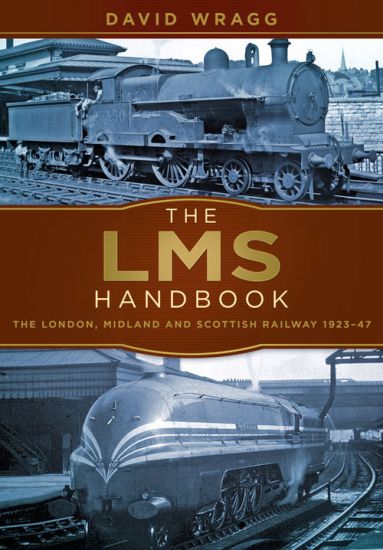
The London Midland & Scottish Railway was the largest of the Big Four railway companies to emerge from the 1923 grouping. It was the only one to operate in England, Scotland, Wales and Northern Ireland, as well as having two short stretches of line in the Irish Republic. It was also the world’s largest railway shipping operator and owned the greatest number of railway hotels. Mainly a freight railway, it still boasted the best carriages, and the work of chief engineer Sir William Stanier influenced the first locomotive and carriage designs for the nationalised British railways. Packed with facts and figures as well as historical narrative, this extensively illustrated book is a superb reference source that will be of interest to all railway enthusiasts.
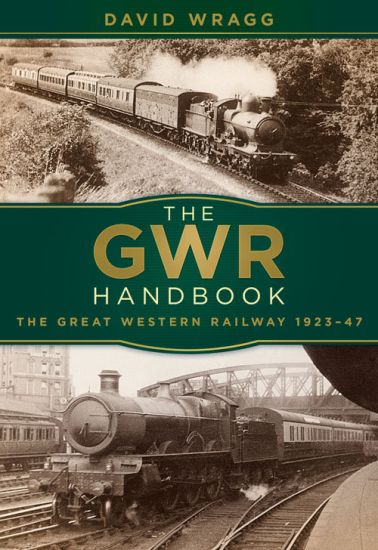
The GWR Handbook

The GWR Handbook

David Wragg

The History Press Ltd
2016
nidottu
For many the GWR was synonymous with holidays by the sea in the West Country, but it was built to serve as a fast railway line to London, especially for the merchants and financiers of Bristol. Its operations stretched as far as Merseyside, it provided most services in Wales, and it was the main line to Cardiff, Bristol, Cornwall and Birmingham. This book, a classic first published in 2006, reveals the equipment, stations, network, shipping and air services, bus operations including Western National, and overall reach and history of the GWR. Forming part of a series, along with The LMS Handbook, The LNER Handbook and The Southern Railway Handbook, this new edition provides an authoritative and highly detailed reference of information about the GWR.
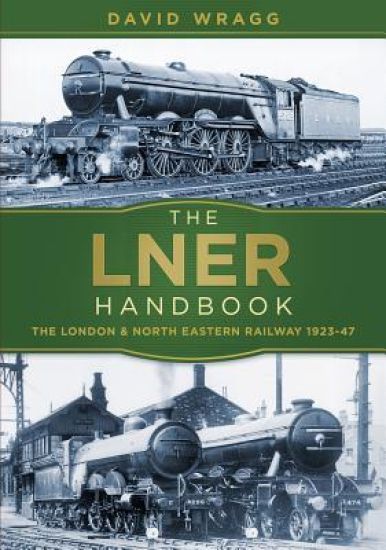
The LNER Handbook

The LNER Handbook

David Wragg

The History Press Ltd
2017
nidottu
Renowned for its express locomotive Mallard setting a world speed record (126mph) for steam locomotives that endures to this day, the London & North Eastern Railway was the second largest of the ‘Big Four’ railway companies to emerge from the 1923 grouping and also the most diverse, with its prestigious high-speed trains from King’s Cross balanced by an intensive suburban and commuter service from Liverpool Street and a high dependence on freight. Noted for its cautious board and thrifty management, the LNER gained a reputation for being poor but honest. Forming part of a series, along with The GWR Handbook, The LMS Handbook and The Southern Railway Handbook, this new edition provides an authoritative and highly detailed reference of information about the LNER.
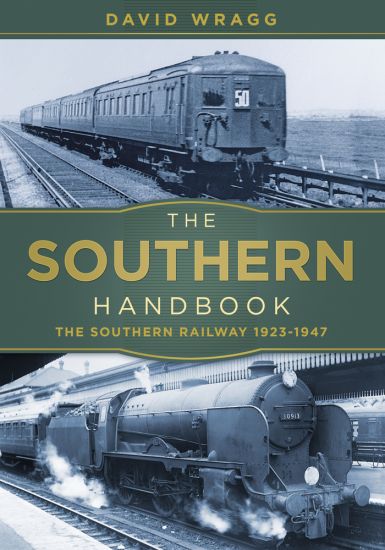
The Southern Handbook

The Southern Handbook

David Wragg

The History Press Ltd
2017
nidottu
The Southern Railway may not have been the most glamorous of the ‘Big Four’ companies that emerged from the grouping of 1923, but it was the great innovator. In the 1930s the Southern pioneered the first main-line electrification and created the largest electrified suburban railway network in the world. It was also one of the few to offer regular departures and the first to run true international services, introducing the ‘Night Ferry’ through-trains from London to Paris using special ferries. Forming part of a series, along with The GWR Handbook, The LMS Handbook and The LNER Handbook, this new edition provides an authoritative and highly detailed reference of information about the Southern Railway.
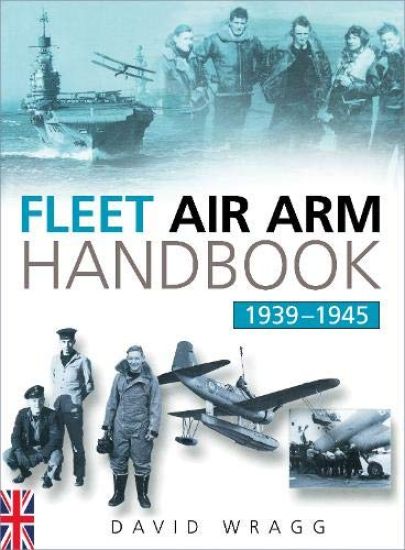
Fleet Air Arm Handbook 1939-1945

Fleet Air Arm Handbook 1939-1945

David Wragg

The History Press Ltd
2019
nidottu
Fleet Air Arm Handbook is the most comprehensive review available of the Royal Navy’s air power during the war years. Starting with a brief history, the book progresses with a full war diary of all the major operations in a gripping narrative account. We see the different functions of the Fleet Air Arm – to protect the essential supplies brought by merchant ships, and their close support of sea and ground forces, both from carriers at sea and bases ashore. In-depth analysis reveals what life was like in the Fleet Air Arm during the war; the food, accommodation, training, activities, uniform, and the relationship between aircrew and their shipmates aboard the Royal Navy’s carriers. Each squadron, wing and carrier air group is listed along with their operations and locations. This is a well-researched tribute to an important force and is essential reading for anyone interested in naval or aviation activity during the Second World War.
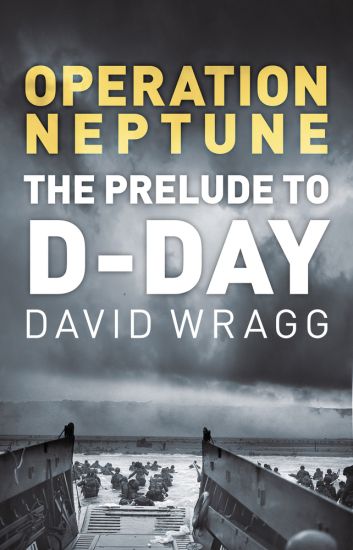
Operation Neptune

Operation Neptune

David Wragg

THE HISTORY PRESS LTD
2022
nidottu
Long-awaited, the Normandy landings were the largest amphibious operation in history. Success was achieved by the advent of specialised landing craft, heavy naval firepower and the creation of two artificial harbours and an underwater pipeline. Operation Neptune: The Prelude to D-Day tells the story of this incredible feat using eyewitness accounts of the landings and the breaching of Hitler’s famed ‘Atlantic Wall’.David Wragg explores the earlier Allied and Axis experiences with amphibious operations and the planning for Neptune and Overlord. He reveals the naval support needed once the armies were ashore and before continental ports could be captured and cleared of mines, with operations such as minesweeping off the Normandy coast, which led to one of the worst ‘friendly fire’ incidents of the war. This is the must-read book to understand what made D-Day possible.
Fisher

Fisher

David Wragg

The History Press Ltd
2009
sidottu
*'Jacky' Fisher (1841-1920) was a man with a mission: to prepare the Royal Navy that he loved so much and that had been his life for war. **He saw war in Europe as inevitable and incredibly predicted accurately the date when war would break out. An enthusiast for change, Fisher knew that the Royal Navy was fast losing its superiority over the Germans, with a massive reserve of old and hopelessly antiquated ships held ready in case of war, but aptly described by Fisher as 'unable to fight or run away'. Instead, he set out to impose on the Royal Navy his philosophy of the all-big-gun battleship, the 'dreadnought', while also recognising that the future of warfare at sea lay in underwater weapons and in the air. In *Fisher: The Admiral who Reinvented the Royal Navy, David Wragg examines Fisher's life and work, his ambitions and plans, his relationships with those around him, and the legacy he bequeathed to the Royal Navy. The book will be invaluable to those interested in maritime history and strategy, and especially that of the First World War and the plans that were made for it.
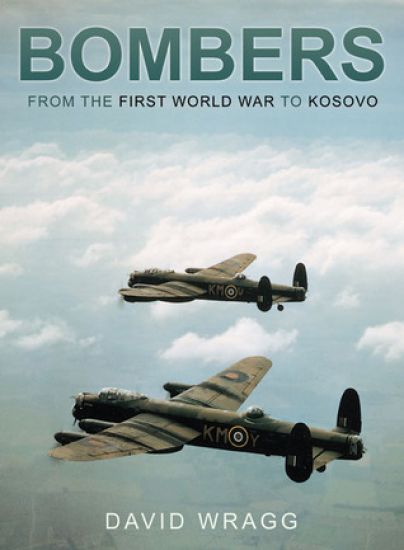
Bombers

Bombers

David Wragg

The History Press Ltd
2009
nidottu
The role of the bomber has proved to be on of the most controversial aspects of twentieth-century warfare. Bombers tells the story of the bomber with a blend of narrative and personal accounts, recording the history of the principle bombing raids and the skill and courage of those who flew them. David Wragg begins with a brief overview of the origins of the concept of aerial bombardment, which astonishingly go back several thousand years. He then describes the early raids of the First World War and the use of the bomber between the wars by the Germans in the Spanish Civil War, the Italians in Abyssinia and by the Japanese in China. The Second World War marked the massive deployment of the bomber by the main combatants as a major tactical and strategic weapon and, bringing this in-depth study up to date, Wragg examines the United States controversial campaign of extensive bombing in Vietnam during the 1960s and 70s. He also discusses whether, with the growing use of cruise missiles, the manned bomber may soon be the first element of air power to be made redundant in this age of high technology. Fully illustrated with a wide selection of photographs, Bombers will appeal to all with an interest in this key weapon of twentieth-century warfare.
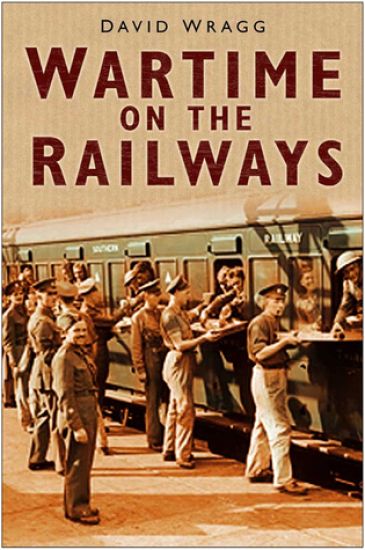
Wartime on the Railways

Wartime on the Railways

David Wragg

The History Press Ltd
2012
nidottu
Presenting an account of the part played by Britain's railways during the Second World War, this book deals with operational matters and the impact of enemy action on railways. It also looks at financial arrangements, the part played by railway workshops in producing equipment for the military, and the wartime experience of the railways' ships.
The Southern Railway Story

The Southern Railway Story

David Wragg

The History Press Ltd
2013
sidottu
At the forefront of innovation and development in the rail world, the Southern Railway was the only main-line railway to embrace electrification wholeheartedly, creating what was at the time the world’s largest electric suburban network. It was also the only railway to use passenger train ferries, allowing its sleeping car service between London and Paris to operate as a true through service, and its ‘Golden Arrow’ all-Pullman day express even had its own luxury Channel ferry. These achievements would have been noteworthy at any time, but were set against the challenging background of worldwide depression. With the aid of stunning colour photographs, The Southern Railway Story explores this remarkable passenger-traffic-driven railway from its commuter trains, via its international express railway, to its role as a holiday railway serving many of the most popular seaside resorts.
The LMS Story

The LMS Story

David Wragg

The History Press Ltd
2013
sidottu
The London, Midland & Scottish Railway (LMS) claimed to be the largest private enterprise concern in the British Empire. It was Britain’s largest steam railway and the only one to operate in England, Scotland, Wales and Northern Ireland, as well as having two short stretches of line in the Irish Republic. It was the world’s largest owner of railway hotels and the world’s largest railway shipping operator. Mainly a steam railway, it had a significant electric service out of Euston in London, and on Merseyside and Manchester. One of the leaders in diesel shunting locomotives, the company was a pioneer of using mechanical handling equipment, including large coaling towers. The LMS was mainly a freight railway, but it was still able to boast the best railway carriages, even on suburban services, where there was more legroom than was offered by other companies. Full of little-known facts, illustrated throughout and including a useful timeline, The LMS Story is the latest addition to this successful series.
The Steam Locomotive Story

The Steam Locomotive Story

David Wragg

The History Press Ltd
2013
sidottu
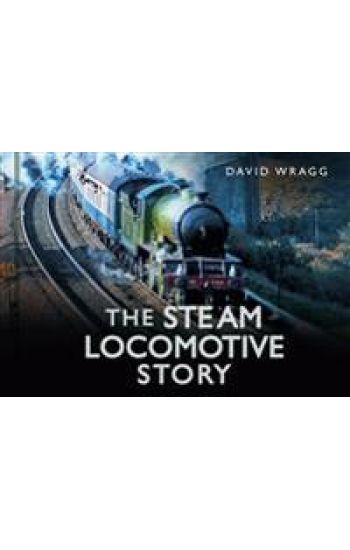
The steam locomotive was a British invention and even today, the world speed record for steam remains with a British locomotive, Mallard. Steam’s first significant contribution to British industry was through powering pumping engines for mines. When steam was applied to the railways, the ‘railway age’ began. The steam locomotive went through several distinct phases during its long life, which came to an end on regular service in the late 1960s. The early phase was followed by the trend for large single driving wheels, then compound locomotives with connected driving wheels once steel became strong enough for the connecting rods. Further developments included tank engines that could run equally well forwards and backwards; the 4-6-0 and 4-6-2 expresses; the passion for speed records and streamlining; and the standardisation years of British Railways. This insightful, fully illustrated story book follows the history of the steam locomotive and will delight all those interested in the steam age.
Malta: The Last Great Siege 1940-194.

Malta: The Last Great Siege 1940-194.

David Wragg

Pen Sword Military
2019
nidottu
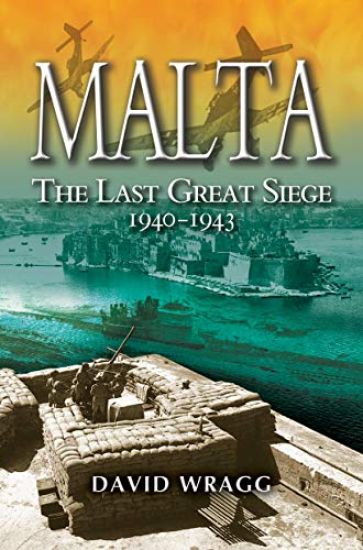
The strategic importance of Malta sitting astride both the Axis and Allied supply routes in the Mediterranean was obvious to both sides during WW2. As a result the Island became the focal point in a prolonged and dreadful struggle that cost the lives of thousands of servicemen and civilians. After setting the scene for the action, this book tells the story of the Island's stand against the might of the Axis powers that led to the unprecedented award of the George Cross to the whole by King George VI. It not only covers the struggle by the British and Maltese forces on the ground but the vicious fighting in the skies above. At one point the Island's only aircraft were the three antiquated Gloster Gladiators, nicknamed Faith, Hope and Charity. Then of course there was the naval effort to run convoys through with essential supplies not just of war material and oil but food for the starving population. The losses endured were appalling but repeated attempts to run the gauntlet had to be made. This was indeed a great siege involving every man and women on the Island. David Wragg tells the story using many first hand accounts and yet skilfully explains the strategic situation. The result is an inspiring book worthy of the courage shown by the Islanders and their defenders.
Stringbag

Stringbag

David Wragg

PEN SWORD BOOKS LTD
2020
nidottu
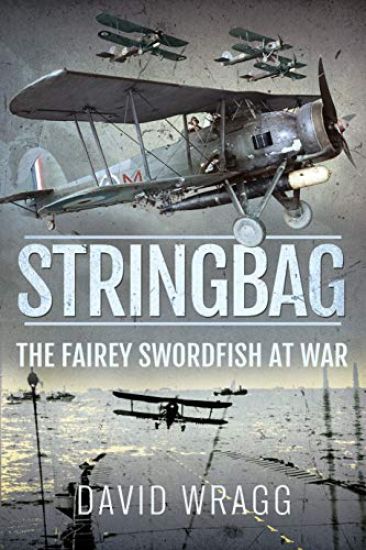
During World War Two an American naval officer stared at a Swordfish for the first time. 'Where did that come from?' he asked. 'Fairey's', came the reply from a British naval officer standing nearby. He stroked his chin thoughtfully. 'That figures', he replied. This is a narrative account of the operations of the Fairey Swordfish throughout World War Two. The most famous of these was the attack on the Italian fleet at Taranto, crippling three battleships and damaging several other ships as well as the seaplane base and an oil storage depot. The Swordfish played a prominent part in the Battle of Matapan and in the sinking of the Bismark. Less happily, Swordfish were used in the unsuccessful and ill-prepared raid on the Germans at Petsamo and in the abortive attack on the battle cruisers Scharnhorst and Gneisenau during the Channel Dash in 1942. Throughout the book, the text is interwoven with personal accounts by naval airmen.
Swordfish

Swordfish

David Wragg

ORION PUBLISHING CO
2026
pokkari
The daring British air raid that inspired the Japanese attack on Pearl Harbor. In November 1940 Britain was isolated in its stand against Nazi Germany and its ally, Italy. The country could not afford to lose control of the Mediterranean, but the Royal Navy was already overstretched by the U-boat war and the threat of invasion. Italy's fleet of modern battleships presented a grave threat to our communications with Egypt and the Suez Canal. On the night of 11 November 1940, 42 members of the Fleet Air Arm took off in 21 obsolete 'Swordfish' biplanes, launched from HMS Illustrious. Their target: the Italian fleet anchorage at Taranto. Pressing home their attack in the face of intense anti-aircraft fire and searchlights, they torpedoed and sank three battleships. Incredibly, all but two of the biplanes survived. The Italian fleet was crippled and the world took note that Britain was far from defeated. No-one was more impressed than the Japanese, who noted how a fleet in harbour could be demolished by air attack. In this new account of the Royal Navy's most daring operation of the Second World War, David Wragg draws on British and Italian records as well as interviews with the aircrew, to tell the full story of a night that changed the course of the war.