Kirjojen hintavertailu. Mukana 12 459 402 kirjaa ja 12 kauppaa.

Kirjahaku

Etsi kirjoja tekijän nimen, kirjan nimen tai ISBN:n perusteella.

48 kirjaa tekijältä Erich Neumann

The Archetypal World of Henry Moore

The Archetypal World of Henry Moore

Erich Neumann

PRINCETON UNIVERSITY PRESS
2026
sidottu
A groundbreaking exploration of the feminine archetype in Henry Moore’s sculptural worldHenry Moore (1898–1986) was an artist and sculptor renowned for his monumental semiabstract bronzes, many of them suggestive of the female form. The Archetypal World of Henry Moore is Erich Neumann’s thought-provoking analysis of Moore’s extraordinary work from the perspective of analytical psychology. In this landmark book, Neumann, one of the twentieth century’s most brilliant psychologists and a student of C. G. Jung, clarifies and enriches our understanding of the sculptor’s themes of mother and child and the reclining figure, demonstrating how both are supreme expressions of the archetypal feminine.
The Archetypal World of Henry Moore

The Archetypal World of Henry Moore

Erich Neumann

PRINCETON UNIVERSITY PRESS
2026
pokkari
A groundbreaking exploration of the feminine archetype in Henry Moore’s sculptural worldHenry Moore (1898–1986) was an artist and sculptor renowned for his monumental semiabstract bronzes, many of them suggestive of the female form. The Archetypal World of Henry Moore is Erich Neumann’s thought-provoking analysis of Moore’s extraordinary work from the perspective of analytical psychology. In this landmark book, Neumann, one of the twentieth century’s most brilliant psychologists and a student of C. G. Jung, clarifies and enriches our understanding of the sculptor’s themes of mother and child and the reclining figure, demonstrating how both are supreme expressions of the archetypal feminine.
Amor and Psyche

Amor and Psyche

Erich Neumann

PRINCETON UNIVERSITY PRESS
2026
sidottu
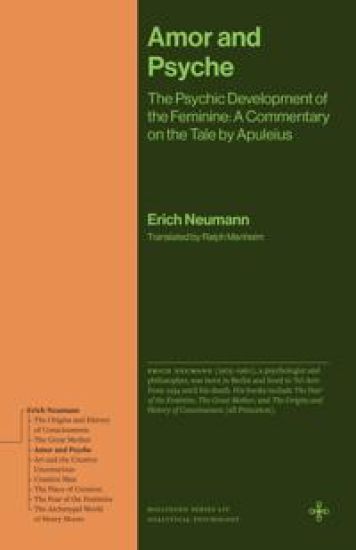
A mythic journey of psychological transformation and the development of the selfThe renowned tale of Amor and Psyche, from Apuleius’s second-century Latin novel The Golden Ass, is one of the most charming fragments of classical literature. In this landmark book, Erich Neumann reveals how this timeless story is an exemplar of feminine psychology. Unfolding the spiritual and mythical background of the pagan narrative, he shows how the contest between the mortal maid Psyche and the great goddess Aphrodite over the god Amor—Aphrodite’s son, Psyche’s husband—yields surprising and valuable insights into the psychic life of women. A classic work by one of the most brilliant figures of the twentieth century, Amor and Psyche offers a profound meditation on the tensions between the conscious and unconscious, the feminine and the masculine, and the known and unknown.
Amor and Psyche

Amor and Psyche

Erich Neumann

PRINCETON UNIVERSITY PRESS
2026
pokkari
A mythic journey of psychological transformation and the development of the selfThe renowned tale of Amor and Psyche, from Apuleius’s second-century Latin novel The Golden Ass, is one of the most charming fragments of classical literature. In this landmark book, Erich Neumann reveals how this timeless story is an exemplar of feminine psychology. Unfolding the spiritual and mythical background of the pagan narrative, he shows how the contest between the mortal maid Psyche and the great goddess Aphrodite over the god Amor—Aphrodite’s son, Psyche’s husband—yields surprising and valuable insights into the psychic life of women. A classic work by one of the most brilliant figures of the twentieth century, Amor and Psyche offers a profound meditation on the tensions between the conscious and unconscious, the feminine and the masculine, and the known and unknown.
The Roots of Jewish Consciousness, Volume One
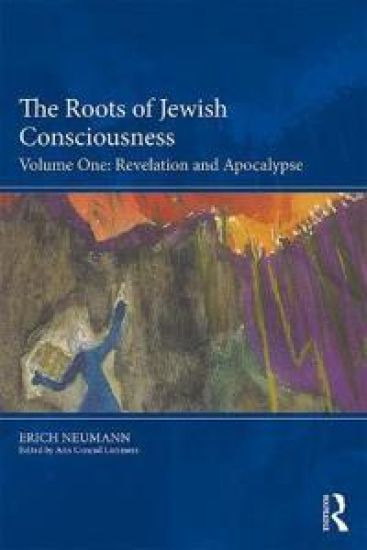
The Roots of Jewish Consciousness, Volume One: Revelation and Apocalypse is the first volume, fully annotated, of a major, previously unpublished, two-part work by Erich Neumann (1905–1960). It was written between 1934 and 1940, after Neumann, then a young philosopher and physician and freshly trained as a disciple of Jung, fled Berlin to settle in Tel Aviv. He finished the second volume of this work at the end of World War II. Although he never published either volume, he kept them the rest of his life.The challenge of Jewish survival frames Neumann’s work existentially. This survival, he insists, must be psychological and spiritual as much as physical. In Volume One, Revelation and Apocalypse, he argues that modern Jews must relearn what ancient Jews once understood but lost during the Babylonian Exile: that is, the individual capacity to meet the sacred directly, to receive revelation, and to prophesy. Neumann interprets scriptural and intertestamental (apocalyptic) literature through the lens of Jung’s teaching, and his reliance on the work of Jung is supplemented with references to Buber, Rosenzweig, and Auerbach. Including a foreword by Nancy Swift Furlotti and editorial introduction by Ann Conrad Lammers, readers of this volume can hold for the first time the unpublished work of Neumann, with useful annotations and insights throughout.These volumes anticipate Neumann’s later works, including Depth Psychology and a New Ethic, The Origins and History of Consciousness, and The Great Mother. His signature contribution to analytical psychology, the concept of the ego–Self axis, arises indirectly in Volume One, folded into Neumann’s theme of the tension between earth and YHWH. This unique work will appeal to Jungian analysts and psychotherapists in training and in practice, historians of psychology, Jewish scholars, biblical historians, teachers of comparative religion, as well as academics and students.
The Roots of Jewish Consciousness, Volume One
The Roots of Jewish Consciousness, Volume One: Revelation and Apocalypse is the first volume, fully annotated, of a major, previously unpublished, two-part work by Erich Neumann (1905–1960). It was written between 1934 and 1940, after Neumann, then a young philosopher and physician and freshly trained as a disciple of Jung, fled Berlin to settle in Tel Aviv. He finished the second volume of this work at the end of World War II. Although he never published either volume, he kept them the rest of his life.The challenge of Jewish survival frames Neumann’s work existentially. This survival, he insists, must be psychological and spiritual as much as physical. In Volume One, Revelation and Apocalypse, he argues that modern Jews must relearn what ancient Jews once understood but lost during the Babylonian Exile: that is, the individual capacity to meet the sacred directly, to receive revelation, and to prophesy. Neumann interprets scriptural and intertestamental (apocalyptic) literature through the lens of Jung’s teaching, and his reliance on the work of Jung is supplemented with references to Buber, Rosenzweig, and Auerbach. Including a foreword by Nancy Swift Furlotti and editorial introduction by Ann Conrad Lammers, readers of this volume can hold for the first time the unpublished work of Neumann, with useful annotations and insights throughout.These volumes anticipate Neumann’s later works, including Depth Psychology and a New Ethic, The Origins and History of Consciousness, and The Great Mother. His signature contribution to analytical psychology, the concept of the ego–Self axis, arises indirectly in Volume One, folded into Neumann’s theme of the tension between earth and YHWH. This unique work will appeal to Jungian analysts and psychotherapists in training and in practice, historians of psychology, Jewish scholars, biblical historians, teachers of comparative religion, as well as academics and students.
The Roots of Jewish Consciousness, Volume Two
The Roots of Jewish Consciousness, Volume Two: Hasidism is the second volume, fullyannotated, of a major, previously unpublished, two-part work by Erich Neumann (1905–1960). It was written between 1940 and 1945, after Neumann, then a young philosopher and physician and freshly trained as a disciple of Jung, fled Berlin to settle in Tel Aviv. He finished this work at the end of World War II. Although he never published it, he kept it the rest of his life.Volume Two, Hasidism, is devoted to the psychological and spiritual wisdom embodied in Jewish spiritual tradition. Relying on Jung’s concepts and Buber’s Hasidic interpretations, Neumann seeks alternatives to the legalism and anti-feminine bias that he says have dominated collective Judaism since the Second Temple. He argues that modern Jews can develop psychological wholeness through an appropriation of Hasidic legends, Talmudic texts, and Kabbalistic mysteries, including especially the Zohar. Exclusively, this volume includes a foreword by Moshe Idel. An appendix, Neumann’s four-lecture series from the 1940s, gives a glimpse of his intended, unpublished Part Three.These volumes anticipate Neumann’s later works, including Depth Psychology and a New Ethic, The Origins and History of Consciousness, and The Great Mother. In Volume Two, Hasidism, his concept of the ego–Self axis is developed in clearly psychological terms. Four previously unpublished essays, appended to Volume Two, illustrate Neumann’s developmental psychology, including his theme of primary and secondary personalization. This unique work will appeal to Jungian analysts and psychotherapists in training and in practice, historians of psychology, Jewish scholars, biblical historians, teachers of comparative religion, as well as academics and students.

The Roots of Jewish Consciousness, Volume Two
The Roots of Jewish Consciousness, Volume Two: Hasidism is the second volume, fullyannotated, of a major, previously unpublished, two-part work by Erich Neumann (1905–1960). It was written between 1940 and 1945, after Neumann, then a young philosopher and physician and freshly trained as a disciple of Jung, fled Berlin to settle in Tel Aviv. He finished this work at the end of World War II. Although he never published it, he kept it the rest of his life.Volume Two, Hasidism, is devoted to the psychological and spiritual wisdom embodied in Jewish spiritual tradition. Relying on Jung’s concepts and Buber’s Hasidic interpretations, Neumann seeks alternatives to the legalism and anti-feminine bias that he says have dominated collective Judaism since the Second Temple. He argues that modern Jews can develop psychological wholeness through an appropriation of Hasidic legends, Talmudic texts, and Kabbalistic mysteries, including especially the Zohar. Exclusively, this volume includes a foreword by Moshe Idel. An appendix, Neumann’s four-lecture series from the 1940s, gives a glimpse of his intended, unpublished Part Three.These volumes anticipate Neumann’s later works, including Depth Psychology and a New Ethic, The Origins and History of Consciousness, and The Great Mother. In Volume Two, Hasidism, his concept of the ego–Self axis is developed in clearly psychological terms. Four previously unpublished essays, appended to Volume Two, illustrate Neumann’s developmental psychology, including his theme of primary and secondary personalization. This unique work will appeal to Jungian analysts and psychotherapists in training and in practice, historians of psychology, Jewish scholars, biblical historians, teachers of comparative religion, as well as academics and students.
Die Wurzeln Des Judischen Bewusstseins

Die Wurzeln Des Judischen Bewusstseins

Erich Neumann

Berlin Schwabe
2024
sidottu
Vor dem Hintergrund existenzieller Herausforderungen schrieb Erich Neumann dieses fruhe Werk, das hier erstmals auf Deutsch ediert vorliegt. Das judische Uberleben beleuchtet er sowohl aus physischer als auch aus spiritueller und psychologischer Perspektive. Neumann glaubt, dass moderne Juden wieder lernen mussen, was ihre Vorfahren wahrend des babylonischen Exils verloren haben: die Fahigkeit, dem Heiligen direkt zu begegnen, Offenbarungen zu empfangen und zu prophezeien. Er stutzt sich auf C. G. Jungs Lehren und Martin Bubers chassidische Schriften und befurwortet Alternativen zum Legalismus und zur frauenfeindlichen Voreingenommenheit. Diese Ideen nehmen Neumanns spatere Werke vorweg, darunter Tiefenpsychologie und neue Ethik, Ursprungsgeschichte des Bewusstseins und Die grosse Mutter. Das Konzept der Ego-Selbst-Achse, Neumanns charakteristischer Beitrag zur analytischen Psychologie, wird schon hier vorgestellt und umfassend entwickelt.
Los orígenes e historia de la conciencia

Los orígenes e historia de la conciencia

Erich Neumann

Traducciones Junguianas
2017
pokkari
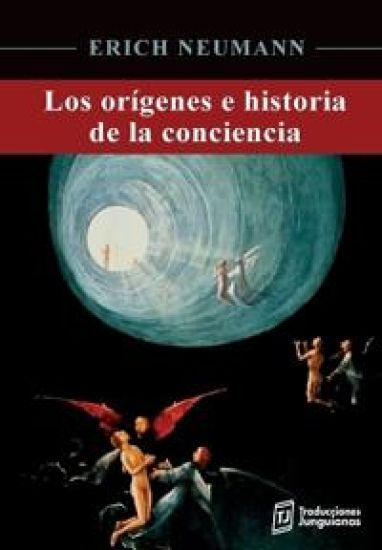
ERICH NEUMANN (Berl n 1905 - Tel Aviv ERICH NEUMANN1960), considerado por muchos como el disc pulodirecto m s brillante de Jung, public esta obra enZurich en 1949.Aplicando el m todo de amplificaci n, Neumanntraza un paralelo entre el proceso de nacimiento, desarrollo y consolidaci n de la conciencia como rgano de orientaci n respecto del mundo externo y del mundo interno, o Proceso de Individuaci n, y las mitolog as -en especial el mito de Osiris e Isis- con que en todo tiempo y lugar nuestra especie describi ese mismo recorrido que tambi n afront .LOS OR GENES E HISTORIA DE LA CONCIENCIA no s lo propone novedades como, por ejemplo, la centroversi n: "la tendencia innata deuna totalidad a crear unidad dentro de las partes que la componen y a sintetizar en sistemas unificados las diferencias que existen entre ellas".Tambi n les asigna a la creatividad y al individuo creativo sitios preponderantes, respectivamente, en el Proceso de Individuaci n y en la reformulaci n de los c nones culturales. Asimismo, constituye una v a de penetraci n y esclarecimiento de las ideas de Jung, que encuentran de estemodo resonancias sorprendentes en las antiguas producciones culturales dela Humanidad.Las narraciones de la mitolog a, obligadas a desplegarse de manera lineal, coherente y no contradictoria para resultar inteligibles a la lectura literal, una vez desprovistas de ese orden indispensable pero artificial se revelan, gracias a Erich Neumann, como met foras de la psicodin mica; hasta entonces oculta en las picas, dramas y a veces tragedias de los relatos, aunque siempre personificada en los dioses y semidioses, ninfas y monstruos, h roes y villanos que los protagonizan.
Grande mãe (A)

Grande mãe (A)

Erich Neumann

Grupo Pensamento
2021
sidottu
Para quem conhece A Grande M e, eis aqui uma nova edi o contempor nea e essencial para os novos tempos: com texto totalmente revisto e projeto gr fico revitalizado, ela traz ainda um caderno especial com 243 obras de arte - um tesouro da arte arcaica sobre mitos femininos. Neste livro, o renomado psic logo anal tico Dr Erich Neumann versa sobre as formas da manifesta o do Feminino em seu car ter elementar e de transforma o. Ao mesmo tempo, trata-se de uma obra fundamental para a pesquisa mitol gica. Suas gravuras formam uma verdadeira galeria da Hist ria da Arte antiga, focada em representa es do Feminino Universal, dando continuidade significativa s pesquisas iniciadas por C. G. Jung sobre o arqu tipo da Grande M e. Um amplo estudo sobre rituais, mitologia, arte e registro de an lises sobre sonhos e fantasias, no intuito de examinar como este arqu tipo foi expresso por milhares de anos em v rias culturas e per odos hist ricos ao longo do tempo.
Art and the Creative Unconscious

Art and the Creative Unconscious

Erich Neumann; Ralph (TRN) Manheim

Princeton University Press
1971
pokkari
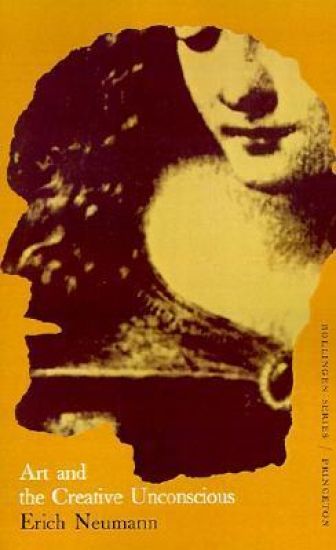
Four essays on the psychological aspects of art. A study of Leonardo treats the work of art, and art itself, not as ends in themselves, but rather as instruments of the artist's inner situation. Two other essays discuss the relation of art to its epoch and specifically the relation of modern art to our own time. An essay on Chagall views this artist in the context of the problems explored in the other studies.
The Origins and History of Consciousness

The Origins and History of Consciousness

Erich Neumann; C. G. Jung

Princeton University Press
2014
pokkari
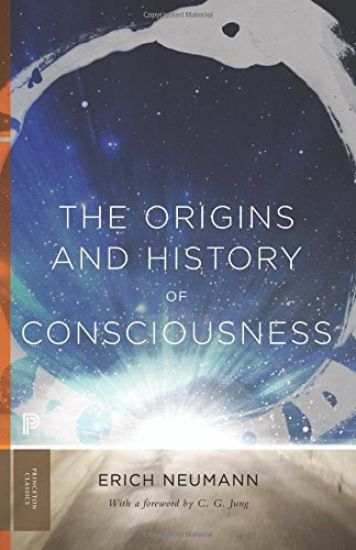
The Origins and History of Consciousness draws on a full range of world mythology to show how individual consciousness undergoes the same archetypal stages of development as human consciousness as a whole. Erich Neumann was one of C. G. Jung's most creative students and a renowned practitioner of analytical psychology in his own right. In this influential book, Neumann shows how the stages begin and end with the symbol of the Uroboros, the tail-eating serpent. The intermediate stages are projected in the universal myths of the World Creation, Great Mother, Separation of the World Parents, Birth of the Hero, Slaying of the Dragon, Rescue of the Captive, and Transformation and Deification of the Hero. Throughout the sequence, the Hero is the evolving ego consciousness. Featuring a foreword by Jung, this Princeton Classics edition introduces a new generation of readers to this eloquent and enduring work.
The Great Mother

The Great Mother

Erich Neumann; Martin Liebscher

Princeton University Press
2015
pokkari
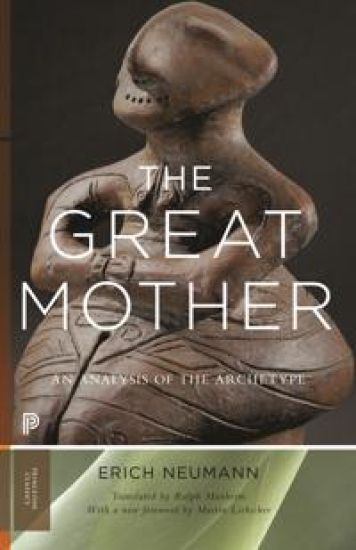
This landmark book explores the Great Mother as a primordial image of the human psyche. Here the renowned analytical psychologist Erich Neumann draws on ritual, mythology, art, and records of dreams and fantasies to examine how this archetype has been outwardly expressed in many cultures and periods since prehistory. He shows how the feminine has been represented as goddess, monster, gate, pillar, tree, moon, sun, vessel, and every animal from snakes to birds. Neumann discerns a universal experience of the maternal as both nurturing and fearsome, an experience rooted in the dialectical relation of growing consciousness, symbolized by the child, to the unconscious and the unknown, symbolized by the Great Mother. Featuring a new foreword by Martin Liebscher, this Princeton Classics edition of The Great Mother introduces a new generation of readers to this profound and enduring work.