Kirjojen hintavertailu. Mukana 12 390 323 kirjaa ja 12 kauppaa.

Kirjahaku

Etsi kirjoja tekijän nimen, kirjan nimen tai ISBN:n perusteella.

48 kirjaa tekijältä Erich Neumann

The Great Mother

The Great Mother

Erich Neumann; Martin Liebscher

PRINCETON UNIVERSITY PRESS
2026
sidottu
A landmark account of the Great Mother as a primordial image of the human psycheIn this book, renowned analytical psychologist Erich Neumann draws on ritual, mythology, art, and records of dreams and fantasies to examine how the archetype of the Great Mother has been outwardly expressed in many cultures and periods since prehistory. He shows how the feminine has been represented as goddess, monster, gate, pillar, tree, moon, sun, vessel, and every animal from snakes to birds. Neumann discerns a universal experience of the maternal as both nurturing and fearsome, an experience rooted in the dialectical relation of growing consciousness, symbolized by the child, to the unconscious and the unknown, symbolized by the Great Mother. With a foreword by Martin Liebscher, The Great Mother is a profound and enduring work by one of the most brilliant thinkers of the twentieth century.
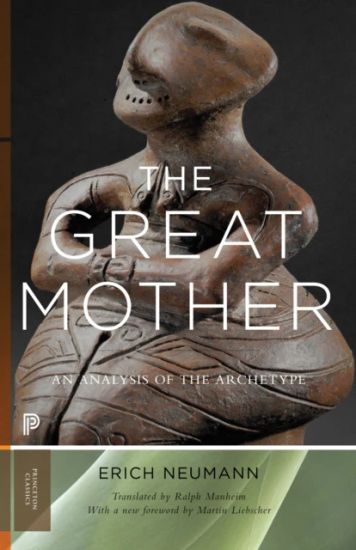
The Great Mother

The Great Mother

Erich Neumann; Martin Liebscher

PRINCETON UNIVERSITY PRESS
2026
pokkari
A landmark account of the Great Mother as a primordial image of the human psycheIn this book, renowned analytical psychologist Erich Neumann draws on ritual, mythology, art, and records of dreams and fantasies to examine how the archetype of the Great Mother has been outwardly expressed in many cultures and periods since prehistory. He shows how the feminine has been represented as goddess, monster, gate, pillar, tree, moon, sun, vessel, and every animal from snakes to birds. Neumann discerns a universal experience of the maternal as both nurturing and fearsome, an experience rooted in the dialectical relation of growing consciousness, symbolized by the child, to the unconscious and the unknown, symbolized by the Great Mother. With a foreword by Martin Liebscher, The Great Mother is a profound and enduring work by one of the most brilliant thinkers of the twentieth century.
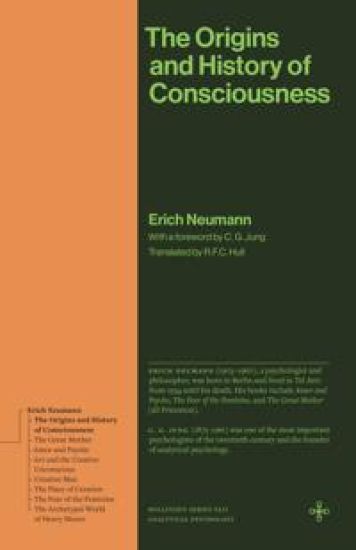
The Origins and History of Consciousness

The Origins and History of Consciousness

Erich Neumann; C. G. Jung

PRINCETON UNIVERSITY PRESS
2026
sidottu
A landmark account of the evolution of consciousness by one of the twentieth century’s leading Jungian psychologistsThis book draws on a full range of world mythology to show how individual consciousness undergoes the same archetypal stages of development as human consciousness as a whole. Erich Neumann, one of C. G. Jung’s most creative students and a renowned practitioner of analytical psychology in his own right, shows how the stages begin and end with the symbol of the Uroboros, the tail-eating serpent. The intermediate stages are projected in the universal myths of the World Creation, the Great Mother, the Separation of the World Parents, the Birth of the Hero, the Slaying of the Dragon, the Rescue of the Captive, and the Transformation and Deification of the Hero. Neumann traces how, throughout this sequence, the Hero is the evolving ego consciousness. With a foreword by Jung, The Origins and History of Consciousness is an eloquent and enduring meditation on myth and the human psyche.
The Origins and History of Consciousness

The Origins and History of Consciousness

Erich Neumann; C. G. Jung

PRINCETON UNIVERSITY PRESS
2026
pokkari
A landmark account of the evolution of consciousness by one of the twentieth century’s leading Jungian psychologistsThis book draws on a full range of world mythology to show how individual consciousness undergoes the same archetypal stages of development as human consciousness as a whole. Erich Neumann, one of C. G. Jung’s most creative students and a renowned practitioner of analytical psychology in his own right, shows how the stages begin and end with the symbol of the Uroboros, the tail-eating serpent. The intermediate stages are projected in the universal myths of the World Creation, the Great Mother, the Separation of the World Parents, the Birth of the Hero, the Slaying of the Dragon, the Rescue of the Captive, and the Transformation and Deification of the Hero. Neumann traces how, throughout this sequence, the Hero is the evolving ego consciousness. With a foreword by Jung, The Origins and History of Consciousness is an eloquent and enduring meditation on myth and the human psyche.
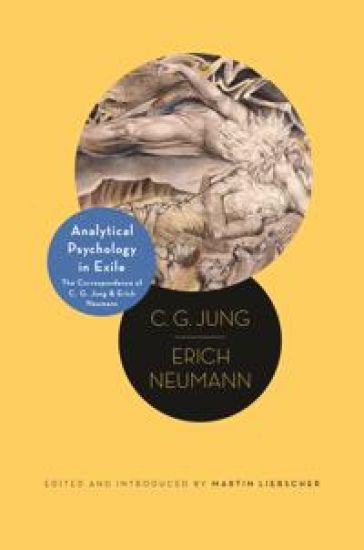
Analytical Psychology in Exile

Analytical Psychology in Exile

C. G. Jung; Erich Neumann

Princeton University Press
2015
sidottu
C. G. Jung and Erich Neumann first met in 1933, at a seminar Jung was conducting in Berlin. Jung was fifty-seven years old and internationally acclaimed for his own brand of psychotherapy. Neumann, twenty-eight, had just finished his studies in medicine. The two men struck up a correspondence that would continue until Neumann's death in 1960. A lifelong Zionist, Neumann fled Nazi Germany with his family and settled in Palestine in 1934, where he would become the founding father of analytical psychology in the future state of Israel. Presented here in English for the first time are letters that provide a rare look at the development of Jung's psychological theories from the 1930s onward as well as the emerging self-confidence of another towering twentieth-century intellectual who was often described as Jung's most talented student. Neumann was one of the few correspondence partners of Jung's who was able to challenge him intellectually and personally. These letters shed light on not only Jung's political attitude toward Nazi Germany, his alleged anti-Semitism, and his psychological theory of fascism, but also his understanding of Jewish psychology and mysticism. They affirm Neumann's importance as a leading psychologist of his time and paint a fascinating picture of the psychological impact of immigration on the German Jewish intellectuals who settled in Palestine and helped to create the state of Israel. Featuring Martin Liebscher's authoritative introduction and annotations, this volume documents one of the most important intellectual relationships in the history of analytical psychology.
Analytical Psychology in Exile

Analytical Psychology in Exile

C. G. Jung; Erich Neumann

PRINCETON UNIVERSITY PRESS
2025
pokkari
Two giants of twentieth-century psychology in dialogueC. G. Jung and Erich Neumann first met in 1933, at a seminar Jung was conducting in Berlin. Jung was fifty-seven years old and internationally acclaimed for his own brand of psychotherapy. Neumann, twenty-eight, had just finished his studies in medicine. The two men struck up a correspondence that would continue until Neumann's death in 1960. A lifelong Zionist, Neumann fled Nazi Germany with his family and settled in Palestine in 1934, where he would become the founding father of analytical psychology in the future state of Israel.Presented here in English for the first time are letters that provide a rare look at the development of Jung’s psychological theories from the 1930s onward as well as the emerging self-confidence of another towering twentieth-century intellectual who was often described as Jung’s most talented student. Neumann was one of the few correspondence partners of Jung’s who was able to challenge him intellectually and personally. These letters shed light on not only Jung’s political attitude toward Nazi Germany, his alleged anti-Semitism, and his psychological theory of fascism, but also his understanding of Jewish psychology and mysticism. They affirm Neumann’s importance as a leading psychologist of his time and paint a fascinating picture of the psychological impact of immigration on the German Jewish intellectuals who settled in Palestine and helped to create the state of Israel.Featuring Martin Liebscher’s authoritative introduction and annotations, this volume documents one of the most important intellectual relationships in the history of analytical psychology.