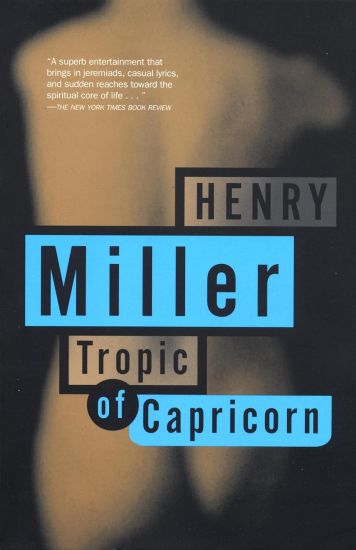
Banned in America for almost thirty years because of its explicit sexual content, this companion volume to Miller's Tropic of Cancer chronicles his life in 1920s New York City. Famous for its frank portrayal of life in Brooklyn's ethnic neighborhoods and Miller's outrageous sexual exploits, The Tropic of Capricorn is now considered a cornerstone of modern literature.
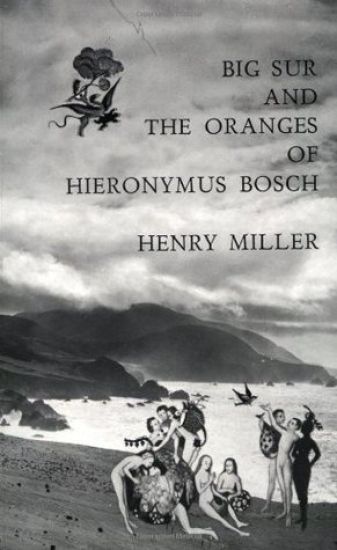
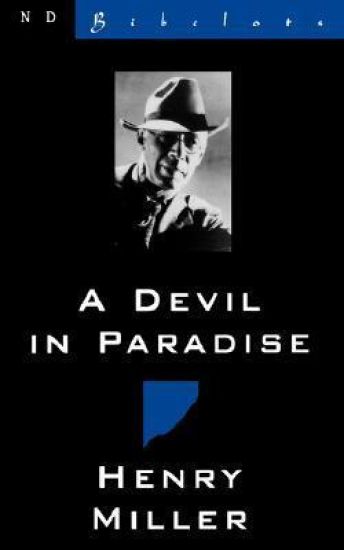
In his great triptych “The Millennium,” Bosch used oranges and other fruits to symbolize the delights of Paradise. Whence Henry Miller’s title for this, one of his most appealing books; first published in 1957, it tells the story of Miller’s life on the Big Sur, a section of the California coast where he lived for fifteen years. Big Sur is the portrait of a place—one of the most colorful in the United States—and of the extraordinary people Miller knew there: writers (and writers who did not write), mystics seeking truth in meditation (and the not-so-saintly looking for sex-cults or celebrity), sophisticated children and adult innocents; geniuses, cranks and the unclassifiable, like Conrad Moricand, the “Devil in Paradise” who is one of Miller’s greatest character studies. Henry Miller writes with a buoyancy and brimming energy that are infectious. He has a fine touch for comedy. But this is also a serious book—the testament of a free spirit who has broken through the restraints and clichés of modern life to find within himself his own kind of paradise.
Some writers attempt to conceal the literary influences which have shaped their thinking--but not Henry Miller. In The Books in My Life he shares the thrills of discovery that many kinds of books have brought to a keenly curious and questioning mind. Some of Miller's favorite writers are the giants whom most of us revere--authors such as Dostoeyvsky, Boccaccio, Walt Whitman, James Joyce, Thomas Mann, Lao-Tse. To them he brings fresh and penetrating insights. But many are lesser-known figures: Krishnamurti, the prophet-sage; the French contemporaries Blaise Cendrars and Jean Giono; Richard Jeffries, who wrote The Story of My Heart; the Welshman John Cowper Powys; and scores of others. The Books in My Life contains some fine autobiographical chapters, too. Miller describes his boyhood in Brooklyn, when he devoured the historical stories of G. A. Henty and the romances of Rider Haggard. He tells of the men and women whom he regards as "living books" Lou Jacobs, W. E. B. DuBois, Elizabeth Gurley Flynn, and others. He offers his reminiscences of the New York Theatre in the early 1900's--including plays such as Alias Jimmy Valentine and Nellie, the Beautiful Cloak Model. And finally, in Miller's best vein of humor, he provides a satiric chapter on bathroom reading. In an appendix, Miller lists the hundred books that have influenced him most.
They are taken from the Paris books Black Spring (1936) and Max and the White Phagocytes (1938) and were for the most part, written at about the satire time as Tropic of Capricorn—the period of Miller’s and Durrell’s life in the famous Villa Seurat in Paris. As is usual with Miller, these pieces cannot be tagged with the label of any given literary category. The unforgettable portrait of Max, the Paris drifter, and the probably-autobiographical Tailor Shop, are basically short stories, but even here the irrepressible vitality of Miller’s personality keeps breaking into the narrative. And in the critical and philosophical essays, the prose poems and surrealist fantasies, the travel sketches and scenarios, Miller’s passion for fiction, for telling the endless story of his extraordinary life, cannot be held down. Life, as no other modern author has lived it or can write it, bursts from these pages—the life of the mind and the body; of people, places and things; of ideas and the imagination.
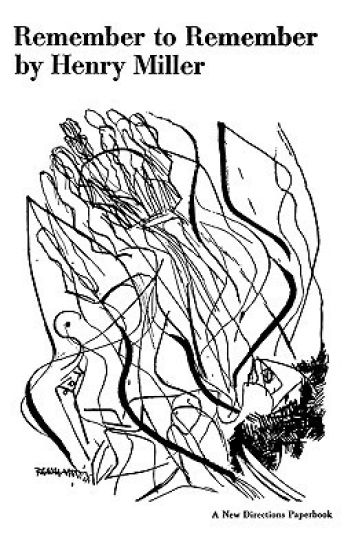
This collection of stories and essays takes its title from a long prose reverie in which Henry Miller, after his return to the United States, thinks back to the happy years of middle life which he spent in France. The qualities that make the French unique have seldom been so movingly expressed. The America he had rediscovered does not come off very well by contrast--particularly the Hollywood state of mind, which gets a thoroughly Milleresque going over in the burlesque Astrological Fricassee.What Miller likes on the American scene are the individuals who have broken through the pattern of conformity, the rare and often isolated creative personalities who are resisting the dehumanization of our so-called "civilization." He gives us vivid portraits of the painters Abe Rattner, Jean Varda and Beauford Delaney; the sculptor Bufano; and Jasper Deeter, director of the hedgerow Theatre.Two of Henry Miller's greatest essays are also in this volume: Murder the Murderer (on war), a declaration which ranks with Randolph Bourne's War and the Intellectuals, and, with particular relevance to the censorship codes which kept his Tropics of Cancer and Capricorn out of this country for so long, Obscenity and the Law of Reflection.
A “melo-melo in seven scenes,” Just Wild About Harry is Henry Miller’s only excursion into playwriting. Harry is pure Miller, welling up from the same abundant love of life and freedom from convention that made its author the dean of writers dedicated to human liberation. Admittedly inspired by lonesco and the Theatre of the Absurd, Miller’s tragicomic slapstick is nevertheless as American as the Marx Brothers and the blues––the simple story of a heartless Harry (the one the ladies are wild about) who learns a bittersweet lesson about life, death, and love. Begun in Europe in 1960, Just Wild About Harry was first published by New Directions in 1963.
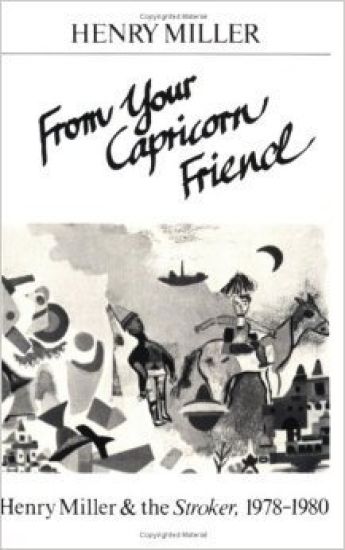
“It makes me feel good to know there is a comparatively unknown little magazine in the heart of Second Avenue (ghetto to the world) in which l am granted full freedom of speech,” wrote Henry Miller to his friend Irving Stettner, editor of Stroker. In 1978-80, the last three years of his life, Miller generously contributed letters, drawings, and various prose pieces for this magazine’s use, both previously unpublished works from an earlier date and, of special interest, much that was newly written. Presented here are the best of these Miller pieces, including letters he wrote to Stettner in which the author remarks on anything and everything: painting, Brooklyn, Isaac Bashevis Singer’s Nobel Prize acceptance speech, books and writers, his daily doings. Among the prose selections are pieces on the theatre, “Memory and Forgettery,” “America, America,” “A Few Chaotic Recollections,” and a short story, “Vienna and Back.” His “Toccata for Half-Wits,” an essay on the movie Bonnie and Clyde written in 1968, is the only exception to the concept of this book as a presentation of the fruits of Miller’s very last years. “Squeeze all the color out of the tubes,” Miller advises a young painter friend. As this collection indeed testifies, “Brother Henry,” as he sometimes signed himself, did just that as the end of his life approached.
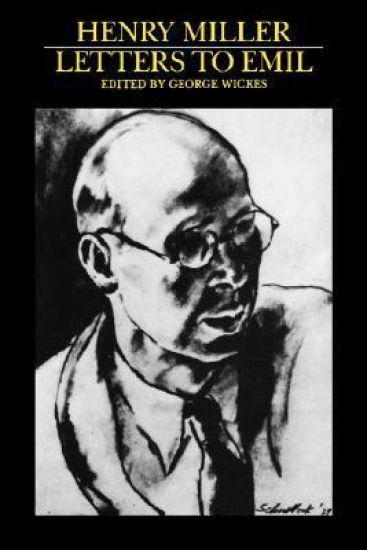
Prepared by Henry Miller for publication in 1938, Letters to Emil--correspondence from 1921 through 1934 with his boyhood friend and successful artist Emil Schnellock--remained unpublished until 1989. A chance encounter by the two men, out of touch since childhood, led to Miller's decision to become a writer. Throughout the '20s and into the '30s, Schnellock acted as his chief mentor, to whom he voiced his exuberant, sometimes cranky views of life and anxiously discussed his dying marriage to June Mansfield and his growing involvement with Ana s Nin. Miller's letters are a compelling record of the writer in the making, beginning with his first efforts in 1922, tracing his ten-year struggle to find his own voice, and reaching a climax with the publication of Tropic of Cancer in 1934. Indeed, it was in his actual letters to Emil that Henry Miller developed his vigorously earthy yet philosophical style.
The devil in Henry Miller's Big Sur paradise is Conrad Moricand: "A friend of his Paris days, who, having been financed and brought over from Europe as an act of mercy by Mr. Miller, turns out as exacting, sponging, evil, cunning and ungrateful a guest as can be found in contemporary literature. Mr. Miller has always been a remarkable creator of character. Conrad Moricand is probably his masterpiece. . . .A Devil in Paradise is the work of a great novelist manqu , a novelist who has no stricter sense of form than the divine creator. . . .Fresh and intoxicating, funny and moving. . ." --The Times Literary Supplement (London)
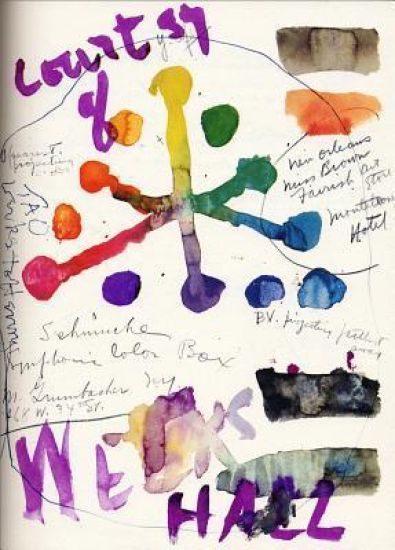
Resembling a musical sextet where no two instruments are the same, but all instruments blend to form a single sound, Henry Miller’s Sextet combines six jive-talkin’, fresh, and impromptu pieces of writing originally published as individual chapbooks by Capra Press: “On Turning Eighty,” “Reflections on the Death of Mishima,” “First Impressions of Greece,” “The Waters Reglitterized: The Subject of Water Colors in Some of its More Liquid Phases,” “Reflections on The Maurizius Case: A Humble Appraisal of a Great Book,” and “Mother, China and the World Beyond: A Dream in Which I Die and Find Myself in Devachan (Limbo) Where I Run into My Mother whom I Hated All My Life.” Like your favorite band releasing a six-song EP to keep you salivating until its next full-length album, Sextet is a finger-snapping sample of Miller’s work with the blare of a clarion call, and lots of raucous humor and jazz.
In this selection of stories and essays, Henry Miller elucidates, revels, and soars, showing his command over a wide range of moods, styles, and subject matters. Writing “from the heart,” always with a refreshing lack of reticence, Miller involves the reader directly in his thoughts and feelings. “His real aim,” Karl Shapiro has written, “is to find the living core of our world whenever it survives and in whatever manifestation, in art, in literature, in human behavior itself. It is then that he sings, praises, and shouts at the top of his lungs with the uncontainable hilarity he is famous for.” Here are some of Henry Miller’s best-known writings: an essay on the photographer Brassai; “Reflections on Writing,” in which Miller examines his own position as a writer; “Seraphita” and “Balzac and His Double,” on the works of other writers; and “The Alcoholic Veteran,” “Creative Death,” “The Enormous Womb,” and “The Philosopher Who Philosophizes.”
Title: Some account of the Parish of Ashbury in Berkshire, etc.Publisher: British Library, Historical Print EditionsThe British Library is the national library of the United Kingdom. It is one of the world's largest research libraries holding over 150 million items in all known languages and formats: books, journals, newspapers, sound recordings, patents, maps, stamps, prints and much more. Its collections include around 14 million books, along with substantial additional collections of manuscripts and historical items dating back as far as 300 BC.The HISTORY OF BRITAIN & IRELAND collection includes books from the British Library digitised by Microsoft. As well as historical works, this collection includes geographies, travelogues, and titles covering periods of competition and cooperation among the people of Great Britain and Ireland. Works also explore the countries' relations with France, Germany, the Low Countries, Denmark, and Scandinavia. ++++The below data was compiled from various identification fields in the bibliographic record of this title. This data is provided as an additional tool in helping to insure edition identification: ++++ British Library Miller, Henry; 1877. 8 . 10347.c.1.(5.)