
Kirjahaku
Etsi kirjoja tekijän nimen, kirjan nimen tai ISBN:n perusteella.
36 kirjaa tekijältä Iain Sinclair
Text by Iain Sinclair, illustrations by Oona Grimes, printed tete-beche.

Iain Sinclair's classic early text, Lud Heat, explores mysterious cartographic connections between the six Hawksmoor churches in London. In a unique fusion of prose and poetry, Sinclair invokes the mythic realm of King Lud, who according to legend was one of the founders of London, as well as the notion of psychic 'heat' as an enigmatic energy contained in many of its places. The book's many different voices, including the incantatory whispers of Blake and Pound, combine in an amalgamated shamanic sense that somehow works to transcend time. The transmogrifying intonations and rhythms slowly incorporate new signs, symbols and sigils into the poem that further work on the senses. This was the work that set the 'psychogeographical' tone for much of Sinclair's mature work, as well as inspiring novels like Hawksmoor and Gloriana from his peers Peter Ackroyd and Michael Moorcock, and Alan Moore's From Hell.
This classic text has in recent times been fused to its contemporaneous volume, Lud Heat, but very much deserves to stand on its own. Suicide Bridge was originally published by Albion Village Press in 1979 with the sub-title A Book of the Furies, A Mythology of the South & East - Autumn 1973 to Spring 1978. As elsewhere, Sinclair saunters into the shadowy city underworld with his ever-watchful eye and roving syntax, this time probing the mythic figures from William Blake's Jerusalem and the mythical king Bladud. Previously text-bound entities such as Hand, Hyle and Kotope are made flesh and and given to foggy breath in the contemporary landscape. Addressed to "the enemy" the reader is precariously perched on the teetering bridge while the author kicks at the mythic spindles that hold it up. Sinclair's alternating, inter-penetrating prose and poetry become the uneven struts and pylons of a new concrete/abstract literary edifice. - 'One of the cliffs of Blake's and Coleridge's Albion sweeping against the walls of Everywhere...This is the landscape of another realm. We are walking over a raw and smoking surface filled with surprises. All around are the possibilities of lost tribes quietly bustling in the shadows...This is a rare jewel.' - Michael McClure

Iain Sinclair, the celebrated author and psycho-geographer, walks back along the blue-grey roads and cliff-top paths of his childhood in south Wales, rediscovering the Gower peninsula. Provoked by the strange and enigmatic series of paintings Afal du Brogwyr (Black Apple of Gower) made by the artist Ceri Richards in the 1950s, Sinclair leaves behind the familiar "murky elsewheres" of his life in Hackney, London, carrying an envelope of photographs and old postcards, along with fragments of memory. He soon realises that a series of walks over the same ground - Port Enyon Point to Worm's Head have become significant waymarks in his life. His recollections of a meeting with the poet Vernon Watkins, the art of Richards and the poetry of Dylan Thomas lead him to his final quest, the Paviland Cave where in 1823 human remains 36,000 years old were discovered.
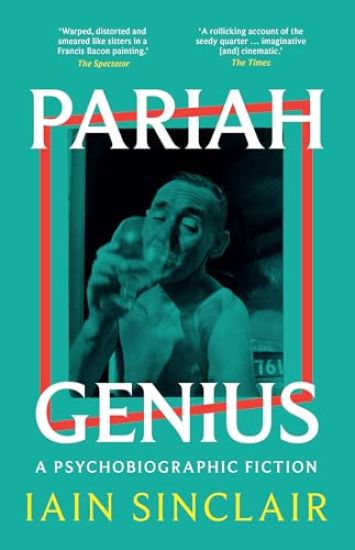
In Pariah Genius, literary giant Iain Sinclair follows in the footsteps of photographer John Deakin, whose chronicles of Soho life - and the world of Francis Bacon and his friends - have so influenced our perception of that generation's work. In this bold fictionalisation, Sinclair enters the underworld of Deakin's life and imagination, pursuing his subject across continents, in dive bars, and bedrooms. The result is an engrossing, utterly unique portrait of a man who some felt was a fallen angel, and others, the devil himself.
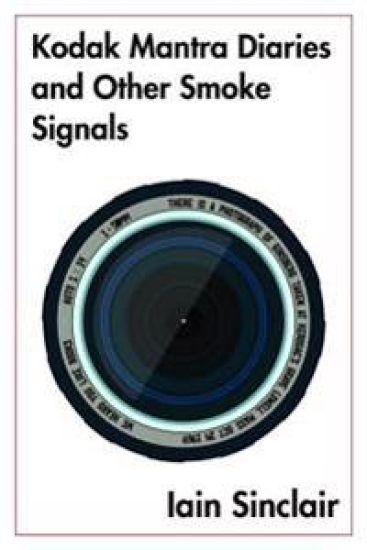
For two weeks in 1967, London's Roundhouse hosted The Congress on the Dialectics for the Demystification of Violence, a counterculture happening showcasing R.D. Laing, Gregory Bateson, Emmett Grogan, Stokely Carmichael and Herbert Marcuse. The event's acknowledged star was Allen Ginsberg. As he pronounced to radical England, Ginsberg was followed by a young filmmaker with a commission from West German television to produce a documentary on the poet. That filmmaker's name was Iain Sinclair. Four years later, Sinclair gathered his notes and photographs of the experience and published Kodak Mantra Diaries on his own Albion Village Press. Wrestling with his brush with the poet and 1960s radical politics, Sinclair wrote an astonishing prose debut, setting the template for his later works of non-fiction. We Heard You Like Books is pleased to present the first hardcover edition of this little seen classic, accompanied by new texts which track Sinclair's continuing fascination with the survivors of the Beat Generation, and record random encounters in the years that followed his initial engagement.
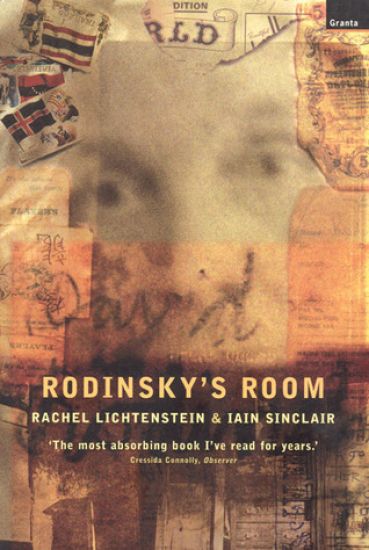
Rodinsky's world was that of the East European Jewry, cabbalistic speculation, an obsession with language as code and terrible loss. He touched the imagination of artist Rachel Lichtenstein, whose grandparents had left Poland in the 1930s. This text weaves together Lichtenstein's quest for Rodinsky - which took her to Poland, to Israel and around Jewish London - with Iain Sinclair's meditations on her journey into her own past and on the Whitechapel he has reinvented in his own writing. Rodinsky's Room is a testament to a world that has all but vanished, a homage to a unique culture and way of life.
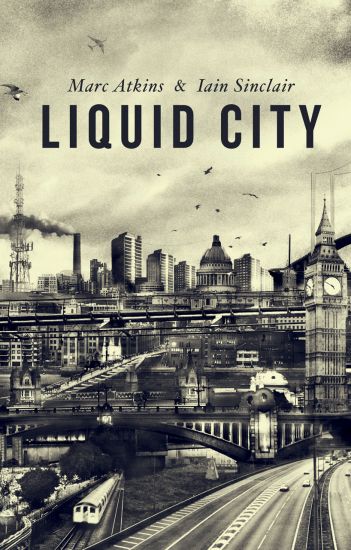
Liquid City documents the collaboration between Iain Sinclair and photographer Marc Atkins and their eccentric, manic, often moving explorations of London's hidden streets, cemeteries, canals, parks, pubs and personalities. Consisting of striking, atmospheric photographs by Atkins, including many new additions, and with a new introduction by Sinclair, the book focuses on London's eastern and southeastern quadrants. An array of famous and lesser-known writers, booksellers and film-makers slip in and out of Sinclair's annotations, as do memories and remnants of the East End's criminal mobs, as well as physical landmarks as diverse as the Thames Barrier and Karl Marx's grave in Highgate Cemetery.
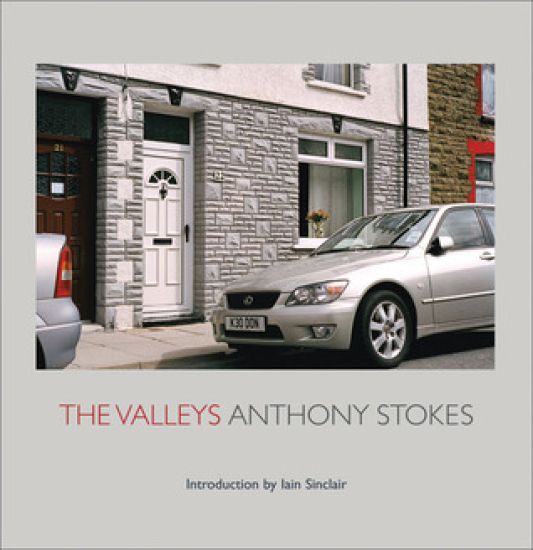
The valleys of south Wales have undergone a profound and remorseless transition since their heyday as the industrial heart of the British empire. Now the coal industry has disappeared, communities have fragmented and the society there seems poorer. How have the people responded to this change? Photographer Tony Stokes has spent the last four years photographing what he calls "this huge, beautiful, muddled landscape" and has produced an astonishing personal view and response to living there. His collection of photographs abjures the traditional lines of terraces and blasted landscapes to focus on form and colour in the buildings of the area, and domestic taste in the contents of people's front windows. The result is a fascinating commentary on an evolving vernacular of modern expectations and fashion. The photographs serve as a record of what the place looks like today. Stokes looks at houses, shops and public buildings in and their modifications; vacant buildings, industrial sites, casual construction and dereliction; the landscape, and recent development. The people themselves appear in what they have made, or modified, to express their nature and the photographs reveal a creative sense of design and use of rich colour. The cumulative effect of these images makes a remarkable book and a rich commentary on south Wales.
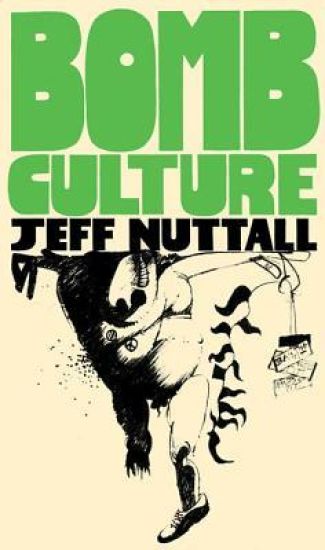
Out of print for fifty years, Jeff Nuttall's legendary exploration of radical 1960s art, music, and protest movements." Bomb Culture is an abscess that lances itself. An extreme book, unreasonable but not irrational. Abrasive, contemptuous, attitudinizing, ignorant and yet brilliant." —Dennis PotterOut of print for fifty years, Jeff Nuttall's Bomb Culture has achieved legendary status as a powerful, informative, and spirited exploration of 1960s alternative society and counterculture. Nuttall's confessional account of the period investigates the sources of its radical art, music, and protest movements as well as the beliefs, anxieties, and conceits of its key agitators, including his own.Nuttall argued that a tangible psychic dread of nuclear holocaust pervaded both high and low cultures, determining their attitude and content, much as the horrors of World War I had nourished the tactics and aesthetics of Dadaism.Accompanying the original text is a new foreword by author Iain Sinclair, who was closely acquainted with Jeff Nuttall and participated in the turbulent underground culture described in Bomb Culture. This anniversary edition is rounded out with an afterword by writer Maria Fusco and a contextual introduction by the book's editors which includes photographs and images of Nuttall's distinctive artwork as well as further archival materials.
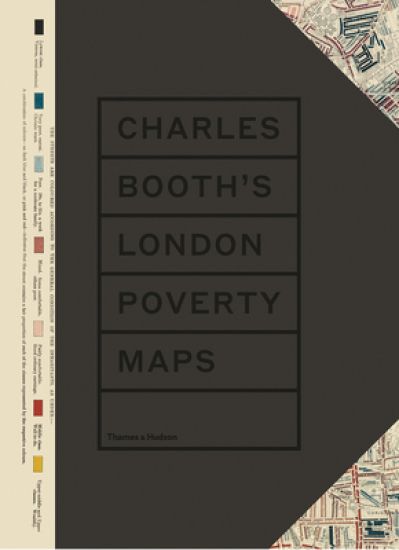
Charles Booth’s London Poverty Maps
Mary S. Morgan; Iain Sinclair; London School of Economics
Thames Hudson Ltd
2019
sidottu
A splendid – and necessary – publication…a great resource Iain SinclairCharles Booth’s landmark survey of life in late-19th-century London, published for the first time in one volume. In the late nineteenth century, Charles Booth's landmark social and economic survey found that 35 percent of Londoners were living in abject poverty. Booth's team of social investigators interviewed Londoners from all walks of life, recording their comments, together with their own unrestrained remarks and statistical information, in 450 notebooks. Their findings formed the basis of Booth's colour-coded social mapping (from vicious and semi-criminal to wealthy) and his seventeen-volume survey Inquiry into the Life and Labour of the People of London, 1886-1903.Organized into six geographical sections, Charles Booth's London Poverty Maps presents the hand-colored preparatory and printed social mapping of London. Accompanying the maps are reproductions of pages from the original notebooks, containing anecdotes and observations too judgmental for Booth to include in his final published survey. An introduction by professor Mary S. Morgan clarifies the aims and methodology of Booth's survey and six themed essays contextualize the the survey's findings, accompanied by evocative period photographs. Providing insights into the minutia of everyday life viewed through the lens of inhabitants of every trade, class, creed, and nationality, Charles Booth's London Poverty Maps brings to life the diversity and dynamism of late nineteenth-century London.
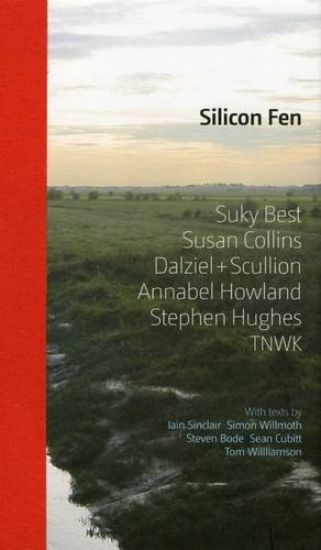
Silicon Fen: Suky Best, Susan Collins, Dalziel + Scullion, Annabel Howland, Stephen Hughes, TNWK
Simon Willmoth; Steven Bode; Iain Sinclair
Film Video Umbrella
2008
sidottu
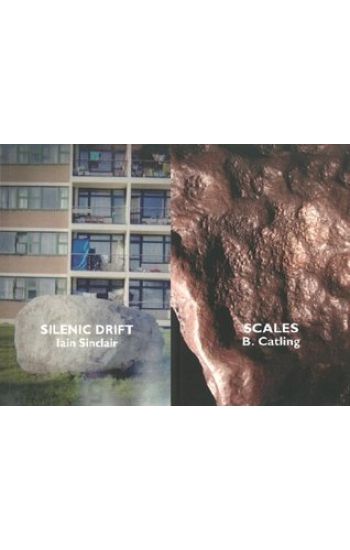
Iain Sinclair's 'Our Silenic Compact' is a psychogeographical exploration of London's geological substrata in search of the city's meteorites. Classic Sinclair, it touches and expands upon many of the themes of his most admired works. Brian Catling's 'Ahnighito' is a historical epic-in-miniature, a fictionalised account of the discovery and transportation of the enormous, 34-tonne anhnighito meteorite from Greenland to New York's Natural History Museum in 1894, where it still resides.

Best British Short Stories 2025
David Bevan; Rose Biggin; Christopher Burns; Ian Critchley; Pippa Goldschmidt; Linden Hibbert; Hannah Hoare; Catrin Kean; Roger Luckhurst; Baret Magarian; Wyl Menmuir; Alison Moore; Okechukwu Nzelu; Simon Okotie; Imogen Reid; C. D. Rose; Iain Sinclair; Elizabeth Stott; Mark Valentine; Naomi Wood
SALT PUBLISHING
2025
pokkari
The definitive showcase of the year’s finest British short stories ‘Bravo to Salt’s beacon of delight and intrigue – its annual collection of the UK’s best short stories, from established and emerging voices.’ —Duncan Minshull Now relaunched for a new era, Best British Short Stories returns with a bold new look and a renewed commitment to celebrating the art of the short story. As we enter our fifteenth volume, this much-loved annual collection continues to be the go-to anthology for readers seeking the most exciting and diverse voices in contemporary British fiction. Assembled by series editor Nicholas Royle, Best British Short Stories 2025 presents a stellar selection of stories first published in 2024, drawn from magazines, journals, anthologies, collections, chapbooks, and online. Whether you’re a devoted follower or discovering the series for the first time, this new edition reaffirms our mission to champion storytelling in all its forms. ‘If the latest iteration of Salt’s Best British Short Stories collection is anything to go by then the genre remains in safe hands.’ —Lawrence Foley, TLS Featuring stories by: David Bevan, Rose Biggin, Christopher Burns, Ian Critchley, Pippa Goldschmidt, Linden Hibbert, Hannah Hoare, Catrin Kean, Roger Luckhurst, Baret Magarian, Wyl Menmuir, Alison Moore, Okechukwu Nzelu, Simon Okotie, Imogen Reid, C. D. Rose, Iain Sinclair, Elizabeth Stott, Mark Valentine, and Naomi Wood.