Kirjojen hintavertailu. Mukana 12 408 019 kirjaa ja 12 kauppaa.

Kirjahaku

Etsi kirjoja tekijän nimen, kirjan nimen tai ISBN:n perusteella.

71 kirjaa tekijältä Ilan Stavans

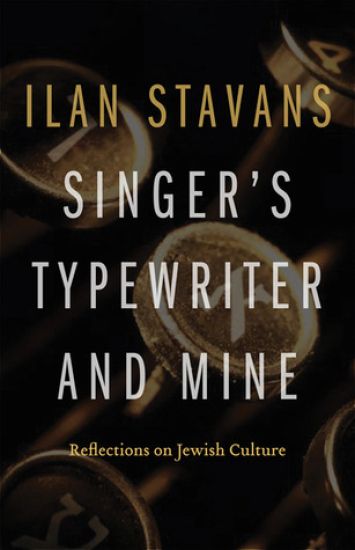
Singer's Typewriter and Mine

Singer's Typewriter and Mine

Ilan Stavans

University of Nebraska Press
2012
pokkari
A cultural critic of extraordinary erudition, encyclopedic knowledge, and boundless curiosity, Ilan Stavans, an Ashkenazic Jew who grew up in Mexico, negotiates wildly varied topics as effortlessly and deftly as he manages the multiple perspectives of a dual national, religious, and ethnic identity. In Singer's Typewriter and Mine, a follow-up to The Inveterate Dreamer (Nebraska, 2001), Stavans interweaves his own experience with that of other Jewish writers and thinkers, past and present, to explore modern Jewish culture across the boundaries of language and nation. Juxtaposing the personal and the analytical, these essays and conversations take up the oeuvres of Isaac Bashevis Singer and Mario Vargas Llosa, translation and God's language, storytelling as midrash, anti-Semitism in Hispanic America, Yiddish and Sephardic literatures, the connection between humor and terror, impostors as cultural agents, the creators of the King James Bible, and the encounter between Jewish and Latino civilizations, to name but a few of Stavans's topics here. Funny, engaging, and provocative, this collection continues Stavans's project of opening new vistas in our cross-cultural understanding of language, literature, and life.
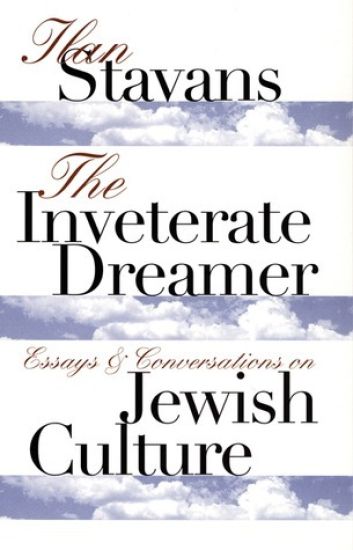
The Inveterate Dreamer

The Inveterate Dreamer

Ilan Stavans

University of Nebraska Press
2001
pokkari
Not only do "modern" Jewish languages like Yiddish and Hebrew have their own Jewish writers, but every major Western tongue—from German and Russian to English and Portuguese—does as well. These writers are often at the crossroad between the two traditions: their Jewish one and their own national one. Is there such a thing as a modern Jewish literary tradition, one navigating across linguistic and national lines? If so, how should one define it? Ilan Stavans is uniquely qualified to answer these questions and to comment on the power and challenges of cultural margins and literary crossings. He has been at the forefront of an appreciation of the Jewish literary tradition that is less asphyxiating, more global. His reflections on Jewish Latin America have won him the nickname "pathfinder." This incomparable volume showcases Stavans's most insightful and provocative—and at times controversial—observations on transnational Jewish culture and literature. Stavans explores the problems and prospects of representing Jewish experiences through such media as Holocaust memoirs and Jewish museums; astutely comments on well-known intellectual figures, including Lionel Trilling, Isaac Babel, Primo Levi, Harold Bloom, and Walter Benjamin; engages in memorable conversations with Norman Manea, Joseph Brodsky, and Ariel Dorfman; and offers compelling glimpses of revelatory moments in his own life.
Bandido

Bandido

Ilan Stavans

Northwestern University Press
2003
nidottu
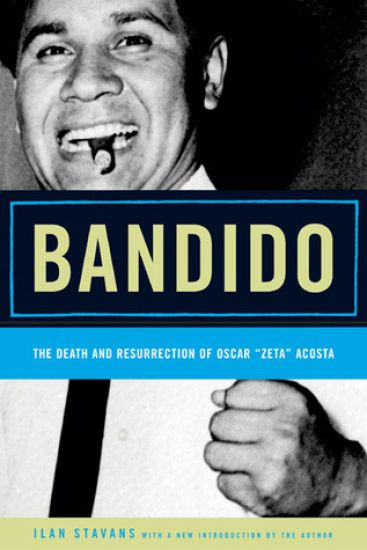
The Hispanic Malcolm X. Writer. Activist. Civil rights attorney. Obese, darkskinned, and angry. Man with a surplus of personality. Man of vision. All the above describe Oscar ""Zeta"" Acosta. El Paso-born, Acosta became a leading figure in the Chicano rights movement of the 1960s and 1970s, winning landmark decisions in civil rights cases as an attorney. As a tireless writer and activist, he had profound influence on his contemporaries. He seemed to be everywhere at once, knowing everyone in ""el movimiento"" and involving himself in many of its key moments. Tumultuous and prone to excess, he is the Samoan in Hunter S. Thompson's Fear and Loathing in Las Vegas. In 1974, after a last phone call to his son, Acosta disappeared in the Mexican state of Mazatlan. Hailed as ""a fine, learned homage"" (Kirkus), ""a kaleidoscopic portrait"" (Booklist), and ""a game of mirrors"" (The Washington Post), Bandido is a veritable tour de force. Through interviews and Acosta's writings (published and unpublished), Ilan Stavans reconstructs - even reinvents - the man behind the myth. Part biographical appraisal, part reflection on the legacy of the Civil Rights era, Bandido is an opportunity to understand the challenges and pitfalls Latinos face in finding a place of their own in America.
The Disappearance

The Disappearance

Ilan Stavans

Northwestern University Press
2006
sidottu
Hailed as one of the most important Hispanic writers of his generation, Ilan Stavans is mostly known for his penetrating essays on culture. He is also a celebrated storyteller whose work has been translated into a dozen languages and has garnered numerous international awards. ""The Disappearance: A Novella and Stories"" contains three small, masterful gems. The novella ""Morirse esta en hebreo,"" is a thought-provoking meditation on continuity and tradition among Mexican Jews that takes place just as a decades-long, one-party dictatorship is crumbling down. It is the basis for a critically-acclaimed Mexican feature film that will be released in the United States in late 2006. The volume also features ""Xerox Man,"" an intriguing story about a book thief with a bizarre theological obsession, which was commissioned and broadcast by the BBC and has been widely anthologized. The title story ""The Disappearance"" is the resonant tale of a Belgian actor who kidnaps himself in an attempt to respond to neo-Nazi groups. Together, these three pieces offer an unforeseen vista of Jewish-Hispanic relations and confirm Stavans's reputation as a lyrical, daring, and original literary voice.
The One-handed Pianist and Other Stories

The One-handed Pianist and Other Stories

Ilan Stavans

Northwestern University Press
2007
nidottu
The One-Handed Pianist was published to acclaim in the early 1990s, with the two-part Spanish edition winning the Latino Literature Prize in 1989 and the Gamma Literature Prize in 1992. Its tales look at what it means to be Jewish in the Hispanic world - a world in which spirituality is often exercised outside the realm of orthodoxy. Stavans constructs fables that raise questions about ethnicity and community; even Stavans' person raises questions about ethnicity and community: what does it mean that a Jew of Eastern European lineage can call himself Latino and speak for that group?
The Disappearance

The Disappearance

Ilan Stavans

Northwestern University Press
2008
nidottu
Hailed as one of the most important Hispanic writers of his generation, Ilan Stavans is a celebrated storyteller whose work has been translated into a dozen languages and has garnered numerous international awards. ""The Disappearance: A Novella and Stories"" contains three masterful gems. The novella, ""Morirse esta en hebreo,"" is a thought-provoking meditation on continuity and tradition among Mexican Jews; ""Xerox Man"" is an intriguing story about a book thief with a bizarre theological obsession; and the title story, ""The Disappearance,"" is the resonant tale of a Belgian actor who kidnaps himself in an attempt to respond to neo-Nazi groups. Together, these three pieces offer an unforeseen vista of Jewish-Hispanic relations and confirm Stavans' reputation as an original literary voice.
José Vasconcelos

José Vasconcelos

Ilan Stavans

Rutgers University Press
2011
nidottu
Mexican educator and thinker Jose Vasconcelos is to Latinos what W.E.B. Du Bois is to African Americans a controversial scholar who fostered an alternative view of the future. In Josè Vasconcelos: The Prophet of Race, his influential 1925 essay, "Mestizaje" key to understanding the role he played in the shaping of multiethnic America—is for the first time showcased and properly analyzed. Freshly translated here by John H. R. Polt, "Mestizaje" suggested that the Brown Race from Latin America was called to dominate the world, a thesis embraced by activists and scholars north and south of the Rio Grande. Ilan Stavans insightfully and comprehensively examines the essay in biographical and historical context, and considers how many in the United States, especially Chicanos during the civil rights era, used it as a platform for their political agenda. The volume also includes Vasconcelos's long-forgotten 1926 Harris Foundation Lecture at the University of Chicago, "The Race Problem in Latin America," where he cautioned the United States that rejecting mestizaje in our own midst will ultimately bankrupt the nation.
Return to Centro Histórico

Return to Centro Histórico

Ilan Stavans

Rutgers University Press
2012
sidottu
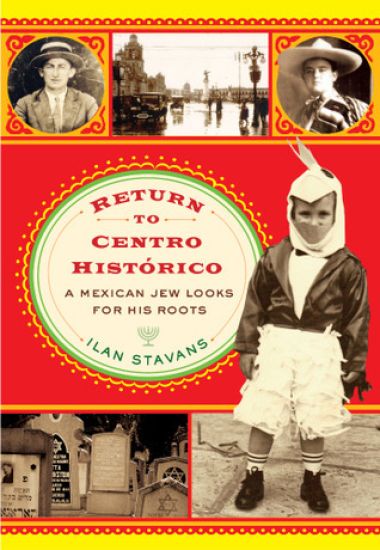
After a stirring e-mail exchange with his father, awardwinning essayist and cultural commentator Ilan Stavans decided to do something bizarre: revisit his hometown, Mexico City, accompanied by a tourist guide. But rather than seeking his roots in the neighborhood where he grew up, he headed to the Centro Histórico, the downtown area at the heart of the world’s largest metropolis. It was there that conversos, the hidden Jews escaping the might of the Holy Office of the Inquisition, were burned at the stake. And, centuries later, it was the same section where Jewish immigrants, both Yiddish-speaking Ashkenazim and Sephardim from the Ottoman Empire, made their homes as peddlers. In a sense, Centro Histórico is to Mexico what the Lower East Side is to the United States: a platform for reinventing one’s self in the New World.With the same linguistic verve and insight that has made him one of the most distinguished voices in American literature today, Ilan Stavans invites readers along for a personal journey that is not only his own, but that of an entire culture. In Return to Centro Histórico he makes it possible to understand the intimate role that Jews have played in the development of Hispanic civilization.
Octavio Paz

Octavio Paz

Ilan Stavans

University of Arizona Press
2002
sidottu
Octavio Paz: Nobel Prize winner, author of The Labyrinth of Solitude and Sor Juana, or, the Traps of Faith, precursor and pathfinder, a guiding light of the Mexican intelligentsia in the twentieth century. In this small, memorable meditation on Octavio Paz as a thinker and man of action, Ilan Stavans described by the Washington Post as "one of our foremost cultural critics" and by the New York Times as "the czar of Latino culture in the United States" ponders Paz's intellectual courage against the ideological tapestry of his epoch and shows us what lessons can be learned from him. He does so by exploring such timeless issues as the crossroads where literature and politics meet, the place of criticism in society, and Mexico's difficult quest to come to terms with its own history. Stavans reflects on Paz's personal struggle with Marxism and surrealism, his reflections on pachucos, his analysis of love and eroticism, his study of the life and legacy of Sor Juana Ines de la Cruz, and his influence as a magazine editor. But this extraordinary rumination is not only a thought-provoking appraisal of Paz; it is also a feast for the myriad admirers of Stavans, himself a spirited, mordant essayist who is not afraid of controversy. This explains why Richard Rodriguez has portrayed Stavans as "the rarest of North American writers he sees the Americas whole," and then added, "Not since Octavio Paz has Mexico given us an intellectual so able to violate borders with learning and grace." Octavio Paz: A Meditation is a fitting addition to Stavans's own oeuvre that will stimulate discerning readers.
Sor Juana

Sor Juana

Ilan Stavans

University of Arizona Press
2018
nidottu
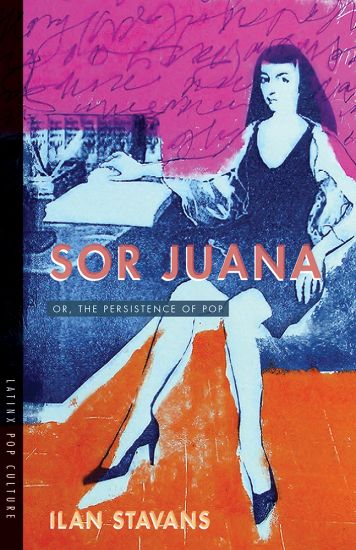
A sixteenth-century Mexican nun, Sor Juana Inés de la Cruz, has become one of the most rebellious and lasting icons in modern times, on par with Mahatma Gandhi, Ernesto ""Che"" Guevara, and Nelson Mandela. Referenced in ranchera, tejana, and hip-hop lyrics, and celebrated in popular art as a guerrillera with rifle and bullet belts, Sor Juana has become ubiquitous. The conduits keep multiplying: statues, lotería cards, key chains, recipe books, coffee mugs, Día de los Muertos costumes. Ironically, Juana Inés de Asbaje—alias Sor Juana Inés de la Cruz—died in anonymity. Her grave was unmarked until the 1970s. Sor Juana: Or, the Persistence of Pop encapsulates the life, times, and legacy of Sor Juana. In this immersive work, essayist Ilan Stavans provides a biographical and meditative picture of the ways in which popular perceptions of her life and body of work both shape and reflect modern Latinx culture.
Octavio Paz

Octavio Paz

Ilan Stavans

University of Arizona Press
2021
nidottu
Octavio Paz: Nobel Prize winner, author of The Labyrinth of Solitude and Sor Juana, or, the Traps of Faith, precursor and pathfinder, a guiding light of the Mexican intelligentsia in the twentieth century. In this small, memorable meditation on Octavio Paz as a thinker and man of action, Ilan Stavans - described by the Washington Post as "one of our foremost cultural critics" and by the New York Times as "the czar of Latino culture in the United States" - ponders Paz's intellectual courage against the ideological tapestry of his epoch and shows us what lessons can be learned from him. He does so by exploring such timeless issues as the crossroads where literature and politics meet, the place of criticism in society, and Mexico's difficult quest to come to terms with its own history. Stavans reflects on Paz's personal struggle with Marxism and surrealism, his reflections on pachucos, his analysis of love and eroticism, his study of the life and legacy of Sor Juana InÉs de la Cruz, and his influence as a magazine editor. But this extraordinary rumination is not only a thought-provoking appraisal of Paz; it is also a feast for the myriad admirers of Stavans, himself a spirited, mordant essayist who is not afraid of controversy. This explains why Richard Rodriguez has portrayed Stavans as "the rarest of North American writers - he sees the Americas whole," and then added, "Not since Octavio Paz has Mexico given us an intellectual so able to violate borders with learning and grace." Octavio Paz: A Meditation is a fitting addition to Stavans's own oeuvre that will stimulate discerning readers.
I Love My Selfie

I Love My Selfie

Ilan Stavans

Duke University Press
2017
sidottu
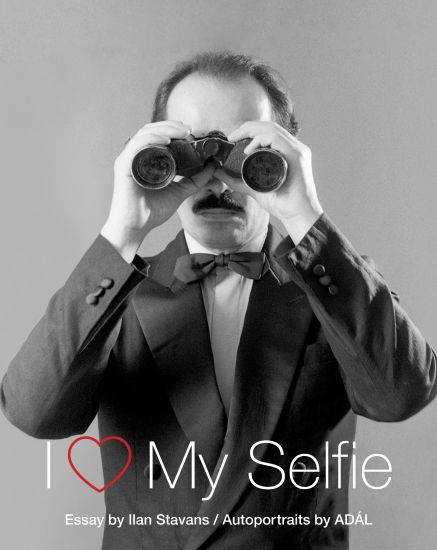
What explains our current obsession with selfies? In I Love My Selfie noted cultural critic Ilan Stavans explores the selfie's historical and cultural roots by discussing everything from Greek mythology and Shakespeare to Andy Warhol, James Franco, and Pope Francis. He sees selfies as tools people use to disguise or present themselves as spontaneous and casual. This collaboration includes a portfolio of fifty autoportraits by the artist ADÁL; he and Stavans use them as a way to question the notion of the self and to engage with artists, celebrities, technology, identity, and politics. Provocative and engaging, I Love My Selfie will change the way readers think about this unavoidable phenomenon of twenty-first-century life.
I Love My Selfie

I Love My Selfie

Ilan Stavans

Duke University Press
2017
pokkari
What explains our current obsession with selfies? In I Love My Selfie noted cultural critic Ilan Stavans explores the selfie's historical and cultural roots by discussing everything from Greek mythology and Shakespeare to Andy Warhol, James Franco, and Pope Francis. He sees selfies as tools people use to disguise or present themselves as spontaneous and casual. This collaboration includes a portfolio of fifty autoportraits by the artist ADÁL; he and Stavans use them as a way to question the notion of the self and to engage with artists, celebrities, technology, identity, and politics. Provocative and engaging, I Love My Selfie will change the way readers think about this unavoidable phenomenon of twenty-first-century life.
Wall, The

Wall, The

Ilan Stavans

University of Pittsburgh Press
2018
nidottu
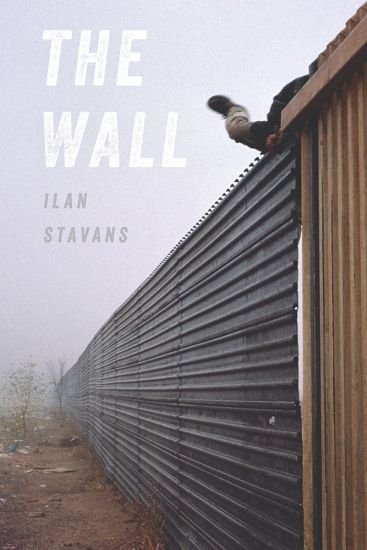
Winner of the Massachusetts Book Award for PoetryThe Wall is a poetic exploration—across time, space, and language, real as well as metaphorical—of the U.S.-Mexican wall dividing the two civilizations, of similar walls (Jerusalem, China, Berlin, Warsaw, etc.) in history, and of the act of separating people by ideology, class, race, and other subterfuges. It is an indictment of hateful political rhetoric. In the spirit of Virgil’s Aeneid and Spoon River Anthology by Edgar Lee Master, it gives voice in symphonic fashion to an assortment of participants (immigrants, border patrol, soldiers, activists, presidents, people dead and alive) involved in the debate on walls. It brings in elements of literature and pop culture, fashion and cuisine. Poetry becomes a tool to explore raw human emotions in all its extremes.
The Seventh Heaven

The Seventh Heaven

Ilan Stavans

University of Pittsburgh Press
2020
nidottu
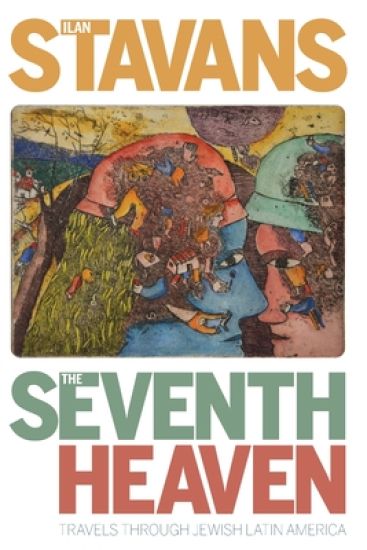
Internationally renowned essayist and cultural commentator Ilan Stavans spent five years traveling from across a dozen countries in Latin America, in search of what defines the Jewish communities in the region, whose roots date back to Christopher Columbus’s arrival. In the tradition of V.S. Naipaul’s explorations of India, the Caribbean, and the Arab World, he came back with an extraordinarily vivid travelogue. Stavans talks to families of the desaparecidos in Buenos Aires, to “Indian Jews,” and to people affiliated with neo-Nazi groups in Patagonia. He also visits Spain to understand the long-term effects of the Inquisition, the American Southwest habitat of “secret Jews,” and Israel, where immigrants from Latin America have reshaped the Jewish state. Along the way, he looks for the proverbial “seventh heaven,” which, according to the Talmud, out of proximity with the divine, the meaning of life in general, and Jewish life in particular, becomes clearer. The Seventh Heaven is a masterful work in Stavans’s ongoing quest to find a convergence between the personal and the historical.
Selected Translations

Selected Translations

Ilan Stavans

University of Pittsburgh Press
2021
nidottu
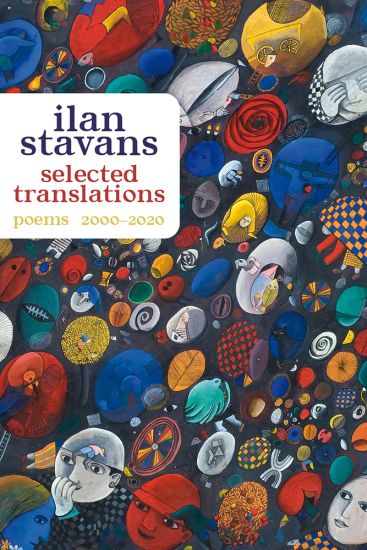
For twenty years, Ilan Stavans has been translating poetry from Spanish, Yiddish, Hebrew, French, Portuguese, Russian, German, Georgian, and other languages. His versions of Borges, Neruda, Sor Juana Inés de la Cruz, Ferreira Gullar, Raúl Zurita, and dozens of others have become classics. This volume, which includes poems from more than forty poets from all over the world, is testimony to a life dedicated to the pursuit of beauty through poetry in different languages.
The Riddle of Cantinflas

The Riddle of Cantinflas

Ilan Stavans

University of New Mexico Press
2012
nidottu
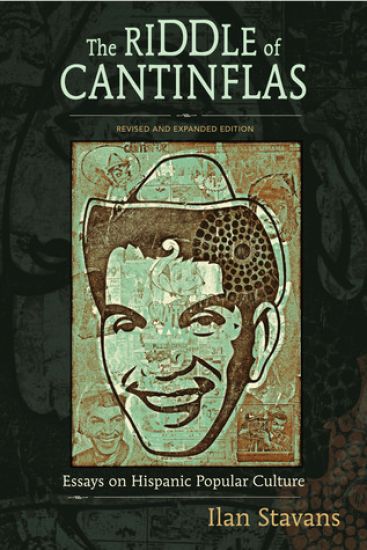
Ilan Stavans’s collection of essays on kitsch and high art in the Americas makes a return with thirteen new colourful conversations that deliver Stavans’s trademark wit and provocative analysis. “A Dream Act Deferred” discusses an issue that is at once and always topical in the dialogue of Hispanic popular culture: immigration. This essay generated a vociferous response when first published in The Chronicle of Higher Education as the issue of immigration was contested in states like Arizona, and is included here as a new addition that adds a rich layer to Stavans’s vibrant discourse. Fitting in this reconfiguration of his analytical conversations on Hispanic popular culture is Stavans’s “Arrival: Notes from an Interloper,” which recounts his origins as a social critic and provides the reader with interactive insight into the mind behind the matter. Once again delightfully humorous and perceptive, Stavans delivers an expanded collection that has the power to go even further beyond common assumptions and helps us understand Mexican popular culture and its counterparts in the United States.
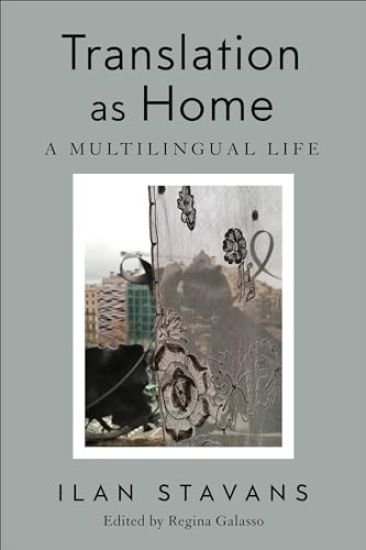
Translation As Home

Translation As Home

Ilan Stavans

UNIVERSITY OF TORONTO PRESS
2024
sidottu
Translation as Home is a collection of autobiographical essays by Ilan Stavans that eloquently and unequivocally make the case that translation is not only a career, but a way of life. Born in Mexico City, Ilan Stavans is an essayist, anthologist, literary scholar, translator, and editor. Stavans has changed languages at various points in his life: from Yiddish to Spanish to Hebrew and English. A controversial public intellectual, he is the world’s authority on hybrid languages and on the history of dictionaries. His influential studies on Spanglish have redefined many fields of study, and he has become an international authority on translation as a mechanism of survival. This collection deals with Stavans’s three selves: Mexican, Jewish, and American. The volume presents his recent essays, some previously unpublished, addressing the themes of language, identity, and translation and emphasizing his work in Latin American and Jewish studies. It also features conversations between Stavans and writers, educators, and translators, including Regina Galasso, the author of the introduction and editor of the volume.
Dictionary Days

Dictionary Days

Ilan Stavans

Graywolf Press,U.S.
2005
sidottu
A dictionary, despite its heroic efforts to pin down language, is destined for failure the moment a single word is printed; for language, with its eternal mutations, is forever uncontainable. Award-winning essayist Ilyan Stavans explores the human need to isolate meaning: owner of hundreds of dictionaries, he follows a fascinating, zigzagging lexicography across many languages including English, French, Spanish, German, Arabic, Hebrew, Latin and Cyrillic. A fabulous selection of strange inconstancies, unusual origins and extraordinary anecdotes.