Kirjojen hintavertailu. Mukana 11 342 296 kirjaa ja 12 kauppaa.

Kirjahaku

Etsi kirjoja tekijän nimen, kirjan nimen tai ISBN:n perusteella.

255 kirjaa tekijältä Jacob Neusner

Praxis and Parable

Praxis and Parable

Jacob Neusner

University Press of America
2005
nidottu
Judaism's two native categories, narrative theology and law (also known as parable and praxis or Aggadah and Halakhah) form two distinct modes of discourse. The one expounds norms of attitude and belief, the other, norms of action and behavior. Each possesses its own modes of thought, topical program, and medium for expression. Joined together, they create a remarkably coherent statement. Any understanding of Rabbinic Judaism depends on a theory of how these two modes of thought and expression relate to form a single cogent system. In Praxis and Parable, author Jacob Neusner explores how that single topic "the morality and law of the animal kingdom" in the Rabbinic canon of the formative age, like all other ubiquitous topics encompassed in that canon, produces two distinct vocabularies of analysis. These distinct realms of thought and speech on the same subject yield two separate classifications of the order of nature and society. How these two mediums of expressions intersect and diverge in a single case permits the general characterization of the two Judaic modes of discourse. The general characterization of the interplay of Halakhah and Aggadah defines the interior dynamics of Rabbinic Judaism and forms the principal task of systemic analysis of that Judaism. In the Rabbinic manner, this book works from the case to the rule.
How Important Was the Destruction of the Second Temple in the Formation of Rabbinic Judaism?
The destruction of the First Temple (586 B.C.E.), destruction of the Second Temple (70 C.E.), and the defeat of the Bar Kokhba (132-135 C.E.) are discussed in great detail in the covenantal theology of the Torah and Scripture. In this new work, Jacob Neusner uses extensive textual evidence to explore the importance of the second temple's destruction and the aforementioned events in the creation of Rabbinic Judaism. Neusner ultimately proposes that the destruction of the second temple merely reinforced the existing theological system, which posed the following choice: keep the Torah and prosper, or rebel against the Torah and suffer God's wrath. This detailed analysis is an important new exploration into the foundations of Rabbinic Judaism.
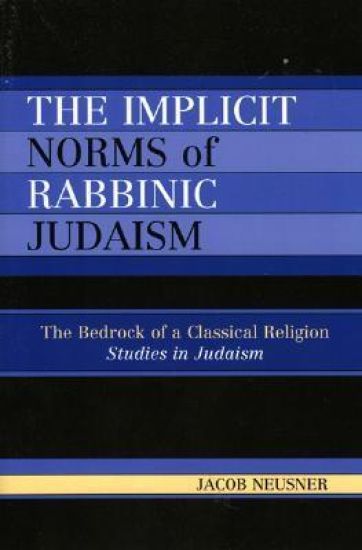
The Implicit Norms of Rabbinic Judaism

The Implicit Norms of Rabbinic Judaism

Jacob Neusner

University Press of America
2005
nidottu
Implicit norms of law and theology governed in Rabbinic Judaism from the onset of its canon in the Mishnah (concluded at ca. 200) to its climax in the Talmud of Babylonia four centuries later. These norms of conviction and conception prevailed in a complete system, which was logically present, if not fully realized, from the very beginning of the canon. Norms of belief, not only behavior, governed in the canonical documents of Rabbinic Judaism and defined its orthodoxy and its heterodoxy. This book proves that proposition by asking, what are the theological premises of the documents upon which the Rabbinic canon was built and do these premises cohere in a tight theological system? The Implicit Norms of Rabbinic Judaism answers this question by identifying the principles that had to govern in order for a given composition to be articulated or a particular composite to be assembled. Those premises at the foundations of the canonical documents prove not episodic, but coherent. The documents speak, so it is universally maintained, for the community of the Rabbinic sages that sponsored them. Hence the premises and presuppositions of a document represent the consensus of the Rabbinic sages: the implicit norms of attitude and action. Canonical orthodoxy and heresy come to definition in those norms. How individuals conformed, and what institutions functioned to enforce conformity, do not figure into this account. It suffices to show that orthodoxy and heresy constituted native categories of the Rabbinic system of thought inherent in principal documents of the canon.
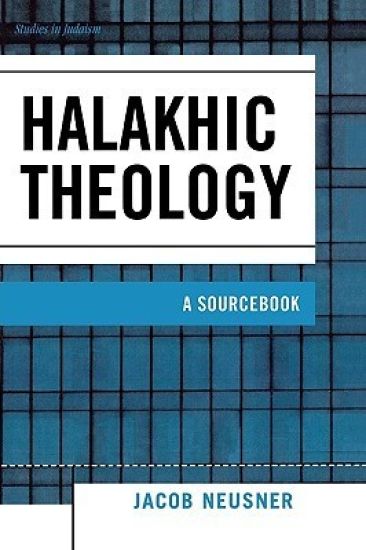
Halakhic Theology

Halakhic Theology

Jacob Neusner

University Press of America
2005
nidottu
Laws, or Halakhah, and narratives, or Aggadah, comprises the Torah. Halakhah, normative law, makes the same statement in terms of behavior that Aggadah, in its systematic and abstract mode, makes in terms of beliefs. The Halakhic theology focuses on the interior existence of Israelite. In this sourcebook, author Jacob Neusner derives from details of legal expositions some of the Halakhah's theological propositions, in order to show how normative laws of conduct express the narrative monotheism of the Torah. An introductory overview of the Halakhic theological program, seen through topical expositions of law, briefly compares Halakhic texts with Aggadic theological programs.
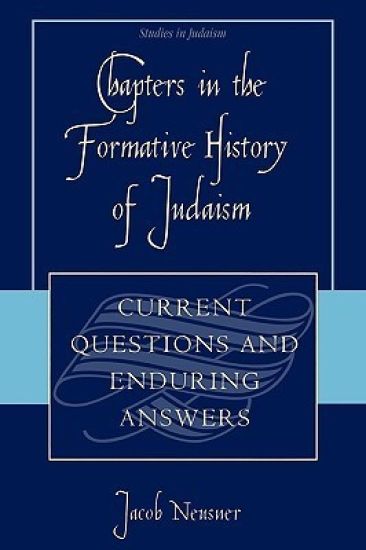
Chapters in the Formative History of Judaism

Chapters in the Formative History of Judaism

Jacob Neusner

University Press of America
2005
nidottu
The documentary reading of the Rabbinic canon continues to create engaging questions and interesting problems for study. This collection of essays and book reviews represents two years of work from 2003 to 2005 focused on the Rabbinic canon. The collection is divided into four main groups. The first set of essays represents examples of historical and history-of-religion questions precipitated by the documentary perspective. The second group of essays focuses on the treatment of 56 B.C.E., 70 C.E., and 132-135 C.E. in successive canonical compilations. This section compares and contrasts Rabbinic and Christian writings on the same topic, Halakhic and Aggadic documents on the same topic, the theological description of a Rabbinic document, and various historical problems. The third set of essays deals with the history of law, and the fourth section includes several freestanding essays and six book reviews.
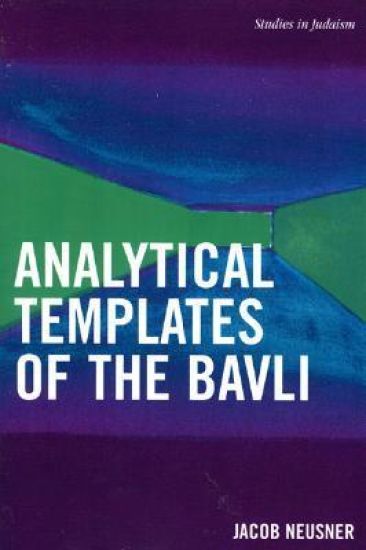
Analytical Templates of the Bavli

Analytical Templates of the Bavli

Jacob Neusner

University Press of America
2006
nidottu
In the Mishnah (ca. 200 C.E.), the Tosefta (ca. 300 C.E.), and the commentaries that joined them-the Yerushalmi, the Talmud of the Land of Israel (ca. 400) and the Bavli, and the Talmud of Babylonia (ca. 600)-the law of Judaism is outlined topic by topic. The exposition of these topics, however, is shaped in part by a generic analytical program. The hermeneutics of the Halakhah of the formative canon guides the Rabbinic sages to say the same thing about many things. Specifically, issues of a patterned analytical character guide the presentation, so that most topics in some measure, and some topics in paramount measure, serve to illustrate ubiquitous, generic problems of thought or intellectual templates. Two generative problems, found in four intellectual templates, predominate: [1] intentionality and concomitantly, [2] teleology, [3] resolution of doubts and concomitantly, [4] the classification of mixtures. The second and fourth templates form subsets of the first and the third. In this project, author Jacob Neusner identifies the occurrences of the four intellectual templates and shows, in complete detail, where and how the same problems recur time and again.
How the Halakhah Unfolds

How the Halakhah Unfolds

Jacob Neusner

University Press of America
2006
nidottu
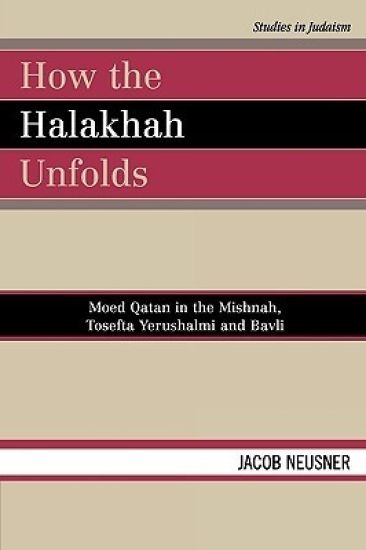
This work follows the single tractate, Moed Qatan, in its passage through the principal documents of formative Judaism_the Mishnah (200 C.E.), Tosefta (300 C.E.), Yerushalmi (400 C.E.), and Bavli (600 C.E.). Author Jacob Neusner presents a systematic account of the Halakhah in its documentary unfolding from beginning to end. In acute detail, the study illustrates the comparison between the documents by showing each individual document's treatment of the same topic.
Intellectual Templates of the Law of Judaism

Intellectual Templates of the Law of Judaism

Jacob Neusner

University Press of America
2006
nidottu
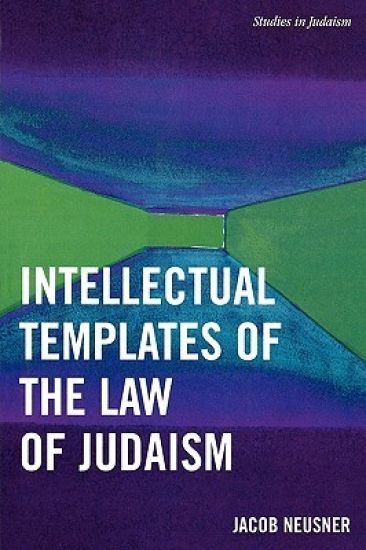
What purpose information? Facing a vast corpus of facts, the heirs of the Mishnah answered this question by showing the cogency of data. They adopted analytical templates that transcended details and transformed the Mishnah's collection of topical expositions into a system of law. This was accomplished in the Bavli, the Talmud of Babylonia, which systematized and imposed an orderly program on the numerous subjects treated by the Mishnah. The Bavli follows a limited repertoire of analytical procedures, and so in parsing the law it often says the same thing about many things. Four templates govern, two form clear patterns from the data and two use various analytical arguments to transform these patterns into generalizations. Two types of analytical arguments, dialectical or moving and formal or static, join the exegetical analyses of clarification and contextualization. The systematization of the law proceeded in four steps. First, the words, phrases, principles, and authorities of the Mishnah were clarified in a uniform manner, following a rigid pattern. Second, the laws of the Mishnah were harmonized and shown to be coherent. Third, the laws were exhibited to showcase their dynamic quality, which was conveyed through disputation. Fourth, the dialectical argument extended through many topics. In this book, the author systematically defines and classifies these four analytical initiatives of the Bavli.
Jeremiah in Talmud and Midrash

Jeremiah in Talmud and Midrash

Jacob Neusner

University Press of America
2006
nidottu
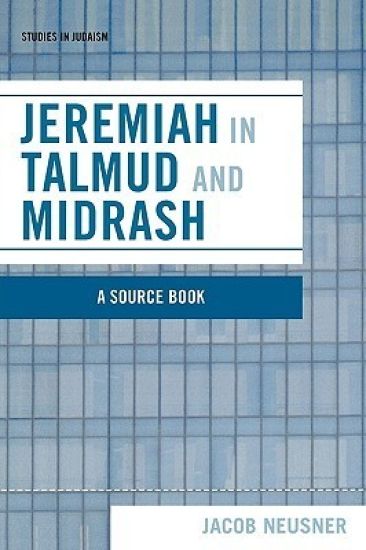
This sourcebook collects and classifies how Israelite Scripture was received and recast in the language community that produced the dual Torah of Judaism. It is well known that verses of prophecy figure as proof-texts in Rabbinic exegesis of scriptural narratives, but to what end, and with what larger concept in mind? With extensive translation and documentation, author Jacob Neusner uses the case of Jeremiah in the Rabbinic canon of the formative age to examine the Rabbinic document's response to the prophetic ones in terms of how they select, explain, and utilize the language of Scripture. The book also explores how one particular kind of ancient Israelite Scripture, the prophetic books, found a place in the new language community formed by the Rabbinic sages and documented in their canon from the Mishnah (ca. 200 C.E.), through the Talmud of Babylonia, a.k.a. the Bavli (ca. 600 C. E.).
Theology in Action

Theology in Action

Jacob Neusner

University Press of America
2006
nidottu
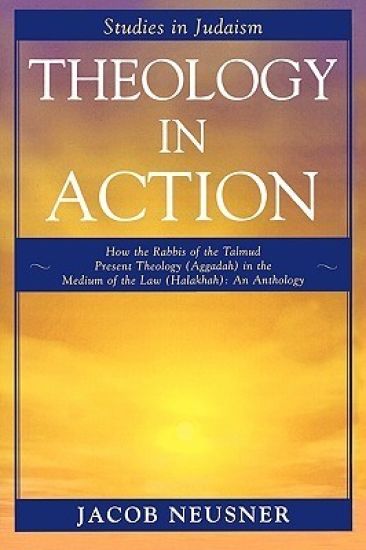
While in contemporary culture we tend to resort to a single, if broadly defined, range of discourse for the results of systematic thought about public matters of the social order, this is not the case in Rabbinic Judaism. Judaism's authoritative documents set forth the entire structure of belief and system of behavior in two distinct modes of discourse, Halakhic and Aggadic, or broadly construed, statements of law and lore. Theology in Action shows how the Talmud of Babylonia (a.k.a., the Bavli) account of normative action sets forth in a dual discourse the single, coherent theology of Rabbinic Judaism.
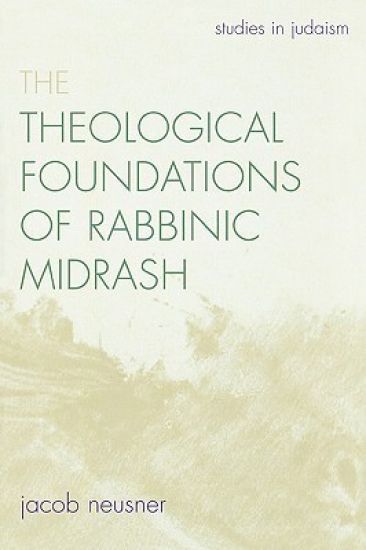
The Theological Foundations of Rabbinic Midrash

The Theological Foundations of Rabbinic Midrash

Jacob Neusner

University Press of America
2006
nidottu
A theological system and structure form foundations of, and are realized in detail by, the Rabbinic Midrash. That system, comprised by active category formations, turns facts into knowledge and knowledge into propositions of a theological character. The structure embodies the paradigm that solves new problems. So, the Rabbinic Midrash exegesis pertaining to theological matters proves coherent. Rabbinic Midrash follows a cogent theological program and sets forth an orderly theological construction. This work defines the principal parts of the theological system that animated the Rabbinic sages encounter with Scripture as embodied in the Rabbinic Midrash; and shows how these parts form a theological system.
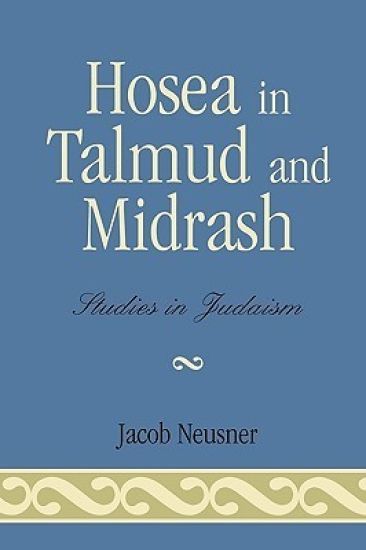
Hosea in Talmud and Midrash

Hosea in Talmud and Midrash

Jacob Neusner

University Press of America
2006
nidottu
In the first six centuries of the Common Era, the Rabbis of formative Judaism, from the Mishnah through the Bavli, consulted the ancient Israelite prophets for guidance on issues of theology, law, history, and literature. In this anthology, Jacob Neusner collects and arranges in documentary sequence the Rabbinic comments on verses in the biblical prophet Hosea.
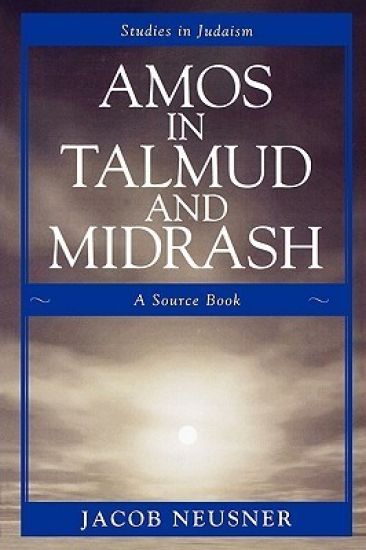
Amos in Talmud and Midrash

Amos in Talmud and Midrash

Jacob Neusner

University Press of America
2006
nidottu
In the first six centuries of the Common Era, the Rabbis of formative Judaism, from the Mishnah through the Bavli, consulted the ancient Israelite prophets for guidance on issues of theology, law, history, and literature. In this anthology, Jacob Neusner collects and arranges in documentary sequence the Rabbinic comments on verses in the biblical prophet Amos.
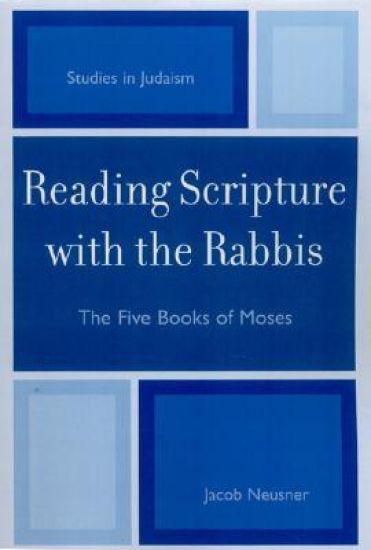
Reading Scripture with the Rabbis

Reading Scripture with the Rabbis

Jacob Neusner

University Press of America
2006
nidottu
This anthology illustrates how Judaism's classical rabbis of the first seven centuries of the Common Era read the ancient Israelite scriptures. It presents, in particular, a selection of writings that show what happens to the five books of Moses at the hands of the Rabbinical sages of the formative age of Judaism. Each Midrash-compilation takes up a book of Scripture and systematically expounds the message that the Rabbis derive from that particular book. No statement by the rabbis of the meaning of a biblical book emerges as a mere paraphrase of the plain sense of Scripture itself. The compiler introduces the Rabbinic reading of the Five books of Moses, Genesis through Genesis Rabbah, Exodus through Mekhilta attributed to R. Ishmael, Leviticus through Leviticus Rabbah, Numbers through Sifré to Numbers, and Deuteronomy through Sifré to Deuteronomy. Genesis Rabbah shows how the rabbis found in the book of Genesis lessons of history realized in their own times. That approach to Scripture will not surprise Bible-believing Christians. Mekhilta attributed to R. Ishmael shows how the Ten Commandments are expounded in an inclusive spirit, so that the Commandments cover important aspects of everyday life. Leviticus Rabbah shows how the rabbis found in the laws of animal sacrifice lessons of both history and morality, once more an approach Christians will find congenial. The book of Numbers illustrates how the ancient rabbis read Scripture in such a way as to validate and justify rules that on the surface do not seem valid and just at all. In the case I have chosen, the treatment of the wife accused of infidelity, Numbers Chpater Five, the law of the Mishnah and the Tosefta affords to the accused wife rights that Scripture does not on the surface provide for her. We consider both the legal and the exegetical treatment of the topic, with its emphasis, for both norms of conduct and norms of conviction, upon God's justice. The book of Deuteronomy at Chapter Thirty-Two contains Moses's profound reflection on the me
Rabbi Jeremiah

Rabbi Jeremiah

Jacob Neusner

University Press of America
2006
nidottu
This analysis of how the Rabbis of the Talmud and Midrash made Jeremiah one of their own shows how Rabbinic Judaism rehearses the Prophetic message. Jeremiah offered hope to renew the relation that was broken, and Yohanan ben Zakkai promised another mode of atonement, involving individual conviction, and conduct. Joining the two yields, the thesis of this book is: in the case of Jeremiah Rabbinic Judaism continues and recapitulates Prophetic Judaism. Prophet and Rabbi confront the same kind of crisis with the same theological outcome. The Prophetic response to and the Rabbinic reading of the event of the destruction of the Temple of Jerusalem— the certainty of God's pardon and love— intersect. The problem of this study of Rabbi Jeremiah is to describe precisely how the Rabbis of the formative canon in the case of Jeremiah naturalized to their system— thus Rabbinized— Prophecy. In taking over the heritage of ancient Israelite Prophecy and law, have the Rabbis subverted Prophecy's religious vision or adapted and adopted it, making that vision their own? By identifying the principal propositions of the Prophet and by examining both the Rabbinic reading of the Prophet and the Rabbinic theology of those same propositions, Neusner answers that question.
Micah and Joel in Talmud and Midrash

Micah and Joel in Talmud and Midrash

Jacob Neusner

University Press of America
2006
nidottu
In the first six centuries of the Common Era, the Rabbis of formative Judaism, from the Mishnah through the Bavli, consulted the ancient Israelite prophets for guidance on issues of theology, law, history, and literature. In this anthology, Jacob Neusner collects and arranges in documentary sequence the Rabbinic comments on verses in the biblical prophets of Michael and Joel.
How the Halakhah Unfolds

How the Halakhah Unfolds

Jacob Neusner

University Press of America
2006
nidottu
In separate multi-volumed works, form-analytical English translations of the Mishnah, Tosefta, Yerushalmi, and Bavli have been set forth. Outlines of the Yerushalmi and the Bavli have been brought about, and those outlines of the two Talmuds have been compared. In addition, for each subject the main points of the Halakhah of the topical expositions or tractates of the Mishnah-Tosefta-Yerushalmi-Bavli have been set forth. The theological message of the respective tractates has been spelled out. Here, we follow a single tractate through the principal documents of formative Judaism as these have already presented them. How the academic commentaries, outlines and comparisons, and theological summaries yield a systematic account of the Halakhah in its documentary unfolding is thus fully exposed.
How the Halakhah Unfolds

How the Halakhah Unfolds

Jacob Neusner

University Press of America
2006
nidottu
In separate multi-volumed works, form-analytical English translations of the Mishnah, Tosefta, Yerushalmi, and Bavli have been set forth. Outlines of the Yerushalmi and the Bavli have been brought about, and those outlines of the two Talmuds have been compared. In addition, for each subject the main points of the Halakhah of the topical expositions or tractates of the Mishnah-Tosefta-Yerushalmi-Bavli have been set forth. The theological message of the respective tractates has been spelled out. Here, we follow a single tractate through the principal documents of formative Judaism as these have already presented them. How the academic commentaries, outlines and comparisons, and theological summaries yield a systematic account of the Halakhah in its documentary unfolding is thus fully exposed.
How the Halakhah Unfolds

How the Halakhah Unfolds

Jacob Neusner

University Press of America
2006
nidottu
In separate multi-volumed works, form-analytical English translations of the Mishnah, Tosefta, Yerushalmi, and Bavli have been set forth. Outlines of the Yerushalmi and the Bavli have been brought about, and those outlines of the two Talmuds have been compared. In addition, for each subject the main points of the Halakhah of the topical expositions or tractates of the Mishnah-Tosefta-Yerushalmi-Bavli have been set forth. The theological message of the respective tractates has been spelled out. Here, we follow a single tractate through the principal documents of formative Judaism as these have already presented them. How the academic commentaries, outlines and comparisons, and theological summaries yield a systematic account of the Halakhah in its documentary unfolding is thus fully exposed.
How the Halakhah Unfolds

How the Halakhah Unfolds

Jacob Neusner

University Press of America
2006
nidottu
In separate multi-volumed works, form-analytical English translations of the Mishnah, Tosefta, Yerushalmi, and Bavli have been set forth. Outlines of the Yerushalmi and the Bavli have been brought about, and those outlines of the two Talmuds have been compared. In addition, for each subject the main points of the Halakhah of the topical expositions or tractates of the Mishnah-Tosefta-Yerushalmi-Bavli have been set forth. The theological message of the respective tractates has been spelled out. Here, we follow a single tractate through the principal documents of formative Judaism as these have already presented them. How the academic commentaries, outlines and comparisons, and theological summaries yield a systematic account of the Halakhah in its documentary unfolding is thus fully exposed.