Kirjojen hintavertailu. Mukana 11 348 994 kirjaa ja 12 kauppaa.

Kirjahaku

Etsi kirjoja tekijän nimen, kirjan nimen tai ISBN:n perusteella.

255 kirjaa tekijältä Jacob Neusner

Ezekiel in Talmud and Midrash

Ezekiel in Talmud and Midrash

Jacob Neusner

University Press of America
2007
nidottu
The Rabbis of classical Judaism, in the first six centuries of the Common Era, commented on the teachings of ancient Israel's prophets and shaped, as much as they were shaped by, prophecy. They commented on much of the Scriptural heritage and they made it their own. This collection of the Rabbinic comments on biblical books makes easily accessible the Rabbinic reading of the prophetic heritage and opens the way to the study of how normative Judaism responded to the challenge of the prophetic writings.
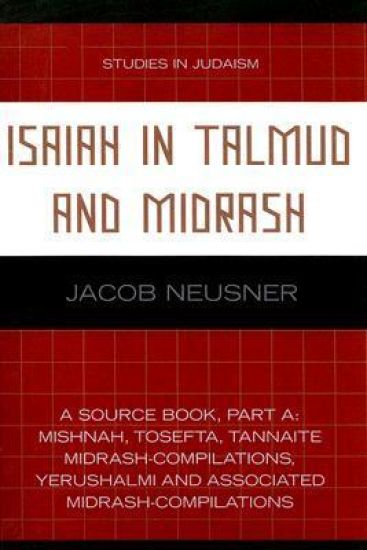
Isaiah in Talmud and Midrash

Isaiah in Talmud and Midrash

Jacob Neusner

University Press of America
2007
nidottu
The Rabbis of classical Judaism, in the first six centuries of the Common Era, commented on the teachings of ancient Israel's prophets and shaped, as much as they were shaped by, prophecy. They commented on much of the Scriptural heritage and they made it their own. This collection of the Rabbinic comments on biblical books makes easily accessible the Rabbinic reading of the prophetic heritage and opens the way to the study of how normative Judaism responded to the challenge of the prophetic writings.
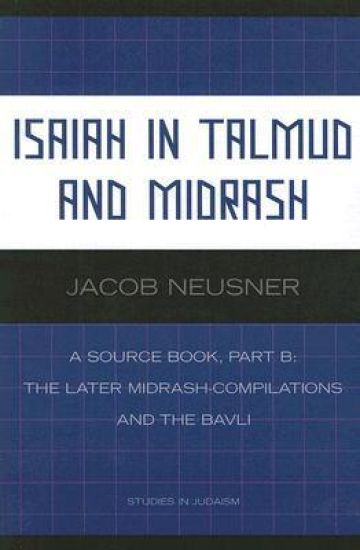
Isaiah in Talmud and Midrash

Isaiah in Talmud and Midrash

Jacob Neusner

University Press of America
2007
nidottu
The Rabbis of classical Judaism, in the first six centuries of the Common Era, commented on the teachings of ancient Israel's prophets and shaped, as much as they were shaped by, prophecy. They commented on much of the Scriptural heritage and they made it their own. This collection of the Rabbinic comments on biblical books makes easily accessible the Rabbinic reading of the prophetic heritage and opens the way to the study of how normative Judaism responded to the challenge of the prophetic writings.
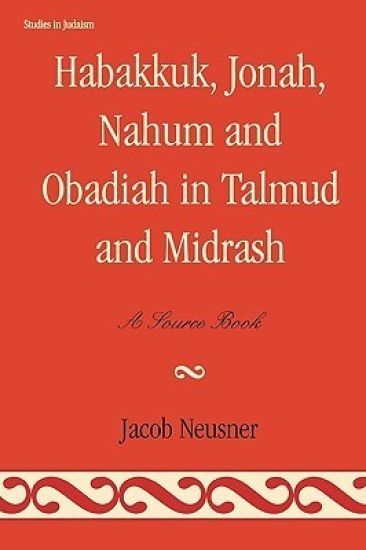
Habakkuk, Jonah, Nahum, and Obadiah in Talmud and Midrash

Habakkuk, Jonah, Nahum, and Obadiah in Talmud and Midrash

Jacob Neusner

University Press of America
2007
nidottu
The Rabbis of classical Judaism, in the first six centuries of the Common Era, commented on the teachings of ancient Israel's prophets and shaped, as much as they were shaped by, prophecy. They commented on much of the Scriptural heritage and they made it their own. This collection of the Rabbinic comments on biblical books makes easily accessible the Rabbinic reading of the prophetic heritage and opens the way to the study of how normative Judaism responded to the challenge of the prophetic writings.
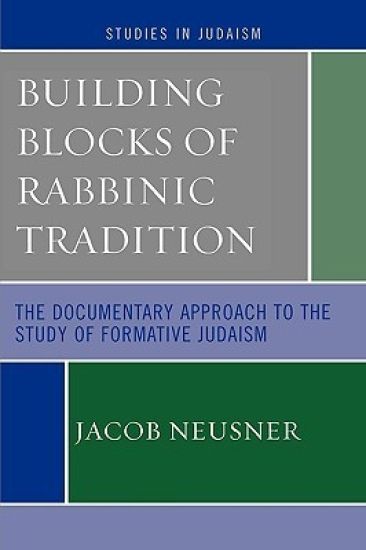
Building Blocks of Rabbinic Tradition

Building Blocks of Rabbinic Tradition

Jacob Neusner

University Press of America
2007
nidottu
This book responds to a question that came to the author from Professor Maren Niehoff of the Hebrew University of Jerusalem: 'Have you written a simple introduction to your documentary theory and method, which can serve as a starting point for my students?' In this book are gathered eight of the more fundamental items of documentary theory and practice_three in theory, five in practice_for Professor Neihoff's students and anyone else who takes an interest in the formative history of Judaism. The documentary thesis of Rabbinic literature holds that the document_the Mishnah, Sifra, Lamentations, Rabbah, the Bavli, for example_forms the basic building block of the Rabbinic tradition. Excluded by that definition are sayings attributed to, and stories told about, named sages. These cannot serve in the reconstruction of the Rabbinic tradition, its literature, history, religion, and theology.
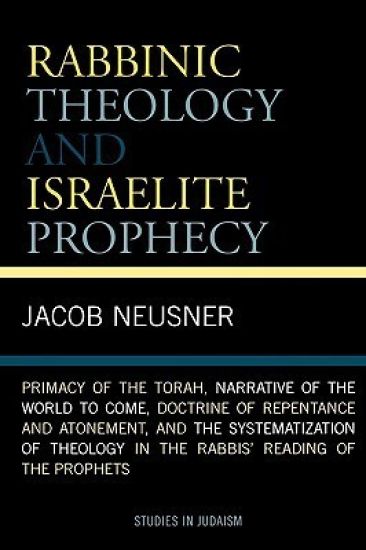
Rabbinic Theology and Israelite Prophecy

Rabbinic Theology and Israelite Prophecy

Jacob Neusner

University Press of America
2007
nidottu
Rabbinic Judaism affirms the Prophetic heritage and makes it its own. Indeed, the Rabbis of the formative age and canon of Rabbinic Judaism looked to Prophecy along with the Torah and the Writings to define and sustain their system. We may reasonably label the Judaic religious system portrayed in the Rabbinic canon as Prophetic-Rabbinic Judaism, the Judaism that the Rabbis formed in response to the Prophetic imperatives. In this book, the author shows how the Rabbis found in Prophecy a source not of contradiction but of conciliation and doctrinal validation. Rabbi Neusner answers the question, what do we learn about the Rabbinic system from its encounter with the Prophetic books? The four principal building blocks of Rabbinic theology addressed here take up symbolism, eschatology, immanental theology, and theological systematics. The fifth, Halakhah, has been addressed in The Rabbis, the Law, and the Prophets. Here, Rabbi Neusner takes up these matters and shows how the Rabbis found in Prophecy support for their fundamental principles.
The Rabbinic Utopia

The Rabbinic Utopia

Jacob Neusner

University Press of America
2007
nidottu
This book expounds upon the Utopian vision of Rabbinic Judaism in its classical documents. Rabbinic Judaism carries forward, and itself forms, a massive Utopian enterprise, a design of an ideal condition for humanity. It carries forward the two matched Utopian projects of the Pentateuch_Eden, the Land of Israel_and on its own forms a system for an ideal social and metaphysical order. That is because the law of that Judaism set forth a plan for the construction of an ideal society in a perfect age. Over time, the Israelite community undertook to realize that plan in concrete ways: to build Utopia in the green and pleasant Land of Israel. So, normative Judaism assumes as its task to realize a Utopian vision. Its vision takes the form of law. Some of the law at the time of its presentation in the Mishnah in ca. 200 C.E. and successor documents of amplification could be realized. Some could not. But the whole of the law formed a statement of integrity. All the parts were essential to the system. By fulfilling the law, or Halakhah, the faithful Israelite would help realize in the here and now Utopia, an ideal world.
The Rabbis, the Law, and the Prophets

The Rabbis, the Law, and the Prophets

Jacob Neusner

University Press of America
2007
nidottu
Here is an answer to the question, what do we learn about the Rabbinic system from its encounter with the Prophetic books? This book analyzes the way in which Rabbinic Judaism in its formative canon received and made its own an important segment of the Israelite Scripture, the Halakhic or legal heritage of Prophecy. The author characterizes the traits of Rabbinic Judaism that come to the surface in that Judaism's engagement with the Halakhic writings of ancient Israelite literary prophecy: Isaiah, Jeremiah, Ezekiel, and the Twelve Minor Prophets. It proposses to discern the system and establish the coherence of the episodic Rabbinic exegesis of verses of Prophecy.
The Treasury of Judaism

The Treasury of Judaism

Jacob Neusner

University Press of America
2008
nidottu
This is the first volume of a set of anthologies that sets forth the statements of the formative canon of influential Rabbinic Judaism on three large topics: the calendar, the life cycle, and theology. Focusing on the seminal period of normative Judaism, the editor Jacob Neusner presents in three parts the teachings of Rabbinic Judaism in late antiquity, the first six centuries of the Common Era. The topical abstracts, which deal with the sacred calendar (volume one), events in the life cycle (volume two), and theological expositions (volume three), are presented in documentary sequence, from the Mishnah, ca. 200, through the Bavil or Talmud of Babylonia, ca. 600. This is the story told in abundant selections of Rabbinic classics of the age, the first centuries C.E., in which the two Talmuds and Midrash came to closure.
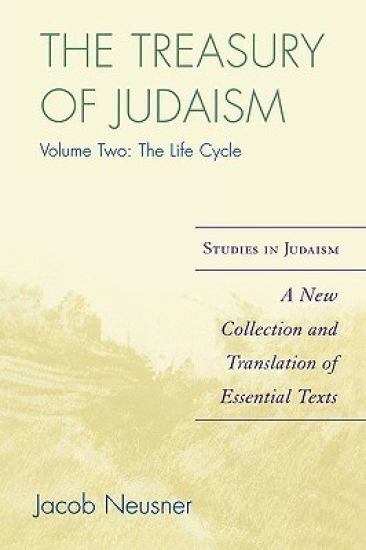
The Treasury of Judaism

The Treasury of Judaism

Jacob Neusner

University Press of America
2008
nidottu
This is the second volume of a set of anthologies that sets forth the statements of the formative canon of influential Rabbinic Judaism on three large topics: the calendar, the life cycle, and theology. Focusing on the seminal period of normative Judaism, the editor Jacob Neusner presents in three parts the teachings of Rabbinic Judaism in late antiquity, the first six centuries of the Common Era. The topical abstracts, which deal with the sacred calendar (volume one), events in the life cycle (volume two), and theological expositions (volume three), are presented in documentary sequence, from the Mishnah, ca. 200, through the Bavil or Talmud of Babylonia, ca. 600. This is the story told in abundant selections of Rabbinic classics of the age, the first centuries C.E., in which the two Talmuds and Midrash came to closure.
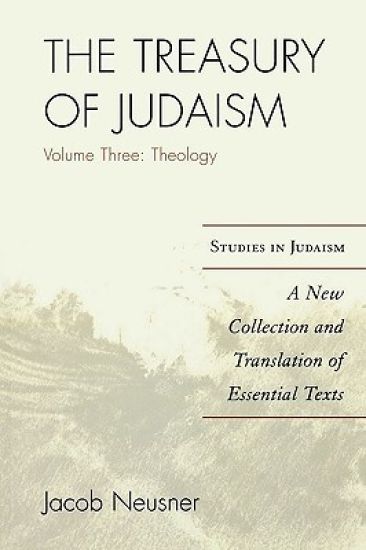
The Treasury of Judaism

The Treasury of Judaism

Jacob Neusner

University Press of America
2008
nidottu
This is the third volume of a set of anthologies that sets forth the statements of the formative canon of influential Rabbinic Judaism on three large topics: the calendar, the life cycle, and theology. Focusing on the seminal period of normative Judaism, the editor Jacob Neusner presents in three parts the teachings of Rabbinic Judaism in late antiquity, the first six centuries of the Common Era. The topical abstracts, which deal with the sacred calendar (volume one), events in the life cycle (volume two), and theological expositions (volume three), are presented in documentary sequence, from the Mishnah, ca. 200, through the Bavil or Talmud of Babylonia, ca. 600. This is the story told in abundant selections of Rabbinic classics of the age, the first centuries C.E., in which the two Talmuds and Midrash came to closure.
Analytical Templates of the Yerushalmi

Analytical Templates of the Yerushalmi

Jacob Neusner

University Press of America
2008
nidottu
In Analytical Templates of the Yerushalmi, Jacob Neusner systematically defines and classifies the four analytical initiatives of the Bavli in its encounter with the Mishnah. Neusner questions whether the Yerushalmi yields a comparable repertoire of fixed patterns of analysis. In covering four tractates, Neusner first presents a tractate of the Yerushalmi and inductively defines its program for analysis of the law seen in context. For each of the three additional tractates, Neusner creates a log of the forms and types of the exegetical templates brought to the Mishnah. Here the tractates are outlines, showing at a glance the program of each in the Yerushalmi. Each of the four divisions of the Mishnah covered by the Yerushalmi is represented by tractate. By compiling the data in this manner, Neusner makes possible an inductive account of the whole and concludes with remarks of the two Talmuds' analytical templates.
Persia and Rome in Classical Judaism

Persia and Rome in Classical Judaism

Jacob Neusner

University Press of America
2008
nidottu
Persia and Rome in Classical Judaism examines the representation of Rome and Persia (Iran) in the successive groups of documents that comprise the Rabbinic canon of late antiquity. Neusner considers how diverse documents of Rabbinic Judaism represent Rome and Iran and presents the way in which documentary differentiation affords perspective on the history of Judaism. Axial events of the age—the destruction of the second Temple in 70 and the defeat of the effort to restore it in 135, the transformation of the Roman Empire into a Christian state in the fourth century, the failure to rebuild the Temple when the opportunity arose in the reign of Emperor Julian, and the delegitimation of Israelite institutions in Byzantine Rome—allow us to examine in historical and political context the evidence of the formation of normative Judaism.
Chapters in the Formative History of Judaism

Chapters in the Formative History of Judaism

Jacob Neusner

University Press of America
2008
nidottu
This collection of ten essays and five book reviews draws on three years of work, from late 2005 through mid-2008. It begins with two Halakhic essays, one on the category-formations of the Halakhah and how to account for the ones that we do not have but ought to have anticipated. The argument proceeds to another way of formulating the historical problem of the Talmud, its roots in Scripture. This is followed by an account of how the Halakhah actualizes the Torah's narrative. Also included are four essays on Classical Judaism and two literary studies, which show both old and new engagements. Five book reviews conclude the collection, one of them a review essay, covering Edward Kaplan's two volumes on Abraham J. Heschel.
Comparative Midrash

Comparative Midrash

Jacob Neusner

University Press of America
2009
nidottu
The documentary hypothesis of the Rabbinic canon of late antiquity maintains that complete documents form the smallest whole building blocks of the Rabbinic system. These two volumes undertake a concrete exercise in the realization of the documentary hypothesis. It compares the rhetorical/formal and exegetical traits of two entire, kindred documents. Then, through a side by side chart, it compares each component of the two documents' treatment of the same extended segment of Scripture, Numbers 19. Whole documents are to be described and analyzed through a process of systematic description, comparison, and contrast. What makes the study fresh is that the author compares the two documents of the rabbinic canon that are most alike—the two Sifrés on Numbers. What makes it surprising is the result: they have nothing in common. Each is autonomous, and except for the scriptural foundation systematically shared by both, neither intersects in an appreciable measure with the other. Volume One (Chapters One and Two) deals with forms. In Chapter One, the author surveys the forms of Sifré to Numbers and identifies and classifies the formal patterns that govern throughout. Then, with the formal and propositional program of Sifré to Numbers as a base, in Chapter Two he does the same with Sifré Zutta to Numbers. Volume Two (Chapters Three through Five) deals with exegesis and systematic comparison of whole segments of documents. Chapters Three and Four describe and compare the exegetical patterns of the base-documents, with special reference to the utilization of the verses of Scripture as foci of coherent discourse. In Chapter Five, the author compares the treatment of Huqqat, that is, a single passage of Scripture read by the two commentaries respectively.
Comparative Midrash

Comparative Midrash

Jacob Neusner

University Press of America
2009
nidottu
The documentary hypothesis of the Rabbinic canon of late antiquity maintains that complete documents form the smallest whole building blocks of the Rabbinic system. These two volumes undertake a concrete exercise in the realization of the documentary hypothesis. It compares the rhetorical/formal and exegetical traits of two entire, kindred documents. Then, through a side by side chart, it compares each component of the two documents' treatment of the same extended segment of Scripture, Numbers 19. Whole documents are to be described and analyzed through a process of systematic description, comparison, and contrast. What makes the study fresh is that the author compares the two documents of the rabbinic canon that are most alike—the two Sifrés on Numbers. What makes it surprising is the result: they have nothing in common. Each is autonomous, and except for the scriptural foundation systematically shared by both, neither intersects in an appreciable measure with the other. Volume One (Chapters One and Two) deals with forms. In Chapter One, the author surveys the forms of Sifré to Numbers and identifies and classifies the formal patterns that govern throughout. Then, with the formal and propositional program of Sifré to Numbers as a base, in Chapter Two he does the same with Sifré Zutta to Numbers. Volume Two (Chapters Three through Five) deals with exegesis and systematic comparison of whole segments of documents. Chapters Three and Four describe and compare the exegetical patterns of the base-documents, with special reference to the utilization of the verses of Scripture as foci of coherent discourse. In Chapter Five, the author compares the treatment of Huqqat, that is, a single passage of Scripture read by the two commentaries respectively.
Chapters in the Formative History of Judaism

Chapters in the Formative History of Judaism

Jacob Neusner

University Press of America
2009
nidottu
This collection of five essays and two book reviews draws on a half-year of work, from mid-2008 to early 2009. The collection begins with historical theological essays: one on the apologetics of Judaism, the other on its soteriology. Both were written in response to invitations to contribute to collections of historical theology. The second set of two essays deals with the canon of Rabbinic Judaism. This is The Jack Chester Memorial Lecture to the Tenth Anniversary Celebration of the Sue and Leonard Miller Center for Contemporary Judaic Studies at the University of Miami. Two brief reviews complete the collection of six months of work.
How the Bavli is Constructed

How the Bavli is Constructed

Jacob Neusner

University Press of America
2009
nidottu
In this Neusner book, he seeks to discern the Talmud's forests from its trees. By "trees" is meant episodic and free-standing statements, facts out of any larger context. By "forests" is meant whole paragraphs and still larger constructions of thought made out of sentences that in context and in sequence cohere. Accordingly, the issue here is how the Talmud transforms isolated facts into cogent and coherent constructions: the forests formed by the Talmud's trees. What is at stake is simply stated: What ignores the program of the Bavli in its composition and in the formation of its composites belongs in other, different documents from the Bavli and we can reconstruct through an act of imagination in response to the characteristics of the secondary composites of the Bavli the traits of those other, different documents.
How the Halakhah Unfolds

How the Halakhah Unfolds

Jacob Neusner

University Press of America
2009
nidottu
In separate multi-volumed works, the author has presented form-analytical English translations of the Mishnah, Tosefta, Yerushalmi, and Bavli, outlined the Yerushalmi and the Bavli, and compared those outlines. In addition, he has set forth the main points of the Halakhah of the topical expositions or tractates of the Mishnah-Tosefta-Yerushalmi-Bavli and stated what he conceives to be the theological message of the respective tractates. Here he follows a single tractate through the principal documents of formative Judaism as he has presented them. He shows how his academic commentaries, outlines and comparisons and theological summaries yield a systematic account of the Halakhah in its documentary unfolding.
The Program of the Fathers According to Rabbi Nathan A

The Program of the Fathers According to Rabbi Nathan A

Jacob Neusner

University Press of America
2009
nidottu
Of the score of documents in the Rabbinic canon that reached closure in late antiquity, the first six centuries of the Common Era, the Fathers According to Rabbi Nathan Text A (Abot de Rabbi Natan, henceforward: ARNA) proves the most difficult to classify in the canonical context. It presents a challenge because it is different in its indicative traits from any other in the Rabbinic documents of its period. In the conclusion, (Chapter Forty-Five), Neusner explains what is at stake for the documentary hypothesis of the Rabbinic canon in that observation. Jacob Neusner follows the procedures that have guided his prior work in situating Rabbinic documents within their formal context and in ordinal sequence in their larger canonical setting. After introducing the two documents compared here, Abot and ARNA, Neusner sets out a prologue explaining the analytical procedure. Then, he takes up a detailed probe of all the evidence and produces a hypothetical category-system of forms. This is exposed through a system of visual indicators, which Neusner defines and explains in the prologue to Part One. Part Two in two chapters follows. The results of Chapter Forty-Four, where Neusner tests the givens of the documentary hypothesis against the facts of ARNA and Abot, yield the concluding chapter, Chapter Forty-Five, where Neusner surveys the results for the entire document to see what rules govern in the context of the documentary hypothesis. These call into question the universal applicability of that hypothesis. There is no documentary program that derives uniquely from ARNA in canonical context.