Kirjahaku
Etsi kirjoja tekijän nimen, kirjan nimen tai ISBN:n perusteella.
45 kirjaa tekijältä James Cox
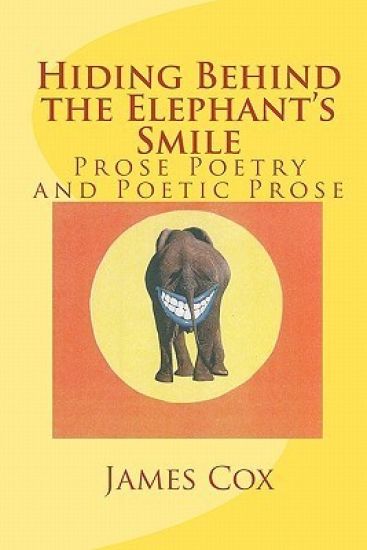
Hiding Behind the Elephant's Smile: Prose Poetry and Poetic Prose
James Cox
Createspace Independent Publishing Platform
2011
nidottu
My Native Land the United States: Its Wonders, Its Beauties and Its People
James Cox
Literary Licensing, LLC
2014
nidottu


My Native Land The United States Its Wonders, Its Beauties, and Its People
James Cox
Createspace Independent Publishing Platform
2015
nidottu



Before Al Qaeda; before ISIS; there was the Aum Cult."Shoko Asahara founded Aum Shinrikyo in 1987. The doctrines of Aum Shinrikyo are based on ancient yoga and primitive Buddhism, and require worshipping the Hindu God Siva, believed to preside over both destruction and creation. The sect has tried to build its own "kingdom" within its controlled compound facilities by establishing ministries and agencies under Asahara, its paramount leader. Among these, the sect "Science and Technology Agency" consists of scientists who graduated from prestigious universities in Japan. It is divided into several teams specialized in chemistry, biology, physics and medicine. This organization provided the technical information required to synthesize the Sarin." -The Japan Times, 1992A broken-down Navy Intel operative swimming in a sea of alcohol. The Japanese girl who loves him despite the tragic price she may have to pay. The "old salt" with a dark past who nonetheless tries to save them both. All coming together to face a madman more dangerous than Hitler himself with the very survival of civilization itself on the line.Fresh from his critically-acclaimed psychological thriller, Silver or Lead, James Cox brings us Roppongi, a ripped-from-the-headlines page-turner about an all-too-real terrorist group that many had never heard of but after this read will never forget.
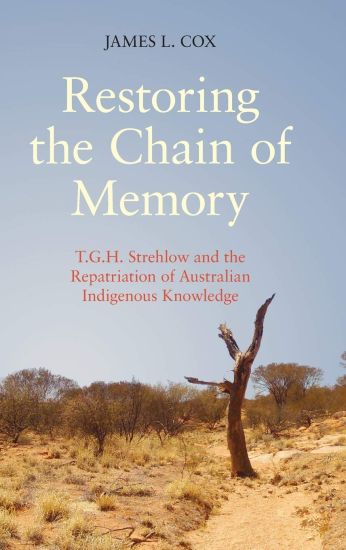
This book describes and analyses the writings and records compiled by the notable linguist, T.G.H. Strehlow (1908-1978), on Australian Aboriginal religions, particularly as practised by the Arrernte of the central desert region. During numerous research trips between 1932 and 1966, the local Indigenous Arrernte Elders entrusted him with sacred objects, allowed him to film their secret rituals and record their songs, partly because he was regarded as one of them, an `insider’, who they believed would help preserve their ancient traditions in the face of threats posed by outside forces. Strehlow characterised Arrernte society as `personal monototemism in a polytotemic community’. This concept provides an important insight into understanding how Arrernte society was traditionally organised and how the societal structure was re-enforced by carefully organised rituals. Strehlow’s research into this complex societal system is here examined both in terms of its meaning and current application and with reference to how the societal structure traditionally was interwoven into religious understandings of the world. It exemplifies precisely how the `insider-outsider’ problem is embodied in one individual: he was accepted by the Arrernte people as an insider who used this knowledge to interpret Arrernte culture for non-Indigenous audiences (outsiders). The volume documents how Strehlow’s works are contributing to the current repatriation by Australian Aboriginal leaders of rituals, ancient songs, meanings associated with sacred objects and genealogies, much of which by the 1950s had been lost through the processes of colonisation, missionary influences and Australian governmental interference in the lives of Indigenous societies.
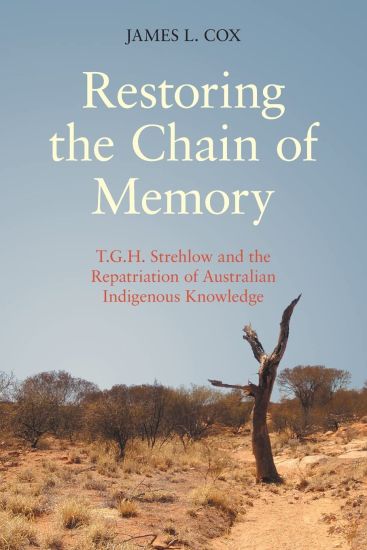
Restoring the Chain of Memory describes and analyses the writings and records compiled by the notable linguist, T.G.H. Strehlow (1908–1978), on Australian Aboriginal Religions, particularly as practised by the Arrernte of Central Australia. During numerous research trips between 1932 and 1966, the local Indigenous Arrernte Elders entrusted him with sacred objects, allowed him to film their secret rituals and record their songs, partly because he was regarded as one of them, an ‘insider’, who they believed would help preserve their ancient traditions in the face of threats posed by outside forces. Strehlow characterized Arrernte society as ‘personal monototemism in a polytotemic community’. This concept provides an important insight into understanding how Arrernte society was traditionally organized and how the societal structure was re-enforced by carefully organized rituals. Strehlow’s research into this complex societal system is here examined both in terms of its meaning and current application and with reference to how the societal structure traditionally was interwoven into religious understandings of the world. It exemplifies precisely how the ‘insider-outsider’ problem is embodied in one individual: he was accepted by the Arrernte people as an insider who used this knowledge to interpret Arrernte culture for non-Indigenous audiences (outsiders). This volume documents how Strehlow’s works are contributing to the current repatriation by Australian Aboriginal leaders of rituals, ancient songs, meanings associated with sacred objects and genealogies, much of which by the 1950s had been lost through the processes of colonization, missionary influences and Australian governmental interference in the lives of Indigenous societies.
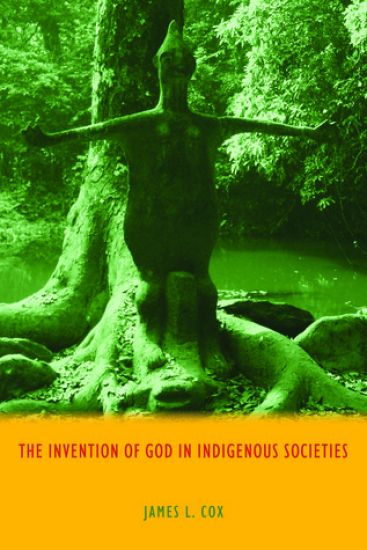
Indigenous societies around the world have been historically disparaged by European explorers, colonial officials and Christian missionaries. Nowhere was this more evident than in early descriptions of indigenous religions as savage, primitive, superstitious and fetishistic. Liberal intellectuals, both indigenous and colonial, reacted to this by claiming that, before indigenous peoples ever encountered Europeans, they all believed in a Supreme Being. The Invention of God in Indigenous Societies argues that, by alleging that God can be located at the core of pre-Christian cultures, this claim effectively invents a tradition which only makes sense theologically if God has never left himself without a witness. Examining a range of indigenous religions from North America, Africa and Australasia - the Shona of Zimbabwe, the "Rainbow Spirit Theology" in Australia, the Yupiit of Alaska, and the Maori of New Zealand – the book argues that the interests of indigenous societies are best served by carefully describing their religious beliefs and practices using historical and phenomenological methods – just as would be done in the study of any world religion.
Indigenous societies around the world have been historically disparaged by European explorers, colonial officials and Christian missionaries. Nowhere was this more evident than in early descriptions of indigenous religions as savage, primitive, superstitious and fetishistic. Liberal intellectuals, both indigenous and colonial, reacted to this by claiming that, before indigenous peoples ever encountered Europeans, they all believed in a Supreme Being. The Invention of God in Indigenous Societies argues that, by alleging that God can be located at the core of pre-Christian cultures, this claim effectively invents a tradition which only makes sense theologically if God has never left himself without a witness. Examining a range of indigenous religions from North America, Africa and Australasia - the Shona of Zimbabwe, the "Rainbow Spirit Theology" in Australia, the Yupiit of Alaska, and the Maori of New Zealand – the book argues that the interests of indigenous societies are best served by carefully describing their religious beliefs and practices using historical and phenomenological methods – just as would be done in the study of any world religion.
Reproduktion des Originals: My Native Land von James Cox
Reproduktion des Originals: My Native Land von James Cox

A descriptive inventory of the several exquisite and magnificent pieces of mechanism and jewellery
James Cox
Hansebooks
2016
pokkari