Kirjojen hintavertailu. Mukana 12 016 292 kirjaa ja 12 kauppaa.

Kirjahaku

Etsi kirjoja tekijän nimen, kirjan nimen tai ISBN:n perusteella.

50 kirjaa tekijältä Joel Spring

Educating the Consumer-citizen

Educating the Consumer-citizen

Joel Spring

Routledge Member of the Taylor and Francis Group
2003
nidottu
In Educating the Consumer-Citizen: A History of the Marriage of Schools, Advertising, and Media, Joel Spring charts the rise of consumerism as the dominant American ideology of the 21st century. He documents and analyzes how, from the early 19th century through the present, the combined endeavors of schools, advertising, and media have led to the creation of a consumerist ideology and ensured its central place in American life and global culture. Spring first defines consumerist ideology and consumer-citizen and explores their 19th-century origins in schools, children's literature, the commercialization of American cities, advertising, newspapers, and the development of department stores. He then traces the rise of consumerist ideology in the 20th century by looking closely at: the impact of the home economics profession on the education of women as consumers and the development of an American cuisine based on packaged and processed foods; the influence of advertising images of sports heroes, cowboys, and the clean-shaven businessman in shaping male identity; the outcomes of the growth of the high school as a mass institution on the development of teenage consumer markets; the consequences of commercial radio and television joining with the schools to educate a consumer-oriented population so that, by the 1950s, consumerist images were tied to the Cold War and presented as the "American way of life" in both media and schools; the effects of the civil rights movement on integrating previously excluded groups into the consumer society; the changes the women's movement demanded in textbooks, school curricula, media, and advertising that led to a new image of women in the consumer market; and the ascent of fast food education. Spring carries the story into the 21st century by examining the evolving marriage of schools, advertising, and media and its ongoing role in educating the consumer-citizen and creating an integrated consumer market. This book will be of wide interest to scholars, professionals, and students across foundations of education, history and sociology of education, educational policy, mass communications, American history, and cultural studies. It is highly appropriate as a text for courses in these areas.
How Educational Ideologies Are Shaping Global Society

How Educational Ideologies Are Shaping Global Society

Joel Spring

Routledge Member of the Taylor and Francis Group
2004
sidottu
In this book Joel Spring explores three major international educational ideologies that are shaping global society: neo-liberal educational ideology, human rights education, and environmentalism. Neo-liberal ideology reflects a rethinking of nationalist forms of education as the nation-state slowly erodes under the power of a growing global civil society. Traditional nationalist education attempts to mold loyal and patriotic citizens who are emotionally attached to symbols of the state, whereas the goal of neo-liberal educational ideology is to change nationalist education to serve the needs of the global economy. These changes are fueling a clash between the ideas of free-market and consumer-based neo-liberals and those of human rights and environmental educators. Human rights education is concerned with creating activist global citizens. It is rooted in the idea that inherent in human rights doctrines is a collective responsibility to ensure the rights of all people. Environmentalism is the most radical of the ideologies because it rejects the industrial and consumerist paradigm that has dominated most economic thought, including capitalism and communism. Spring synthesizes and analyzes the effect of these educational ideologies on shaping the future of the global society. In the concluding section, he compares the effect of these ideologies on global society with the possibility of a world divided between conflicting civilizations. How Educational Ideologies Are Shaping Global Society: Intergovernmental Organizations, NGOs, and the Decline of the Nation-State features: *a critical exploration of the transition of schooling from a function of the nation-state to a globalized economic and political system; *a discussion of the major organizations and trading blocs shaping the future globalization of educational policies; *an analysis of the major competing global ideologies of education--including national and corporate models that emphasize training workers for a competitive global free market; the worldwide network of human rights and peace educators who are teaching a global set of ethics; and the environmental movement's efforts to create a common set of educational standards for sustainable development and sustainable consumption; and *an exploration of the possible future of global educational policy and school organizations. By integrating a wide range of previously scattered information within a bold new framework for understanding educational ideologies and their impact on the global society, Spring raises important questions for researchers, professionals, and students in history and philosophy of education, educational policy, educational studies, comparative education, multicultural education, curriculum studies, critical media studies, global studies, human rights education, and related areas.
How Educational Ideologies Are Shaping Global Society

How Educational Ideologies Are Shaping Global Society

Joel Spring

Routledge Member of the Taylor and Francis Group
2004
nidottu
In this book Joel Spring explores three major international educational ideologies that are shaping global society: neo-liberal educational ideology, human rights education, and environmentalism. Neo-liberal ideology reflects a rethinking of nationalist forms of education as the nation-state slowly erodes under the power of a growing global civil society. Traditional nationalist education attempts to mold loyal and patriotic citizens who are emotionally attached to symbols of the state, whereas the goal of neo-liberal educational ideology is to change nationalist education to serve the needs of the global economy. These changes are fueling a clash between the ideas of free-market and consumer-based neo-liberals and those of human rights and environmental educators. Human rights education is concerned with creating activist global citizens. It is rooted in the idea that inherent in human rights doctrines is a collective responsibility to ensure the rights of all people. Environmentalism is the most radical of the ideologies because it rejects the industrial and consumerist paradigm that has dominated most economic thought, including capitalism and communism. Spring synthesizes and analyzes the effect of these educational ideologies on shaping the future of the global society. In the concluding section, he compares the effect of these ideologies on global society with the possibility of a world divided between conflicting civilizations. How Educational Ideologies Are Shaping Global Society: Intergovernmental Organizations, NGOs, and the Decline of the Nation-State features: *a critical exploration of the transition of schooling from a function of the nation-state to a globalized economic and political system; *a discussion of the major organizations and trading blocs shaping the future globalization of educational policies; *an analysis of the major competing global ideologies of education--including national and corporate models that emphasize training workers for a competitive global free market; the worldwide network of human rights and peace educators who are teaching a global set of ethics; and the environmental movement's efforts to create a common set of educational standards for sustainable development and sustainable consumption; and *an exploration of the possible future of global educational policy and school organizations. By integrating a wide range of previously scattered information within a bold new framework for understanding educational ideologies and their impact on the global society, Spring raises important questions for researchers, professionals, and students in history and philosophy of education, educational policy, educational studies, comparative education, multicultural education, curriculum studies, critical media studies, global studies, human rights education, and related areas.
Pedagogies of Globalization

Pedagogies of Globalization

Joel Spring

Routledge Member of the Taylor and Francis Group
2006
sidottu
In this ground-breaking book, Joel Spring examines globalization and its worldwide effects on education. A central thesis is that industrial-consumerism is the dominant paradigm in the integration of education and economic planning in modern economic security states.In the twenty-first century, national school systems have similar grades and promotion plans, instructional methods, curriculum organization, and linkages between secondary and higher education. Although there are local variations, the most striking feature is the sameness of educational systems. How did this happen? How was education globalized? Spring explains and analyzes this phenomenon and its consequences for human life and the future improvement of social and economic organizations. Central themes include:*the elements of the educational security state and the industrial-consumer paradigm in relationship to classical forms of education such as Confucianism, Islam, and Christianity, and their concerns with creating a just and ethical society;*the role of the 'other' in the globalization of educational structures as international military and economic rivalries spark competition between educational systems;*the transition from the Confucian village school to Western forms of education as exemplified in the lives of Ho Chi Minh and Mao Zedong;*the effect of the cultural and economic rivalry between the Soviet Union and the United States and its impact on schooling in both countries;*the rise of the educational security state in China, the Soviet Union, and the United States as these countries focus their educational efforts on military and economic development;*the evolution of progressive education as it appeared in revolutionary movements in South America, Cuba, Nicaragua, and El Salvador;*the transition from traditional to Westernized forms of Islamic education against the background of European imperialism, Arab nationalism and wars of liberation, and the uneasy tension between Western educational ideals and Islamic religious values;*socialist education in the Democratic People's Republic of Korea;*current developments in educational security states such as China, Japan, the United States, the new Russia, and the European Union; and*the consequences of English as the global language and the global spread of the industrial-consumer paradigm.Readership for this book includes scholars and students in comparative, international, and multicultural education; educational policy and politics; historical, social, and philosophical foundations of education; and curriculum studies. It is a particularly timely, informative, engaging text for courses in all of these areas.
Pedagogies of Globalization

Pedagogies of Globalization

Joel Spring

Routledge Member of the Taylor and Francis Group
2006
nidottu
In this ground-breaking book, Joel Spring examines globalization and its worldwide effects on education. A central thesis is that industrial-consumerism is the dominant paradigm in the integration of education and economic planning in modern economic security states.In the twenty-first century, national school systems have similar grades and promotion plans, instructional methods, curriculum organization, and linkages between secondary and higher education. Although there are local variations, the most striking feature is the sameness of educational systems. How did this happen? How was education globalized? Spring explains and analyzes this phenomenon and its consequences for human life and the future improvement of social and economic organizations. Central themes include:*the elements of the educational security state and the industrial-consumer paradigm in relationship to classical forms of education such as Confucianism, Islam, and Christianity, and their concerns with creating a just and ethical society;*the role of the 'other' in the globalization of educational structures as international military and economic rivalries spark competition between educational systems;*the transition from the Confucian village school to Western forms of education as exemplified in the lives of Ho Chi Minh and Mao Zedong;*the effect of the cultural and economic rivalry between the Soviet Union and the United States and its impact on schooling in both countries;*the rise of the educational security state in China, the Soviet Union, and the United States as these countries focus their educational efforts on military and economic development;*the evolution of progressive education as it appeared in revolutionary movements in South America, Cuba, Nicaragua, and El Salvador;*the transition from traditional to Westernized forms of Islamic education against the background of European imperialism, Arab nationalism and wars of liberation, and the uneasy tension between Western educational ideals and Islamic religious values;*socialist education in the Democratic People's Republic of Korea;*current developments in educational security states such as China, Japan, the United States, the new Russia, and the European Union; and*the consequences of English as the global language and the global spread of the industrial-consumer paradigm.Readership for this book includes scholars and students in comparative, international, and multicultural education; educational policy and politics; historical, social, and philosophical foundations of education; and curriculum studies. It is a particularly timely, informative, engaging text for courses in all of these areas.
A New Paradigm for Global School Systems

A New Paradigm for Global School Systems

Joel Spring

Routledge Member of the Taylor and Francis Group
2007
sidottu
This volume—a major new contribution to Joel Spring’s reportage and analysis of the intersection of global forces and education—offers a new paradigm for global school systems. Education for global economic competition is the prevailing goal of most national school systems. Spring argues that recent international studies by economists, social psychologists, and others on the social factors that support subjective well-being and longevity should serve as a call to arms to change education policy; the current industrial-consumer paradigm is not supportive of either happiness or long life.Building his argument through an original documentation, synthesis, and critique of prevailing global economic goals for schools and research on social conditions that support happiness and long life, Spring: *develops guidelines for a global core curriculum, methods of instruction, and school organizations; *translates these guidelines into a new paradigm for global school systems based on progressive, human rights, and environmental educational traditions; *contrasts differing ways of seeing and knowing among indigenous, Western, and Confucian-based societies, concluding that global teaching and learning involve a particular form of holistic knowing and seeing; and*proposes a prototype for a global school—an eco-school that functions to protect the biosphere and human rights and to support the happiness and well-being of the school staff, students, and immediate community—and for a global core curriculum based on holistic models for lessons and instruction. The book concludes with Spring’s retelling of Plato’s parable of the cave—in which educators break the chains that bind them to the industrial-consumer paradigm and rethink their commitment to humanity’s welfare.
A New Paradigm for Global School Systems

A New Paradigm for Global School Systems

Joel Spring

Routledge Member of the Taylor and Francis Group
2007
nidottu
This volume—a major new contribution to Joel Spring’s reportage and analysis of the intersection of global forces and education—offers a new paradigm for global school systems. Education for global economic competition is the prevailing goal of most national school systems. Spring argues that recent international studies by economists, social psychologists, and others on the social factors that support subjective well-being and longevity should serve as a call to arms to change education policy; the current industrial-consumer paradigm is not supportive of either happiness or long life.Building his argument through an original documentation, synthesis, and critique of prevailing global economic goals for schools and research on social conditions that support happiness and long life, Spring: *develops guidelines for a global core curriculum, methods of instruction, and school organizations; *translates these guidelines into a new paradigm for global school systems based on progressive, human rights, and environmental educational traditions; *contrasts differing ways of seeing and knowing among indigenous, Western, and Confucian-based societies, concluding that global teaching and learning involve a particular form of holistic knowing and seeing; and*proposes a prototype for a global school—an eco-school that functions to protect the biosphere and human rights and to support the happiness and well-being of the school staff, students, and immediate community—and for a global core curriculum based on holistic models for lessons and instruction. The book concludes with Spring’s retelling of Plato’s parable of the cave—in which educators break the chains that bind them to the industrial-consumer paradigm and rethink their commitment to humanity’s welfare.
Wheels in the Head

Wheels in the Head

Joel Spring

Routledge Member of the Taylor and Francis Group
2007
sidottu
In this popular text Joel Spring provocatively analyzes the ideas of traditional and non-traditional philosophies from Confucianism to human rights regarding the contribution of education to the creation of a democratic society. The goal is to explore how governments use education to control and manage their populations, and to examine forms of education that claim to free people from authoritarian control. A critically original work, it is widely used as a text for courses on philosophical, social, political, and historical foundations of education, and critical issues in education. Reflecting its global relevance, a Chinese translation was published by the University of Peking Press in 2005.New in the third edition:Expanded analysis of the use of education by authoritarian statesRevisions to more clearly relate educational ideas to the theme of “wheels in the head” – a phrase coined by philosopher Max Stirner - to describe the use of schools by modern governments to control their citizensNew sections on liberation education and on human rights education
Wheels in the Head

Wheels in the Head

Joel Spring

Routledge Member of the Taylor and Francis Group
2007
nidottu
In this popular text Joel Spring provocatively analyzes the ideas of traditional and non-traditional philosophies from Confucianism to human rights regarding the contribution of education to the creation of a democratic society. The goal is to explore how governments use education to control and manage their populations, and to examine forms of education that claim to free people from authoritarian control. A critically original work, it is widely used as a text for courses on philosophical, social, political, and historical foundations of education, and critical issues in education. Reflecting its global relevance, a Chinese translation was published by the University of Peking Press in 2005.New in the third edition:Expanded analysis of the use of education by authoritarian statesRevisions to more clearly relate educational ideas to the theme of “wheels in the head” – a phrase coined by philosopher Max Stirner - to describe the use of schools by modern governments to control their citizensNew sections on liberation education and on human rights education
The Intersection of Cultures

The Intersection of Cultures

Joel Spring

Routledge Member of the Taylor and Francis Group
2007
nidottu
The Intersection of Cultures: Multicultural Education in the United States and the Global Economy, Fourth Edition offers a unique, problem-solving approach to the complex issues involved in educating culturally and linguistically diverse students. Perfect for any course devoted wholly or in part to the study of multicultural education, this text addresses a wealth of topics. A particular focus in this edition is the current global migration of peoples, and the tension between local and global cultures. Part One, Multiculturalism, includes chapters on cultural differences and schooling, dominated cultures, and immigrant cultures. Chapters in Part Two, Cultural Frames of Reference, address monoculturalism, biculturalism, and ethnic identity; multicultural minds; history, gender, and social class; and the intersection of school culture with dominated and immigrant cultures. Part Three, Perspectives on Teaching Multicultural Education, includes chapters on teaching about racism; teaching about sexism; and teaching to protect and preserve cultures. All chapters include model multicultural lessons for elementary through college classes. These lessons serve a dual function—first, they can be used to help teach the content of the chapter, and second, elementary, middle school, and high school teachers can use these lessons in their own classes. Each chapter concludes with a “Personal Frames of References” section designed to engage students in relating multiculturalism to their own lives.New in the Fourth Edition: *cultural differences in ways of seeing, knowing, and interrelating with the world;*recent research findings from cross cultural psychology and the psychology of immigration; and*methods for educating “multicultural minds”.
Deculturalization and the Struggle for Equality
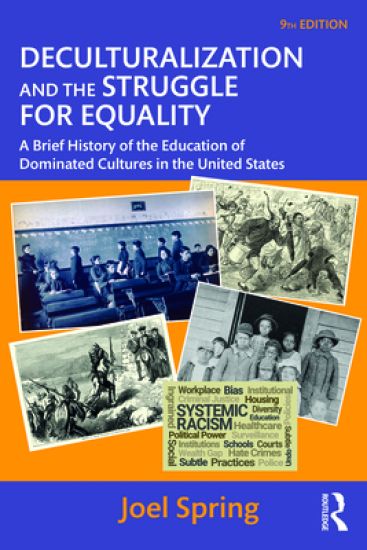
Joel Spring’s history of school policies imposed on dominated groups in the United States examines the concept of deculturalization—the use of schools to strip away family languages and cultures and replace them with those of the dominant group. The focus is on the education of dominated groups forced to become citizens in territories conquered by the United States, including Native Americans, African Americans, Asian Americans, Latino Americans, and Hawaiians. In seven concise, thought-provoking chapters, this analysis and documentation of how education is used to change or eliminate linguistic and cultural traditions in the United States looks at the educational, legal, and social construction of race and racism in the United States, emphasizing the various meanings of "equality" that have existed from colonial America to the present. Providing a broader perspective for understanding the denial of cultural and linguistic rights in the United States, issues of language, culture, and deculturalization are placed in a global context. Extensively revised throughout to reflect the dramatic national events since the prior edition, the Ninth Edition discusses the rise of the Black Lives Matter movement, increased educational inequality related to the pandemic, concerns about institutional racism and White nationalism, disputes about the interpretation of U.S. history, and debates over cultural and racial identity.
Deculturalization and the Struggle for Equality
Joel Spring’s history of school policies imposed on dominated groups in the United States examines the concept of deculturalization—the use of schools to strip away family languages and cultures and replace them with those of the dominant group. The focus is on the education of dominated groups forced to become citizens in territories conquered by the United States, including Native Americans, African Americans, Asian Americans, Latino Americans, and Hawaiians. In seven concise, thought-provoking chapters, this analysis and documentation of how education is used to change or eliminate linguistic and cultural traditions in the United States looks at the educational, legal, and social construction of race and racism in the United States, emphasizing the various meanings of "equality" that have existed from colonial America to the present. Providing a broader perspective for understanding the denial of cultural and linguistic rights in the United States, issues of language, culture, and deculturalization are placed in a global context. Extensively revised throughout to reflect the dramatic national events since the prior edition, the Ninth Edition discusses the rise of the Black Lives Matter movement, increased educational inequality related to the pandemic, concerns about institutional racism and White nationalism, disputes about the interpretation of U.S. history, and debates over cultural and racial identity.
American Education

American Education

Joel Spring

TAYLOR FRANCIS LTD
2023
nidottu
Featuring current information and challenging perspectives on the latest issues and forces shaping the American educational system—with scholarship that is often cited as a primary source—Joel Spring introduces readers to the historical, political, social and legal foundations of education and to the profession of teaching in the United States. In his signature straightforward, concise approach to describing complex issues, he illuminates events and topics that are often overlooked or whitewashed, giving students the opportunity to engage in critical thinking about education. Students come away informed on the latest topics, issues and data and with a strong knowledge of the forces shaping the American educational system.Updated throughout, the 21st edition of this clear, authoritative text remains fresh and up-to-date, reflecting the many changes in education that have occurred since the publication of the previous edition. New coverage includes:Discussion of “culture wars” and critical race theoryParental rights versus the goals of common educationLGBTQIA+ students’ rightsDiscussion of the current administration’s educational policies
American Education

American Education

Joel Spring

TAYLOR FRANCIS LTD
2023
sidottu
Featuring current information and challenging perspectives on the latest issues and forces shaping the American educational system—with scholarship that is often cited as a primary source—Joel Spring introduces readers to the historical, political, social and legal foundations of education and to the profession of teaching in the United States. In his signature straightforward, concise approach to describing complex issues, he illuminates events and topics that are often overlooked or whitewashed, giving students the opportunity to engage in critical thinking about education. Students come away informed on the latest topics, issues and data and with a strong knowledge of the forces shaping the American educational system.Updated throughout, the 21st edition of this clear, authoritative text remains fresh and up-to-date, reflecting the many changes in education that have occurred since the publication of the previous edition. New coverage includes:Discussion of “culture wars” and critical race theoryParental rights versus the goals of common educationLGBTQIA+ students’ rightsDiscussion of the current administration’s educational policies
Deculturalization and the Struggle for Equality
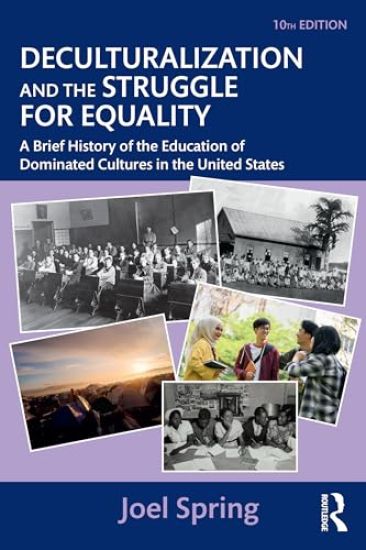
Joel Spring’s history of school policies imposed on dominated groups in the United States examines the concept of deculturalization—the use of schools to strip away family languages and cultures and replace them with those of the dominant group. The focus is on the education of dominated groups forced to become citizens in territories conquered by the United States, including Native Americans, African Americans, Asian Americans, Latino Americans, and Hawaiians.In seven concise, thought-provoking chapters, this analysis and documentation of how education is used to change or eliminate linguistic and cultural traditions in the United States looks at the educational, legal, and social construction of race and racism in the United States, emphasizing the various meanings of “equality” that have existed from colonial America to the present. Providing a broader perspective for understanding the denial of cultural and linguistic rights in the United States, issues of language, culture, and deculturalization are placed in a global context.Revised throughout to reflect the national events and shifts in the field since the prior edition, the 10th Edition includes updated discussion around race and its impacts on college campuses, exploration of the refugee crises, new material on Native American, Alaskan, and Hawaiian boarding schools, and expanded discussion of debates over cultural and racial identity.
Deculturalization and the Struggle for Equality
Joel Spring’s history of school policies imposed on dominated groups in the United States examines the concept of deculturalization—the use of schools to strip away family languages and cultures and replace them with those of the dominant group. The focus is on the education of dominated groups forced to become citizens in territories conquered by the United States, including Native Americans, African Americans, Asian Americans, Latino Americans, and Hawaiians.In seven concise, thought-provoking chapters, this analysis and documentation of how education is used to change or eliminate linguistic and cultural traditions in the United States looks at the educational, legal, and social construction of race and racism in the United States, emphasizing the various meanings of “equality” that have existed from colonial America to the present. Providing a broader perspective for understanding the denial of cultural and linguistic rights in the United States, issues of language, culture, and deculturalization are placed in a global context.Revised throughout to reflect the national events and shifts in the field since the prior edition, the 10th Edition includes updated discussion around race and its impacts on college campuses, exploration of the refugee crises, new material on Native American, Alaskan, and Hawaiian boarding schools, and expanded discussion of debates over cultural and racial identity.
Alt-Right: The Novel

Alt-Right: The Novel

Joel Spring

Independently Published
2019
nidottu
In this satirical and suspenseful contemporary political novel set in the years immediately before the election of President Donald Trump, Jimmy Brice dreams of restoring true American values. Raised in the 1970s by a militant and depressed working-class father and a sexually oppressed mother who is overly concerned with his bowel movements and masturbation, he tries to overcome his psychological damage through participation in nationalist militia groups and violence. Sally Yates, abused by her corporate-criminal father, becomes a martial arts expert and sharpshooter. After attending Yale and Harvard Law School she pursues a legal career supporting alt-right ideas and founds the Originalist Constitution Fund. Life-long friends and lovers, their complicated love evolves as Jimmy and Sally work together to implement a nationalist alt-right agenda. Through the Originalist Constitution Fund, Jimmy and Sally support gun rights, access to federal lands, segregated militia nations, alt-right economics and the use of violence. Satirical and suspenseful, the story takes startling twists and turns including a takeover of Yellowstone National Park by the Yellowstone Militia Nation, the establishment of the New African Nation in Georgia's Stone Mountain State Park, and Jimmy's journey to Sardinia to help the New Sardinian Armed Movement in its nationalist quest for independence from Italy. Mysterious Russian spies appear throughout. In the end, disgusted with the racism and violence of America, Jimmy and Sally conclude it is impossible to fulfill the ideals of the founding fathers because America was founded on slavery and genocide of Native Americans. Fleeing enemies, the story ends with their radical decision about what to do next.
Political Agendas for Education

Political Agendas for Education

Joel Spring

Routledge
2017
sidottu
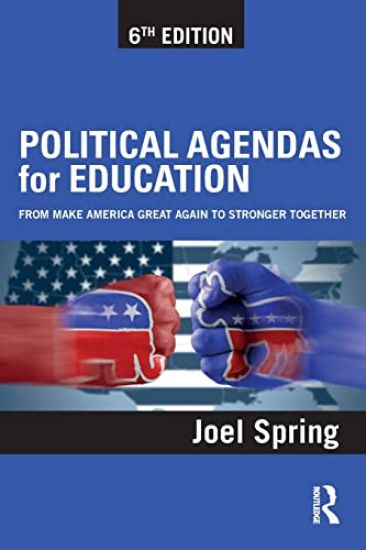
Following the epic, contentious 2016 presidential election, Joel Spring’s ongoing documentation and analysis of political agendas for education reflect the major political issues since 2012. Here he examines the 2016 education planks of the Republican, Democratic, Libertarian, and Green Parties, using their official platforms and other statements, speeches given by each candidate, and media reports and publications. Each party’s position is linked to previous political movements in education. Spring offers an alternative agenda for American schools, including a proposed education amendment to the U.S. Constitution and replacing human capital agendas with goals emphasizing education for a long life and happiness. Taking a fresh look at the social and political forces, educational research, and ideologies shaping their educational agendas and a comparative approach, the book stimulates reflection and discussion.Updates and changes in the Sixth Edition: Betsy DeVos’s education agenda supporting vouchers, free market competition and for-profit schools and its relationship to the education section of the 2016 Republican platform The important role religion and culture played in the evolution of Republican education policies after the school prayer and Bible decisions of the 1960s The influence of human capital economics on Democratic education proposals How No Child Left Behind and Democratic President Barack Obama opened doors to the growth of the for-profit education industry and investment bankers The 2016 Democratic positions on the cost of higher education and student loan debts The Democratic left as represented by the 2016 campaign of Democrat Bernie Sanders and his influence on the presidential candidate Hillary Clinton and the Democratic Party platform The education proposals of the Green and Libertarian parties
Political Agendas for Education

Political Agendas for Education

Joel Spring

Routledge
2017
nidottu
Following the epic, contentious 2016 presidential election, Joel Spring’s ongoing documentation and analysis of political agendas for education reflect the major political issues since 2012. Here he examines the 2016 education planks of the Republican, Democratic, Libertarian, and Green Parties, using their official platforms and other statements, speeches given by each candidate, and media reports and publications. Each party’s position is linked to previous political movements in education. Spring offers an alternative agenda for American schools, including a proposed education amendment to the U.S. Constitution and replacing human capital agendas with goals emphasizing education for a long life and happiness. Taking a fresh look at the social and political forces, educational research, and ideologies shaping their educational agendas and a comparative approach, the book stimulates reflection and discussion.Updates and changes in the Sixth Edition: Betsy DeVos’s education agenda supporting vouchers, free market competition and for-profit schools and its relationship to the education section of the 2016 Republican platform The important role religion and culture played in the evolution of Republican education policies after the school prayer and Bible decisions of the 1960s The influence of human capital economics on Democratic education proposals How No Child Left Behind and Democratic President Barack Obama opened doors to the growth of the for-profit education industry and investment bankers The 2016 Democratic positions on the cost of higher education and student loan debts The Democratic left as represented by the 2016 campaign of Democrat Bernie Sanders and his influence on the presidential candidate Hillary Clinton and the Democratic Party platform The education proposals of the Green and Libertarian parties