Kirjojen hintavertailu. Mukana 11 699 587 kirjaa ja 12 kauppaa.

Kirjahaku

Etsi kirjoja tekijän nimen, kirjan nimen tai ISBN:n perusteella.

50 kirjaa tekijältä Joel Spring

Corporatism, Social Control, and Cultural Domination in Education: From the Radical Right to Globalization
Starting with the 1972 publication of his seminal work, Education and the Rise of the Corporate State, Joel Spring has been documenting and analyzing the politics of knowledge and education. Throughout his work he has explored the attempts to use education to advance the economic and political interests of dominant groups. The general term he uses for the relationship between schools and power is "ideological management." His scholarly work first looked at the influence on American schooling of business and economic doctrines embodied in human capital theories and consumerism. The next step in his exploration of the politics of knowledge was to examine these issues in the context of globalization, leading to a proposed educational rights amendment to national constitutions and a new paradigm for education, both of which might ensure that schools are protected from ideological management by economic and political elites. Spring’s indigenous background has strongly shaped his interest in the political and economic goals of schooling, particularly the attempts of those in power to use schools to destroy indigenous languages and cultures. In this collection, Spring brings together 10 of his key writings, providing an overview not just of his own career but the larger contexts in which it is situated. In the Introduction he reviews the evolution and scope of his work and his earlier arguments and reflects on its central themes, which are reflected in the writings selected for this volume.In the World Library of Educationalists, international scholars themselves compile career-long collections of what they judge to be their finest pieces – extracts from books, key articles, salient research findings, major theoretical and/practical contributions – so the world can read them in a single manageable volume. Readers will be able to follow the themes and strands of their work and see their contribution to the development of a field, as well as the development of the field itself. Contributors to the series include: Michael Apple, James A. Banks, Stephen J. Ball, Elliot Eisner, Howard Gardner, John Gilbert, Ivor F. Goodson, Peter Jarvis.

The American School

The American School

Joel Spring

Routledge
2018
sidottu
This current, comprehensive history of American education is designed to stimulate critical analysis and critical thinking by offering alternative interpretations of each historical period. In his signature straight-forward, concise style, Joel Spring provides a variety of interpretations of American schooling, from conservative to leftist, in order to spark the reader’s own critical thinking about history and schools. This tenth edition follows the history of American education from the seventeenth century to the integration into global capitalism of the twenty-first century to the tumultuous current political landscape. In particular, the updates focus on tracing the direct religious links between the colonial Puritans and the current-day Trump administration. Chapters 1 and 2 have been rewritten to take a closer look at religious traditions in American schools, leading up to the educational ideas of the current U.S. Secretary of Education Betsy DeVos. An updated Chapter 15 further links traditional religious fundamentalist ideas and the twentieth century free market arguments of the Chicago school of economists to President Trump’s administration and the influence of the Alt-Right.
The American School

The American School

Joel Spring

Routledge
2018
nidottu
This current, comprehensive history of American education is designed to stimulate critical analysis and critical thinking by offering alternative interpretations of each historical period. In his signature straight-forward, concise style, Joel Spring provides a variety of interpretations of American schooling, from conservative to leftist, in order to spark the reader’s own critical thinking about history and schools. This tenth edition follows the history of American education from the seventeenth century to the integration into global capitalism of the twenty-first century to the tumultuous current political landscape. In particular, the updates focus on tracing the direct religious links between the colonial Puritans and the current-day Trump administration. Chapters 1 and 2 have been rewritten to take a closer look at religious traditions in American schools, leading up to the educational ideas of the current U.S. Secretary of Education Betsy DeVos. An updated Chapter 15 further links traditional religious fundamentalist ideas and the twentieth century free market arguments of the Chicago school of economists to President Trump’s administration and the influence of the Alt-Right.
Global Impacts of the Western School Model
In this timely analysis of the current state of global educational policies, Joel Spring focuses on the spread of the Western school model and its impact on creating an urban-consumer culture, increasing economic inequalities, contributing to environmental destruction and diminishing compassion and empathy essential for energizing social justice movements. In his signature straightforward, concise style, Spring describes and analyzes the school's role in displacing religious with secular values, promoting nationalism, preparing students to work in global corporations, supporting cultural and linguistic homogeneity, and discusses related goals and effects of anti-globalization movements such as the Alt-right, Anti-fascist groups, radical environmentalism and anarchism. An important addition to Spring’s body of work on global educational policies, this provocative book challenges readers to re-examine what they know about education, globalization and their interconnections.
Global Impacts of the Western School Model
In this timely analysis of the current state of global educational policies, Joel Spring focuses on the spread of the Western school model and its impact on creating an urban-consumer culture, increasing economic inequalities, contributing to environmental destruction and diminishing compassion and empathy essential for energizing social justice movements. In his signature straightforward, concise style, Spring describes and analyzes the school's role in displacing religious with secular values, promoting nationalism, preparing students to work in global corporations, supporting cultural and linguistic homogeneity, and discusses related goals and effects of anti-globalization movements such as the Alt-right, Anti-fascist groups, radical environmentalism and anarchism. An important addition to Spring’s body of work on global educational policies, this provocative book challenges readers to re-examine what they know about education, globalization and their interconnections.
Economization of Education

Economization of Education

Joel Spring

Routledge
2015
sidottu
In this timely, cogent analysis of trends and powerful forces shaping global educational policy today, Joel Spring focuses on how economization is making economic growth and increased productivity the main goals of schools, and the ways these goals are achieved—including measuring educational policies by their costs and economic benefits, shaping family life to ensure productive workers and high-achieving students, introducing entrepreneurship education into curricula from preschool through higher education, and increasing the involvement of economists in educational policy analysis. Close attention is given to the Organization for Economic Cooperation and Development (OECD), the World Bank, the World Economic Forum, and multinational corporations, which, as advocates of economization, want schools to focus on teaching hard and soft skills needed by the global labor market.Economization raises questions about the effects of economically driven agendas for schools: Will education policies advocated by global organizations and multinational businesses corporatize and standardize human personalities and families? What type of global worker is being sought by global organizations and multinational corporations? What education programs are supported to educate the ideal global worker? What is the ideal family life for economic growth and development? Detailing and analyzing the politics and motivations driving economization, the book concludes with an assessment of the impacts of the confluence of business interests, economic theories, governments, and educators.
Economization of Education

Economization of Education

Joel Spring

Routledge
2015
nidottu
In this timely, cogent analysis of trends and powerful forces shaping global educational policy today, Joel Spring focuses on how economization is making economic growth and increased productivity the main goals of schools, and the ways these goals are achieved—including measuring educational policies by their costs and economic benefits, shaping family life to ensure productive workers and high-achieving students, introducing entrepreneurship education into curricula from preschool through higher education, and increasing the involvement of economists in educational policy analysis. Close attention is given to the Organization for Economic Cooperation and Development (OECD), the World Bank, the World Economic Forum, and multinational corporations, which, as advocates of economization, want schools to focus on teaching hard and soft skills needed by the global labor market.Economization raises questions about the effects of economically driven agendas for schools: Will education policies advocated by global organizations and multinational businesses corporatize and standardize human personalities and families? What type of global worker is being sought by global organizations and multinational corporations? What education programs are supported to educate the ideal global worker? What is the ideal family life for economic growth and development? Detailing and analyzing the politics and motivations driving economization, the book concludes with an assessment of the impacts of the confluence of business interests, economic theories, governments, and educators.
American Education

American Education

Joel Spring

Routledge
2015
nidottu
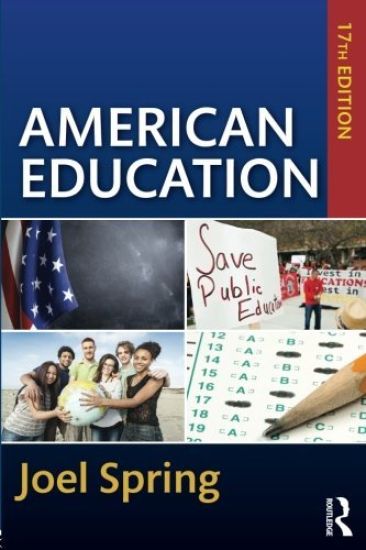
Joel Spring’s American Education introduces readers to the historical, political, social, and legal foundations of education and to the profession of teaching in the United States. In his signature straightforward and concise approach to describing complex issues, Spring illuminates events and topics and that are often overlooked or whitewashed, giving students the opportunity to engage in critical thinking about education. In this edition he looks closely at the global context of education in the U.S. Featuring current information and challenging perspectives—with scholarship that is often cited as a primary source, students will come away from this clear, authoritative text informed on the latest topics, issues, and data and with a strong knowledge of the forces shaping of the American educational system. Changes in the 17th Edition include new and updated material and statistics on economic theories related to "skills" education and employability the conflict between a skills approach and cultural diversity political differences regarding education among the Republican, Democratic, Libertarian and Green parties social mobility and equality of opportunity as related to schooling global migration and student diversity in US schools charter schools and home schooling
A Primer of Libertarian Education

A Primer of Libertarian Education

Joel Spring

Black Rose Books
2023
sidottu
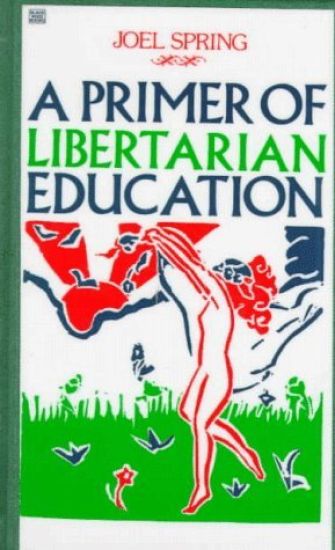
In this book Joel Spring traces the long tradition of libertarian opposition to established forms of schooling from Rousseau and William Godwin to A.S. Neill and Paulo Freire. He illuminates the central questions that have concerned radical educators: How can teaching encourage independence and self-reliance? Can rigid ideas and ideologies be avoided by radical educators? What is the contradiction between schooling and education? How does truly libertarian child rearing challenge the family structure? How can real learning free people so they can begin to change the world around them? Spring also discusses the ideas of several figures whose relevance to education is just beginning to be appreciated, including Max Stirner, Franciso Ferrer, Wilhelm Reich, and Tolstoy. Spring concludes with suggestions for what directions radical educational change might now take.