
Kirjahaku
Etsi kirjoja tekijän nimen, kirjan nimen tai ISBN:n perusteella.
81 kirjaa tekijältä John Matthews

The Divine Purpose, Displayed In The Works Of Providence And Grace
John Matthews
KESSINGER PUBLISHING, LLC
2010
pokkari
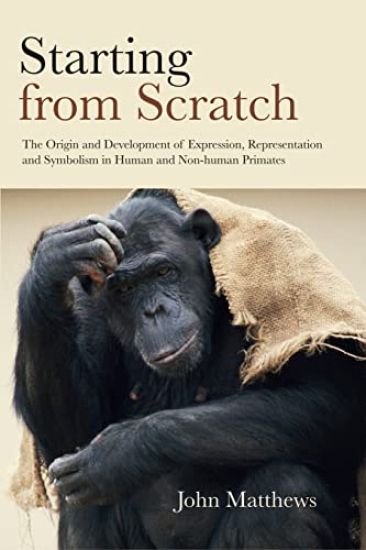
This book compares the beginning of symbolic thought in human infancy with that of our close primate relatives, the chimpanzees. The author investigates the precursors of symbolism by studying the actions and interactions of a small group of these intelligent, non-human primates who live in Singapore Zoo.Drawing upon his years of detailed observations, Matthews offers an in-depth analysis and interpretation of chimp behaviour to present an unprecedented account of the beginnings of symbolic thought. The book shows that the actions the chimpanzees perform have structural and semantic similarities with the actions of emergent expression and representation we find in human infancy. Of great importance is the finding that chimpanzee mark-making activity is not an artefact of human interference, but part of chimpanzee culture. Young chimpanzees seem to be introduced to acts of pretence and imagination by older and more experienced ones and taught the rudiments of expression, representation and symbolism.The implications for our understanding of symbolism, language, art and education are enormous, as are those about our origins and our place within nature. The book is written in an accessible style for both specialist and non-specialist readers, and illustrated with the author’s drawings and photographs.
Twenty-One Plans, with Explanations, of Different Actions in the West-Indies, During the Late War
John Matthews
Gale Ecco, Print Editions
2010
pokkari
A Sketch, from the Landscape, a Didactic Poem. Addressed to R. P. Knight ... with Notes, Illustrations, and a Postscript.
John Matthews
Gale Ecco, Print Editions
2010
pokkari
In The Life of Training, John Matthews offers an accessible and original contribution to the philosophy of training for performance, building on his previous works Training for Performance (2011) and Anatomy of Performance Training (2014).With chapters on the seven characteristics of biological life - reproduction, stimulation, heritability, adaptation, growth, organisation and homeostasis - Matthews combines his unique approach with elements of Hannah Arendt’s mature philosophy to reach surprising and essential conclusions about the role time plays in training practices, and about the function of training practices in producing time and its tenses. Ideal for readers seeking to understand the relationship between training practices and human experience, on and off stage, or for teachers looking for a new, innovative approach to performance.
In The Life of Training, John Matthews offers an accessible and original contribution to the philosophy of training for performance, building on his previous works Training for Performance (2011) and Anatomy of Performance Training (2014).With chapters on the seven characteristics of biological life - reproduction, stimulation, heritability, adaptation, growth, organisation and homeostasis - Matthews combines his unique approach with elements of Hannah Arendt’s mature philosophy to reach surprising and essential conclusions about the role time plays in training practices, and about the function of training practices in producing time and its tenses. Ideal for readers seeking to understand the relationship between training practices and human experience, on and off stage, or for teachers looking for a new, innovative approach to performance.
What is ‘talent’? How do I know if my acting is ‘moment-to-moment’? Do you know your 'secondary action' and employ your 'sense memory'? The idioms of acting can both delight and frustrate. While enthusiastic theatregoers and aspiring actors may be attracted to studio slang, theorists and practitioners of the craft will argue fiercely over the derivation, meaning and use of professional language terms, while academics dispute the very philosophical basis of key acting concepts, such as ‘authenticity’ and ‘truth’. This book is for all these communities of interest and provides a practical and reliable evidence-based account of the most significant ideas about acting in circulation today. A meta-analytical and unique account, this is the first book in the field to use digital computational methodologies to produce a comprehensive, word and sentiment analysis of keytexts. John Matthews’ expertise and accessible style renders the massive dataset underpinning the research endlessly accessible and provides many surprises. Organized in digestible sections and pithy ‘keyword’ subheadings, this book, alongside its companion volume, Training Actors, makes a large and complex topic easily referenceable and eminently readable. It reveals the politics and ideologies at play in both dominant and niche acting schools, indicating how ideas and practices have developed over time as well as where acting theory and practice is heading.
Twenty-one Plans, With Explanations, of Different Actions in the West-Indies, During the Late War
John Matthews
Gale Ecco, Print Editions
2018
sidottu
The 18th century was a wealth of knowledge, exploration and rapidly growing technology and expanding record-keeping made possible by advances in the printing press. In its determination to preserve the century of revolution, Gale initiated a revolution of its own: digitization of epic proportions to preserve these invaluable works in the largest archive of its kind. Now for the first time these high-quality digital copies of original 18th century manuscripts are available in print, making them highly accessible to libraries, undergraduate students, and independent scholars.Rich in titles on English life and social history, this collection spans the world as it was known to eighteenth-century historians and explorers. Titles include a wealth of travel accounts and diaries, histories of nations from throughout the world, and maps and charts of a world that was still being discovered. Students of the War of American Independence will find fascinating accounts from the British side of conflict. ++++The below data was compiled from various identification fields in the bibliographic record of this title. This data is provided as an additional tool in helping to insure edition identification: ++++British LibraryT100566The dedication signed: John Matthews.Chester: printed by J. Fletcher, for the author, 1784. 24p.,21 plates; 4
A Sketch, From The Landscape, a Didactic Poem. Addressed to R. P. Knight ... With Notes, Illustrations, and a Postscript
John Matthews
Gale Ecco, Print Editions
2018
sidottu
The 18th century was a wealth of knowledge, exploration and rapidly growing technology and expanding record-keeping made possible by advances in the printing press. In its determination to preserve the century of revolution, Gale initiated a revolution of its own: digitization of epic proportions to preserve these invaluable works in the largest archive of its kind. Now for the first time these high-quality digital copies of original 18th century manuscripts are available in print, making them highly accessible to libraries, undergraduate students, and independent scholars.Western literary study flows out of eighteenth-century works by Alexander Pope, Daniel Defoe, Henry Fielding, Frances Burney, Denis Diderot, Johann Gottfried Herder, Johann Wolfgang von Goethe, and others. Experience the birth of the modern novel, or compare the development of language using dictionaries and grammar discourses. ++++The below data was compiled from various identification fields in the bibliographic record of this title. This data is provided as an additional tool in helping to insure edition identification: ++++Harvard University Houghton LibraryN021442Anonymous. By John Matthews. A satire, in verse, on the current mode of garden planning, notably the popularity of topiary work; with many references to Lancelot Brown. The titlepage is engraved.London: printed for R. Faulder, 1794. 2],28p.: ill.; 4
A Voyage to the River Sierra-Leone, on the Coast of Africa; Containing an Account of the Trade and Productions of the Country, and of the Civil and Religious Customs and Manners of the People
John Matthews
Gale Ecco, Print Editions
2018
sidottu
The 18th century was a wealth of knowledge, exploration and rapidly growing technology and expanding record-keeping made possible by advances in the printing press. In its determination to preserve the century of revolution, Gale initiated a revolution of its own: digitization of epic proportions to preserve these invaluable works in the largest archive of its kind. Now for the first time these high-quality digital copies of original 18th century manuscripts are available in print, making them highly accessible to libraries, undergraduate students, and independent scholars.Delve into what it was like to live during the eighteenth century by reading the first-hand accounts of everyday people, including city dwellers and farmers, businessmen and bankers, artisans and merchants, artists and their patrons, politicians and their constituents. Original texts make the American, French, and Industrial revolutions vividly contemporary.++++The below data was compiled from various identification fields in the bibliographic record of this title. This data is provided as an additional tool in helping to insure edition identification: ++++British LibraryT100565The tenth preliminary page numbered iv. A reissue of the 1788 edition, with a new titlepage, three additional leaves inserted before the list of contents, and eight additional plates.London: printed for B. White and Son; and J. Sewell, 1791. vii, 3],183, 1]p., plates: map; 8
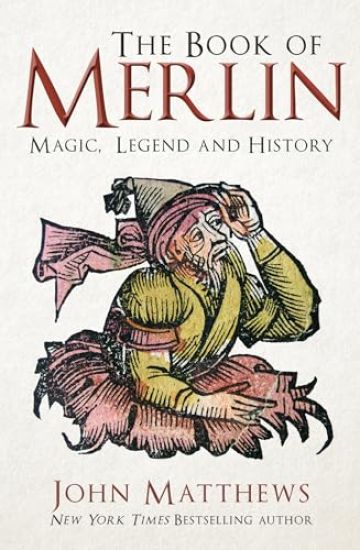
Merlin remains the most famous and familiar image of the magician we possess. Best known as the advisor of the young King Arthur, he was also a famous seer, whose books of prophecies have been reprinted countless times since the Middle Ages and are still in print today. He has reappeared in numerous guises in modern times, in film, TV and books, as well as being studied as an exponent of shamanism, seership and ancient wisdom. Arthurian expert John Matthews examines the many guises of Merlin - as seer, prophet, magician and, perhaps surprisingly, as lover, and as an inspirer of people from all walks of life. He traces the historical origin of Merlin as a Celtic warrior, the later literary forms of his growing legend in the myths of Arthur, and his more recent manifestations in fantasy writing. Also explored is the important connection between Merlin and the Druids. Spanning the ages and delving into some of the most colourful corners of human history, The Book of Merlin presents a new look at an age-old character. The author has provided a new translation of the poems of Myrddin Wyllt, Merlin’s prophecies in the wilderness: ‘Snow to my knees, ice in my beard.’

Passenger Trains in the North of England features over 270 black and white pictures and takes the reader northbound from South Yorkshire and Cheshire to the Scottish Borders. Also covered in detail are a wide selection of pictures from Cumbria, West and North Yorkshire among others. We see main line expresses, branch line and local trains, plus special workings running along today's railways and lines that have faded into history. Steam, diesel and electric powered trains are pictured right across the North of England including industrial and city views plus a great selection taking in the highly picturesque locations of the northern hills and Dales. Embracing a period of 65 years the book features images from as early as 1957 right through the late steam era up to the present day. The stars of the book are obviously the trains of the past, but just as important are the top photographers who have kindly provided these high-quality pictures for your enjoyment. While the author has sneaked a few of his own efforts in, the main contributions come from the great names of the railway photography world including Gavin Morrison, Les Nixon, Peter Fitton, John Whiteley, John Cooper Smith and others.
We train because we are human and we become human because we train. This is the surprising and original conclusion of Anatomy of Performance Training, in which John Matthews shows how training is a very human response to the problems of having a body and living in the world. Using illustrative case-studies of professional practice, each chapter addresses a specific body part, offering a self-contained discussion of its symbolic and practical significance in the artistic, and commercial, activities of training. These anatomical case-studies are cross-referenced with other disciplines (such as sport, high diving, deep diving and artisan craft) to further expand our understanding of performance. Stand-alone chapters, ideal for reference, build towards an overall conclusion that the uniquely human practice of training is emerging as a new and pervasive ideology globally. Ideal for readers seeking to understand the relationship the body has with the theatre and training, or for teachers looking for a new, innovative approach to performance, Anatomy of Performance Training is an accessible, original contribution to the philosophy of training for performance.
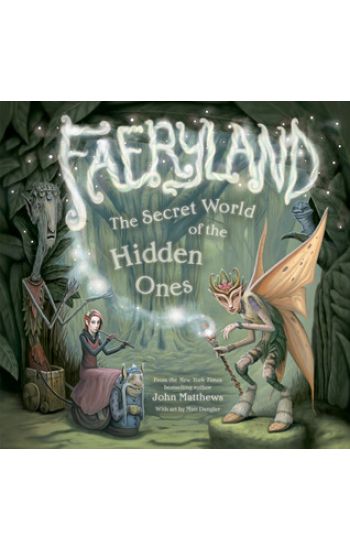
From the author of the bestselling book Pirates and our own How To See Faeries (with Brian Froud) comes a wonderful interactive book about Faeries. The book includes faeries of the British Isles as well as those of Scandinavia, Germany, North America and even the Asian, Arab and African worlds. The book is divided into 13 sections: among them A Brief History of Faeries; Who’s Who of Faeries; Good Faeries vs Bad Faeries; Faerie Courts; Faerie Spells; Faerie Places, Faerie Sightings; Faerie Gold; Faerie Children; Faerie Good and Bad Fortune; and Faerie Music. The book is illustrated with new art from talented faerie artist Matt Dangler as well as other celebrated contemporary artists alongside classic art by William Blake, Henry Fuseli, William Turner and others. An important aspect of the package will be the striking memorabilia included: A Handbook for Faery Hunters; a small manual of how and where to look for fairies; an envelope of real faery photos; a 19th century faery pull out map (currently housed in the Library of Congress!) and more.

The Influence Of The Bible In Improving The Understanding And Moral Character (1864)
John Matthews
KESSINGER PUBLISHING, LLC
2008
sidottu