How has Japan become a global superpower and what does the future look like for it? There was a time in the 1980s when, if the media were to be believed, the Japanese were set to become the masters of the world and owners of all our companies and intellectual properties. Today, Japan's rapid ascendancy now seems dwarfed by the metoric rise of its neighbour, China. Here, Jonathan Clements charts the rise of Japan since the end of World War Two. Presenting the country as the Japanese themselves see it, he explains key issues in national reconstruction, the often-overlooked US Occupation, the influence of the Cold War, student unrest, political scandals, and the meteoric rise and sudden fall of the Japanese economy in the late 20th century.He chronicles changes in women's rights and consumer habits, developments in politics, education and health today, and the shadow of nuclear issues from Hiroshima to Fukushima. He also raises topics rarely covered by the foreign media - Japan's ethnic minorities and burakumin underclass, the influence of organised crime and the hard sell behind "soft" power.
"Although this is his first novel, Jonathan Clements's long practice writing the personal-finance column for The Wall Street Journal shows in a quickly paced story with a plot that moves right along, with enough detail that every middle-aged cyclist can relate to," writes Richard Masoner, Cyclelicio.us. "It's a quick, enjoyable read.""An entertaining story," says Ray Niekamp, BikeNoob.com.48 and Counting is, as the novel's subtitle suggests, A Story of Money, Love and Bicycling. It traces amateur cyclist Max Whitfield through three eventful seasons as his marriage collapses and he loses control of his business. Unemployed and unsure what to do next, he throws himself into training for a 40-mile bicycle race. Clare saw Max rise out of the seat. He was her 48-year-old father and yet, at that moment, he was somebody else entirely. The muscles in his arms were taut. His face and legs glistened with perspiration. As the bike leapt forward and gathered speed, he sat down, shifted into an easier gear and spun the pedals with a controlled fury. For a few brief seconds, the beauty was unmistakable. Max's bike hurtled past the other two riders. A yawning gap immediately opened up. Max had his chance. He had broken free of the other two, who were now belatedly trying to respond, their suddenly feverish motion signaling how surprised they were. Max was 80 excruciating seconds from the finish line. Jonathan Clements is the former personal-finance columnist for The Wall Street Journal. He was born in London, England, graduated from Cambridge University and now lives in New York City. This is Clements's fifth book and his first novel.
There are those who think the goal of investing is to beat the market and amass as much wealth as possible, that street smarts and hard work ensure investment success, and that the road to happiness is paved with more of everything. And then there are those who get it.Want a more prosperous, less stressful financial life? Jonathan Clements, longtime personal finance columnist for The Wall Street Journal, is here to help. His goal: to provide readers with a coherent way to think about their finances, so they worry less about money, make smarter financial choices and squeeze more happiness out of the dollars that they have. How to Think About Money is built around five key ideas: Money can buy happiness, but we need to spend with great care.Most of us will enjoy an extraordinarily long life--and that has profound financial implications.We are hardwired for financial failure, so sensible money management takes great mental strength.We need to bring order to our financial life--by focusing on our paycheck, or lack thereof.If we want to add to our wealth, we should strive to minimize the subtractions."Now why didn't I think of that? That's what you'll ask yourself after you read Jonathan Clements's fine new book. Its beauty lies in the commonsense and wisdom that is summed up in just five simple steps that will help you to earn your financial independence. Easy to understand, essential to follow."--John C. Bogle, founder, The Vanguard Group"Jonathan Clements brings his intelligence, insight and commonsense to How to Think About Money, which is packed with wisdom and great guidance. Read it and reap the rewards in the years and decades ahead."--Eric Tyson, author of Personal Finance for Dummies and Investing for Dummies "How to Think About Money is financial feng shui --a blueprint for harmonizing all the aspects of personal finance into a balanced way of approaching and managing money. I found myself measuring my own attitudes and beliefs against the yardsticks in Jonathan Clements's book, and was pleased to find that we're on the same page. Anyone who feels overwhelmed by the challenges of today's world can benefit from Clements's advice on how to make smart financial choices, as well as how to develop, in his words, a 'coherent way to think about their financial life'."--Janet Bodnar, editor, Kiplinger's Personal Finance magazine"Concise, important and true. Jonathan Clements provides you a path not just to better finances, but to a better life."--Terry Burnham, finance professor, Chapman University, and author of Mean Markets and Lizard Brains"Jonathan Clements writes so well and thinks so clearly that even financial planning, saving, and wise decisions are almost fun to think through with him as our guide."--Charles Ellis, author of Winning the Loser's Game"In How to Think About Money, Jonathan Clements, one of the premier financial writers of our times, provides readers with a roadmap for a successful financial life. It's an easy read that can result in changing the way readers look at investing and life. Read it and reap."--Mel Lindauer, Forbes.com columnist and co-author of The Bogleheads' Guide to Investing and The Bogleheads' Guide to Retirement Planning"Jonathan Clements is one of the greatest financial consumer advocates of our time, not only because of his emphasis on a practical and commonsense approach to personal finance, but because his message is delivered in a welcoming, easy-to-understand manner. That approach moves his readers to take the most important step toward winning in the personal-finance world--taking ownership of one's financial life and following that with action."--Peter Mallouk, president of Creative Planning and author of The 5 Mistakes Every Investor Makes and How to Avoid Them
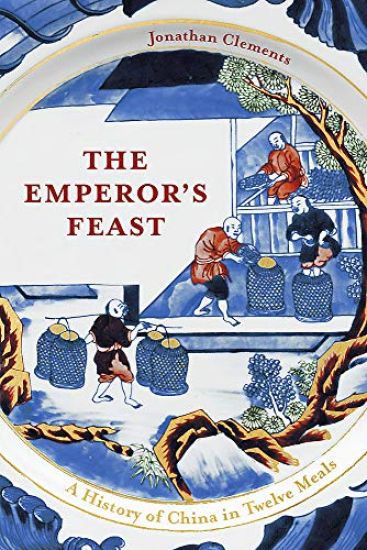
'A galloping journey through thousands of years of Chinese culinary history . . . a timely reminder that the country's modern cuisine is the delicious fruit of a rich, ancient and perhaps surprisingly multicultural tradition' FUCHSIA DUNLOP, SPECTATOR'A tasty portrait of a nation' SUNDAY TELEGRAPH'A splendid introduction to the complex history of China' GUARDIAN'A terrific read . . . Jonathan Clements writes with erudition and humour' DAILY MAIL'This book is itself a feast, each chapter a sumptuous course'Frederik L. Schodt, author of My Heart Sutra'Witty and insightful' Derek Sandhaus, author of Drunk in China****************The history of China - not according to emperors or battles, but according to its food and drink.The Emperor's Feast is the epic story of a nation and a people, told through one of its most fundamental pillars and successful exports: food. Following the journeys of different ingredients, dishes and eating habits over 5,000 years of history, author and presenter Jonathan Clements examines how China's political, cultural and technological evolution and her remarkable entrance onto the world stage have impacted how the Chinese - and the rest of the world - eat, drink and cook.We see the influence of invaders such as the Mongols and the Manchus, and discover how food - like the fiery cuisine of Sichuan or the hardy dishes of the north - often became a stand-in for regional and national identities. We also follow Chinese flavours to the shores of Europe and America, where enterprising chefs and home cooks created new traditions and dishes unheard of in the homeland.From dim sum to mooncakes to General Tso's chicken, The Emperor's Feast shows us that the story of Chinese food is ultimately the story of a nation: not just the one that history tells us, but also the one that China tells us about itself.
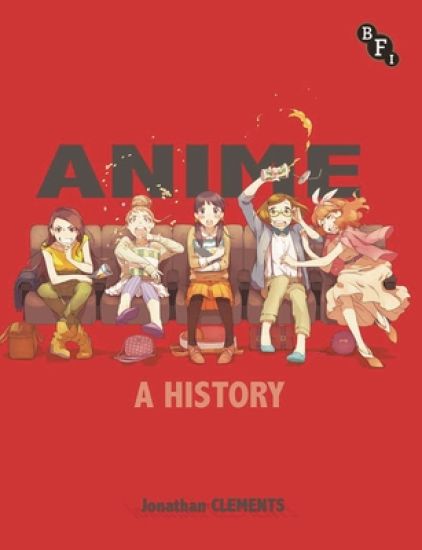
Japanese animation is at the nexus of an international multimedia industry worth over $23.6 billion a year, linked to everything from manga to computer games, Pokémon and plushies. In this comprehensive guide, Jonathan Clements chronicles the production and reception history of the entire medium, from a handful of hobbyists in the 1910s to the Oscar-winning Spirited Away and beyond.Exploring the cultural and technological developments of the past century, Clements addresses how anime’s history has been written by Japanese scholars, and covers previously neglected topics such as wartime instructional animation and work-for-hire for American clients. Founded on the testimonies of industry professionals, and drawing on a myriad of Japanese-language documents, memoirs and books, Anime: A History illuminates the anime business from the inside – investigating its innovators, its unsung heroes and its controversies.This new edition has been updated and revised throughout, with full colour illustrations and three new chapters on anime’s fortunes among Chinese audiences and subcontractors, 21st century trends in ‘otaku economics’, and the huge transformations brought about by the rise of global streaming technology.
Japanese animation is at the nexus of an international multimedia industry worth over $23.6 billion a year, linked to everything from manga to computer games, Pokémon and plushies. In this comprehensive guide, Jonathan Clements chronicles the production and reception history of the entire medium, from a handful of hobbyists in the 1910s to the Oscar-winning Spirited Away and beyond. Exploring the cultural and technological developments of the past century, Clements addresses how anime’s history has been written by Japanese scholars, and covers previously neglected topics such as wartime instructional animation and work-for-hire for American clients. Founded on the testimonies of industry professionals, and drawing on a myriad of Japanese-language documents, memoirs and books, Anime: A History illuminates the anime business from the inside – investigating its innovators, its unsung heroes and its controversies. This new edition has been updated and revised throughout, with full colour illustrations and three new chapters on anime’s fortunes among Chinese audiences and subcontractors, 21st century trends in ‘otaku economics’, and the huge transformations brought about by the rise of global streaming technology.
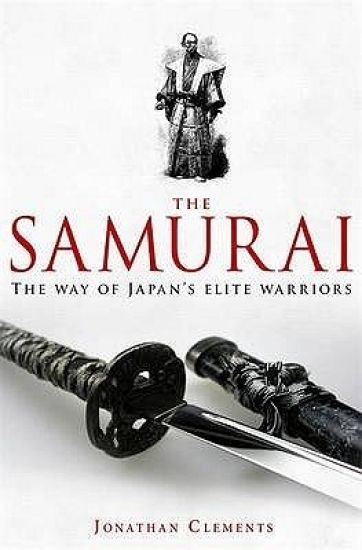
From a leading expert in Japanese history, this is one of the first full histories of the art and culture of the Samurai warrior. The Samurai emerged as a warrior caste in Medieval Japan and would have a powerful influence on the history and culture of the country from the next 500 years. Clements also looks at the Samurai wars that tore Japan apart in the 17th and 18th centuries and how the caste was finally demolished in the advent of the mechanized world.
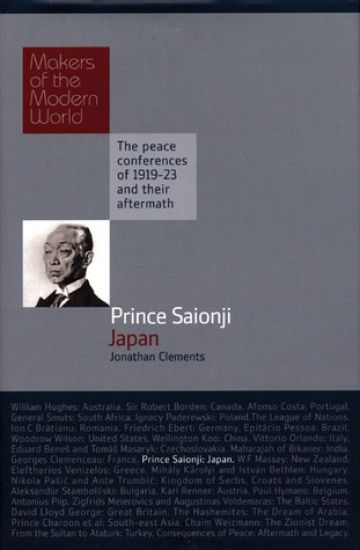
The Japanese delegation at the Paris Peace Conference did not have the Japanese prime or foreign ministers with them as they had only just been elected and had plenty to do back home. The delegation was instead led by Prince Saionji Kinmochi (1849-1940), the dashing 'kingmaker' of early 20th-century Japanese politics whose life spanned the arrival of Commodore Perry and his 'black ships', the Japanese civil war, the Meiji Restoration, the Sino-Japanese War, the Russo-Japanese War, the First World War, the Paris Peace Conference and the Treaty of Versailles, and the rise of Japanese militarism. Unlike many of the conservatives of his day, Saionji was a man with experience of international diplomacy and admiration for European culture.Brought up in the days of the last Shogun, he became an active supporter of Japan's new ruling regime, after the Shogun was overthrown in a civil war, and a leading figure in the post-Restoration reform movement. In 1869, he founded the institution that would become the Ritsumeikan University - literally, 'the place to establish one's destiny'. He was sent to France for nine years to investigate Western technology and philosophy, and served for a decade as a Japanese ambassador in Europe. Returning to Japan, he served twice as Minister of Education and later became prime minister before resigning to become a revered elder statesman. Japan entered the First World War on the Allied side, seizing German possessions in China and the Pacific. In the closing days of the war, Japanese military forces participated in the Siberian Intervention - an American-led invasion of eastern Russia against Communist insurgents.At the Conference Saionji's presence was initially regarded by the Japanese as a sign that Japan had become a fully-fledged member of the international community and accepted on an equal footing with the Western Powers. His delegation introduced a controversial proposal to legally enshrine racial equality as one of the tenets of the League of Nations. The Japanese were also keen to grab colonies of their own, and went head-to-head with the Chinese delegation over the fate of the former German possession of Shandong. When Shandong was 'returned' not to China but to its Japanese occupiers, riots broke out in China. Despite Saionji's statesmanship and diplomacy, the Treaty of Versailles was regarded by many Japanese as a slap in the face. Saionji's influence weakened in his last years, while his party was dissolved and amalgamated with others.
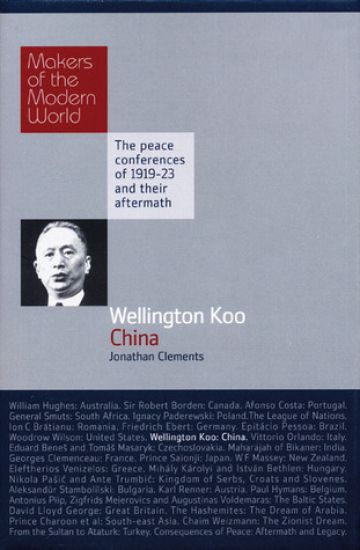
Born in Shanghai and raised in the city's International Settlement, Gu Weijun, a.k.a. Wellington Koo (1887-1985) became fluent in English during his postgraduate studies abroad - he got a PhD in Law from Columbia in 1912. He was recalled soon afterwards to become the English Secretary to the newly formed Republic of China, and became ambassador to the United States in 1915. He achieved notoriety at the Paris Peace Conference where he sternly resisted Japanese attempts to hold onto seized German colonial territory in mainland China. In protest at their treatment, the Chinese were the only delegates not to sign the subsequent Treaty of Versailles. Koo was China's first representative to the League of Nations, and ended up as acting president of Republican China during the unrest of the period 1926-7.He subsequently served briefly as a Foreign Minister during the peak of the Warlord Era, before returning to Europe, first as a delegate at the League of Nations, and then as China's ambassador to France. With the Nazi occupation, Koo fled to Britain, where he became the Chinese ambassador to the UK until 1946. A founder member of the United Nations, Koo was instrumental in maintaining the position of Republican China on the Security Council - by this time, 'Republican China' was limited solely to the island of Taiwan, while the Communists proclaimed themselves to be the new rulers of China itself.Retiring from the diplomatic service in 1956, the venerable Koo went on to become a judge at the International Court of Justice at the Hague, rising to vice-president before his retirement, aged 80, in 1967. He settled in New York, where his final years were tormented by 'Republican' China's loss of its seat on the United Nations Security Council to the Communists, following Nixon's famous visit to China.
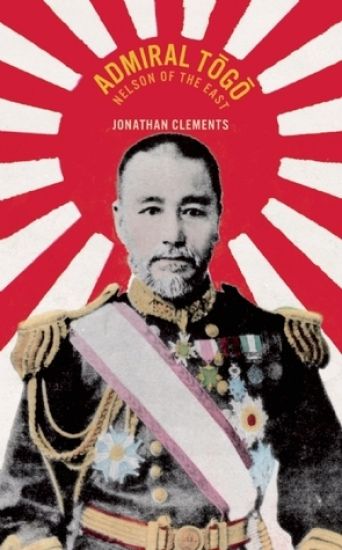
Togo Heihachiro (1848-1934) was born into a feudal society that had lived in seclusion for 250 years. As a teenage samurai, he witnessed the destruction wrought upon his native land by British warships. As the legendary Silent Admiral, he was at the forefront of innovations in warfare, pioneering the Japanese use of modern gunnery and wireless communication. He is best known as the Nelson of the East for his resounding victory over the Tsar's navy in the Russo-Japanese War, but he also lived a remarkable life studying at a British maritime college, witnessing the Sino-French War, the Hawaiian Revolution, and the Boxer Uprising. After his retirement, he was appointed to oversee the education of the Emperor, Hirohito. This new biography spans Japan's sudden, violent leap out of its self-imposed isolation and into the 20th century. Delving beyond Togo's finest hour at the Battle of Tsushima, it portrays the life of a diffident Japanese sailor in Victorian Britain, his reluctant celebrity in America where he was laid low by Boston cooking and welcomed by his biggest fan, Theodore Roosevelt , forgotten wars over the short-lived Republics of Ezo and Formosa, and the accumulation of peacetime experience that forged a wartime hero.
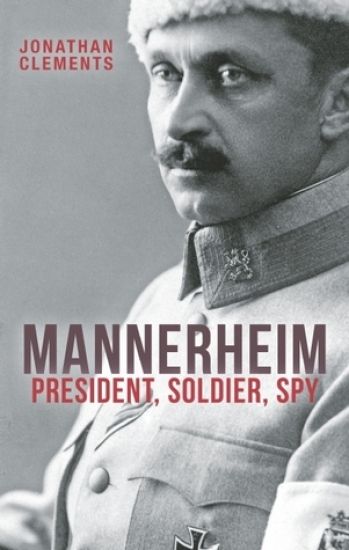
Gustaf Mannerheim was one of the greatest figures of the 20th century. As a young Finnish officer he witnessed the coronation of the last Tsar and was decorated for bravery in the Russo-Japanese War. He spent two years undercover in Asia as an agent of the 'Great Game'. Crossing China on horseback, he stopped en route to teach the 13th Dalai Lama how to shoot a pistol; he also spied on the Japanese navy. Having escaped the Bolsheviks by the skin of his teeth in 1917, he commanded the anti-Russian forces in the local revolt and civil war and later, during Finland's darkest hour, he lead the defence of his country against the impossible odds of the Winter War. In this, the first major biography of Mannerheim for a decade, Jonathan Clements brings new material to light on Mannerheim's time in Manchuria and Japan. This is a fascinating appraisal of an adventurer and explorer who would go on to forge a new nation.
The Silk Road is a route from the edges of the European world to the central plains of China. For thousands of years, its history has been a traveller's history, of brief encounters in desert towns, snowbound passes and nameless forts. It was the conduit that first brought Buddhism, Christianity and Islam into China, and the site of much of the 'Great Game' between Victorian empires. Jonathan Clements guides the reader through the trackless wastes of the Taklamakan Desert, its black whirlwinds and dead lakes, its shimmering mirages, lost cities and mysterious mummies, but also its iconic statues and memorable modern pop songs. He explains the truth behind odd tales of horses that sweat blood, defaced statues and missing frescoes, and Marco Polo's stories of black gold that seeps from the earth.
Presents the modern capital of Japan from the first forest clearances on the vast Kanto plain, through the wars and intrigues of the samurai era, up to the preparations for the 2020 Olympics. Tokyo (the `Eastern Capital') has only enjoyed that name and status for 150 years. Before then it was the site of Edojuku (`Estuary Camp'), a medieval outpost designed to keep watch over rich farmlands. Whereas the imperial court ruled Japan from the sleepy city of Kyoto the land-owners of the Kanto plain held the true wealth and power, which they eventually asserted in a series of bloody civil wars. As `Edo' in the early modern period, the Tokyo region became the administrative centre of Japan's Shogun overlords and the site of a vibrant, vivid urban culture of theatres, taverns and brothels. After the Meiji Restoration in 1868, it became Japan's true capital, home to the emperors, seat of government and site of rapid urban growth.
Tokyo, which in Japanese means the "Eastern Capital," has only enjoyed that name and status for 150 years. Until the middle of the nineteenth century, the city that is now Tokyo was a sprawling fishing town by the bay named Edo. Earlier still, in the Middle Ages, it was Edojuku, an outpost overlooking farmlands. And thousands of years ago, its mudflats and marshes were home to elephants, deer, and marine life. In this compact history, Jonathan Clements traces Tokyo's fascinating story from the first forest clearances and the samurai wars to the hedonistic "floating world" of the last years of the Shogunate. He illuminates the Tokyo of the twentieth century with its destruction and redevelopment, boom and bust without forgoing the thousand years of history that have led to the Eastern Capital as we know it. Tokyo is so entwined with the history of Japan that it can be hard to separate them, and A Short History of Tokyo tells both the story of the city itself and offers insight into Tokyo's position at the nexus of power and people that has made the city crucial to the events of the whole country.
Before China's capital became a sprawling megacity and international centre of business and culture, its fortunes fluctuated under a dozen dynasties. It has been a capital for several states, including those headed by Mongolian chiefs and the glorious Ming emperors, whose tombs can still be found on its outskirts. And before all that, it was a campsite for primitive hominids, known as the Peking Man. A Short History of Beijing tells the story of this remarkable city, from its more famous residents - Khubilai Khan, Mulan, and Marco Polo - right up to the twenty-first century, as modern construction wipes out so much of the old city to make way for its twenty-million-strong population. Through his timely and intimate portrait of the world's most populous capital city, Jonathan Clements reveals the history of China itself. This first paperback edition includes a new final chapter, taking the history of Beijing up to the 2022 Winter Olympics and beyond.