Kirjojen hintavertailu. Mukana 11 244 527 kirjaa ja 12 kauppaa.

Kirjahaku

Etsi kirjoja tekijän nimen, kirjan nimen tai ISBN:n perusteella.

63 kirjaa tekijältä Judith Butler

Senses of the Subject

Senses of the Subject

Judith Butler

Fordham University Press
2015
pokkari
This book brings together a group of Judith Butler's philosophical essays written over two decades that elaborate her reflections on the roles of the passions in subject formation through an engagement with Hegel, Kierkegaard, Descartes, Spinoza, Malebranche, Merleau-Ponty, Freud, Irigaray, and Fanon. Drawing on her early work on Hegelian desire and her subsequent reflections on the psychic life of power and the possibility of self-narration, this book considers how passions such as desire, rage, love, and grief are bound up with becoming a subject within specific historical fields of power. Butler shows in different philosophical contexts how the self that seeks to make itself finds itself already affected and formed against its will by social and discursive powers. And yet, agency and action are not necessarily nullified by this primary impingement. Primary sense impressions register this dual situation of being acted on and acting, countering the idea that acting requires one to overcome the situation of being affected by others and the linguistic and social world. This dual structure of sense sheds light on the desire to live, the practice and peril of grieving, embodied resistance, love, and modes of enthrallment and dispossession. Working with theories of embodiment, desire, and relationality in conversation with philosophers as diverse as Hegel, Spinoza, Descartes, Merleau-Ponty, Freud, and Fanon, Butler reanimates and revises her basic propositions concerning the constitution and deconstitution of the subject within fields of power, taking up key issues of gender, sexuality, and race in several analyses. Taken together, these essays track the development of Butler's embodied account of ethical relations.
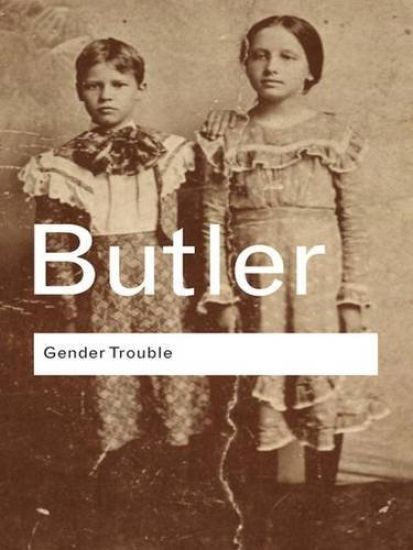
Gender Trouble

Gender Trouble

Judith Butler

Routledge
2015
sidottu
One of the most talked-about scholarly works of the past fifty years, Judith Butler’s Gender Trouble is as celebrated as it is controversial.Arguing that traditional feminism is wrong to look to a natural, 'essential' notion of the female, or indeed of sex or gender, Butler starts by questioning the category 'woman' and continues in this vein with examinations of 'the masculine' and 'the feminine'. Best known however, but also most often misinterpreted, is Butler's concept of gender as a reiterated social performance rather than the expression of a prior reality.Thrilling and provocative, few other academic works have roused passions to the same extent.
Bodies That Matter

Bodies That Matter

Judith Butler

Routledge
2015
sidottu
In Bodies That Matter, renowned theorist and philosopher Judith Butler argues that theories of gender need to return to the most material dimension of sex and sexuality: the body. Butler offers a brilliant reworking of the body, examining how the power of heterosexual hegemony forms the "matter" of bodies, sex, and gender. Butler argues that power operates to constrain sex from the start, delimiting what counts as a viable sex. She clarifies the notion of "performativity" introduced in Gender Trouble and via bold readings of Plato, Irigaray, Lacan, and Freud explores the meaning of a citational politics. She also draws on documentary and literature with compelling interpretations of the film Paris is Burning, Nella Larsen's Passing, and short stories by Willa Cather.
Who's Afraid of Gender?

Who's Afraid of Gender?

Judith Butler

Picador USA
2025
nidottu
National Bestseller. Named a Best Book of 2024 by NPR, Harper's Bazaar, W, and Esquire."A profoundly urgent intervention." --Naomi Klein "A timely must-read for anyone actively invested in reimagining collective futurity." --Claudia RankineFrom a global icon, a bold, essential account of how a fear of gender is fueling reactionary politics around the world. Judith Butler, the groundbreaking thinker whose iconic book Gender Trouble redefined how we think about gender and sexuality, confronts the attacks on "gender" that have become central to right-wing movements today. Global networks have formed "anti-gender ideology movements" that are dedicated to circulating a fantasy that gender is a dangerous, perhaps diabolical, threat to families, local cultures, civilization--and even "man" himself. Inflamed by the rhetoric of public figures, this movement has sought to nullify reproductive justice, undermine protections against sexual and gender violence, and strip trans and queer people of their rights to pursue a life without fear of violence. The aim of Who's Afraid of Gender? is not to offer a new theory of gender but to examine how "gender" has become a phantasm for emerging authoritarian regimes, fascist formations, and trans-exclusionary feminists. In their vital, courageous new book, Butler illuminates the concrete ways that this phantasm of "gender" collects and displaces anxieties and fears of destruction. Operating in tandem with deceptive accounts of "critical race theory" and xenophobic panics about migration, the anti-gender movement demonizes struggles for equality, fuels aggressive nationalism, and leaves millions of people vulnerable to subjugation. An essential intervention into one of the most fraught issues of our moment, Who's Afraid of Gender? is a bold call to refuse the alliance with authoritarian movements and to make a broad coalition with all those whose struggle for equality is linked with fighting injustice. Imagining new possibilities for both freedom and solidarity, Butler offers us a hopeful work of social and political analysis that is both timely and timeless--a book whose verve and rigor only they could deliver.
Giving an Account of Oneself

Giving an Account of Oneself

Judith Butler

FORDHAM UNIVERSITY PRESS
2025
sidottu
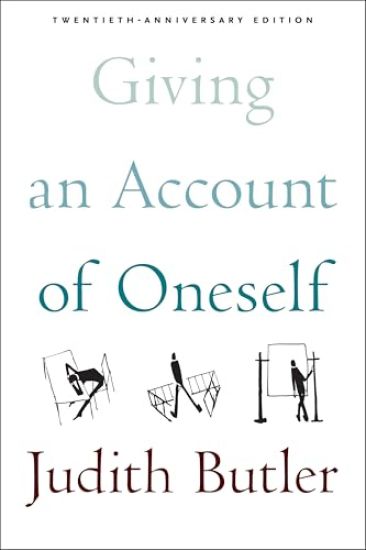
What does it mean to lead a moral life? In their first extended study of moral philosophy, Judith Butler offers a provocative outline for a new ethical practice—one responsive to the need for critical autonomy yet grounded in the opacity of the human subject. Butler takes as their starting point one's ability to answer the questions "What have I done?" and "What ought I to do?" They show that these questions can be answered only by asking a prior question, "Who is this 'I' who is under an obligation to give an account of itself and to act in certain ways?" Because I find that I cannot give an account of myself without accounting for the social conditions under which I emerge, ethical reflection requires a turn to social theory. In three powerfully crafted and lucidly written chapters, Butler demonstrates how difficult it is to give an account of oneself, and how this lack of self-transparency and narratibility is crucial to an ethical understanding of the human. In dialogue with Adorno, Levinas, Foucault, and other thinkers, they eloquently argue the limits, possibilities, and dangers of contemporary ethical thought. Butler offers a critique of the moral self, arguing that the transparent, rational, and continuous ethical subject is an impossible construct that seeks to deny the specificity of what it is to be human. We can know ourselves only incompletely, and only in relation to a broader social world that has always preceded us and already shaped us in ways we cannot grasp. If inevitably we are partially opaque to ourselves, how can giving an account of ourselves define the ethical act? And doesn't an ethical system that holds us impossibly accountable for full self-knowledge and self-consistency inflict a kind of psychic violence, leading to a culture of self-beratement and cruelty? How does the turn to social theory offer us a chance to understand the specifically social character of our own unknowingness about ourselves? By recasting ethics as a project in which being ethical means becoming critical of norms under which we are asked to act, but which we can never fully choose, Butler illuminates what it means for us as "fallible creatures" to create and share an ethics of vulnerability, humility, and ethical responsiveness.
Giving an Account of Oneself

Giving an Account of Oneself

Judith Butler

FORDHAM UNIVERSITY PRESS
2025
pokkari
What does it mean to lead a moral life? In their first extended study of moral philosophy, Judith Butler offers a provocative outline for a new ethical practice—one responsive to the need for critical autonomy yet grounded in the opacity of the human subject. Butler takes as their starting point one's ability to answer the questions "What have I done?" and "What ought I to do?" They show that these questions can be answered only by asking a prior question, "Who is this 'I' who is under an obligation to give an account of itself and to act in certain ways?" Because I find that I cannot give an account of myself without accounting for the social conditions under which I emerge, ethical reflection requires a turn to social theory. In three powerfully crafted and lucidly written chapters, Butler demonstrates how difficult it is to give an account of oneself, and how this lack of self-transparency and narratibility is crucial to an ethical understanding of the human. In dialogue with Adorno, Levinas, Foucault, and other thinkers, they eloquently argue the limits, possibilities, and dangers of contemporary ethical thought. Butler offers a critique of the moral self, arguing that the transparent, rational, and continuous ethical subject is an impossible construct that seeks to deny the specificity of what it is to be human. We can know ourselves only incompletely, and only in relation to a broader social world that has always preceded us and already shaped us in ways we cannot grasp. If inevitably we are partially opaque to ourselves, how can giving an account of ourselves define the ethical act? And doesn't an ethical system that holds us impossibly accountable for full self-knowledge and self-consistency inflict a kind of psychic violence, leading to a culture of self-beratement and cruelty? How does the turn to social theory offer us a chance to understand the specifically social character of our own unknowingness about ourselves? By recasting ethics as a project in which being ethical means becoming critical of norms under which we are asked to act, but which we can never fully choose, Butler illuminates what it means for us as "fallible creatures" to create and share an ethics of vulnerability, humility, and ethical responsiveness.
George Yancy

George Yancy

Judith Butler

BLOOMSBURY PUBLISHING PLC
2021
sidottu
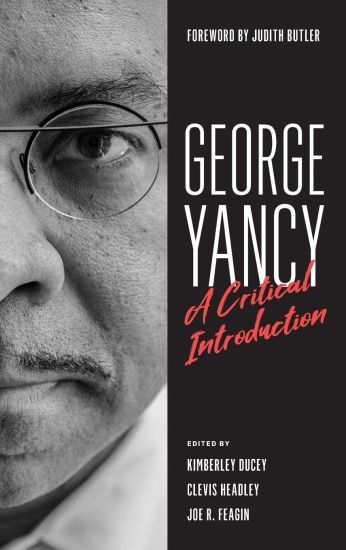
This collection gives George Yancy’s transformative work in social and political philosophy and the philosophy of race the critical attention it has long deserved. Contributors apply perspectives from disciplines including philosophy, sociology, education, communication, peace and conflict studies, religion, and psychology.
George Yancy

George Yancy

Judith Butler

BLOOMSBURY PUBLISHING PLC
2023
nidottu
This collection gives George Yancy’s transformative work in social and political philosophy and the philosophy of race the critical attention it has long deserved. Contributors apply perspectives from disciplines including philosophy, sociology, education, communication, peace and conflict studies, religion, and psychology.
Frames of War

Frames of War

Judith Butler

Verso Books
2016
nidottu
In this urgent response to violence, racism and increasingly aggressive methods of coercion, Judith Butler explores the media's portrayal of armed conflict, a process integral to how the West prosecutes its wars. In doing so, she calls for a reconceptualization of the left, one united in opposition and resistance to the illegitimate and arbitrary effects of interventionist military action.
The Force of Nonviolence

The Force of Nonviolence

Judith Butler

Verso Books
2020
sidottu
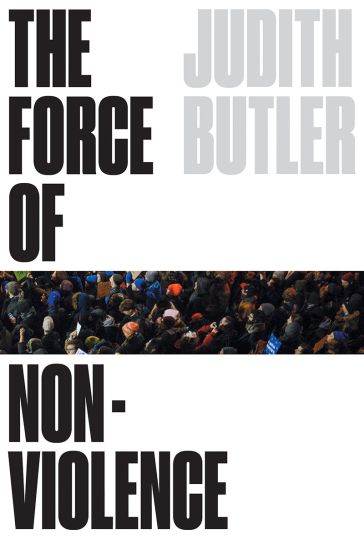
Judith Butler's new book shows how an ethic of nonviolence must be connected to a broader political struggle for social equality. Further, it argues that nonviolence is often misunderstood as a passive practice that emanates from a calm region of the soul, or as an individualist ethical relation to existing forms of power. But, in fact, nonviolence is an ethical position found in the midst of the political field. An aggressive form of nonviolence accepts that hostility is part of our psychic constitution, but values ambivalence as a way of checking the conversion of aggression into violence. One contemporary challenge to a politics of nonviolence points out that there is a difference of opinion on what counts as violence and nonviolence. The distinction between them can be mobilised in the service of ratifying the state's monopoly on violence.Considering nonviolence as an ethical problem within a political philosophy requires a critique of individualism as well as an understanding of the psychosocial dimensions of violence. Butler draws upon Foucault, Fanon, Freud, and Benjamin to consider how the interdiction against violence fails to include lives regarded as ungrievable. By considering how 'racial phantasms' inform justifications of state and administrative violence, Butler tracks how violence is often attributed to those who are most severely exposed to its lethal effects. The struggle for nonviolence is found in movements for social transformation that reframe the grievability of lives in light of social equality and whose ethical claims follow from an insight into the interdependency of life as the basis of social and political equality.
The Force of Nonviolence

The Force of Nonviolence

Judith Butler

Verso Books
2021
nidottu
Judith Butler's new book shows how an ethic of nonviolence must be connected to a broader political struggle for social equality. Further, it argues that nonviolence is often misunderstood as a passive practice that emanates from a calm region of the soul, or as an individualist ethical relation to existing forms of power. But, in fact, nonviolence is an ethical position found in the midst of the political field. An aggressive form of nonviolence accepts that hostility is part of our psychic constitution, but values ambivalence as a way of checking the conversion of aggression into violence. One contemporary challenge to a politics of nonviolence points out that there is a difference of opinion on what counts as violence and nonviolence. The distinction between them can be mobilised in the service of ratifying the state's monopoly on violence.Considering nonviolence as an ethical problem within a political philosophy requires a critique of individualism as well as an understanding of the psychosocial dimensions of violence. Butler draws upon Foucault, Fanon, Freud, and Benjamin to consider how the interdiction against violence fails to include lives regarded as ungrievable. By considering how 'racial phantasms' inform justifications of state and administrative violence, Butler tracks how violence is often attributed to those who are most severely exposed to its lethal effects. The struggle for nonviolence is found in movements for social transformation that reframe the grievability of lives in light of social equality and whose ethical claims follow from an insight into the interdependency of life as the basis of social and political equality.
Precarious Life

Precarious Life

Judith Butler

Verso Books
2020
nidottu
In her most impassioned and personal book to date, Judith Butler responds in this profound appraisal of post-9/11 America to the current US policies to wage perpetual war, and calls for a deeper understanding of how mourning and violence might instead inspire solidarity and a quest for global justice.
Who's Afraid of Gender?

Who's Afraid of Gender?

Judith Butler

PENGUIN BOOKS LTD
2025
pokkari
An Instant Sunday Times Bestseller'A profoundly urgent intervention' Naomi KleinFrom one of the most influential thinkers of our time, an enlightening, essential account of how a fear of gender is fuelling reactionary politics around the world Judith Butler, the ground-breaking philosopher whose work has redefined how we think about gender and sexuality, confronts the attacks on gender that have become central to right-wing movements today. Global networks have formed ‘anti-gender ideology movements’ dedicated to circulating a fantasy that gender is a dangerous threat to families, local cultures, civilization – and even ‘man’ himself. Inflamed by the rhetoric of public figures, this movement has sought to abolish reproductive justice, undermine protections against violence, and strip trans and queer people of their rights.But what, exactly, is so disturbing about gender? In this vital, courageous book, Butler carefully examines how ‘gender’ has become a phantasm for emerging authoritarian regimes, fascist formations and transexclusionary feminists, and the concrete ways in which this phantasm works. Operating in tandem with deceptive accounts of critical race theory and xenophobic panics about migration, the anti-gender movement demonizes struggles for equality and leaves millions of people vulnerable to subjugation.An essential intervention into one of the most fraught issues of our moment, Who's Afraid of Gender? is a galvanizing call to make a broad coalition with all those who struggle for equality and fight injustice. Imagining new possibilities for freedom and solidarity, Butler offers us an essentially hopeful work that is both timely and timeless.
Frames of War

Frames of War

Judith Butler

Verso Books
2025
nidottu
In Frames of War, Judith Butler explores the media’s portrayal of state violence, a process integral to the way in which the West wages modern war. This portrayal has saturated our understanding of human life, and has led to the exploitation and abandonment of whole peoples, who are cast as existential threats rather than as living populations in need of protection. These people are framed as already lost, to imprisonment, unemployment and starvation, and can easily be dismissed. In the twisted logic that rationalizes their deaths, the loss of such populations is deemed necessary to protect the lives of ‘the living.’ This disparity, Butler argues, has profound implications for why and when we feel horror, outrage, guilt, loss and righteous indifference, both in the context of war and, increasingly, everyday life.This book discerns the resistance to the frames of war in the context of the images from Abu Ghraib, the poetry from Guantanamo, recent European policy on immigration and Islam, and debates on normativity and non-violence. In this urgent response to ever more dominant methods of coercion, violence and racism, Butler calls for a re-conceptualization of the Left, one that brokers cultural difference and cultivates resistance to the illegitimate and arbitrary effects of state violence and its vicissitudes.
Precarious Life

Precarious Life

Judith Butler

Verso Books
2025
nidottu
In this profound appraisal of post-September 11, 2001 America, Judith Butler considers the conditions of heightened vulnerability and aggression that followed from the attack on the US, and US retaliation. Judith Butler critiques the use of violence that has emerged as a response to loss, and argues that the dislocation of first-world privilege offers instead a chance to imagine a world in which that violence might be minimized and in which interdependency becomes acknowledged as the basis for a global political community.Butler considers the means by which some lives become grief-worthy, while others are perceived as undeserving of grief or even incomprehensible as lives. She discusses the political implications of sovereignty in light of the prisoners in Guantanamo Bay. She argues against the anti-intellectual current of contemporary US patriotism and the power of censorship during times of war. Finally, she takes on the question of when and why anti-semitism is leveled as a charge against those who voice criticisms of the Israeli state. She counters that we have a responsibility to speak out against both Israeli injustices and anti-semitism, and argues against the rhetorical use of the charge of anti-semitism to quell public debate.In her most impassioned and personal book to date, Judith Butler responds to the current US policies to wage perpetual war, and calls for a deeper understanding of how mourning and violence might instead inspire solidarity and a quest form global justice.