Kirjahaku
Etsi kirjoja tekijän nimen, kirjan nimen tai ISBN:n perusteella.
137 kirjaa tekijältä Julius Caesar
C. Julii Cæsaris De bello gallico, commentariorum libri V. Accessere index geographicus et Galliæ veteris, ad Cæsarem, tabula. Editio ad usum juventutis accommodata.
Julius Caesar
Gale Ecco, Print Editions
2018
sidottu
The 18th century was a wealth of knowledge, exploration and rapidly growing technology and expanding record-keeping made possible by advances in the printing press. In its determination to preserve the century of revolution, Gale initiated a revolution of its own: digitization of epic proportions to preserve these invaluable works in the largest archive of its kind. Now for the first time these high-quality digital copies of original 18th century manuscripts are available in print, making them highly accessible to libraries, undergraduate students, and independent scholars.Rich in titles on English life and social history, this collection spans the world as it was known to eighteenth-century historians and explorers. Titles include a wealth of travel accounts and diaries, histories of nations from throughout the world, and maps and charts of a world that was still being discovered. Students of the War of American Independence will find fascinating accounts from the British side of conflict. ++++The below data was compiled from various identification fields in the bibliographic record of this title. This data is provided as an additional tool in helping to insure edition identification: ++++Bodleian Library (Oxford)T185370With a half-title and a final advertisement leaf. Vertical chain lines.Eton excudunt M. Pote, et E. Williams, 1797. 4],173, 3]p., plate: map; 12
C. Julii Cæsaris de Bellis gallico et Civili pampeiano; nec non A. Hirtii, aliorumque de Bellis Alexandrino, Africano, et Hispaniensi commentarii; ex optima atque accuratissima Francisci Oudendorpii et Samuelis Clarke editionibus expressi.
Julius Caesar
Gale Ecco, Print Editions
2018
sidottu
The 18th century was a wealth of knowledge, exploration and rapidly growing technology and expanding record-keeping made possible by advances in the printing press. In its determination to preserve the century of revolution, Gale initiated a revolution of its own: digitization of epic proportions to preserve these invaluable works in the largest archive of its kind. Now for the first time these high-quality digital copies of original 18th century manuscripts are available in print, making them highly accessible to libraries, undergraduate students, and independent scholars.Rich in titles on English life and social history, this collection spans the world as it was known to eighteenth-century historians and explorers. Titles include a wealth of travel accounts and diaries, histories of nations from throughout the world, and maps and charts of a world that was still being discovered. Students of the War of American Independence will find fascinating accounts from the British side of conflict. ++++The below data was compiled from various identification fields in the bibliographic record of this title. This data is provided as an additional tool in helping to insure edition identification: ++++National Library of ScotlandN046801Edinburgi: typis Joannis Robertson. Veneunt autem apud Kincaid et Bell, W. Gray, J. Dickson, et J. Robertson, 1767. 2],357, 1]p.; 12

C. Julii Cæsaris de bellis Gallico et civili Pompeiano; nec non A. Hirtii, aliorumque de bellis Alexandrino, Africano, et Hispaniensi commentarii; ex optima atque accuratissima Francisci Oudendorpii editione expressi.
Julius Caesar
Gale Ecco, Print Editions
2018
sidottu
The 18th century was a wealth of knowledge, exploration and rapidly growing technology and expanding record-keeping made possible by advances in the printing press. In its determination to preserve the century of revolution, Gale initiated a revolution of its own: digitization of epic proportions to preserve these invaluable works in the largest archive of its kind. Now for the first time these high-quality digital copies of original 18th century manuscripts are available in print, making them highly accessible to libraries, undergraduate students, and independent scholars.Rich in titles on English life and social history, this collection spans the world as it was known to eighteenth-century historians and explorers. Titles include a wealth of travel accounts and diaries, histories of nations from throughout the world, and maps and charts of a world that was still being discovered. Students of the War of American Independence will find fascinating accounts from the British side of conflict. ++++The below data was compiled from various identification fields in the bibliographic record of this title. This data is provided as an additional tool in helping to insure edition identification: ++++National Library of ScotlandT163810Edinburgi: impensis J. Dickson et W. Creech, 1788. 396p.; 12
C. Julii Cæsaris de bellis Gallico et civili Pompeiano
Julius Caesar
Gale Ecco, Print Editions
2018
sidottu
The 18th century was a wealth of knowledge, exploration and rapidly growing technology and expanding record-keeping made possible by advances in the printing press. In its determination to preserve the century of revolution, Gale initiated a revolution of its own: digitization of epic proportions to preserve these invaluable works in the largest archive of its kind. Now for the first time these high-quality digital copies of original 18th century manuscripts are available in print, making them highly accessible to libraries, undergraduate students, and independent scholars.Rich in titles on English life and social history, this collection spans the world as it was known to eighteenth-century historians and explorers. Titles include a wealth of travel accounts and diaries, histories of nations from throughout the world, and maps and charts of a world that was still being discovered. Students of the War of American Independence will find fascinating accounts from the British side of conflict. ++++The below data was compiled from various identification fields in the bibliographic record of this title. This data is provided as an additional tool in helping to insure edition identification: ++++Bodleian Library (Oxford)T186173Edinburgi: typis Joannis Robertson, 1771. 2],357, 1]p.; 12
C. Julii Cæsaris Commentaria de Bello Gallico; cum Versione Anglicana, in Usum Scholarum. Or, Cæsar's Commentaries of his war in Gaul; With an English Translation, for the use of Schools
Julius Caesar
Gale Ecco, Print Editions
2018
sidottu
The 18th century was a wealth of knowledge, exploration and rapidly growing technology and expanding record-keeping made possible by advances in the printing press. In its determination to preserve the century of revolution, Gale initiated a revolution of its own: digitization of epic proportions to preserve these invaluable works in the largest archive of its kind. Now for the first time these high-quality digital copies of original 18th century manuscripts are available in print, making them highly accessible to libraries, undergraduate students, and independent scholars.Rich in titles on English life and social history, this collection spans the world as it was known to eighteenth-century historians and explorers. Titles include a wealth of travel accounts and diaries, histories of nations from throughout the world, and maps and charts of a world that was still being discovered. Students of the War of American Independence will find fascinating accounts from the British side of conflict. ++++The below data was compiled from various identification fields in the bibliographic record of this title. This data is provided as an additional tool in helping to insure edition identification: ++++Bodleian Library (Oxford)T187740Parallel Latin and English texts.London: printed for L. Hawes, W. Clarke, and R. Collins, 1768. iv, 4],13-308p., plate: map; 8
Caesar'S Commentaries On the Gallic War; and the First Book of the Greek Paraphrase; With English Notes, Critical and Explanatory, Plans of Battles, Sieges, Etc., and Historical, Geographical, and ArchµOlogical indexes. by Charles Anthon ...
Julius Caesar
University of Michigan Library
2006
pokkari
Caesar's Commentaries in Latin: Books I-IV
Julius Caesar
Createspace Independent Publishing Platform
2010
nidottu
Caesars Commentaries on the Gallic War: With Notes, Dictionary, and a Map of Gaul (1886)
Julius Caesar
Literary Licensing, LLC
2014
sidottu
Caesar's Commentaries on the Gallic War is a historical book written by Julius Caesar in the first century BC. The book chronicles Caesar's military campaigns in Gaul (modern-day France) from 58 BC to 51 BC. It provides a detailed account of the battles, tactics, and strategies used by Caesar and his army to conquer the Gauls. The book is divided into eight chapters, each covering a different year of the campaign. This edition of the book, published in 1886, includes notes and a dictionary to help readers understand the language and context of the text. It also features a map of Gaul, which helps readers visualize the locations of the battles and the movements of Caesar's army. The book is a valuable resource for historians, military strategists, and anyone interested in ancient Roman history.This Is A New Release Of The Original 1886 Edition.This scarce antiquarian book is a facsimile reprint of the old original and may contain some imperfections such as library marks and notations. Because we believe this work is culturally important, we have made it available as part of our commitment for protecting, preserving, and promoting the world's literature in affordable, high quality, modern editions, that are true to their original work.
This school edition of Caesar's Gallic War book VII contains an introduction giving background and context, the Latin text, notes on the text and vocabulary.
Book III of Caesar's "de Bello Civili" is arguably the most interesting he ever wrote, containing as it does the two major campaigns of Dyrrachium and of Pharsalus - Caesar's titanic struggle with his arch-rival Pompey. This edition, first published in 1941, remains an extremely serviceable introduction. It was designed with the comparative beginner in mind. An introduction contains the historical background; extensive annotation gives assistance with linguistic difficulties; and there is a full vocabulary. There are full chapter headings in English enabling the reader to follow the narrative and easily select sections of most interest.
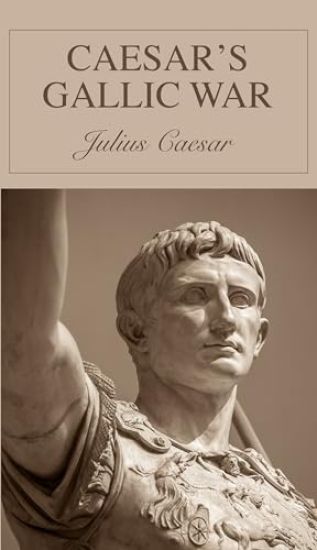
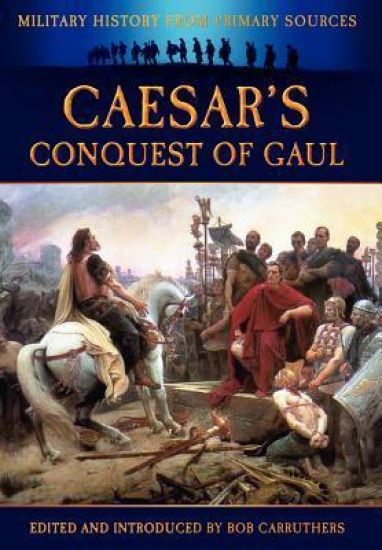
Caesar wrote this account of his campaign against the Gauls (58BCE-51BCE) in the third person, which led some to consider it as much a piece of political propaganda as an accurate "after-action report."
Caesar's Gallic War Commentaries in Latin
Julius Caesar
Createspace Independent Publishing Platform
2017
pokkari
COMMENTARIORUM DE BELLO GALLICO - This is the complete commentary, all eight books in the original Latin. Paragraphs and sentences are numbered for reference but there are no added notes.Commentaries on the Gallic War, is Julius Caesar's firsthand account of the Gallic Wars, written as a third-person narrative. In it Caesar describes the battles and intrigues that took place in the nine years he spent fighting the Germanic and Celtic peoples in Gaul who opposed the Roman conquest.Because of its simple, direct prose the work has been a mainstay in Latin instruction. It begins with the frequently quoted phrase, "Gallia est omnis divisa in partes tres", meaning, "Gaul is a whole divided into three parts". The book is divided into eight parts, Books One to Eight, that vary in size from 5,000 to 15,000 words. Book Eight was written by Aulus Hirtius, after Caesar's death.
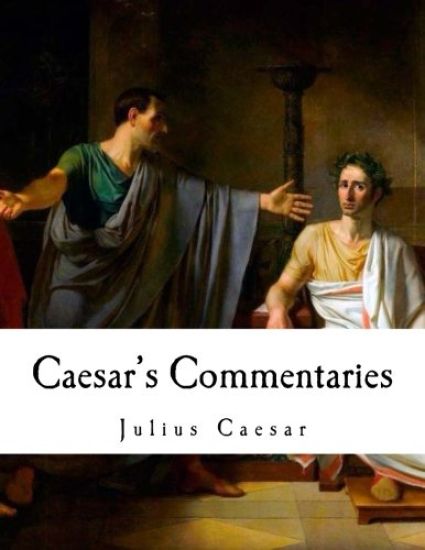
Caesar's Commentaries: de Bello Gallico
Julius Caesar
Createspace Independent Publishing Platform
2017
nidottu
Caesar's Commentaries - De Bello Gallico - The Gallic Wars by Julius Caesar Commentarii de Bello Gallico, also Bellum Gallicum, is Julius Caesar's firsthand account of the Gallic Wars, written as a third-person narrative. In it Caesar describes the battles and intrigues that took place in the nine years he spent fighting the Germanic peoples and Celtic peoples in Gaul that opposed Roman conquest. The character of the First Caesar has perhaps never been worse appreciated than by him who in one sense described it best; that is, with most force and eloquence wherever he really did comprehend it. This was Lucan, who has nowhere exhibited more brilliant rhetoric, nor wandered more from the truth, than in the contrasted portraits of Caesar and Pompey. The famous line, "Nil actum reputans si quid superesset agendum," is a fine feature of the real character, finely expressed.