Kirjojen hintavertailu. Mukana 12 390 323 kirjaa ja 12 kauppaa.

Kirjahaku

Etsi kirjoja tekijän nimen, kirjan nimen tai ISBN:n perusteella.

102 kirjaa tekijältä Kenneth W. Thompson

The Virginia Papers on the Presidency

The Virginia Papers on the Presidency

Kenneth W. Thompson

University Press of America
1994
nidottu
This volume in the Virginia Papers series emphasizes perennial concepts and problems of the presidency such as principles of statecraft, background to leadership, organizing the government for policymaking, communicating with national and international publics, the international setting, and the public philosophy. Contributors: Alberto Coll, Patrick Butler, David L. DiLeo, Chase Untermeyer, Paul Taylor, Admiral William J. Crowe, Jr., Inis L. Claude, Jr., Hugh Sidey, and Kenneth W. Thompson. Co-published with The Miller Center.

Presidents and Arms Control

Presidents and Arms Control

Kenneth W. Thompson

University Press of America
1994
nidottu
This text reviews the facts, strategies, budgets, politics, process and incidents of the relationship between presidents and arms control. The book focuses largely on the USA, but takes examples from the Soviet case.
Europe and Germany

Europe and Germany

Kenneth W. Thompson

University Press of America
1994
sidottu
Contents: Europe: Integration or Fragmentation; East and West in Europe: New Walls or Integration?; Fortress Europe: Fact or Fancy?; Sweden and the New Europe; German and American Constitutionalism; Where Will German Unification Lead?; The New Germany and Europe; The Unification of Germany: Problems and Consequences; German Reunification: Price and Promise; A United Germany: An American Perspective; Governance and the New Europe. Contributors: Robert Rudney, Ambassador Berndt von Staden, Sir Peter Marshall, Ambassador Anders Thunborg, Ernst Benda, Robert Gerald Livingston, Alison T. Millett, Gunter Pleuger, Rebecca Hartley, Eamonn Gallagher. Co-published with The Miller Center.

Europe and Germany

Europe and Germany

Kenneth W. Thompson

University Press of America
1994
nidottu
Contents: Europe: Integration or Fragmentation; East and West in Europe: New Walls or Integration?; Fortress Europe: Fact or Fancy?; Sweden and the New Europe; German and American Constitutionalism; Where Will German Unification Lead?; The New Germany and Europe; The Unification of Germany: Problems and Consequences; German Reunification: Price and Promise; A United Germany: An American Perspective; Governance and the New Europe. Contributors: Robert Rudney, Ambassador Berndt von Staden, Sir Peter Marshall, Ambassador Anders Thunborg, Ernst Benda, Robert Gerald Livingston, Alison T. Millett, Gunter Pleuger, Rebecca Hartley, Eamonn Gallagher. Co-published with The Miller Center.

Great American Presidents

Great American Presidents

Kenneth W. Thompson

UNIVERSITY PRESS OF AMERICA
1995
sidottu
This is the first volume in a new series for the Miller Center and includes chapters from several well-known authors and professors, including Hans J. Morgenthau, Kevin Phillips, Norman Graebner, Michael Riccards, Merrill Peterson, Ralph Ketcham, Alf Mapp, Mortimer Sellers, and Garrett Sheldon. Co-published with the Miller Center for Public Affairs.
Great American Presidents

Great American Presidents

Kenneth W. Thompson

University Press of America
1995
pokkari
This is the first volume in a new series for the Miller Center and includes chapters from several well-known authors and professors, including Hans J. Morgenthau, Kevin Phillips, Norman Graebner, Michael Riccards, Merrill Peterson, Ralph Ketcham, Alf Mapp, Mortimer Sellers, and Garrett Sheldon. Co-published with the Miller Center for Public Affairs.
Paul H. Nitze on National Security and Arms Control

Paul H. Nitze on National Security and Arms Control

Kenneth W. Thompson; Steven L. Rearden

University Press of America
1990
nidottu
This volume makes available to the general public some of Paul H. Nitze's most important papers on foreign policy and national security and arms control. Divided into three chapters, 'Strategy and Security,' 'The Military Component of National Security,' and 'The Arms Control Component of National Security,' this volume contains letters, reports, transcripts of speeches, and Nitze's comments on speeches made by other policy makers and officials involved with national security.
Constitutionalism and Human Rights

Constitutionalism and Human Rights

Kenneth W. Thompson; Rett R. Ludwikowski

University Press of America
1991
nidottu
This work is the sixth volume in the Miller Center Bicentennial Series on Constitutionalism. The contributors examine in several different essays the historical, political, and ideological connections among the constitutional experiences of France, Poland, and the United States. This study furthers the Miller Center's efforts to examine the United States Constitution and its interaction and interrelationship with other constitutions in the world. Although Poland's constitution was the focus of the book, the approach has been made unique by the fact that the study was not conducted solely through Polish eyes, but rather in relation to the constitutions which, with Poland, share the distinction of being the three oldest constitutions in the world, the French and the U.S. Co-published with the Miller Center of Public Affairs.
New Thinking and Developments in International Politics

New Thinking and Developments in International Politics

Kenneth W. Thompson; Neal Riemer

University Press of America
1991
sidottu
This book explores the provocative question, 'What has been, and will be, the impact of new thinking and developments upon international politics?' The essays discuss the new possibilities resulting from new thinking. These are: the end of the Cold War and the advent of a peaceful, prosperous Europe closely tied to the United States; an invigorated United Nations; a shift of attention to the new challenges posed by patterns of violence in areas of the world divorced from the Cold War; and the prospect of global democratization and greater global economic and ecological health. Essays include: Implications of Soviet New Thinking for International Politics: Clues from Eastern Europe; Remodeling NATO and Europe: Continuity and Change in European Security in the 1990s; Toward a New and Invigorated United Nations; Violent Conflict in the International System of the 1990s; International Economics in the 1990s; Information Revolution and the Shaping of a Democratic Global Order. Co-published with the Miller Center of Public Affairs.
Africa's Second Wave of Freedom

Africa's Second Wave of Freedom

Lyn Graybill; Kenneth W. Thompson

University Press of America
1998
sidottu
Africa's Second Wave of Freedom represents the work of scholars who share a concern with the development of civil society in Africa. The first third of the book deals theoretically with the issues of democracy and stability in Africa. In particular, the contributors analyze the inadequacy of the United States' response to African problems (such as environmental decay, spiraling debt, and health epidemics) that do not respect national boundaries; the fragility of democracy in Africa and the danger of reversion to dictatorships; and the barriers to constitutional democracy in sub-Saharan Africa. The remainder of the book consists of case studies of various aspects of civil society from Mozambique, Nigeria, Zimbabwe, and South Africa.
Africa's Second Wave of Freedom

Africa's Second Wave of Freedom

Lyn Graybill; Kenneth W. Thompson

University Press of America
1998
nidottu
Africa's Second Wave of Freedom represents the work of scholars who share a concern with the development of civil society in Africa. The first third of the book deals theoretically with the issues of democracy and stability in Africa. In particular, the contributors analyze the inadequacy of the United States' response to African problems (such as environmental decay, spiraling debt, and health epidemics) that do not respect national boundaries; the fragility of democracy in Africa and the danger of reversion to dictatorships; and the barriers to constitutional democracy in sub-Saharan Africa. The remainder of the book consists of case studies of various aspects of civil society from Mozambique, Nigeria, Zimbabwe, and South Africa.
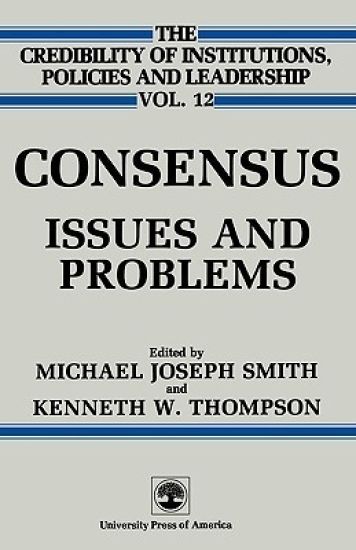
Consensus

Consensus

Michael Joseph Smith; Kenneth W. Thompson

University Press of America
1985
nidottu
^R This volume examines certain recurrent issues in the fashioning and maintenance of consensus. Contents: Introduction, Kenneth W. Thompson, Preface, Kenneth W. Thompson; Simplification vs. Explanation Michael Joseph Smith; Two Crises, Not One, Major S. Nelson Drew; Nuclear Compliance and Consensus, Lynda M. Rozell; New Law on Old Foundations: Newly Independent States and the Established International Legal System, Betty A. Hempfling; Leadership and Consensus, Nicolai Petro; Concluding Observations, Kenneth W. Thompson; Appendix A: Vietnam Involvement Was a Failure, Not a Folly, John Mueller; Appendix B: United States Foreign Policy: A Theory-Practice-Support Connection, Phillip W. Buchen.
Gerard Piel on Arms Control

Gerard Piel on Arms Control

Gerard Piel; Kenneth W. Thompson

University Press of America
1987
sidottu
Gerard Piel, one of the nation's foremost writers on science policy, sees the nuclear crisis as the paramount problem of our times. He has been persistent in analyzing its underlying causes and in calling for a greater sense of urgency in ameliorating the perils of conflict. The first original essay addresses the nuclear question. The other essays in this book are reprints of earlier essays written in the 1950s and '60s by Mr. Piel. While he draws on examples of developments in an earlier phase of the arms race, the principles are relevant today, the issues raised a quarter century ago still remain unresolved.
Franklin Long on Arms Control

Franklin Long on Arms Control

Franklin Long; Kenneth W. Thompson

University Press of America
1988
sidottu
n this volume, Long addresses himself to some of the central issues of arms control. Having worked with a succession of American presidents, he discusses the role of the president as an initiator of arms control policies, the failures of presidents to educate the American public on the subject and the neglect by some presidents to support arms control. Long disucsses American presidents from Eisenhower through Reagan and helps us understand some of the differences in their approaches.
Franklin Long on Arms Control

Franklin Long on Arms Control

Franklin Long; Kenneth W. Thompson

University Press of America
1988
nidottu
n this volume, Long addresses himself to some of the central issues of arms control. Having worked with a succession of American presidents, he discusses the role of the president as an initiator of arms control policies, the failures of presidents to educate the American public on the subject and the neglect by some presidents to support arms control. Long disucsses American presidents from Eisenhower through Reagan and helps us understand some of the differences in their approaches.
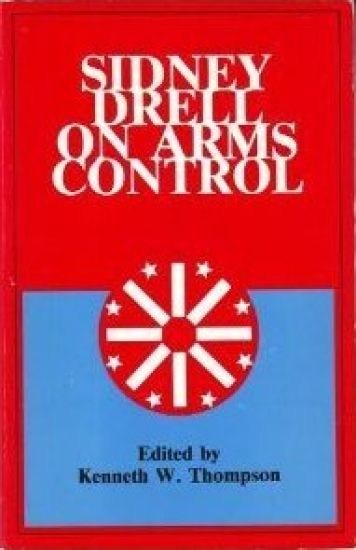
Sidney Drell on Arms Control

Sidney Drell on Arms Control

Sidney Drell; Kenneth W. Thompson

University Press of America
1988
sidottu
In the lecture which spurred this volume, Sidney Drell equated arms control with the Strategic Defense Initiative and limited his comments exclusively to that subject. Drell stands out among scientists who have contributed to the dialogue on arms control. He has been an advisor to the U.S. government on issues of national security and science policy for many years and served on the President's Science Advisory Committee for Presidents Johnson and Nixon. Two qualities distinguish the speeches and writings collected here. Drell has kept alive the hope of arms control even in its darkest hours, and has clearly explained the scientific side of arms control to public policy students.
Sidney Drell on Arms Control

Sidney Drell on Arms Control

Sidney Drell; Kenneth W. Thompson

University Press of America
1988
nidottu
In the lecture which spurred this volume, Sidney Drell equated arms control with the Strategic Defense Initiative and limited his comments exclusively to that subject. Drell stands out among scientists who have contributed to the dialogue on arms control. He has been an advisor to the U.S. government on issues of national security and science policy for many years and served on the President's Science Advisory Committee for Presidents Johnson and Nixon. Two qualities distinguish the speeches and writings collected here. Drell has kept alive the hope of arms control even in its darkest hours, and has clearly explained the scientific side of arms control to public policy students.
Paul H. Nitze on Foreign Policy

Paul H. Nitze on Foreign Policy

Steven Reardon; Kenneth W. Thompson

University Press of America
1989
nidottu
The distinguished New York Times columnist James Reston has observed that few if any Americans have served their government with greater distinction over a longer period of time than President Reagan's Secretary of State on arms control matters, Paul H. Nitze. This volume brings together some of his most important essays, articles, speeches, correspondence, and public papers on foreign policy and national security and arms control.
Foreign Policy and Domestic Consensus

Foreign Policy and Domestic Consensus

Richard A. Melanson; Kenneth W. Thompson

University Press of America
1985
sidottu
^R This volume deals chronologically with the issue of domestic consensus since the Cold War consensus initially crystallized in the late 1940s. Contents: The Cold War Consensus: From Fearful Hostility to Wary Contempt, John Mueller; ^IThe Marshall Plan: A "Non-Presidential" Consensus? David Clinton; Eisenhower, Congress and the Cold War Consensus, Norman A. Graebner; Vietnam and the Breakdown of Consensus, William C. Gibbons; Para-Institutional Elites and Foreign Policy Consensus, Jerry W. Sanders; The Grenada Intervention: Prelude to a New Consensus? Richard A. Melanson.