Kirjojen hintavertailu. Mukana 12 083 983 kirjaa ja 12 kauppaa.

Kirjahaku

Etsi kirjoja tekijän nimen, kirjan nimen tai ISBN:n perusteella.

276 kirjaa tekijältä Lawrence Block

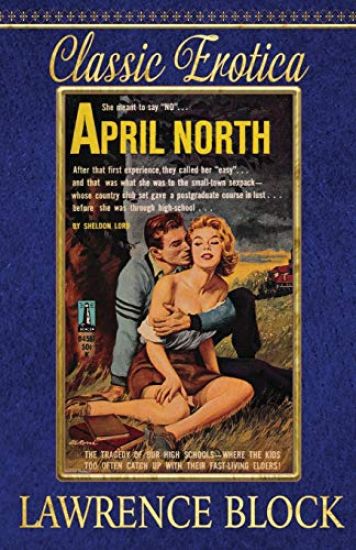
April North

April North

Lawrence Block

LB Productions
2019
pokkari
THOSE BOYS AND THEIR CARS... Danny Duncan drives his father's Oldsmobile. It's a nice respectable family sedan, and April North is every bit as respectable as the car. Until he manages to get her into the back seat. Now she's no longer a good girl, but only Danny know it, and he can keep a secret, can't he? Well, no. He tells half the town of Antrim, Ohio--the male half, and they all come sniffing around, led by Bill Piersall, driving a homemade hot rod cobbled together from spare parts and held together with spit and baling wire. She gives Bill what he wants, but he turns out to be harder to shake than a summer cold, until a Mercedes 300 SL screeches to a stop, with Craig Jeffers at the wheel. He has money and class and sophistication, and just about everything but a functioning moral compass. And, you know, things happen...From the author... April North, April North. A friend of mine thought enough of Mae West to write a book with a heroine he called June East, and I gave the compass and the calendar a further spin. Thus April North, and the name does have a certain lilt to it, doesn't it? Beacon Books thought so, evidently; this was Sheldon Lord's first book for them, and they liked the title enough to keep it, and the reading public liked the book enough to spark a second and third printing. None of this did much for the author, who got a flat fee of $600 for the book. Or maybe it was $750. It's hard to remember, after all these years...
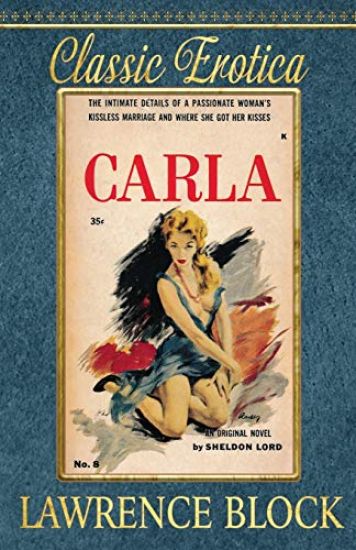
Carla

Carla

Lawrence Block

LB Productions
2019
pokkari
Carla is a beautiful girl. She was plucked from the obscurity of a Polish slum to be the wife of a wealthy man--a man who seemingly gives her everything a wife could want. Except the one thing that she needs most: the pleasure she burns for while he snores beside her, the passion that only a lover can give. But adultery seems impossible until, suddenly, it happens. When she seduces a filling-station attendant, ruining her clothes in the grease of a mechanic's floor, she starts to spin out of control. He is the first but not the last, as Carla learns that infidelity is no work at all.From the author...Carla was my first published novel. In the summer of 1958 I came home from a vacation in Mexico to a note from my agent: Did I know what a sex novel was? Could I write one? We both knew I could write a book, I'd sent him one then under consideration at Gold Medal, and now I sat down and wrote a portion and outline of a book to be set in my hometown of Buffalo, where I was spending what remained of the summer before going back to college in the fall. Midway Tower Books, a new publisher founded by Harry Shorten of Archie Comics, lapped up Carla, so to speak. I met Harry some months later, and all he wanted to talk about was the scene in the grease put at the gas station. I guess it really worked for him. One other thing perhaps worth noting. After my portion and outline had been okayed, I completed the book. Then my agent let me know that it was a little too short. Could I please write another chapter to be inserted anywhere in the book? That was a poser, as the plot--such as it was--didn't have a lot of leftover space in it. But I figured out what to write, and sent along a chapter with the notation that it could indeed be inserted anywhere in the book. My good buddy Don Westlake, who also labored some in the Shorten vineyard, thought this was a remarkable tour de force, but I'm not so sure. I mean, what else was I supposed to do? You can probably spot the chapter in question. As I said, Carla was my first published book, and that's reason enough for me to be pleased by its renewed availability. It may even be reason enough for you to read it. I'd hope, though, that it's not your very first exposure to my work. Still, if it is, there's a bright side. From here on, they get better.
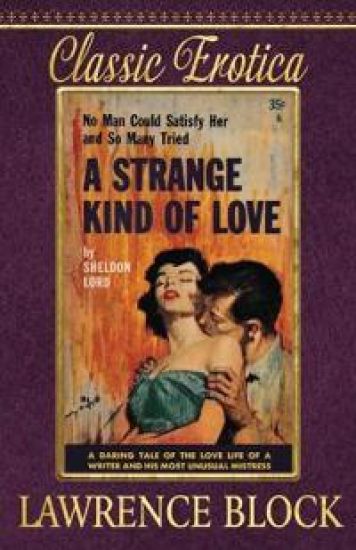
A Strange Kind of Love

A Strange Kind of Love

Lawrence Block

LB Productions
2019
pokkari
From the author: I'd no sooner finished CARLA, my first book for Midwood Tower, than Harry Shorten asked for another. I'd just returned to Antioch College, where after two years as an undistinguished student I'd dropped out for a year to hang on to a summer job at Scott Meredith's literary agency and bucket shop. It was wonderful training, but after a year there I decided I should go back to school, where I had a chance to assume the editorship of the school newspaper. So there I was in Yellow Springs, Ohio, taking a batch of English courses, and I had a publisher who wanted me to write a book. What'll it be, Larry--a paper on Tobias Smollett and the Great Chain of Being, or 50,000 words of soul-searching and sex for Harry Shorten? 50,000 words for which I'd be paid $600? No contest, really. The story concern a has-been writer trying to get back in the game, and all these years later I find it interesting that this young wannabe was already picturing himself on the way down and out.A fellow named Craig said some nice things in his review, which vanished when an earlier edition went off the boards, so I'll excerpt it here: "The protagonist Dan Larkin is an aspiring author, like Block himself, and it's downright eerie how many aspects of Dan's fictional life would end up paralleling the arc of Block's own life over the next 25 years: the progression from obscure pulp writer to eventual best-seller stardom, the women, the binge drinking, and the eventual spiral into alcoholism. . . "There are flashes of some really good writing. The narrator's voice resembles shades of Matt Scudde at times. It doesn't quite match up to the plot, which is mostly devoid of gritty realism and tension. There is a very funny chapter detailing a ten-day drinking binge that presages passages in After the First Death and When the Sacred Gin Mill Closes. There's a memorable scene of frank and unexpected violence during an encounter with an older woman. Above all, the author's young-eyed enthusiasm for the publishing industry and the life of being a professional writer shines through despite an affected veneer of world-weariness." My guess is that some of the writing stuff is interesting. Interesting, too, is the title--which was not my idea, in case you were wondering. I have no idea what title I hung on it, but Harry or one of his elves went for A STRANGE KIND OF LOVE. Meanwhile, my very first novel, a sensitive lesbian coming-of-age effort which I'd called SHADOWS, was in the process of being accepted over at Fawcett Books for their Crest imprint. (They were the first publisher to see it, and in fact had it in hand before I wrote the opening sentence of CARLA, but Harry could commission two books and publish them both in less time than Fawcett could read a manuscript and reach a decision.) And when they did say yes to it, and when I'd revised it to their satisfaction, they changed my pen name (from Rhoda Moore to Lesley Evans, for reasons no one ever explained).
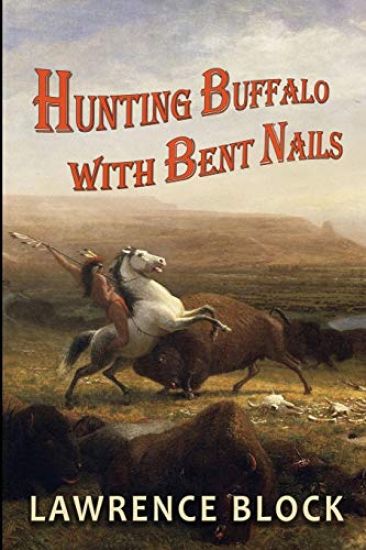
Hunting Buffalo with Bent Nails

Hunting Buffalo with Bent Nails

Lawrence Block

LB Productions
2019
pokkari
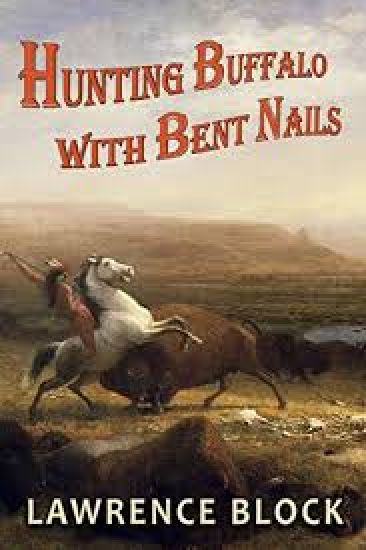
While he is probably best known as a novelist and short-story writer, Lawrence Block has produced a rich trove of nonfiction over the course of a sixty-year career. His instructional books for writers are leaders in the field, and his self-described pedestrian memoir, Step By Step, has found a loyal audience in the running and racewalking community.Over the years, Block has written extensively for magazines and periodicals. Generally Speaking collects his philatelic columns from Linn's Stamp News, while his extensive observations of crime fiction, along with personal glimpses of some of its foremost practitioners, have won wide acclaim in book form as The Crime of Our Lives.Hunting Buffalo with Bent Nails is what he's got left over.The title piece, originally published in American Heritage, recounts the ongoing adventure Block and his wife undertook, crisscrossing the United States and parts of Canada in their quixotic and exotic quest to find every "village, hamlet, and wide place in the road named Buffalo." Other travel tales share space with a remembrance of his mother, odes to New York, a disquisition on pen names and book tours, and, well, no end of bent nails not worth straightening. Where else will you find "Raymond Chandler and the Brasher Doubloon," an assessment of that compelling writer from a numismatic standpoint? Where else can you read about Block's collection of old subway cars?From Charles Ardai Acclaimed worldwide for his extraordinary crime novels, Mystery Writers of America Grand Master Lawrence Block is also a beloved author of nonfiction. In this brand new collection - his first in 5 years - Block demonstrates why, illustrating how a master storyteller can hold an audience spellbound on any topic at all.Whether recounting his exotic travels ("After two weeks of long rides and low rations, we left our wretched Jeeps and mounted Bactrian camels, striking out across the sand in search of a lost city") or expressing his love for his adopted hometown ("I was ten and a half when I fell in love with New York"), whether penning an in-depth appreciation of the work of his friend and fellow Grand Master Donald E. Westlake or an account of his tour of a modeling-clay factory in Indiana -- or his brief stay in a Mexican jail -- Block proves himself once again to be one of our wittiest and most engaging raconteurs. Fans of his seven books on the craft of writing will appreciate his insights on the subject ("Writing is magic, and I say this not boastfully but in wonder. I'm not the magician, waving his wand, pulling a rabbit out of a hat. I'm not sure what I am. The wand, maybe. Or the rabbit, or even the hat."). And what reader could resist a guided tour of Manhattan's eccentricities? ("My favorite intersection is that of Waverly Place and Waverly Place. That street, the most resolutely pious in New York, insists upon crossing itself.")No one writes like Lawrence Block. If you only know him from his crime stories, you owe it to yourself to discover his many other sides. And if you do already know about his wide-ranging and colorful interests and his unforgettable way of sharing them, well, then -- you know just what a wonderful treat HUNTING BUFFALO WITH BENT NAILS has in store for you.
Hunting Buffalo with Bent Nails

Hunting Buffalo with Bent Nails

Lawrence Block

LB Productions
2019
sidottu
While he is probably best known as a novelist and short-story writer, Lawrence Block has produced a rich trove of nonfiction over the course of a sixty-year career. His instructional books for writers are leaders in the field, and his self-described pedestrian memoir, Step By Step, has found a loyal audience in the running and racewalking community.Over the years, Block has written extensively for magazines and periodicals. Generally Speaking collects his philatelic columns from Linn's Stamp News, while his extensive observations of crime fiction, along with personal glimpses of some of its foremost practitioners, have won wide acclaim in book form as The Crime of Our Lives.Hunting Buffalo with Bent Nails is what he's got left over.The title piece, originally published in American Heritage, recounts the ongoing adventure Block and his wife undertook, crisscrossing the United States and parts of Canada in their quixotic and exotic quest to find every "village, hamlet, and wide place in the road named Buffalo." Other travel tales share space with a remembrance of his mother, odes to New York, a disquisition on pen names and book tours, and, well, no end of bent nails not worth straightening. Where else will you find "Raymond Chandler and the Brasher Doubloon," an assessment of that compelling writer from a numismatic standpoint? Where else can you read about Block's collection of old subway cars?From Charles Ardai Acclaimed worldwide for his extraordinary crime novels, Mystery Writers of America Grand Master Lawrence Block is also a beloved author of nonfiction. In this brand new collection - his first in 5 years - Block demonstrates why, illustrating how a master storyteller can hold an audience spellbound on any topic at all.Whether recounting his exotic travels ("After two weeks of long rides and low rations, we left our wretched Jeeps and mounted Bactrian camels, striking out across the sand in search of a lost city") or expressing his love for his adopted hometown ("I was ten and a half when I fell in love with New York"), whether penning an in-depth appreciation of the work of his friend and fellow Grand Master Donald E. Westlake or an account of his tour of a modeling-clay factory in Indiana -- or his brief stay in a Mexican jail -- Block proves himself once again to be one of our wittiest and most engaging raconteurs. Fans of his seven books on the craft of writing will appreciate his insights on the subject ("Writing is magic, and I say this not boastfully but in wonder. I'm not the magician, waving his wand, pulling a rabbit out of a hat. I'm not sure what I am. The wand, maybe. Or the rabbit, or even the hat."). And what reader could resist a guided tour of Manhattan's eccentricities? ("My favorite intersection is that of Waverly Place and Waverly Place. That street, the most resolutely pious in New York, insists upon crossing itself.")No one writes like Lawrence Block. If you only know him from his crime stories, you owe it to yourself to discover his many other sides. And if you do already know about his wide-ranging and colorful interests and his unforgettable way of sharing them, well, then -- you know just what a wonderful treat HUNTING BUFFALO WITH BENT NAILS has in store for you.
Campus Tramp

Campus Tramp

Lawrence Block

LB Productions
2019
pokkari
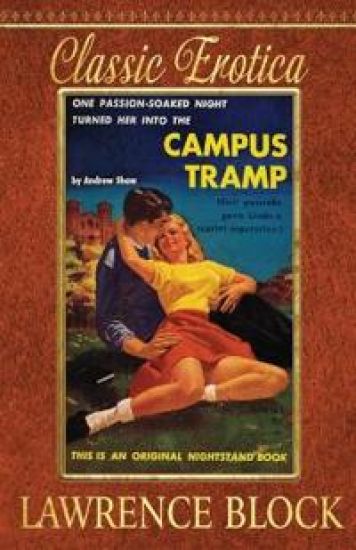
From the author: There's a song they used to sing at Antioch College, and it went something like this: "She was just a little freshman Victim of Admission's whim Then she met an upperclassman--we won't name him-- And she had a child by him. "Now he's off in New York City Rescued by the co-op plan While she walks the streets of Yellow Springs, Ohio, Looking for another man." Ah, they don't write 'em like that anymore, and it's not hard to see why. And the sad story recounted in the song is not entirely unlike that of Linda Shepard, titular (so to speak) heroine of CAMPUS TRAMP.The story of the book may be more interesting than the story told in the book. I wrote it in July of 1959, at the Hotel Rio on West 47th Street in New York. I'd just arrived from, yes, Yellow Springs, having spent a year writing books for Harry Shorten, editing the college newspaper, and giving short shrift to my academic studies. (This was my third year at Antioch. I was there for two years, took a year off to work at a literary agency, and then came back, only to discover that, having seen Paree, you couldn't keep me down on the farm. I tried to drop out during the first semester, got manipulated into staying by my parents, and somehow finished the year. Now I was in New York, where I was to spend the summer writing, before returning for what was supposed to be my last year of school.) Well. My agent came up with an assignment. William Hamling, publisher of science fiction and Rogue Magazine, had decided to initiate a line of erotic novels similar to what I'd been writing for Midwood. Could I write one? I could and did, and thought it might be amusing to use Antioch as a setting, and to choose the characters' surnames from the buildings and dormitory units on the Antioch campus. I picked the title CAMPUS TRAMP and sent it off, and they liked it well enough in Hamlingville (that would be Evanston, Illinois, IIRC) to ask for more. Not long after I'd finished the book, I got a letter from Yellow Springs. The Student Personnel Committee, having taken a long look at my academic performance, advised me of their decision that I might be happier elsewhere. I thought this was very perceptive of them, that I would indeed be happier almost anywhere else, and the passive-aggressive lout I was at the time found this an ideal resolution to a situation I seemed incapable of resolving on my own. Their letter had left the door slightly ajar, if not wide open; I sensed I could talk my way back in, but why?Then CAMPUS TRAMP came out, and a copy or two made it all the way to Yellow Springs, and a legend sprang up. I'd written the book as payback, it was said, a way to revenge myself upon the school that had expelled me. Now when I'd written CAMPUS TRAMP I'd still thought I was to return in the fall. And I was if anything profoundly grateful to the school for having cut the umbilical cord and sent me out into the world. No end of people knew better, even as they were sure they knew who the models were for the various characters--but that happens all the time. But never mind. One recalls the newspaperman's line from THE MAN WHO SHOT LIBERTY VALANCE: "When the legend becomes fact, print the legend "
Community of Women

Community of Women

Lawrence Block

LB Productions
2019
pokkari
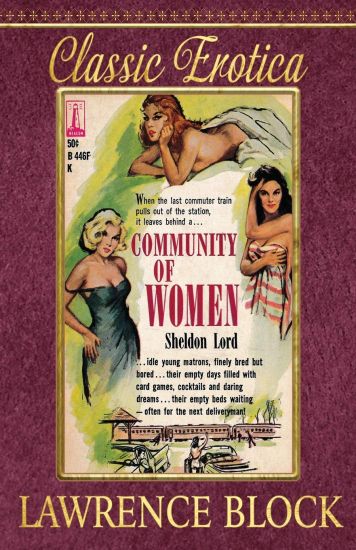
From the author: Sheldon Lord began his career with CARLA, published by Harry Shorten's Midwood Books in 1958. Just about a year later he wrote CAMPUS TRAMP for William Hamling's Nightstand Books, for whom he'd morphed into Andrew Shaw. And young Mr. Lord's first book for yet a third publisher, Beacon, was APRIL NORTH. Each publisher wanted more from the guy. Beacon's request for a second book was remarkably specific. They had a title in mind--COMMUNITY OF WOMEN--and a theme. Their notion was that no end of interesting and attractive couples lived in the suburbs, and five mornings a week virtually all of the husbands rode into Manhattan on the train, while their wives remained to do presumably wifely things at home. So during daytime hours, Monday through Friday, all of these wives constituted a...Community of Women. Which would make it a hotbed of, um, hot stuff.Duh. Well, it was an okay premise. I remember the occasion when it was delivered to me. I was in Buffalo, my ancestral home, on a brief visit. My agent called and recounted what Beacon had asked for. (That agent believed in keeping writers and publishers far apart. I did meet Harry Shorten once, at Harry's insistence, but never had any direct contact with anyone at Nightstand or Beacon.) "They need this as soon as possible," he added. I fell for this, of course. I always did. About a year earlier I was living on West 69th Street when the same agent told me that Monarch Books had an unfinished novel, the first chapters and outline of which had been written by William Ard, who'd died at what even then seemed like an impossibly young age. (Looking back, I can't avoid the thought that the one thing poor Bill Ard got out of his early death was that he didn't have to finish that goddam book.) So my job was to complete the book, which would put a few dollars in my pocket and a few more in the near-empty purse of Ard's widow. "And they need it right away..."Well, the hell they did. But I bought the notion, moved into a hotel on the corner of Broadway and 69th. I went there every morning and went home every night, and i finished that awful book. Are might have made something of it, he was a pretty good writer, but all I can say for myself is the book got written, and published. And it's not as though Monarch was holding the press for it. They published it whenever they got around to it. Same with Beacon and COMMUNITY OF WOMEN. Nobody there was holding his breath. But I believed what I was told, so I wrote it right there, sitting at a card table in the front room of my mother's house on Starin Avenue. I didn't know much about life in the suburbs, or about people who went to an office every morning and came home every night, but it wasn't hard to come up with characters and find ways for them to interact with one another. If I recall correctly (and how often does that happen?) it took me four or five days. I guess Beacon liked it well enough. They wanted more, and published several more of Sheldon Lord's efforts. And then, when they wanted still more and I had neither time nor inclination to write them, my agent suggested we find writers to ghost the books under Sheldon Lord's name; I'd receive a fee off the top for my involvement, with the balance to go to the actual writers. Consequently there are more than a few Sheldon Lord titles--specifically most of the ones for Beacon--which I neither wrote nor read.And so I've spared you a summary of COMMUNITY OF WOMEN, and gotten off the hook instead by taking this little trip down Memory Lane.
Born to Be Bad

Born to Be Bad

Lawrence Block

LB Productions
2019
pokkari
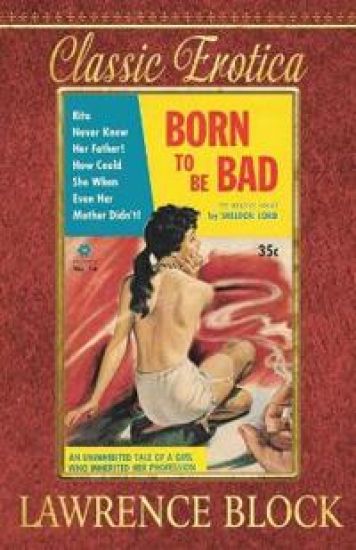
From the author: When I decided to reissue my early books in the Collection of Classic Erotica, I did so without realizing what I was getting myself into. I would have to read them again. Or, as in the case of BORN TO BE BAD, I'd have to read them for the first time.I remembered just three things about the book. (1) The title, BORN TO BE BAD. (My mother, on hearing about the novel, suggested that BORN TO BE BANGED might have been a superior choice.) (2) The name of the heroine, Rita Morales. (My mother, bless her heart, thought Rita Immorales might better suit the character.) (3) The circumstances of the writing--that it was the fall of 1958, that I had just returned to Antioch College after a gap year with a literary agency, that I wrote it on an office-model Remington typewriter in the office of the Antioch College Record, where I was serving as Managing Editor prior to assuming the full-time editorship the following semester, and that between the newspaper and the books I was writing, I was devoting precious little time to my classes. When I was supposed to be reading PARADISE LOST, by John Milton, and Roderick Random, by Tobias Smollett, I was instead writing BORN TO BE BAD, by Sheldon Lord. It was my third novel for Harry Shorten at Midwood Books, and you'd think I might have a clearer recollection of the circumstances of writing it, if not of the book itself. At the very least, I'd have expected to have a good number of Oh Yeah moments while reading it. "Oh yeah, I remember that character. Oh yeah, I remember that scene. Oh yeah, I remember cooking up that plot twist." Nope. It was all remarkably new to me--and I drew great comfort from the discovery that it was better than I'd expected. It's the story of the daughter of a Cuban prostitute from the slums of Miami who goes to New York, breaks into show business, moves from a Times Square hotel room to a Greenwich Village apartment, and takes aim at a life of middle-class respectability. She meets some unusual people and does some unusual things, and stuff happens. And you know what? It's not bad. Still, let's keep Rita's bildungsroman in perspective. She's no Becky Sharp, and BORN TO BE BAD's not on the same shelf as Vanity Fair. (Uh, that's be the novel, by William Makepeace Thackeray, not the magazine. But you knew that, right?)Never mind. I can but hope you enjoy BORN TO BE BAD as much in your first reading of it as I did just now, in mine. I should mention that the cover is by the great Paul Rader, who did so many outstanding covers for Midwood. The book sported a different cover in 1962, when Midwood reissued it with the title PUTA. Then, five years later, they trotted it out again with a third cover and its original title restored. So I guess they must have sold a few copies over the years, but I never got anything beyond the original $600 advance. But you know what? I'm okay with it.
College for Sinners

College for Sinners

Lawrence Block

LB Productions
2019
pokkari
From the author: As far as I'm concerned, the most striking aspect of COLLEGE FOR SINNERS is that it seems to have been the occasion for some unwitting plagiarism on my part. The dramatist Moliere has a character who's astonished, and not half-chuffed, to discover that all his life he's been speaking prose. Well, I'm every bit as surprised by this revelation, if less delighted with myself for it. Here's the story: Not too long ago some idle surfing, possibly prompted by a Talkwalker alert, led me to a site on which a blogger took me to task for having plagiarized CAMPUS LOVE CLUB, by David Challon. The novel he names was published in 1959, a year before COLLEGE FOR SINNERS, and evidently told much the same story; it too was set at Columbia, called Metropolitan University in Challon's novel. And there's a horny young innocent like our David Forrester, and a suave upperclassman, and a club of undergraduate perverts in training. And, duh, one thing leads to another. Now in the ordinary course of things I'd have written this off as coincidence, and a fairly commonplace coincidence at that. But here's the thing--I happen to know that I actually did read CAMPUS LOVE CLUB. I remember the byline, David Challon, and remember having learned that the actual author was the prolific and talented Robert Silverberg. I recall reading it, and I recall thinking that it was good of its kind, and then from that day to this I don't believe I ever gave it another thought. The book I read was published by Bee-Line Books, and the fifty cents I paid for it was more than its author ever saw from the bastards; a bit of surfing shows that Bee-Line failed to pay Silverberg for it, and so a couple of years later he sold it to Midwood, where it was published under another of his pen names, Loren Beauchamp. In the interim COLLEGE FOR SINNERS was published by Nightstand Books under my pen name, Andrew Shaw.If I thought I was plagiarizing anyone, it was neither Mr. Challon nor Mr. Silverberg. (Mr. Beauchamp was not yet in the picture.) My conscious model for COLLEGE FOR SINNERS, to the limited extent that I had one, was an earlier book called HIGH SCHOOL SEX CLUB. . .by a chap who was calling himself Andrew Shaw. Indeed. Decades after all of this happened, Bob Silverberg and I finally met and became friends, and in fact presented a joint program at a Bay Area library in 2011, talking about our early days of laboring in the Midwood/Nightstand vineyard. (And a wonderful evening it turned out to be. Go to YouTube, search for "Lawrence Block Robert Silverberg Lust Lords"--and enjoy.) Did I steal anything from Bob's book? Not consciously, certainly. It was natural enough for me to pick Columbia as a setting, as I'd spent a semester taking courses at that institution's School of General Studies during my year at Scott Meredith. Beyond that, I never deliberately followed any plotline, my own or another's, when I was writing one of these books. I wrote a chapter, and whatever happened in it led me to the next chapter, and so on. Which, now that I think about it, is pretty much the way I've led my life. Is that enough about COLLEGE FOR SINNERS? I think it had better be. . .
Of Shame and Joy

Of Shame and Joy

Lawrence Block

LB Productions
2019
pokkari
From the author: O Rose thou art sick. / The invisible worm, /That flies in the night / In the howling storm: /Has found out thy bed / Of crimson joy: /And his dark secret love / Does thy life destroy. Those eight lines constitute the complete text of "The Sick Rose," published by William Blake in Songs of Experience in 1794. I took to Blake early on, and thought Of Crimson Joy would make a dandy title. I accordingly fastened it on this novel when I sent the manuscript to Harry Shorten at Midwood. Someone there changed the title to Of Shame and Joy, and while I was a tad annoyed at the time, I have to say they made the right call. Of Shame and Joy's not only a better title, it's a damn good one. I remember where and when I wrote the book, although I can't say I recall much of the writing, or indeed of the book itself. It would have been in the late summer or fall of 1959. I'd gone to New York in July, settling in at the Hotel Rio on West 47th Street, planning to stay there until it was time to return to Antioch College for my final year. What I soon learned was that I'd already had my final year at Antioch, at least as far as the school was concerned. I'd written Campus Tramp, my first book as Andrew Shaw, just before they informed me of this decision, and then I went to work on something else, and a bad morning led me to pack a bag and move back to my parents' home at 422 Starin Avenue in Buffalo. ("A bad morning." Is that unnecessarily cryptic? Think of the opening scene in After the First Death, but without the dead hooker on the floor. That's the kind of morning it was, and it led me to conclude that New York Wasn't Working Out, and that maybe I'd do better back in Buffalo.)And, back in Buffalo, I set up my typewriter on the little maple desk on which I'd written Strange are the Ways of Love and Carla, and resumed writing books for Harry Shorten at Midwood, --and for Bill Hamling at Nightstand, who'd liked Campus Tramp enough to want more. For the next eight months or so I wrote books on that desk. My routine was an interesting one; I'd join my mother at the kitchen table for a cup of coffee around midnight, then write all night, then have breakfast with my dad around seven--and then go to bed. It worked for me, and I found things to do with the rest of my time; notably, I bought a partnership in a coffeehouse, The Jazz Center, and began keeping company with the woman whose ill fortune it would be to become my first wife. And how did OF SHAME AND JOY fit into all this? Well, the Provincetown setting came from a two-day trip while I was living at the Rio. This girl whom I knew vaguely was going there, and I decided to join her. I remember we took a Greyhound bus, and that her name either was or wasn't Suzy. (But then that's true of almost everyone, isn't it?) We went to P'town, and she had friends there, and I didn't, and I wandered around for an evening and slept on somebody's couch and went back to New York by myself in the morning. I never saw Suzy again, so for all I know she's still there, though it strikes me as doubtful. Of Shame and Joy has never been republished since its appearance as a Midwood Book, and I'm glad to be able to bring it out again--not least of all for the opportunity to use the wonderful Paul Rader cover. Isn't it gorgeous?
A Woman Must Love

A Woman Must Love

Lawrence Block

LB Productions
2019
pokkari
From the author: A WOMAN MUST LOVE is #12 in the Collection of Classic Erotica, and it's never been reissued since Midwood brought it out in 1960. Consequently I've just read it for the first time since I wrote it some 57 years ago. I remember the circumstances of writing it. I was living in Buffalo, at 422 Starin Avenue, in the house where I grew up. Besides writing, I was co-proprietor of a coffee house and non-alcoholic nightclub called The Jazz Center. (We hosted some decent musicians. Trumpeter Sammy Noto, who'd quit Stan Kenton's band because he didn't like living on the road, led one combo that played our joint with some frequency. Another band was fronted by a dude known alternately as Tommy Green, Tommy Mundy, and Ahmed Khan; his specialty was bongos and bullshit, but he had some good musicians working for him. One night Percy Heath of the Modern Jazz Quartet came by late, sat in with our guys, and played a twenty-minute bass solo that I wish I could hear again. That part was nice, but we never took a dime out of the place, and after I sold my interest to my partner, an old Trotskyite named Frank St. George, he wound up making the musicians partners so he wouldn't have to pay them. After he was forced to close down, Frank went on to have a distinguished career as a Buffalo restauranteur.) See, that much I remember. And I remember my writing schedule at the time. I would be at the club, or out on the town with the unfortunate young woman destined to become the first Mrs. Block. Then I'd get home, and I'd have a cup of coffee with my night owl mother before she went to bed around midnight. Then I'd write until dawn, when I'd have breakfast with my early-rising father. And then I'd go to bed and sleep until it was time to get up and do it all over again. As for the novel itself, A WOMAN MUST LOVE, I can't say I remembered much. It's set in Buffalo, in the very neighborhood in which it was written, and I hadn't even recalled that about the book until I read it on my Kindle. I vaguely remembered that there was a book in which I'd given all the characters English and Irish counties as surnames, and this seems to be the book. Aside from those two elements, I felt like the old boy in the assisted-living center, meeting new people every day.I was surprised to be reading less the erotic romp the Midwood and Nightstand books tended to be than an out-and-out romance novel. Barbara, a young widow, has vowed to be true to her husband's memory (even though he'd wished otherwise). She's courted, and she has a couple of adventures, and there's a certain amount of coupling in the book of one sort or another, but the damn thing's a romance, and I have to wonder how I came to write it. It would have been about a year later that my own father died--suddenly, of an aortic aneurysm. In the years that followed I might well have gone through some sort of Hamlet/Oedipus crap when my mother resumed dating, though I can't recall much in the way of conflicted feelings. But the book was way earlier, and where the story came from I have no idea. Well, never mind. I hope you'll find things to enjoy in Barbara's story--not least of all Paul Rader's cover art. Long after I'd forgotten the words I wrote, I remembered those vivid pastels.
The Adulterers

The Adulterers

Lawrence Block

LB Productions
2019
pokkari
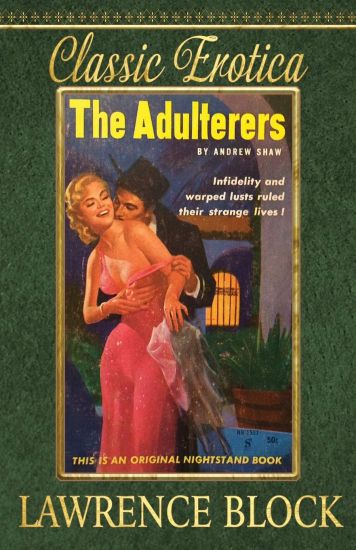
From the author: "Dear Larry, I just finished your The Adulterers. What I found remarkable is that as early as the first few pages, the book read like you, meaning the expository narrative flowed as smoothly as rushing water over rocks. (The only cliche I will allow myself in this short note). And the hooking of the reader into the story, and creating a sense of sympathy for both the husband and the wife, all seemed as effective and effortless as in your (thankfully many) later and better books. Amazingly, you were you, even before Tanner, Bernie, Matthew, or Martin. I found that simply astounding." That's a recent note from a longtime reader and fan. And here's LB's description of the book: "Ah, yes. THE ADULTERATORS, the thrilling account of a couple of desperadoes whose violation of the Pure Food and Drug Act brought a nauseated nation to its knees, and-- "Oh, it's THE ADULTERERS? Oh. Well, never mind. "THE ADULTERERS was my second effort for Bill Hamling's Nightstand Books. Like its predecessor, CAMPUS TRAMP, its cover was the work of Harold W. McCauley. I wrote the book in the fall of 1959, and it's not hard to find its beginning in my own life a little over a year earlier. In May of 1958 I left the employ of Scott Meredith and went home to Buffalo, where I wrote my first novel, STRANGE ARE THE WAYS OF LOVE. Then, with my friend and Antioch roommate Steve Schwerner, I headed to Mexico to devote two months to rest and recreation before returning for another year at the college. "We flew to Houston, hitchhiked to Laredo--and that last empty stretch of road from Freer to Laredo, where the book begins, bas not faded from memory. We were a long time waiting for a ride, and learned later it was because nobody wanted to pick up a hitchhiker on that stretch of highway; if you did and he put you out of the car, you'd die out there. Well, the guys who picked us up weren't worried. They were Tex-Mex gangsters in a block-long Caddy, and the car's welcome A/C was cool, but they were way cooler. "THE ADULTERERS features George and Mona Sutton, a sexually incompatible couple on their way to a Mexican divorce. But they meet a helpful guide named Ernesto, and that changes everything. Now Steve and I had met an Ernesto of our own, and he was helpful enough to steer us to some pot, but this Ernesto took George to a live sex show, and it made an impression on the fellow. And, not too long afterward, Mona drank enough rum and Coca-Cola to float a light cruiser, and wound up as the sex slave of El Tigre, who might have been a narco-trafficker if the career category had existed back then. "So it's a story of evolving depravity. And it's dedicated, you'll note, to Steve and Letitia. You already know who Steve is. Letitia was a young woman at work in one of the establishments we visited, and he became quite fond of her. But, you know, those summer romances never work out..."
Kept

Kept

Lawrence Block

LB Productions
2019
pokkari
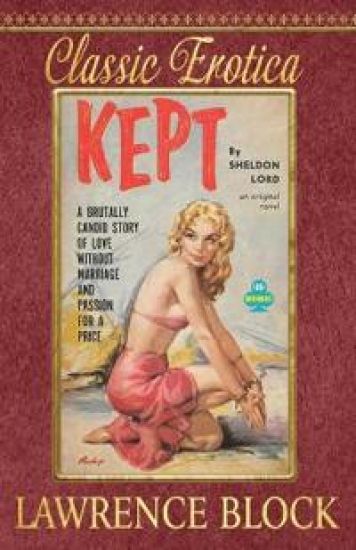
From the author: So you're unemployed, fresh off a construction crew in Albany, and standing on a Thruway ramp trying to thumb a ride, and a babe in a Cadillac convertible stops for you. Hey, these things happen. They never happened to me, but never mind. For you it's different. You're Mark Taggert and you've got the good sense to get in the car, and it changes your life. The girl's Elaine Rice, and she's gorgeous and sexy, and you wind up in her Park Avenue apartment, and you go to bed, and the chemistry is right, and there's only one problem. She's rich. Too rich for you to be comfortable living with her. You're totally lacking in ambition and quite happy drifting, going from town to town and menial job to menial job. It's a life and it's a living and that's enough for you. But if you're going to share Elaine's life, you have to make something of yourself. So you check out the want ads, and you let her buy you a wardrobe, and she fabricates a r sum for you, and you land a job. And you turn out to be remarkably good at it, but she's still got too much money, and you move out. And, you know, stuff happens... Pretty interesting set-up, innit? KEPT was the penultimate book Sheldon Lord wrote for Midwood--CANDY, #2 in the Collection of Classic Erotica, was the last--and it's a shame I stopped there. I understand why I did; I was starting to write crime novels, and didn't want to devote a disproportionate amount of my time to erotica, and Bill Hamling's line, Nightstand Books, was paying me significantly more per book than Harry Shorten at Midwood. Hello, Bill. G'bye, Harry. A pity, though, because Nightstand's artists never came close to the cover art Paul Rader was turning out for Midwood, and his cover for KEPT may be the best of the bunch.
The Twisted Ones

The Twisted Ones

Lawrence Block

LB Productions
2019
pokkari
From the author: You might be surprised to learn that back in 1961 Nightstand Books published an inquiry into the heartbreak of scoliosis, but--oh, hang on a minute. You say the title refers to characters who are not spinally but psychosexually bent?Oh.Well, never mind.Dave and Nancy Grantland look for all the world like happy couple leading a comfortable suburban lifestyle. And Lucy King, the regular babysitter for the Gavilans next door, looks for all the world like a normal teenager.But Dave's lost interest in sex with his wife, as he increasingly becomes obsessed with the desire for a much younger partner. Not a Lolita, exactly, but someone a few years under the age of consent.And Nancy's recalling her college days as what we've since learned to call a LUG. (That's Lesbian Until Graduation. But you knew that, right?)And Lucy's ready for sexual experience, but with whom? Someone more knowledgable than her oafish boyfriend?Dave finds a caf in the West 20s where a man named Hassan can supply anything he wants. Nancy finds a job working for a woman named Bobbie, who can supply anything she wants. Lucy finds a man who'll teach her what she wants to learn--and what she doesn't.Can you see where this is going? Well, along the way you'll get to look over Dave's shoulder as he watches a pornographic movie, courtesy of Hassan.I'm not sure which book was the first in which I employed this device, but the editors at Nightstand thought it was a great way to spice up the books, and I was encouraged to include such scenarios in future books. Well, you know, you didn't have to tell me twice...A Google search advises me that in 1959, two years before this book appeared, Gold Medal published Marijane Meaker's suspense novel, The Twisted Ones, under her pen name of Vin Packer. My guess is that it's a better book than mine, but who's to say you won't enjoy them both?
High School Sex Club

High School Sex Club

Lawrence Block

LB Productions
2019
pokkari
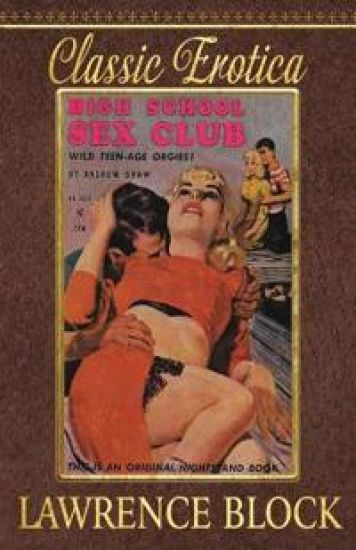
From the author: When I was sifting through copies of my pseudonymous erotic novels of the early 1960s, deciding which books to republish, HIGH SCHOOL SEX CLUB didn't make the initial cut. While it's true that it was once mentioned in the same breath as WAR AND PEACE ("Andrew Shaw's HIGH SCHOOL SEX CLUB is, it must be said, no WAR AND PEACE." --Philomela Triolet, The Hartshorn Review) it could probably disappear forever with the world of American letters being none the poorer for its absence. I know that's hard to believe, given the really classy title I hung on the book, but Im afraid it's true. So why is it here? I guess because of the book's status as an artifact of its time. I'm not entirely sure of this, I can't document it, but I was given to understand back in the day that several booksellers were brought up on charges for selling HIGH SCHOOL SEX CLUB, and one or two of them may even have gone to prison for it. This may well seem incredible in the second decade of the 21st century. The reader will note that the book contains none of the seven words the great George Carlin immortalized as "Words I can't say on TV," and Carlin's list itself is quaint enough now that the only seven words you can't utter on that medium are "Why are we watching all this crap?" Those of us who toiled in this particular vineyard made do without such words, and without precisely describing who was doing what and with which and to whom--and bore this handicap stoically while writing with the singular goal of making our books as erotically stimulating as we possibly could. To what extent HIGH SCHOOL SEX CLUB achieves that goal is not for me to say. The set-up lends itself to that end, with seventeen students and one rich and spoiled libertine ten years their senior organized for weekly orgies. Then--spoiler alert --something goes wrong, and, as I'd have had to say back then, the spit hits the fan. And then the boiler blows up and kills them all. (A story, perhaps apocryphal, to explain that last sentence. There was this brilliantly talented albeit unpublished writer, I'd been given to understand, who would write one novel after another, each building up to the brink of a conclusion, and then ending abruptly with a one-sentence chapter: "And then the boiler blew up and killed them all." They could be out in the middle of the desert, a hundred miles from the nearest boiler. It didn't matter. That's what he wrote, at least according to this tale told in publishing circles, and one can very likely infer what might have been the seminal event in his own unhappy life. Never mind. Something evidently made authorities in various jurisdictions across the country single out HIGH SCHOOL SEX CLUB for censorship and suppression. Really? Hard to say, but it seems to be unarguable that Nightstand Books never did a second printing, or any other sort of latter-day reissue thereof. It couldn't have been good taste or literary sensibilities that kept the book out of print, as neither weighed heavily in their decisions. Perhaps it was the book's own history. In the face of all of the above, could I fail to offer you the opportunity to read the chilling account of Dean Hanson and his adolescent followers? I think not. Here it is, so read it or don't, and make what you will of it.
I Sell Love

I Sell Love

Lawrence Block

LB Productions
2019
pokkari
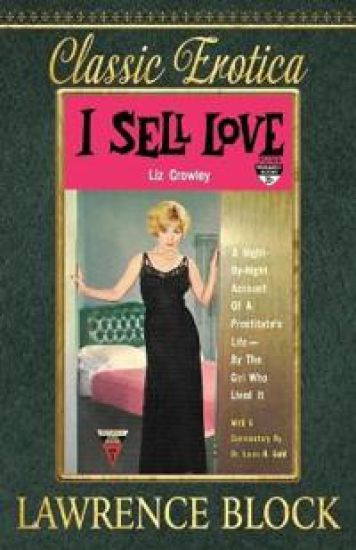
From the author: What's the autobiography of a prostitute doing in the Collection of Classic Erotica? I asked myself this very question while weighing its suitability for the collection. On the one hand, it's nonfiction, specifically memoir. On the other, it was entirely an invention, a fabrication, its putative narrator no less a creation of my own mind than, say, Linda Shepard in CAMPUS TRAMP. And then I let Wikipedia wisk me back almost 300 years: "The Fortunes and Misfortunes of the Famous Moll Flanders (commonly known simply as Moll Flanders) is a novel by Daniel Defoe, first published in 1722. It purports to be the true account of the life of the eponymous Moll, detailing her exploits from birth until old age. "By 1721, Defoe had become a recognized novelist, with the success of Robinson Crusoe in 1719. His political work was tapering off at this point, due to the fall of both Whig and Tory party leaders with whom he had been associated; Robert Walpole was beginning his rise, and Defoe was never fully at home with the Walpole group. Defoe's Whig views are nevertheless evident in the story of Moll, and the novel's full title gives some insight into this and the outline of the plot: "The Fortunes and Misfortunes of the Famous Moll Flanders, &c. Who was Born in Newgate, and during a Life of continu'd Variety for Threescore Years, besides her Childhood, was Twelve Year a Whore, five times a Wife (whereof once to her own Brother), Twelve Year a Thief, Eight Year a Transported Felon in Virginia, at last grew Rich, liv'd Honest, and died a Penitent. Written from her own Memorandums. "It is usually assumed that the novel is written by Daniel Defoe, as his name is commonly published as the author in modern printings of the novel, however the original printing did not have an author, as it was an apparent autobiography. 1] The attribution of Moll Flanders to Defoe was made by Francis Noble, a bookseller in 1770, after Defoe's death in 1731. 2] "The novel is based partially on the life of Moll King, a London criminal whom Defoe met while visiting Newgate Prison." I can but conclude that I SELL LOVE has at least as much claim to be regarded as a novel as does Defoe's groundbreaking work--if rather less in the way of literary merit. He, after all, seems to have had a model. And, while I may have rubbed elbows, among other things, with some hookers over the years, Liz Crowley, unlike Ms. Flanders, has no counterpart in reality. When the Goddess of Design and Production asked if I wanted to drop the afterword by one Dr. Louis H. Gold, I went and had a look at it. My initial assumption was that Charles Heckelmann, longtime editor of Monarch Books, had found some writer to dash off a few words under a medical pen name, all with the aim of legitimizing the text. But the miracle of Google confirms that Dr Gold, born in 1912, was indeed a practicing shrink in Hartford at the time. I presume he was a friend of Heckelmann's, but for all I know he was the man's psychiatrist. We always thought old Charlie ought to get his head examined.
69 Barrow Street

69 Barrow Street

Lawrence Block

LB Productions
2019
pokkari
From the author: While my first visit to New York was with my father in 1948, it wasn't until the summer of 1956 that I actually lived in the city. I'd completed my first year at Antioch College and was to spend August through October in the mailroom at Pines Publications on East 40th Street. (They had a paperback line--Popular Library--and a string of magazines, ranging from surviving pulps like Ranch Romances to movie magazines and a Readers Digest imitation.) I'd arranged to room with two other Antiochians, Paul Grillo and Fred Anliot, and we spent the first week on the top floor at 147 W 14th, the second on the ground floor at 108 W 12th (that building's gone now), and then found a first-floor one-bedroom apartment at 54 Barrow Street, where we stayed through October before passing the place on to another Antioch contingent. It was a wonderful apartment in a perfect location, and for a while it was where the folksinger crowd assembled on Sunday evenings after the singing in Washington Square shut down for the night. (Then the crowd outgrew the space, and moved to somebody's loft on Spring Street.) It was in the kitchen at 54 Barrow Street that I wrote the first story I ever sold, published in Manhunt as You Can't Lose. A year later I was back in New York; I'd found an editorial job at a literary agency and liked it it enough to drop out of school to keep it. I shared an apartment at the Hotel Alexandria on West 103rd Street with Bob Aronson until the Army took him, at which time the hotel let me move to a single room a few floors below. While I lived on 103rd, I spent most of my time in the Village. By the fall of 1958 I was back at Antioch, more focused on writing than classwork. I'd begun selling magazine stories whileI was at the literary agency, and began writing novels once I'd left, and Harry Shorten was eager to publish them at his new venture, Midwood Tower Books. My third book for Harry, following CARLA and A STRANGE KIND OF LIVE, was 69 BARROW STREET. I'd had the idea of a novel set at a multiple dwelling--in this case, a Village brownstone--with the characters interacting and living their lives. One model for it would have been 79 PARK AVENUE, an early work of Harold Robbins, when A STONE FOR DANNY FISHER let the world take him seriously as a writer of American realistic fiction. (Then he wrote THE CARPETBAGGERS, and that was the end of that.) I decided--nudge nudge, wink wink--that 69 BARROW STREET would be an appropriately suggestive title. Jesus, 54 Barrow Street. Fred Alliot and Bob Aronson, both of whom I'd run into now and then over the years, are gone now. Paul Grillo and I lost touch with each other fifty-plus years ago... Years and years later, I found out that 69 PARK AVENUE had been Harold Robbins' original title. His publishers made him change it. My publishers had no such compunctions, and 69 BARROW STREET it was and shall remain. And now it's back in print, and graced once again by Paul Rader's magnificent cover art.
Circle of Sinners

Circle of Sinners

Lawrence Block

LB Productions
2019
pokkari
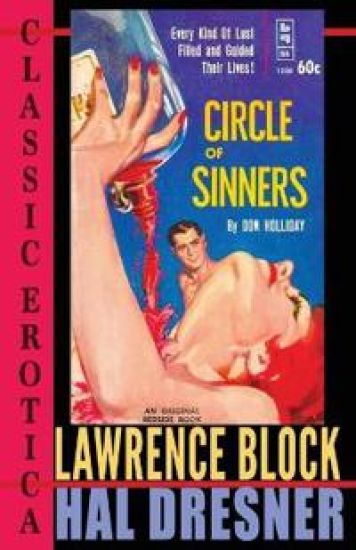
From the author: Because they were collected into a single hardcover volume published by Subterranean Press, a good number of readers are acquainted with my three collaborations with Donald E. Westlake. That's not the case with CIRCLE OF SINNERS, a similar joint effort undertaken with another longstanding (and, I'm pleased to say, still standing) friend and colleague, Hal Dresner. Unlike two of the Block/Westlake titles, CIRCLE OF SINNERS did not bear a joint byline; Nightstand issued it as "by Don Holliday," which was in fact Hal's pen name. (To increase the level of confusion, one book of mine was originally published under that pen name, though I'm not entirely certain why; it's since been reissued by Hard Case Crime under my name and retitled BORDERLINE, and just the other day my Hollywood agent reported a movie guy inquiring about rights. Trust me, nothing will come of it.) But I digress. It's a pleasure to be able to bring back CIRCLE OF SINNERS, which was both easy and enjoyable to write--and, I can but hope, to read. The model here was REIGEN, a very successful play of Arthur Schnitzler's, better known as LA RONDE, the title of the French-language film by Max Oph ls. The structure--a chain of affairs, which each character in turn hooking up with someone else, served as the model for at least three additional films, beginning with Roger Vadim's CIRCLE OF LOVE in 1964. Well, Hal and I got there ahead of Vadim, though surely with less impact. I might add that one short novel of Schnitzler's, CASANOVA'S HOMECOMING, was on the shelves of my parents' library, and I had the great good fortune to read it at an impressionable age. (Come to think of it, I don't believe I ever had an age that wasn't impressionable. Never mind.) Schnitzler may have been more of an influence on my development as a writer than I've realized, and I suspect it would be interesting and enjoyable to read some more of his work. But for now we've got CIRCLE OF SINNERS--complete, in this instance, with the original Nightstand cover. That's something, isn't it?
A Girl Called Honey

A Girl Called Honey

Lawrence Block

LB Productions
2019
pokkari
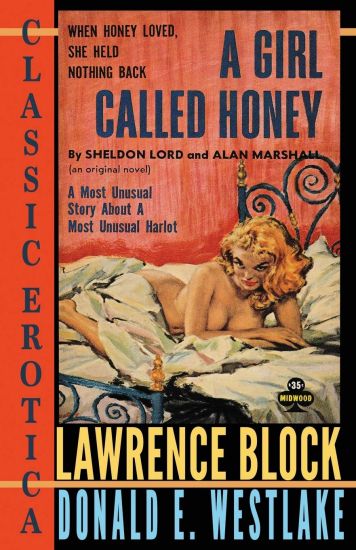
From the author: When Don Westlake and I were starting out as writers, we both served an apprenticeship writing erotic novels for Harry Shorten at Midwood Books and Bill Hamling at Nightstand. (I was Sheldon Lord for Midwood and Andrew Shaw for Nightstand, while Don was Alan Marshall for both publishers. Note though that the presence of either name upon a book is no guarantee that one of us wrote it. Both of us made arrangements whereby lesser writers would submit works under our names--and I know it's hard to believe that any writers were less than we were back then, but it's true.) Well. We'd become friends in the summer of 1959, while we were living a few blocks away from each other in midtown Manhattan. I was at the Hotel Rio, on West 47th between Sixth and Seventh Avenues, and Don was a block south and several blocks west of me. Then I moved back to my parents' house in Buffalo, and Don and his wife and kid moved to Canarsie, and we wrote letters back and forth. And at one point we decided it might be fun to do a novel together. Not by thinking it out and talking through it and, you know, collaborating in a serious artistic manner. Our method was simpler. One of us would write a chapter, and then the other would write a chapter to come after it, and back and forth, like that, until we had a book. It worked, and by God it was fun. The first of our efforts was A GIRL CALLED HONEY, and it started when I wrote a chapter and sent it to Don. And so on, and we left each other cliffhangers and threw each other's characters off those cliffs, and we stopped when we had a book, and sent it to Henry Morrison who sent it to Harry Shorten. We put both our names on the book, our pen names that is to say, and that's how Harry published it: by Sheldon Lord and Alan Marshall. And he included our dedication: "To Don Westlake and Larry Block, who introduced us." It was so much fun that we did it again. This time Don wrote the first chapter, and I wrote the second. Was I still in Buffalo, and did we still send the chapters through the mail? Damned if I can remember. I think I may have been in New York by then, living with my first wife on West 69th Street. But maybe not, and what does it matter? We finished the book, we sent it in, Midwood published it, and we shared the advance, which was probably $600 for A GIRL CALLED HONEY, but may have escalated to $750 by the time we did SO WILLING. So each of us wound up with either $300 or $375 for our trouble, and that's not a lot of money nowadays, and it wasn't a lot of money in 1960 either, but neither was it a lot of trouble. Damn, those were good days. We did a third novel in collaboration, SIN HELLCAT, and I think it may have been the best of the three--but we didn't get to put a joint byline on it. Well, we did--but someone at Nightstand felt free to change it, dropping Alan Marshall from the "by Alan Marshall and Andrew Shaw" byline we'd supplied. Much the same thing happened to CIRCLE OF SINNERS, my collaboration for Nightstand with Hal Dresner; "By Andrew Shaw and Don Holliday" is what we tagged it, and this time it was Andrew Shaw who got bumped. Never mind. Here's the book that started it all, A GIRL CALLED HONEY--and if reading the saga of Honor Mercy Bane brings you a small fraction of the fun we had writing it, you'll be back right away to scoop up SO WILLING and SIN HELLCAT.
Sin Hellcat

Sin Hellcat

Lawrence Block

LB Productions
2019
pokkari
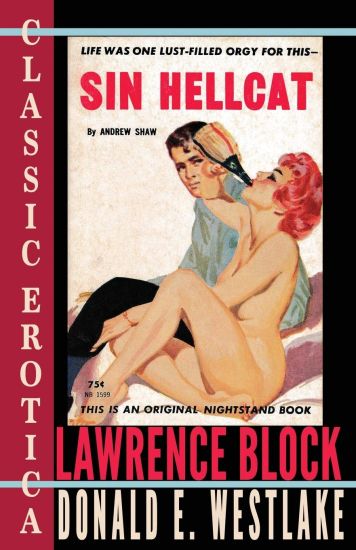
From the author: This is the third novel Donald E. Westlake and I did in collaboration, SIN HELLCAT, and I think it may have been the best of the three--but we didn't get to put a joint byline on it. Well, we did--but someone at Nightstand felt free to change it, dropping Alan Marshall from the "by Alan Marshall and Andrew Shaw" byline we'd supplied. Much the same thing happened to CIRCLE OF SINNERS, my collaboration for Nightstand with Hal Dresner; "By Andrew Shaw and Don Holliday" is what we tagged it, and this time it was Andrew Shaw who got bumped. Well, it's corrected now. SIN HELLCAT, like its fellows, has both names on the cover. And our names, not the ones we donned for our work in the world of paperback erotica. When the two of us were starting out as writers, we both served an apprenticeship writing erotic novels for Harry Shorten at Midwood Books and Bill Hamling at Nightstand. (I was Sheldon Lord for Midwood and Andrew Shaw for Nightstand, while Don was Alan Marshall for both publishers. Note though that the presence of either name upon a book is no guarantee that one of us wrote it. Both of us made arrangements whereby lesser writers would submit works under our names--and I know it's hard to believe that any writers were less than we were back then, but it's true.) Well. We'd become friends in the summer of 1959, while we were living a few blocks away from each other in midtown Manhattan. I was at the Hotel Rio, on West 47th between Sixth and Seventh Avenues, and Don was a block south and several blocks west of me. Then I moved back to my parents' house in Buffalo, and Don and his wife and kid moved to Canarsie, and we wrote letters back and forth. And at one point we decided it might be fun to do a novel together. Not by thinking it out and talking through it and, you know, collaborating in a serious artistic manner. Our method was simpler. One of us would write a chapter, and then the other would write a chapter to come after it, and back and forth, like that, until we had a book. It worked, and by God it was fun. The first of our efforts was A GIRL CALLED HONEY, and it started when I wrote a chapter and sent it to Don. And so on, and we stopped when we had a book and sent it to Henry Morrison who sent it to Harry Shorten. We put both our names on the book, our pen names that is to say, and that's how Harry published it: by Sheldon Lord and Alan Marshall. And he included our dedication: "To Don Westlake and Larry Block, who introduced us." It was so much fun that we did it again. This time Don wrote the first chapter, and I wrote the second. Was I still in Buffalo, and did we still send the chapters through the mail? Damned if I can remember. I think I may have been in New York by then, living with my first wife on West 69th Street. But maybe not, and what does it matter? We finished the book, we sent it in, Midwood published it, and we shared the advance, which was probably $600 for A GIRL CALLED HONEY, but may have escalated to $750 by the time we did SO WILLING. So each of us wound up with either $300 or $375 for our trouble, and that's not a lot of money nowadays, and it wasn't a lot of money in 1960 either, but neither was it a lot of trouble. Damn, those were good days. Never mind. Here's SIN HELLCAT--and if reading it brings you a small fraction of the fun we had writing it, you'll be back right away to scoop up A GIRL CALLED HONEY and SO WILLING.