Swedish American studies, including local history and genealogy, are among the best documented immigrant studies in the United States. This is the result of the Swedish genius for documenting almost every aspect of life from birth to death. They have, in fact, created and retained documents that Americans would never think of looking for, such as certificates of change of employment, of change of address, military records relating whether a soldier's horse was properly equipped, and more common events such as marriage, emigration, and death.When immigrants arrived in the United States and found that they were not bound to the single state religion into which they had been born, the Swedish church split into many denominations that emphasized one or another aspect of religion and culture. Some required children to study the mother tongue in Saturday classes, others did not. Some, more liberal than European Swedish Lutheranism, permitted freedom of religion in the new country and even allowed sects to flourish that had been banned in Sweden. Amidst all these schisms the Augustana Synod in Rock Island, Illinois, remained the largest and most influential, the church that produced the most books and founded Augustana College in Rock Island, Illinois. In this city, and associated with the college, the Swenson Center is a repository of Swedish culture in America and a source of documents for genealogists (see more about this below).Most immigrants adjusted well and became Americans proud of their Swedish descent. Many have contributed significantly to the betterment of the country. Two phenomena, however, differentiate Swedish-American studies from those of other immigrant groups.First, there arose a "Swedish America," which was not entirely of either country. It was characterized by societies designed to keep immigrants together, and sometimes to isolate them from American influence. Swedish-language magazines and books were published, and immigrants were encouraged to live in communities of their own kind, partly to form mutual-aid societies, partly to prevent assimilation. Thus arose Swedish cities such as Lindsborg in Kansas (where the local college still presents a yearly musical performance of great beauty), Bishops Hill in Illinois, and Chisago Lake in Minnesota. In the great Chicago fire of 1871, the southern part of the city, dubbed "Swedetown" by other Chicagoans, was the first to burn, and approximately 200,000 Swedish immigrants were rendered homeless. Swedish America has generated many written records of inestimable value to the genealogist. As early as the 1840s, Swedish journalists and writers toured American Swedish communities to gauge the extent to which the mother culture was being preserved. Some were sympathetic, others were acerbically critical, but all of their writings shed light on Swedish American local history.The second phenomenon is the rise of a literary genre that expressed distaste for the new country. Although published almost entirely in Sweden rather than in America by immigrants, this genre began early and extended at least until 1996. It presents the United States as an inhospitable country to which emigration should be discouraged. While it is not a major factor in Swedish American local history, it is a sufficiently important phenomenon to include here; this compiler has not seen its like for any other immigrant group represented on the shelves of the Library of Congress. It is indeed striking that some Swedish immigrants took offense at American individualism and informality from the moment they set foot on American soil, and some never grew accustomed to it. Being a highly literate people, they expressed their feelings in published works (see Benzendal, Johansson, and Kremer below for examples). Austin and Daun below, both of them Swedes writing for Swedes, discuss Swedish thought and possible causes for this attitude.
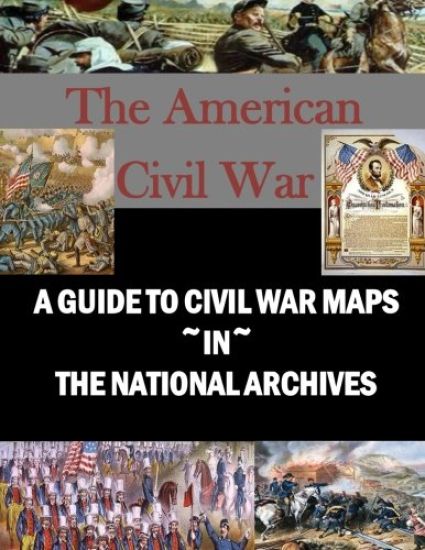
Civil War Maps in the National Archives lists the approximately 8,000 Civil War maps, charts, and plans in the Cartographic and Architectural Branch of the National Archives, the largest single body of cartographic records pertaining to the American Civil War. The records described in this guide are maps, plans, and charts containing information relating directly to Civil War operations and installations. Most of the material described dates from the war and was produced for use by the military forces or to accompany official reports. Many of the maps that are con temporary with the war do not deal specifically with military operations, but do provide information concerning the areas directly affected by the conflict. A number of postwar maps contain military information, usually prepared for historical purposes or in connection with official investigations of Civil War operations.Almost all of the Civil War maps in the National Archives are Federal maps, prepared by or for the Union forces or other agencies of the Federal Government. A few are commercially published maps that were acquired for use and annotated by personnel in Federal military or civilian offices. The Confederate maps described in this guide were, for the most part, captured by Union officers. Maps that are filed with Civil War correspondence, reports, and similar documents are not included here.
Copyright basics is an informative publication that offers a clear and structured overview of copyright law and its application within the United States. The book explains the fundamental principles of protecting creative and intellectual efforts, emphasizing the rights granted to creators over their literary, artistic, musical, and other original works. It outlines the procedures involved in establishing ownership, clarifying how protection arises automatically upon the creation of a work and how registration enhances legal security. The content explores distinctions between published and unpublished works, the scope of transferable rights, and the inclusion of notices that affirm ownership. It also examines the limitations and exceptions built into copyright law to balance individual rights with public access to information. Through practical guidance and legal clarity, the book serves as a resource for understanding intellectual property protection, promoting respect for creative labor, and ensuring that creators retain control over the use and distribution of their creations.