Kirjojen hintavertailu. Mukana 12 459 402 kirjaa ja 12 kauppaa.

Kirjahaku

Etsi kirjoja tekijän nimen, kirjan nimen tai ISBN:n perusteella.

562 kirjaa tekijältä Marie Corelli

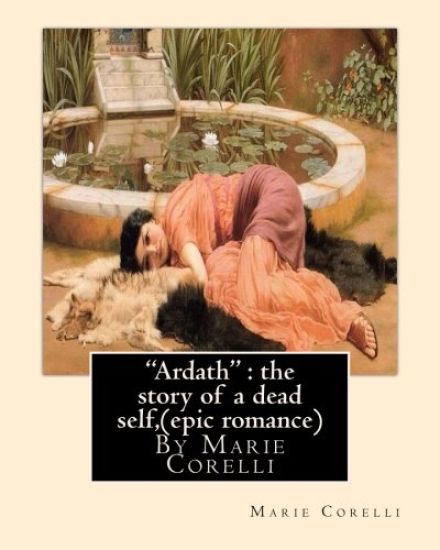
"Ardath": the story of a dead self, By Marie Corelli ( epic romance )

"Ardath": the story of a dead self, By Marie Corelli ( epic romance )

Marie Corelli

Createspace Independent Publishing Platform
2016
nidottu
"Ardath": the story of a dead self--Popular Victorian-era writer Marie Corelli does it again in this epic romance imbued with supernatural and gothic themes. ... Marie Corelli (1 May 1855 - 21 April 1924) was a British novelist. She enjoyed a period of great literary success from the publication of her first novel in 1886 until World War I. Corelli's novels sold more copies than the combined sales of popular contemporaries, including Arthur Conan Doyle, H. G. Wells, and Rudyard Kipling, although critics often derided her work as "the favourite of the common multitude."Mary Mackay was born in London to Elizabeth Mills, a servant of the Scottish poet and songwriter Dr. Charles Mackay, her biological father.In 1866, eleven-year-old Mary was sent to a Parisian convent to further her education. She returned to Britain four years later in 1870. Mackay began her career as a musician, adopting the name Marie Corelli for her billing. Eventually she turned to writing and published her first novel, A Romance of Two Worlds, in 1886. In her time, she was the most widely read author of fiction. Her works were collected by Winston Churchill, Randolph Churchill, and members of the British Royal Family, among othersMackay faced criticism from the literary elite for her overly melodramatic writing. In The Spectator, Grant Allen called her "a woman of deplorable talent who imagined that she was a genius, and was accepted as a genius by a public to whose commonplace sentimentalities and prejudices she gave a glamorous setting."James Agate represented her as combining "the imagination of a Poe with the style of an Ouida and the mentality of a nursemaid."A recurring theme in Corelli's books is her attempt to reconcile Christianity with reincarnation, astral projection, and other mystical ideas. Her books were a part of the foundation of today's New Age religion. Her portrait was painted by Helen Donald-Smith.Corelli is generally accepted to have been the inspiration for at least two of E. F. Benson's characters in his Lucia series of six novels and a short story. The main character, Emmeline "Lucia" Lucas, is a vain and snobbish woman of the upper middle class with an obsessive desire to be the leading light of her community, to associate with the nobility, to see her name reported in the social columns, and a comical pretension to education and musical talent, neither of which she possesses. She also pretends to be able to speak Italian, something Corelli was known to have done. The character of Miss Susan Leg is an author of highly successful but pulpish romance novels who writes under the name of Rudolph da Vinci and first appears in Benson's work a few years after Marie Corelli's death in 1924....
The Sorrows of Satan . Faustian NOVEL By: Marie Corelli

The Sorrows of Satan . Faustian NOVEL By: Marie Corelli

Marie Corelli

Createspace Independent Publishing Platform
2016
nidottu
The Sorrows of Satan is an 1895 Faustian novel by Marie Corelli. It is widely regarded as one of the world's first bestsellers - partly due to an upheaval in the system British libraries used to purchase their books, and partly due to its popular appeal. Roundly condemned by contemporary literary critics for Corelli's moralistic and prosaic style, 1] it nonetheless had strong supporters, including Oscar Wilde and various members of royalty. Widely ignored in literary circles, it is increasingly regarded as an influential fin de si cle text. The book is occasionally subtitled "Or the Strange Experience of One Geoffrey Tempest, Millionaire".On the surface the plot follows the story of a penniless, starving author called Geoffrey Tempest. So poor that he is behind on his rent and can barely afford light in his room, he receives three letters. The first is from a friend in Australia who has made his fortune and offers to introduce him to a good friend who might be able to lift him from poverty. The second is a note from a solicitor detailing that he has inherited a fortune from a deceased relative. The third is a letter of introduction from a foreign aristocrat called Lucio, who befriends him and proceeds to be his guide in how to best use his newfound wealth. Tempest remains blissfully unaware throughout the novel, despite warnings from people he meets, that Lucio is the earthly incarnation of the Devil. Over the course of the book, his wealth leads to misery. Eventually, when confronted with the true nature of his companion, he renounces evil and returns to society penniless but content with the chance to purify his soul.
The Sorrows of Satan Marie Corelli

The Sorrows of Satan Marie Corelli

Marie Corelli

Createspace Independent Publishing Platform
2016
nidottu
The Sorrows of Satan is an 1895 faustian novel by Marie Corelli. It is widely regarded as one of the world's first bestsellers, partly due to an upheaval in the system British libraries used to purchase their books and partly due to its popular appeal. Roundly condemned by critics for Corelli's moralistic and prosaic style it nonetheless had strong supporters in Oscar Wilde and various members of royalty. Widely ignored in literary circles, it is increasingly regarded as an influential fin de si cle text. The book is occasionally subtitled "Or the Strange Experience of one Geoffrey Tempest, Millionaire".
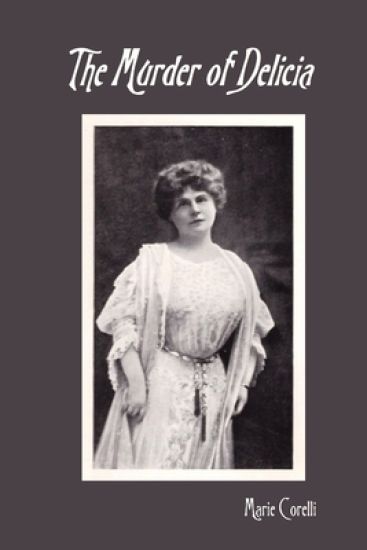
The Murder of Delicia

The Murder of Delicia

Marie Corelli

Lulu.com
2019
nidottu
Critics called her a mystic and an anti-intellectual. They accused her of male-bashing and discounted her work as trite. The critics couldn't, however, explain her popularity. Corelli's novels were continually among the top best selling books at the turn of the twentieth century, making her one of the most recognizable authors of the time. Her portrayals of social gender roles provides an important insight into Victorian Feminism.