Beginning with Buber's seminal essay on mysticism, this book offers texts down the centuries from oriental, pagan, Gnostic, Eastern Orthodox, Catholic, Jewish and Muslim sources. It aims to convey some quality of an experience that is essentially beyond the power of words to capture.
This volume grew out of a series of lectures by the author in 1944. He analyzes the centrality of Zion to biblical and Talmudic thought, how it inspired medieval thinkers and mystics, and how it moved modern Jews from Moses Hess to Ray Kook and A.D. Gordon.
Originally titled For the Sake of Heaven, Gog and Magog is a fictional religious chronicle in which the heroes are Hasidic rabbis. The setting for the novel is Poland and Hungary during the Napoleonic wars at the end of the eighteenth century. Although magic and superstition play their parts in the story, it is really Martin Buber's effort to articulate two approaches to the question: May men use evil to accomplish good? May men take power into their own hands - even to do the work of redemption - without submitting first to the will of God? More particularly, Buber unfolds the inner world of messianic longing and expectations that characterized Judaism then and continues to characterize it to the present day.
Better than any other single work, Daniel enables us to understand the significance of the transition Buber made from his early mysticism to the philosophy of dialogue. The book is written in the form of five dialogues, in each of which Daniel and his friends explore a crucial philosophical problem the nature of interconnection of unity, creativity, action, form, and realization as these illuminate the relations of man to God and the world. Daniel occupies a central position in Buber's life work.
This text acquaints the reader with Martin Buber's works on scripture and with his endeavour to elucidate the meanings of biblical ideas in ages past and in our own time.
Martin Buber contrasts the ""faith of Abraham"" with the ""faith of St Paul"" and ponders the possibilities of reconciliation between the two. He offers a sincere and reverent Jewish view of Christ and of the unique and decisive character of His message to Jew and Gentile.
Martin Buber (1878-1965) was one of the most influential Jewish thinkers of the twentieth century. A philosopher, seeker, and nurturer of dialogue, he responded to the complexities of his times by affirming the fullness of interpersonal encounter and the spiritual everyday. In 1947, Buber delivered lectures interpreting six traditional Chasidic stories to a German-speaking audience, published as The Way of Humanity. In the first new English translation in over half a century, Rabbi Bernard H. Mehlman, DHL, and Gabriel E. Padawer, ScD, z"l, bring the work to contemporary readers in a clear, accessible voice. The teachings within highlight the subversion and innovation of the early Chasidic masters of the eighteenth and nineteenth centuries, while providing meaningful spiritual guidance and insight for any seeker today. Scholarly forewords by Paul Mendes-Flohr, PhD, and Rabbi Joseph A. Skloot, PhD, as well as an introduction, epilogue, and notes from the translators, place Buber's work in historical context. Timeless and enlightening, The Way of Humanity guides us to inner meaning and highlights our human wholeness.
""Moses: The Revelation and the Covenant"" is a book written by Martin Buber that explores the life and teachings of the biblical figure, Moses. The book is divided into two parts: the first part focuses on Moses' encounter with God and the revelation of the Ten Commandments, while the second part delves into the covenant between God and the Israelites. Buber examines the significance of Moses' role as a mediator between God and his people, and how his teachings have influenced Jewish thought and culture. The book also explores the themes of faith, redemption, and the relationship between God and humanity. Overall, ""Moses: The Revelation and the Covenant"" is a thought-provoking and insightful analysis of one of the most important figures in religious history.This scarce antiquarian book is a facsimile reprint of the old original and may contain some imperfections such as library marks and notations. Because we believe this work is culturally important, we have made it available as part of our commitment for protecting, preserving, and promoting the world's literature in affordable, high quality, modern editions, that are true to their original work.
'The publication of Martin Buber's I and Thou was a great event in the religious life of the West.' Reinhold NiebuhrMartin Buber was a prolific and influential teacher and writer, who taught philosophy at the Hebrew University in Jerusalem from 1939 to 1951. Having studied philosophy and art at the universities of Vienna, Zurich and Berlin, he became an active Zionist and was closely involved in the revival of Hasidism. Recognised as a landmark of twentieth century intellectual history, I and Thou is Buber's masterpiece. In this book, his enormous learning and wisdom are distilled into a simple, but compelling vision. It proposes nothing less than a new form of the Deity for today, a new form of human being and of a good life. In so doing, it addresses all religious and social dimensions of the human personality. Translated by Ronald Gregor Smith
Das Buch ""Die Geschichten des Rabbi Nachman: Ihm nacherz�����hlt"" wurde im Jahr 1906 von Martin Buber ver������ffentlicht. Es handelt sich um eine Sammlung von Geschichten des j�����dischen Gelehrten Rabbi Nachman von Bratzlaw, die von Buber nacherz�����hlt wurden. Die Geschichten handeln von spirituellen Themen wie Glauben, Vertrauen und Hoffnung. Sie sind in einer einfachen und zug�����nglichen Sprache geschrieben und bieten eine tiefgr�����ndige Reflexion �����ber das Leben und den Glauben. Das Buch ist ein Klassiker der j�����dischen Literatur und hat einen gro�����en Einfluss auf die j�����dische Mystik und Philosophie ausge�����bt. Es ist ein wichtiges Werk f�����r alle, die sich f�����r die j�����dische Kultur und Spiritualit�����t interessieren und bietet einen Einblick in die Gedankenwelt eines der bedeutendsten j�����dischen Gelehrten.This Is A New Release Of The Original 1906 Edition.This scarce antiquarian book is a facsimile reprint of the old original and may contain some imperfections such as library marks and notations. Because we believe this work is culturally important, we have made it available as part of our commitment for protecting, preserving, and promoting the world's literature in affordable, high quality, modern editions, that are true to their original work.
"The condition Buber calls the 'eclipse of God' is the reality that modern life and the teachings of many scholars have in many ways destroyed the opportunity for intimacy with an eternal, ever-present, Thou, or God. Based in part on a series of lectures he gave in the United States in 1951, this book examines Buber's interpretations of Western thinking and belief around this notion of lost intimacy or direct contact with the Divine, focusing particularly on the relationships between religion and philosophy, ethics, and Jungian psychology." -Reference and Research Book News
Martin Buber, scholar, philosopher, theologian, and Bible translator, is now considered one of the great thinkers and spiritual authorities of the 20th century. As a work of his late maturity, Moses offers the possibility to review Buber's longstanding concern with Scripture. It is in this book that Buber's methodological presuppositions about biblical language and stylistics, and his views on the enduring value of the Bible's religious teachings, come to clear expression.
In this book Buber completed his lifework of recreating and interpreting Hasidism. Here he makes explicit the place of Hasidism among world religions, contrasting it with biblical prophecy, Spinoza, Freud, Sankara, Meister Eckhart, Gnosticism, Christianity, Zionism, and Zen Buddhism.
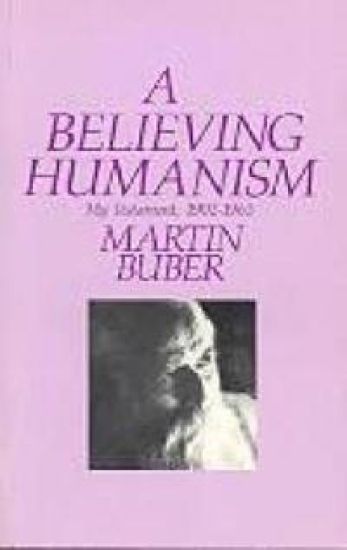
This final volume of Martin Buber's work contains a selection of his poetry and prose written between 1902 and 1964 made by Buber himself a few months before his death in 1965. As the original German title, Nachlese, implies, Buber saw these writings as the "gleanings" of a rich philosophical harvest and as a "testament" to his own beliefs.