
Kirjahaku
Etsi kirjoja tekijän nimen, kirjan nimen tai ISBN:n perusteella.
208 kirjaa tekijältä May Sinclair





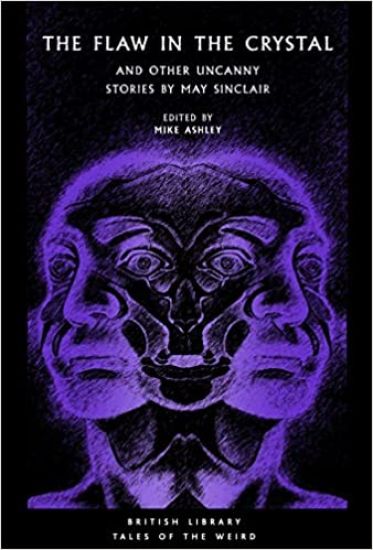
At that moment, in a flash that came like a shifting of her eyes, the world she looked at suffered a change... It was the same world, flat field for flat field and hill for hill; but radiant, vibrant, and, as it were, infinitely transparent. Tales of eternal damnation, love, sexuality, death and supernatural talents form the core of May Sinclair's essential and groundbreaking oeuvre. Literary and still thrilling today, her stories explore the strangeness at the heart of human experience and relationships, where the mundane and the everyday meets lurking, otherworldly weirdness. Including the contents of the classic collections Uncanny Stories (1923) and The Intercessor and Other Stories (1931), this new volume also features two rare strange tales from a third, lesser-known book which explore further facets of Sinclair's fascination with the uncanny.
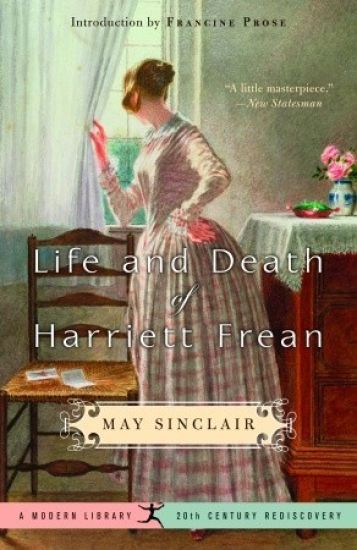
"In a few short pages," writes Francine Prose in her Introduction, "May Sinclair succeeds in rendering the oppressive weight and strength of the chains of family love." Young Harriett Frean is taught that "behaving beautifully" is paramount, and she becomes a self-sacrificing woman whose choices prove devastating to herself and to those who love her most. An early pioneer ofstream-of-consciousness writing, Sinclair employs the technique brilliantly in this finely crafted psychological novel. Evoking the style and depth of her contemporaries Virginia Woolf and D. H. Lawrence, Sinclair's haunting narrative also reflects her keen interest in the theories of Jung and Freud. The text of this Modern Library 20th Century Rediscovery was set from the first American edition of 1922.
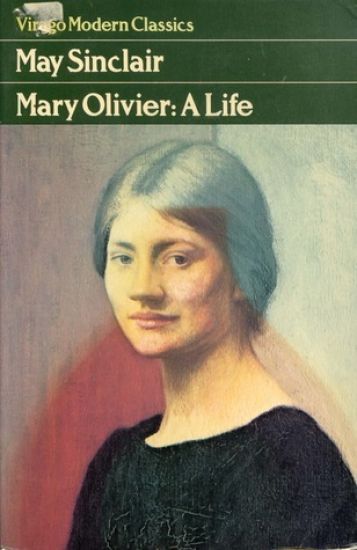
Born in 1865, Mary Olivier is the youngest of four children. Mamma dominates this Victorian household, idolising the boys, rejecting the independent love of her only daughter: the archetype of all women who control by weakness and suffering. Mary adores her mother- and she hates her. Ferociously intelligent, she vacillates between a passionate quest for her own artistic and sexual identity.This is one of the first novels ever written about a mother and daughter relationship, and the eternal conflict engendered by the deepest of ties. But it is a celebration too: for though Mary sacrifices her life- and her lover- to the demands of duty, she emerges victorious, finding in the discovery of her intellectual and feminine self an inner freedom, a perfect happiness.
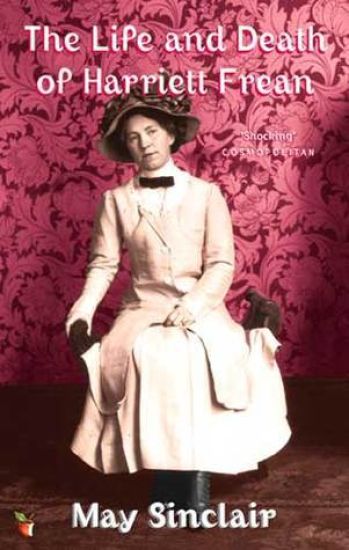
Well, I'm glad my little girl didn't snatch and push. It's better to go without than to take from other people. That's ugly.'Harriett is the Victorian embodiment of all the virtues then viewed as essential to the womanly ideal: a woman reared to love, honour and obey. Idolising her parents, she learns from childhood to equate love with self-sacrifice, so that when she falls in love with the fiance of her closest friend, renunciation of this unworthy passion initially brings her a peculiar sort of happiness. But the passing of time reveals a different truth. Ironic, brief and intensely realised, The Life and Death of Harriett Frean (1922) is a brilliant study of female virtue seen as vice, and stands with the work of Virgina Woolf and Dorothy Richardson as one of the great innovative novels of the century.
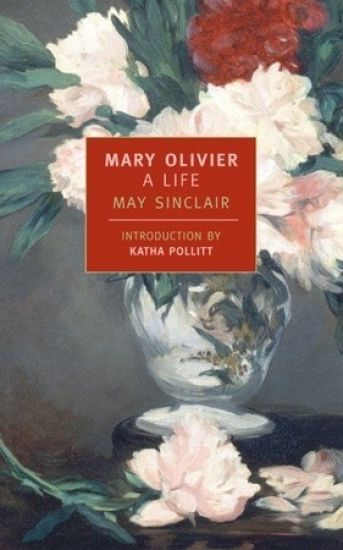
Originally published alongside Ulysses in the pages of the legendary Little Review, Mary Olivier: A Life is an intimate, lacerating account of the ties between daughter and mother, a book of transfixing images and troubling moral intelligence that confronts the exigencies and ambiguities of freedom and responsibility with empathy and power. May Sinclair's finest novel stands comparison with the work of Willa Cather, Katherine Mansfield, and the young Virginia Woolf. As a child, Mary Olivier's dreamy disposition and fierce intelligence set her apart from her Victorian family, especially her mother, "Little Mamma," whose dazzling looks cannot hide her meager love for her only daughter. Mary grows up in a world of her own, a solitude that leaves her free to explore her deepest passions, for literature and philosophy, for the austere beauties of England's north country, even as she continues to attend to her family. But in time the independence Mary values--at almost any cost--threatens to become a form of captivity itself.
May Sinclair was the pseudonym of Mary Amelia St. Clair (24 August 1863 - 14 November 1946), a popular British writer who wrote about two dozen novels, short stories and poetry. She was an active suffragist, and member of the Woman Writers' Suffrage League. She once dressed up as a demure, rebel Jane Austen for a suffrage fundraising event. Sinclair was also a significant critic in the area of modernist poetry and prose, and she is attributed with first using the term 'stream of consciousness' in a literary context, when reviewing the first volumes of Dorothy Richardson's novel sequence Pilgrimage (1915-1967), in The Egoist, April 1918.
May Sinclair was the pseudonym of Mary Amelia St. Clair (24 August 1863 - 14 November 1946), a popular British writer who wrote about two dozen novels, short stories and poetry. She was an active suffragist, and member of the Woman Writers' Suffrage League. She once dressed up as a demure, rebel Jane Austen for a suffrage fundraising event. Sinclair was also a significant critic in the area of modernist poetry and prose, and she is attributed with first using the term 'stream of consciousness' in a literary context, when reviewing the first volumes of Dorothy Richardson's novel sequence Pilgrimage (1915-1967), in The Egoist, April 1918.
May Sinclair was the pseudonym of Mary Amelia St. Clair (24 August 1863 - 14 November 1946), a popular British writer who wrote about two dozen novels, short stories and poetry. She was an active suffragist, and member of the Woman Writers' Suffrage League. She once dressed up as a demure, rebel Jane Austen for a suffrage fundraising event. Sinclair was also a significant critic in the area of modernist poetry and prose, and she is attributed with first using the term 'stream of consciousness' in a literary context, when reviewing the first volumes of Dorothy Richardson's novel sequence Pilgrimage (1915-1967), in The Egoist, April 1918.