Kirjojen hintavertailu. Mukana 11 627 220 kirjaa ja 12 kauppaa.

Kirjahaku

Etsi kirjoja tekijän nimen, kirjan nimen tai ISBN:n perusteella.

43 kirjaa tekijältä Michael Foley

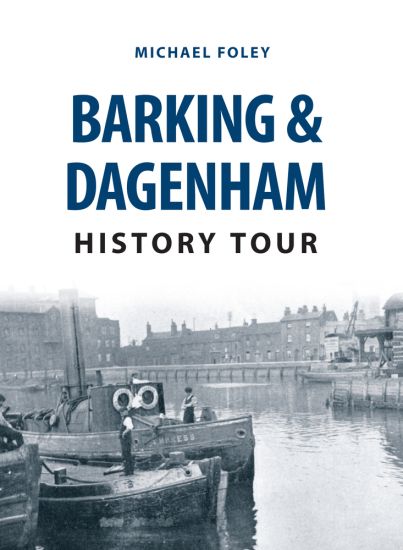
Barking & Dagenham History Tour

Barking & Dagenham History Tour

Michael Foley

Amberley Publishing
2017
nidottu
Barking & Dagenham History Tour is a unique insight into the illustrious history of this famous old port. This new book guides us through the streets and alleyways, showing how its famous landmarks used to look and how they’ve changed over the years, as well as exploring its lesser-known sights and hidden corners. With the help of a handy location map, readers are invited to follow a timeline of events and discover for themselves the changing face of Barking and Dagenham.
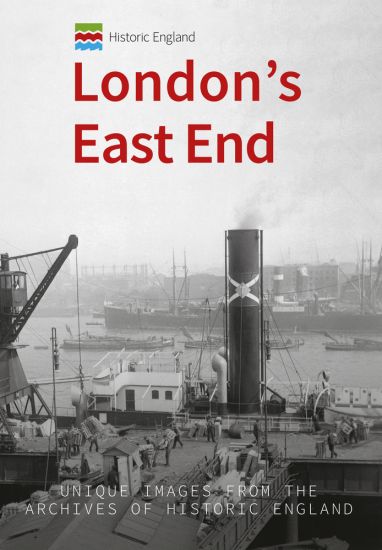
Historic England: London's East End

Historic England: London's East End

Michael Foley

Amberley Publishing
2017
nidottu
This illustrated history portrays one of London’s most fascinating areas. It provides a nostalgic look at the East End’s past and highlights the special character of some of its most important historic sites. The photographs are taken from the Historic England Archive, a unique collection of over 12 million photographs, drawings, plans and documents covering England’s archaeology, architecture, social and local history. Pictures date from the earliest days of photography to the present and cover subjects from Bronze Age burials and medieval churches to cinemas and seaside resorts. This book shows London’s East End as it once was, from its labyrinthine streets and alleys to its factories and warehouses. The East End was one of the poorest parts of the UK, blighted by crime and appalling living conditions. As the boundaries of London spread towards Essex, however, the picture has become very different. As transport links were improved, areas such as Bethnal Green, West Ham and Forest Gate, once small rural villages, have been swallowed up by the capital’s growth. Today, the East End is a very different place, one of regeneration and vibrancy and great cultural diversity. This books will help you discover its remarkable history.
Secret Brentwood

Secret Brentwood

Michael Foley

Amberley Publishing
2018
nidottu
The Essex town of Brentwood has a long and interesting history. The earliest settlement was founded in a clearing in the dense forest that stretched from the edge of London through Essex. The town grew up around the crossroads of the road to Colchester and a pilgrim route to the shrine of St Thomas à Becket in Canterbury. The town became famous for its numerous inns that catered for the travellers and it was also the site of the first disturbances of the Peasants’ Revolt in 1381. The town grew in prosperity as a major stopping place for travellers by stagecoach to and from London and welcomed royal visitors to the large houses built by the wealthy in the area. The town has continued to grow, becoming the home for several industries, including trampolining manufacturing in the 1950s, as well housing and a major army barracks at Warley. Despite being heavily bombed during the Second World War, much of the town’s historical buildings survived, many of which have featured in TV programmes over the years. Secret Brentwood explores the lesser-known episodes and characters in the history of the town through the centuries. With tales of remarkable people, unusual events and tucked-away historical buildings, Secret Brentwood will appeal to all those with an interest in the history of this Essex town.
Get Off The Cow Now: My Simple Cure for Cancer

Get Off The Cow Now: My Simple Cure for Cancer

Michael Foley

Createspace Independent Publishing Platform
2015
nidottu
Do you want to lose weight, feel better and beat cancer? Diagnosed with prostate cancer in 2012, jump-started an alternative, healthy plan to beat this disgusting disease naturally without surgery, radiation or chemotherapy. After hundreds of hours of research and experimentation I have come up with a plan that heals/prevents cancer naturally and effectively without the use of supplements or expensive fads. You can achieve optimal health through a plant based eating arrangement and this book will show you how without a huge amount of aggravation. Did you know a vast majority of Oncologists would not use Chemotherapy if they got cancer themselves?
The Shadow of the Fox

The Shadow of the Fox

Michael Foley

Independently Published
2021
nidottu
The story of a tribe of Celtic people who are battling to save their land from the incoming Saxon invaders. A young man joins with a mysterious woman to fight for their freedom against a Saxon leader known as the Fox
Russian Civil War

Russian Civil War

Michael Foley

Pen Sword Military
2018
nidottu
The Russian Revolution is remembered as the catalyst for the bloody conflict between the Reds and the Whites as each side tried to gain control of the country. But it was far from being so simple. The conflict did not only involve the Russians. The author contemplates whether the Russians could have capitulated to Germany and whether in fact Russia was ever in any condition to carry on the fight even before the revolution began, examining whether a collapse of the war in the east would lead to Allied defeat in the west. The effect of the revolution and the civil war went far beyond the borders of the enormous Russian Empire and far beyond the end of the Great War and the civil war, not least of all whom the millions of subject peoples and races supported: the Reds, the Whites, the Germans, or none. The conflict in Russia between 1917 and 1922 is a fascinating and complex period of history but the brutally colourful cast of characters-Tsar Nicholas II, Brusilov, Kerensky, Lenin, Trotsy, Stalin and Churchill-would make a violent impact on the world stage for a century to come.
Britain's Railways in the Second World War

Britain's Railways in the Second World War

Michael Foley

Pen Sword Transport
2020
sidottu
The outbreak of the Second World War had an enormous effect on the railway system in Britain. Keeping the trains running through times of conflict was not such a distant memory for the railway companies and their workers but in this second major war of the twentieth century, the task was to prove a very different one. The railway system no longer consisted of the hundreds of companies of the past, but the 'Big Four' still needed to learn how to work together and forget their differences for the war effort. The logistics of the mass evacuation of children, and transporting thousands of troops during the evacuation of Dunkirk and the preparations for D-Day, for instance, were unprecedented. At the same time, they had to cope with the new and constant threat of aerial bombing that military advances brought to the Second World War. The railway system, and the men and women who ran it, effectively served as another branch of the military during the conflict. At the end of the war, Winston Churchill likened London to a large animal, declaring that what kept the animal alive was its transport system. The metaphor could have been applied to the whole of Britain, and its most vital transport system was the railway. This book is a fascinating account of the important role that the railways played in the defence of the country as well as in their support of the Allied forces in theatres of war around the world. It brings to light the often forgotten stories of the brave and hard-working men and women who went to work on the railways and put their lives on the line.
Britain's Railways in the First World War

Britain's Railways in the First World War

Michael Foley

Pen Sword Transport
2021
sidottu
It is easy to believe that the only part that Britain's railways played in the First World War was to carry the soldiers to the ships that would take them to France. This couldn't be further from the truth. Without the help from the railways it is unlikely that the war would have been over as quickly as it was. In _Britain's Railways in the First World War_ Michael Foley examines how the railway system and its workers proved to be a vital part of the war effort, one contemporary writer even commenting that he thought they were as significant as the navy. The book describes how the enlistment of railway troops for the Royal Engineers to meet the increasing transport demands of the military was to bleed the civilian system dry as skilled railwaymen were sent to work at the front. In addition, the military commandeered thousands of Britain's railway vehicles, sending them to each of the theatres of war, and turned the already stressed railway workshops away from maintaining what remained of the country's railways and rolling stock so they could produce armaments for the forces instead. The book also reveals how the British were so far behind their enemies and allies in the use of railway support to the front lines that they had to plead for help from Canada.
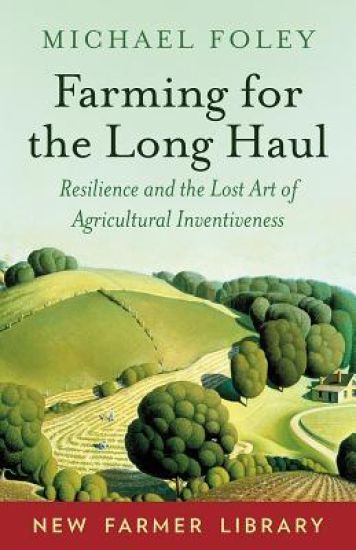
Farming for the Long Haul

Farming for the Long Haul

Michael Foley

Chelsea Green Publishing Co
2019
nidottu
It’s all but certain that the next fifty years will bring enormous, not to say cataclysmic, disruptions to our present way of life. World oil reserves will be exhausted within that time frame, as will the lithium that powers today’s most sophisticated batteries, suggesting that transportation is equally imperiled. And there’s another, even more dire limitation that is looming: at current rates of erosion, the world’s topsoil will be gone in sixty years. Fresh water sources are in jeopardy, too. In short, the large-scale agricultural and food delivery system as we know it has at most a few decades before it exhausts itself and the planet with it. Farming for the Long Haul is about building a viable small farm economy that can withstand the economic, political, and climatic shock waves that the twenty-first century portends. It draws on the innovative work of contemporary farmers, but more than that, it shares the experiences of farming societies around the world that have maintained resilient agricultural systems over centuries of often-turbulent change. Indigenous agriculturalists, peasants, and traditional farmers have all created broad strategies for survival through good times and bad, and many of them prospered. They also developed particular techniques for managing soil, water, and other resources sustainably. Some of these techniques have been taken up by organic agriculture and permaculture, but many more of them are virtually unknown, even among alternative farmers. This book lays out some of these strategies and presents techniques and tools that might prove most useful to farmers today and in the uncertain future.
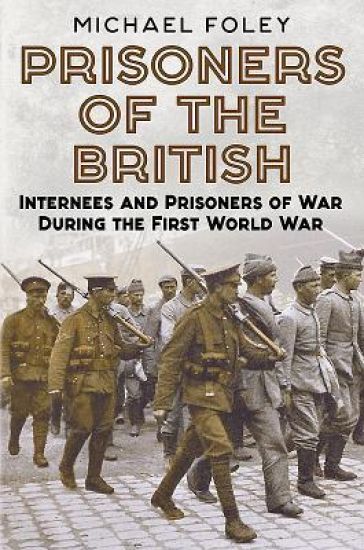
Prisoners of the British

Prisoners of the British

Michael Foley

Fonthill Media
2015
sidottu
Much of what has been written about the treatment of prisoners of war held by the British suggest that they have often been treated in a more caring and compassionate way than the prisoners of other countries. During the First World War, Germans held in Britain were treated leniently while there were claims of British prisoners being mistreated in Germany. Was the British sense of fair play present in the prison camps and did this sense of respect include the press and public who often called for harsher treatment of Germans in captivity? Were those seen as enemy aliens living in Britain given similar fair treatment? Were they sent to internment camps because they were a threat to the country or for their own protection to save them from the British public intent on inflicting violence on them? Prisoners of the British: Internees and Prisoners of War during the First World War examines the truth of these views while also looking at the number of camps set up in the country and the public and press perception of the men held here.
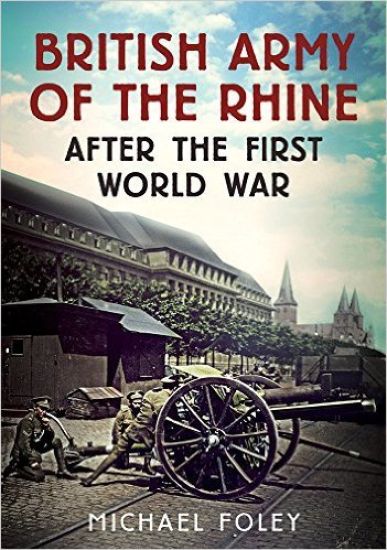
British Army of the Rhine After the First World War
When the First World War ended British troops crossed the Rhine into Germany and entered a country torn by violence and unrest where revolution threatened and civil war seemed more likely every day. There was also a threat of the war resuming if Germany refused to accept allied terms. The British forces were plunged into the turmoil of a defeated country and had to face not only the political unrest but the German public who they expected to be in a hostile mood as they faced the victorious British and allied forces taking over their country. The British troops not only faced this difficult situation but were disillusioned with their continued service. The majority of them had expected to be demobbed as soon as the war was won. This then was the situation they found themselves in, looking forward to going home and instead forced into a hostile country where the war may break out again at any time. This book looks at how the British troops coped with their situation. How they became the most popular members of the occupation force and how Britain and the world faced the growth of German unrest that led to the Second World War.
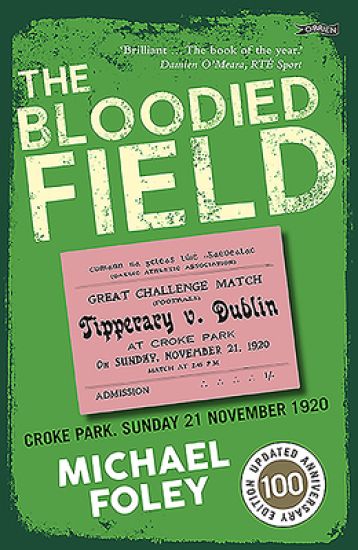
The Bloodied Field

The Bloodied Field

Michael Foley

O'Brien Press Ltd
2020
pokkari
On the morning of 21 November 1920, Jane Boyle walked to Sunday Mass in the church where she would be married five days later. That afternoon she went with her fiancé to watch Tipperary and Dublin play a Gaelic football match at Croke Park. Across the city fourteen men lay dead in their beds after a synchronised IRA attack designed to cripple British intelligence services in Ireland. Trucks of police and military rumbled through the city streets as hundreds of people clamoured at the metal gates of Dublin Castle seeking refuge. Some of them were headed for Croke Park. Award-winning journalist and author Michael Foley recounts the extraordinary story of Bloody Sunday in Croke Park and the 90 seconds of shooting that changed Ireland forever. In a deeply intimate portrait he tells for the first time the stories of those killed, the police and military personnel who were in Croke Park that day, and the families left shattered in its aftermath, all against the backdrop of a fierce conflict that stretched from the streets of Dublin and the hedgerows of Tipperary to the halls of Westminster. Updated with new information and photographs.
The Children of Croke Park

The Children of Croke Park

Michael Foley

O'BRIEN PRESS LTD
2023
pokkari
Dublin 1920 ‘Above the noise of the crowd, I could hear men shouting. I looked back and saw them – a line of trucks, and men with guns starting to run towards the field. That’s when it happened.’ On a bright day in November, three boys joined the huge crowd heading to a Gaelic football match at Croke Park. Excitement filled the air, but also fear. Important men had been killed in their beds that morning by the IRA. The police were angry. In the middle of a cruel war for Irish independence, people were afraid of what might happen next. But that war wouldn’t come to Croke Park. Would it?