

Kirjahaku
Etsi kirjoja tekijän nimen, kirjan nimen tai ISBN:n perusteella.
224 kirjaa tekijältä NA NA
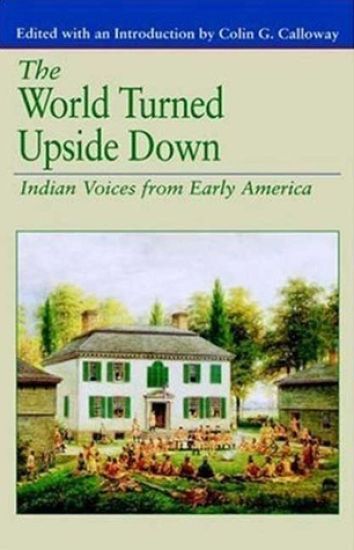
This unique collection presents Native American perspectives on the events of the colonial era, from the first encounters between Indians and Europeans in the early seventeenth century through the American Revolution in the late eighteenth century. The documents collected here are drawn from letters, speeches, and records of treaty negotiations in which Indians addressed settlers. Colin Calloway's introduction discusses the nature of such sources and the problems of interpreting them and also analyzes the forces of change that were creating a new world for Native Americans during the colonial period. An overview introduces each chapter, and a headnote to each document comments on its context and significance. Maps, illustrations, a bibliography, and an index are also included.
The contributors to this volume take a hard look at Roosevelt's reaction to the Holocaust.
This book is about how every age invented the idea of Europe in the mirror of its own identity.
Engendering History broadens the base of empirical knowledge on Caribbean women's history and re-evaluates the body of work that exists. The book is pan-Caribbean in its approach, though most articles are on the English-speaking Caribbean, highlighting the research pattern in Caribbean women's history.

Broadly committed to the goals and values of a green political perspective, the chapters in this book show the environmental crisis to be essentially a political-economic crisis. The pursuit of sustainability cannot proceed without significant changes in our economic enterprises, public institutions and personal lives. Reaching beyond the contradictions of sustainable development, the authors explore the kinds of political arrangements needed to throw open sustainability to wide-ranging debate, both national and international. They advance alternative environmental policymaking processes designed to forge a genuine political consensus around these questions, as well as institutional, cultural and behavioural strategies capable of translating it into effective policy solutions. Fundamental to these strategies, a progressive commitment to participatory democracy is seen to provide the surest footing for both the articulation and realization of a sustainable future.
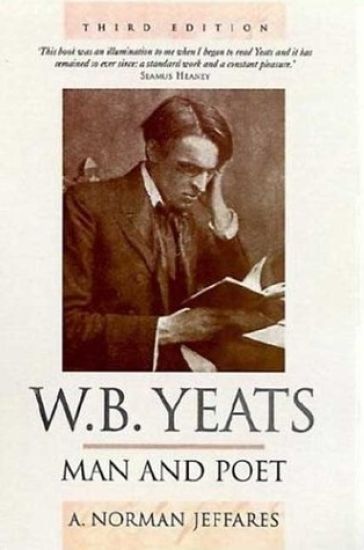
One of the most influential figures of the twentieth century, William Butler Yeats (1865-1939) is among the greatest poets to have written in the English language. He was a multi-talented writer, fascinated by the occult, an important dramatist, critic and autobiographer, with a career extending over more than fifty years. Professor Jeffares investigates the relationship between Yeats's life and his work. He considers the crucial moments as well as the famous relationships that changed Yeats's destiny. A founder of the Abbey Theatre, Dublin, Yeats was also a Senator of the Irish Free State. His life has provided a remarkably rich and varied canvas for this timeless biography.
Explores the fluctuating power of the dollar while giving explanations as to why the dollar is where it is today, making predictions, and presenting advice on the investment direction one should pursue in today's markets
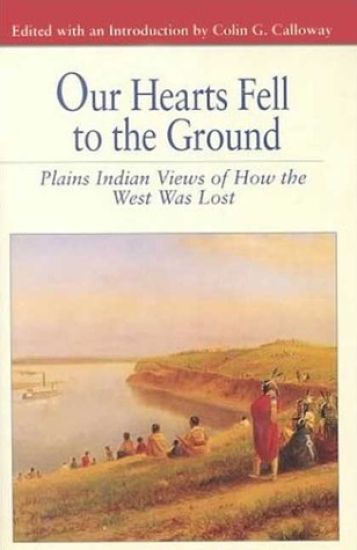
This unique anthology chronicles the Plains Indians' struggle to maintain their traditional way of life in the changing world of the nineteenth century. Its rich variety of 34 primary sources - including narratives, myths, speeches, and transcribed oral histories - gives students the rare opportunity to view the transformation of the West from Native American perspective. Calloway's comprehensive introduction offers crucial information on western expansion, territorial struggles among Indian tribes, the slaughter of the buffalo, and forced assimilation through the reservation system. More than 30 pieces of Plains Indian art are included, along with maps, headnotes, questions for consideration, a bibliography, a chronology, and an index.
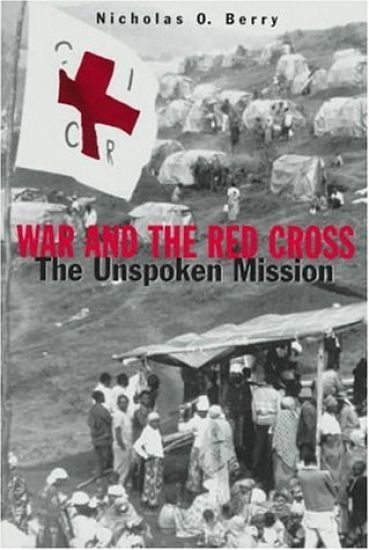
Wars in the post-Cold War era are overwhelmingly internal or civil wars. Civilians, mostly women, children, and the elderly, make up over ninety percent of the casualties in these wars. This statistic has convinced the world's premier war-relief organization, the Swiss-based International Committee of the Red Cross (ICRC), to take on a new mission: to make these wars dysfunctional and to end them. Berry reveals how this mission remains unpublicized and unsaid, due to the effect which many fear it would have on the ICRC's traditional purpose of providing war relief. Exposing the ICRC's intricate and ambitious strategy, Berry shows how it was put into operation in the former Yugoslavia, Rwanda, the Sudan, Aghanistan, and Guatemala. The book reveals that a major non-governmental organization, while proclaiming to be non-political, has a huge political agenda.
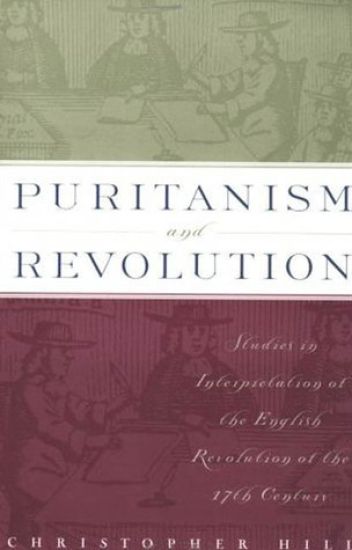
This illuminating collection of essays assesses the 17th century, interpreting what used to be called "The Puritan Revolution," the ideas which helped to produce it and resulted from it, and the relations between these ideas and the political events of the day.

James Williams explores in this book the work of French writer and film-maker Marguerite Duras.

Wage determination is studied here in an international perspective, using a common theoretical framework and statistical method through the individual-country chapters to reveal similarities and differences between Japan, South Korea, the United States, Canada, Australia, the United Kingdom, Germany, France, and several countries in Asia.

The Hermeneutics of the Subject is the third volume in the collection of Michel Foucault's lectures at the Collège de France, one of the world's most prestigious institutions. Faculty at the Collège give public lectures, in which they present works-in-progress on any subject of their choosing. Foucault's wide-ranging lectures influenced his groundbreaking works like The History of Sexuality and Discipline and Punish. In the lectures comprising this volume, Foucault focuses on how the "self" and the "care of the self" were convinced during the period of antiquity, beginning with Socrates. The problems of the ethical formation of the self, Foucault argues, form the background for our own questions about subjectivity and remain at the center of contemporary moral thought. This series of lectures throws new light on Foucault's final works and shows the full depth of his engagement with ancient thought. Lucid and provocative, The Hermeneutics of the Subject reveals Foucault at the height of his powers.
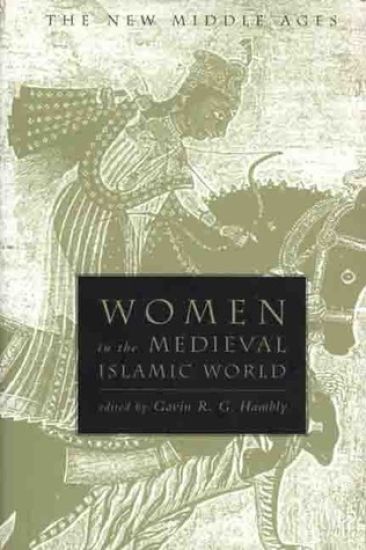
Women often appear invisible in what is widely perceived as the male-oriented society of Islam. Women in the Medieval Islamic World seeks to redress the balance with a series of original essays on women in the pre-modern phase of Islamic history. The reader will encounter here a colorful portrait gallery of rulers, politicians, poets and patrons, as well as some larger than life fictitious females from the pages of Arabic, Persian and Turkish literature. No less authentic are the accounts of quiet or troubled lives of ordinary women preserved in the court records of Mamluk Egypt and Ottoman Turkey, reminders that historical research can resuscitate the lives of subaltern as well as elite women from the past. For people who believe that Muslim women, especially medieval Muslim women, have no history, this book demonstrates the ways in which research by twenty international scholars - sometimes working in their own distinct fields and sometimes in overlapping areas - can bring into focus the role and contribution of women in the development of Islamic history. There will no longer be an excuse for their exclusion.

No region of the world has been so affected as the Caribbean by the geopolitical and economic changes caused by the end of the Cold War and the impact of globalization. This book analyzes the problems of regionalization, integration and identity and the wide range of political, social and economic challenges facing the region. A masterpiece of concise and comprehensive analysis, rich in theoretical insights, this is required for all concerned with these issues in the Caribbean and the wider world.
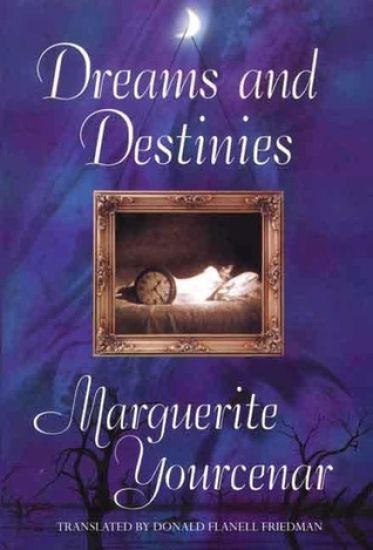
One of the century's great authors offers a record of her dreams to present a unique picture of her life and mind in a final work that has been finally made available in English in the way it was originally intended. 20,000 first printing.
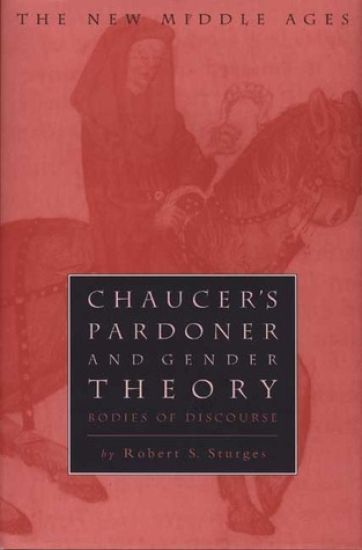
Chaucer s Pardoner and Gender Theory, the first book-length treatment of the character, examines the Pardoner in Chaucer s Canterbury Tales from the perspective of both medieval and twentieth-century theories of sex, gender, and erotic practice. Sturges argues for a discontinuous, fragmentary reading of this character and his tale that is genuinely both premodern and postmodern. Drawing on theorists ranging from St. Augustine and Alain de Lille to Judith Butler and Eve Kosofsky Sedgwick, Sturges approaches the Pardoner as a representative of the construction of historical - and sexual - identities in a variety of historically specific discourses, and argues that medieval understandings of gender remain sedimented in postmodern discourse.
As the end of the century draws closer, one of the most pressing challenges facing educators in the United States is the specter of an 'ethnic and cultural war' - a code phrase that engenders our society's licentiousness toward racism. In Dancing With Bigotry, Macedo and Bartolomé use examples from the mass media, popular culture, and politics to illustrate the larger situations facing educators and how this type of argument is both ignored in much of the academic research and rhetoric. They also examine why it is essential to take on the sources of 'mass public education.' Academia needs to understand that the popular press and mass media educate more people about issues regarding ethnicity and race than all other sources of education available to U.S. citizens. By shunning the mass media, educators are missing the obvious - more public education is done by the media than by teachers, professors, or anyone else. Dancing with Bigotry sheds light on the ideological mechanisms that shapeand maintain the racist social order, while moving the discussion beyond the reductionist binarism of White versus Black racism. Discussing social complexities, including ethnic cleansing, culture wars, hegemony, human sufferings, and intensified xenophobia, Macedo and Bartolomé explain why it is essential that we gain a nuanced understanding of how ideology underlies all social, cultural, and political discourse and actions. This book shows that it is imperative that we appreciate what it means to educate for critical citizenry in the ever-increasing multiracial and multicultural world of the twentieth century.
The United States has the highest incarceration and execution rate in the industrialized world. Due to bias in policing and sentencing, seventy percent of the nearly two million people incarcerated in U.S. prisons and immigration detention centers are people of color. Statistics like these, and the often unsafe conditions under which people are imprisoned, make an analysis of incarceration urgent and timely. Using a broad multicultural approach, States of Confinement uncovers the political, social, and economic biases in our policing and punishment systems. The distinguished authors of this collection - such as Angela Y. Davis, Manning Marable, Gary Marx, Robert Meeropol (the son of Julius and Ethel Rosenberg), Julie Su (an attorney for immigrants' rights), and Judi Bari (a founder of Earthfirst!) - use their diverse experiences and expertise to discuss troubling abuses of police powers in our society. The issues they expose include racial profiling and sentencing disparities that target African Americans and Latinos, the sexual exploitation of women in prison and police custody, racist and homophobic violence, the policing of Asian Americans and Arabs, the adverse conditions of HIV-positive prisoners, and the use of the Grand Jury and police to undermine political activity. These twenty-seven cogent and accessible essays will appeal to students and educators, as well as anyone concerned about the erosion of democracy and equality in this era of increasing incarceration and police powers.