Kirjojen hintavertailu. Mukana 12 382 494 kirjaa ja 12 kauppaa.

Kirjahaku

Etsi kirjoja tekijän nimen, kirjan nimen tai ISBN:n perusteella.

54 kirjaa tekijältä Paul Strathern

Schopenhauer in 90 Minutes

Schopenhauer in 90 Minutes

Paul Strathern

Ivan R Dee, Inc
1999
pokkari
OEach of these little books is witty and dramatic and creates a sense of time, place, and character...I cannot think of a better way to introduce oneself and oneOs friends to Western civilization.O_Katherine A. Powers, Boston Globe. OWell-written, clear and informed, they have a breezy wit about them...I find them hard to stop reading.O_Richard Bernstein, New York Times. OWitty, illuminating, and blessedly concise.O_Jim Holt, Wall Street Journal. These brief and enlightening explorations of our greatest thinkers bring their ideas to life in entertaining and accessible fashion. Philosophical thought is deciphered and made comprehensive and interesting to almost everyone. Far from being a novelty, each book is a highly refined appraisal of the philosopher and his work, authoritative and clearly presented.
Foucault in 90 Minutes: Philosophers in 90 Minutes

Foucault in 90 Minutes: Philosophers in 90 Minutes

Paul Strathern

Ivan R. Dee Publisher
2000
sidottu
In Foucault in 90 Minutes, Paul Strathern offers a concise, expert account of Foucault's life and ideas, and explains their influence on man's struggle to understand his existence in the world. The book also includes selections from Foucault's writings; a brief list of suggested reading for those who wish to push further; and chronologies that place Foucault within his own age and in the broader scheme of philosophy.
Derrida in 90 Minutes

Derrida in 90 Minutes

Paul Strathern

Ivan R. Dee Publisher
2000
nidottu
In Derrida in 90 Minutes, Paul Strathern offers a concise, expert account of Derrida's life and ideas, and explains their influence on man's struggle to understand his existence in the world. The book also includes selections from Derrida's writings; a brief list of suggested reading for those who wish to push further; and chronologies that place Derrida within his own age and in the broader scheme of philosophy.
James Joyce in 90 Minutes

James Joyce in 90 Minutes

Paul Strathern

Ivan R Dee, Inc
2005
sidottu
Building on his enormously successful series of Philosophers in 90 Minutes, Paul Strathern now applies his witty and incisive prose to brief biographical studies of the world's great writers. He brings their lives and ideas to life in entertaining and accessible fashion. Far from being a novelty, each book is a highly refined appraisal of the writer and his work, authoritative and clearly presented.
Virginia Woolf In 90 Minutes

Virginia Woolf In 90 Minutes

Paul Strathern

Ivan R Dee, Inc
2005
sidottu
Building on his enormously successful series of Philosophers in 90 Minutes, Paul Strathern now applies his witty and incisive prose to brief biographical studies of the world's great writers. He brings their lives and ideas to life in entertaining and accessible fashion. Far from being a novelty, each book is a highly refined appraisal of the writer and his work, authoritative and clearly presented.
Hemingway In 90 Minutes

Hemingway In 90 Minutes

Paul Strathern

Ivan R Dee, Inc
2005
pokkari
Building on his enormously successful series of Philosophers in 90 Minutes, Paul Strathern now applies his witty and incisive prose to brief biographical studies of the world's great writers. He brings their lives and ideas to life in entertaining and accessible fashion. Far from being a novelty, each book is a highly refined appraisal of the writer and his work, authoritative and clearly presented.
The Medici

The Medici

Paul Strathern

Pegasus Books
2016
sidottu
A vivid, dramatic, and authoritative account of perhaps the most influential family in Italian history: the Medici. A dazzling history of the modest family that rose to become one of the most powerful in Europe, The Medici is a remarkably modern story of power, money, and ambition. Against the background of an age that saw the rebirth of ancient and classical learning Paul Strathern explores the intensely dramatic rise and fall of the Medici family in Florence, as well as the Italian Renaissance which they did so much to sponsor and encourage. Strathern also follows the lives of many of the great Renaissance artists with whom the Medici had dealings, including Leonardo, Michelangelo and Donatello; as well as scientists like Galileo and Pico della Mirandola; and the fortunes of those members of the Medici family who achieved success away from Florence, including the two Medici popes and Catherine de' M dicis, who became Queen of France and played a major role in that country through three turbulent reigns.
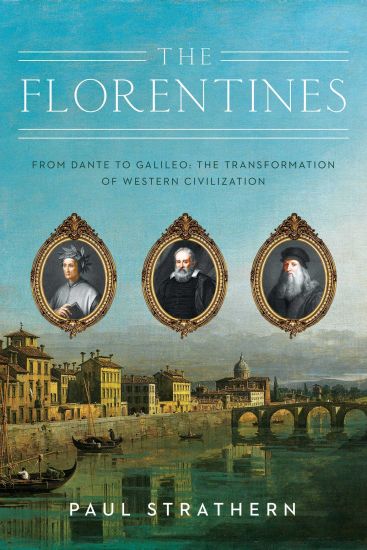
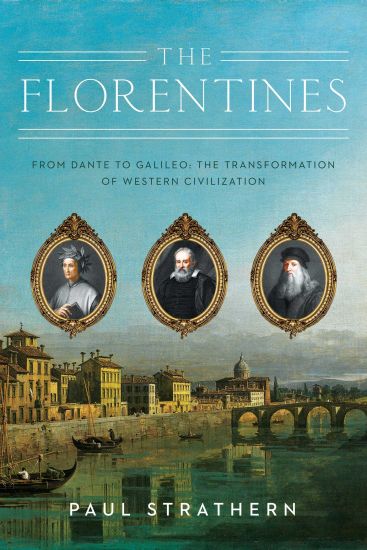
The Florentines: From Dante to Galileo: The Transformation of Western Civilization
A sweeping and magisterial four-hundred-year history of both the city and the people who gave birth to the Renaissance. Between the birth of Dante in 1265 and the death of Galileo in 1642, something happened that transformed the entire culture of western civilization. Painting, sculpture, and architecture would all visibly change in such a striking fashion that there could be no going back on what had taken place. Likewise, the thought and self-conception of humanity would take on a completely new aspect. Sciences would be born--or emerge in an entirely new guise. The ideas that broke this mold began, and continued to flourish, in the city of Florence in northern central Italy. These ideas, which placed an increasing emphasis on the development of our common humanity--rather than other-worldly spirituality--coalesced in what came to be known as humanism. This philosophy and its new ideas would eventually spread across Italy, yet wherever they took hold they would retain an element essential to their origin. And as they spread further across Europe, this element would remain. Transformations of human culture throughout western history have remained indelibly stamped by their origins. The Reformation would always retain something of central and northern Germany. The Industrial Revolution soon outgrew its British origins, yet also retained something of its original template. Closer to the present, the IT revolution that began in Silicon Valley remains indelibly colored by its Californian origins. Paul Strathern shows how Florence, and the Florentines themselves, played a similarly unique and transformative role in the Renaissance.
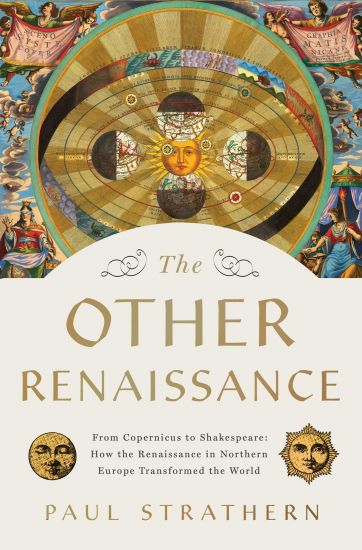
The Other Renaissance: From Copernicus to Shakespeare: How the Renaissance in Northern Europe Transformed the World
An original, illuminating history of the northern European Renaissance in art, science, and philosophy, which often rivaled its Italian counterpart. It is generally accepted that the European Renaissance began in Italy. However, a historical transformation of similar magnitude also took place in northern Europe at the same time. This "Other Renaissance" was initially centered on the city of Bruges in Flanders (modern Belgium), but its influence was soon being felt in France, the German states, London, and even in Italy itself. The northern Renaissance, like the southern Renaissance, largely took place during the period between the end of the Medieval age (circa mid-14th century) and the advent of the Age of Enlightenment (circa end of 17th century). Following a sequence of major figures, including Copernicus, Gutenberg, Luther, Catherine de' Medici, Rabelais, van Eyck, and Shakespeare, Paul Strathern tells the fascinating story of how this "Other Renaissance" played as significant a role as the Italian renaissance in bringing our modern world into being.
Mendeleyev's Dream

Mendeleyev's Dream

Paul Strathern

Pegasus Books
2022
sidottu
**One of Bill Gates' Top Five Book Recommendations** In 1869 Russian scientist Dmitri Mendeleyev was puzzling over a way to bring order to the fledgling science of chemistry. Wearied by the effort, he fell asleep at his desk. What he dreamed would fundamentally change the way we see the world.Framing this history is the life story of the nineteenth-century Russian scientist Dmitri Mendeleyev, who fell asleep at his desk and awoke after conceiving the periodic table in a dream-the template upon which modern chemistry is founded and the formulation of which marked chemistry's coming of age as a science. From ancient philosophy through medieval alchemy to the splitting of the atom, this is the true story of the birth of chemistry and the role of one man's dream.In this elegant, erudite, and entertaining book, Paul Strathern unravels the quixotic history of chemistry through the quest for the elements.
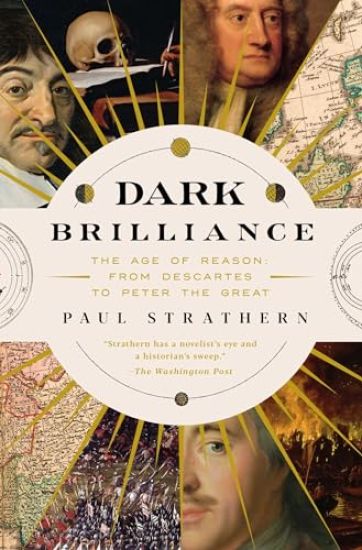
Dark Brilliance: The Age of Reason: From Descartes to Peter the Great
A sweeping history of The Age of Reason, revealing how--although it was a time of great progress--it was also an era of brutality and intolerance with a very human cost. During the 1600s--between the end of the Renaissance and the start of the Enlightenment--Europe lived through an era known as The Age of Reason. This was a revolutionary period that saw great advances in areas such as art, science, philosophy, political theory, and economics. However, all this was accomplished against a background of extreme political turbulence on a continental scale, in the form of internal conflicts and international wars. Indeed, the Age of Reason itself was born at the same time as the Thirty Years' War, which would devastate central Europe to an extent that would not be experienced again until World War I. This period also saw the development of European empires across the world, as well as a lucrative new transatlantic commerce that brought transformative riches to Western European society. However, there was a dark underside to this brilliant wealth: it was dependent upon human slavery. By exploring all the key events and bringing to life some of the most influential characters of the era--including Caravaggio, Rembrandt, Newton, Descartes, Spinoza, Louis XIV, and Charles I--acclaimed historian Paul Strathern tells the vivid story of this paradoxical age, while also exploring the painful cost of creating the progress and modernity upon which the Western world was built.
Mendeleyev's Dream: The Quest for the Elements
The wondrous and illuminating story of humankind's quest to discover the fundamentals of chemistry, culminating in Mendeleyev's dream of the Periodic Table. **One of Bill Gates' Top Five Book Recommendations** In 1869 Russian scientist Dmitri Mendeleyev was puzzling over a way to bring order to the fledgling science of chemistry. Wearied by the effort, he fell asleep at his desk. What he dreamed would fundamentally change the way we see the world. Framing this history is the life story of the nineteenth-century Russian scientist Dmitri Mendeleyev, who fell asleep at his desk and awoke after conceiving the periodic table in a dream-the template upon which modern chemistry is founded and the formulation of which marked chemistry's coming of age as a science. From ancient philosophy through medieval alchemy to the splitting of the atom, this is the true story of the birth of chemistry and the role of one man's dream. In this elegant, erudite, and entertaining book, Paul Strathern unravels the quixotic history of chemistry through the quest for the elements.
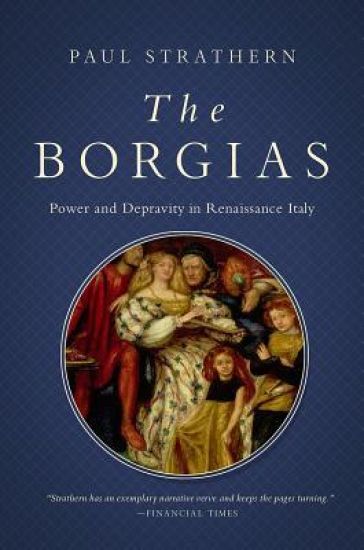
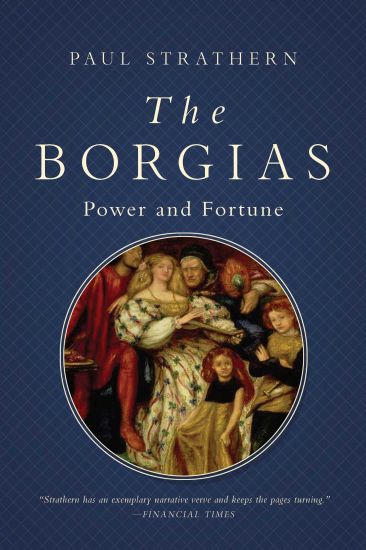
The Borgias

The Borgias

Paul Strathern

Pegasus Books
2022
sidottu
The glorious and infamous history of the Borgia family-a world of saints, corrupt popes, and depraved princes and poisoners-set against the golden age of the Italian Renaissance.The Borgia family have become a byword for evil. Corruption, incest, ruthless megalomania, avarice and vicious cruelty-all have been associated with their name. And yet, paradoxically, this family lived when the Renaissance was coming into its full flowering in Italy. Examples of infamy flourished alongside some of the finest art produced in western history.This is but one of several paradoxes associated with the Borgia family. For the family which produced corrupt popes, depraved princes and poisoners, would also produce a saint. Previously history has tended to condemn, or attempt in part to exonerate, this remarkable family. Yet in order to understand the Borgias, the Borgias must be related to their time, together with the world which enabled them to flourish. Within this context the Renaissance itself takes on a very different aspect. Was the corruption part of the creation, or vice versa? Would one have been possible without the other?The powerful forces which first played out in the amphitheaters of ancient Greece: hubris, incest, murder, rivalries and doomed families, treacheries of political power, twists of fate-they are all here. Along with the final, tragic downfall. All these elements are played out in full in the glorious and infamous history of the Borgia family.
The Borgias: Power and Fortune

The Borgias: Power and Fortune

Paul Strathern

Pegasus Books
2020
nidottu
The glorious and infamous history of the Borgia family--a world of saints, corrupt popes, and depraved princes and poisoners--set against the golden age of the Italian Renaissance. The Borgia family have become a byword for evil. Corruption, incest, ruthless megalomania, avarice and vicious cruelty--all have been associated with their name. And yet, paradoxically, this family lived when the Renaissance was coming into its full flowering in Italy. Examples of infamy flourished alongside some of the finest art produced in western history. This is but one of several paradoxes associated with the Borgia family. For the family which produced corrupt popes, depraved princes and poisoners, would also produce a saint. These paradoxes which so characterize the Borgias have seldom been examined in great detail. Previously history has tended to condemn, or attempt in part to exonerate, this remarkable family. Yet in order to understand the Borgias, much more is needed than evidence for and against. The Borgias must be related to their time, together with the world which enabled them to flourish. Within this context the Renaissance itself takes on a very different aspect. Was the corruption part of the creation, or vice versa? Would one have been possible without the other? In this way, the Borgia too represent the greatest aspirations of the Renaissance. Condemning the Borgia is as futile as attempting to exonerate them. Their leadership and their depravity must both be taken into account, for it would appear that they are both part of the same picture. In the nineteenth century the German philosopher Nietzsche would outline his theory of the Will to Power. In the ensuing century this idea would be hijacked by the Fascists and put into ruthless practice. The Borgia were no Fascists, nor were they thinkers of the calibre of Nietzsche: yet it is arguable that they united both the idea and the practice of the Will to Power some four centuries prior to Nietzsche's conception of this guiding human principle. Telling the story of the Borgias becomes both an illustration and an exemplary analysis of the strengths and flaws of this evolutionary idea. The primitive psychological forces which first played out in the amphitheaters of ancient Greece: hubris, incest, murder, the bitter rivalries and entanglements of doomed families, the treacheries of political power, the twists of fate--they are all here. Along with the final, tragic downfall. All these elements are played out in full in the glorious and infamous history of the Borgia family.

The Florentines: From Dante to Galileo: The Transformation of Western Civilization
A sweeping and magisterial four-hundred-year history of both the city and the people who gave birth to the Renaissance. Between the birth of Dante in 1265 and the death of Galileo in 1642, something happened that transformed the entire culture of western civilization. Painting, sculpture, and architecture would all visibly change in such a striking fashion that there could be no going back on what had taken place. Likewise, the thought and self-conception of humanity would take on a completely new aspect. Sciences would be born--or emerge in an entirely new guise. The ideas that broke this mold began, and continued to flourish, in the city of Florence in northern central Italy. These ideas, which placed an increasing emphasis on the development of our common humanity--rather than other-worldly spirituality--coalesced in what came to be known as humanism. This philosophy and its new ideas would eventually spread across Italy, yet wherever they took hold they would retain an element essential to their origin. And as they spread further across Europe, this element would remain. Transformations of human culture throughout western history have remained indelibly stamped by their origins. The Reformation would always retain something of central and northern Germany. The Industrial Revolution soon outgrew its British origins, yet also retained something of its original template. Closer to the present, the IT revolution that began in Silicon Valley remains indelibly colored by its Californian origins. Paul Strathern shows how Florence, and the Florentines themselves, played a similarly unique and transformative role in the Renaissance.
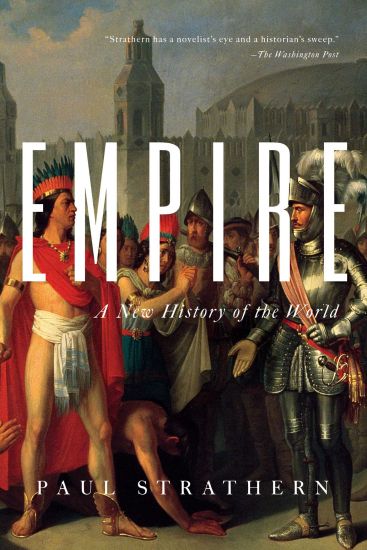
Empire: A New History of the World

Empire: A New History of the World

Paul Strathern

Pegasus Books
2021
nidottu
A dazzling new history of the world told through the ten major empires of human civilization. Eminent historian Paul Strathern opens the story of Empire with the Akkadian civilization, which ruled over a vast expanse of the region of ancient Mesopotamia, then turns to the immense Roman Empire, where we trace back our Western and Eastern roots. Next the narrative describes how a great deal of Western Classical culture was developed in the Abbasid and Umayyad Caliphates. Then, while Europe was beginning to emerge from a period of cultural stagnation, it almost fell to a whirlwind invasion from the East, at which point we meet the Emperors of the Mongol Empire . . . Combining breathtaking scope with masterful narrative control, Paul Strathern traces these connections across four millennia and sheds new light on these major civilizations--from the Mongol Empire and the Yuan Dynasty to the Aztec and Ottoman Empires, through to the most recent and biggest empires: the British, Russo-Soviet, and American. Charting five thousand years of global history in ten lucid chapters, Empire makes comprehensive and inspiring reading to anyone fascinated by the history of the world.