Kirjahaku
Etsi kirjoja tekijän nimen, kirjan nimen tai ISBN:n perusteella.
44 kirjaa tekijältä Peter Doyle
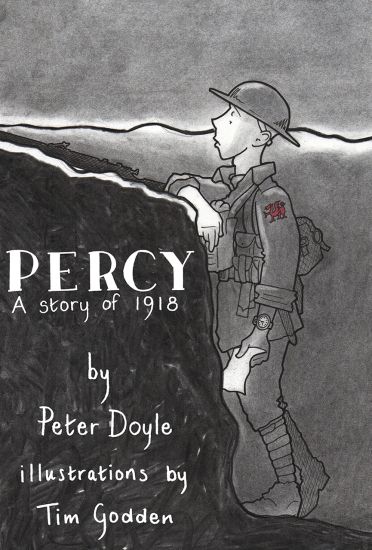
One day, a small bundle of letters was found in a flea market. Kept together for one hundred years, these few letters tell of one teenage boy, Percy, and his girl, Kitty. This is a story of 1918, and of young people caught up in war, and of the war itself. It is a true story. Percy Edwards was conscripted into the Royal Welsh Fusiliers in 1918. Trained at Sniggery Camp near Liverpool, he was sent to the front, aged just 18. Percy’s letters were few and his words sparse and immature, but they are very powerful. Tragically, he was to die of his wounds three weeks after his arrival. Percy: A Story of 1918 is a unique book. Built around the words of a Young man from Wales, its narrative is constructed from surviving documents, war diaries, accounts of battle, and newspapers. It is an accurate picture of the war of 1918, a true story of one soldier representing the bigger picture. Written by historian Peter Doyle in prose that is accessible to young readers, it is illustrated by Tim Godden, renowned illustrator of the war. What Percy brings is an authentic testimony of the final year of the Great war, through the eyes of one young man. Percy’s story is typical of the last year of the war, when the British Army fielded a conscript army of 18 year olds. It was this army that would go on to win the war. It is also a story of the contribution of Wales to the Great War.
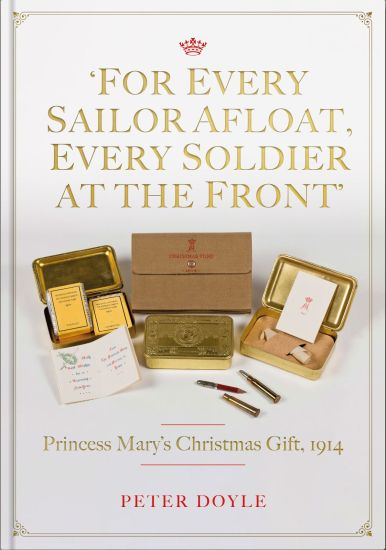
For Every Sailor Afloat, Every Soldier at the Front
Peter Doyle
Unicorn Publishing Group
2021
sidottu
In 1914, Princess Mary, the only daughter of King George V, was just 17. Yet with the world war two months old, the young princess was destined to make her mark. She would send a Christmas gift to all those serving in uniform, ‘afloat and at the front.’ With great determination, she set about her task to provide her gift to all those on active service. For Every Sailor Afloat, Every Soldier at the Front is the first time the full story of the princess’s gift has been told. Using original sources, texts and archives, and illustrating original surviving objects, this book unfolds the true story of the fund and its wider meaning, set, as it is, in the context of hope as provided by the unofficial Truce in No Man’s Land that has been so well documented. Princess Mary’s gift was extremely sophisticated; great pains were taken to ensure that the needs of its recipients were met, based on ethnicity, gender, religious observance and personal preference – the Gift Committee was way ahead of its time. By 1919, some 2.7 million people from across the British Empire had received the gift. Well-illustrated and fully sourced, this book will provide those interested in the first Christmas of the War a greater perspective of the achievements of its founder, of the meaning of the gift to the recipients, and of the nature of the gift itself, such that prevailing myths and misunderstandings of its constituents and recipients will be resolved.
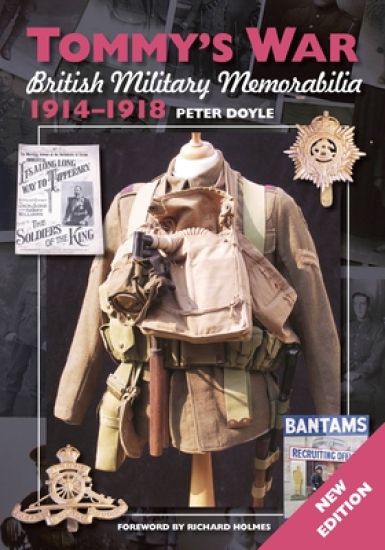
The First World War has left an almost indelible mark on history, with battles such as the Somme and Passchendaele becoming watchwords for suffering unsurpassed. The dreadful fighting on the Western Front, and elsewhere in the world, remains vivid in the public imagination. Over the years dozens of books have been published dealing with the soldier's experience, the military history and the weapons and vehicles of the war, but there has been little devoted to the objects associated with those hard years in the trenches. This book (new in paperback) redresses that balance. With hundreds of carefully captioned photographs of items that would have been part of the everyday life for the British Tommy; from recruiting posters, uniforms and entrenching equipment to games, postcards and pieces of 'trench art', this book brings to life the experience of the Great War soldier through the objects with which he would have been surrounded.
Marketing Management and Strategy
Peter Doyle; Phil Stern
Financial Times Prentice Hall
2006
nidottu
Marketing Management and Strategy is a concise and practical management guide to the latest ideas in advanced Marketing and Strategy. The authors show how to develop a marketing orientation in the organisation and how this impacts on the ultimate corporate goals of profit, growth and security. They then examine how marketing strategies are developed and implemented through effective product, pricing, distribution, communication and services. This is a core text for MBA Marketing Management course and for university short courses for executives. This will also be suitable for any undergraduates or postgraduates on marketing strategy courses.
The Key to Earth History
Peter Doyle; Matthew R. Bennett; Alistair N. Baxter
John Wiley Sons Inc
2001
nidottu
The Key to Earth History introduces students to the basic tools used by geologists to reconstruct the Earth's history, and shows how these tools can be used to chart the pattern of global environmental change since the formation of the Earth some 4600 million years ago. It tells a story of mountain building, climate change and of the evolution of life, and uses the North Atlantic region (Europe and North America) as a study area to illustrate this story. Divided into two parts, the book shows how stratigraphy is the key to understanding the history of the Earth. The first part examines the basic stratigraphical methods used to establish, date and interpret the rock record as the product of a series of events whithin Earth history. The second part presents the results obtained by geologists, who have used these stratigraphical tools to reconstruct the pattern of global environmental change through geological time and focuses on the geological evolution of the North Atlantic region. The Key to Earth History is essential reading for geologists, geographers and environmental scientists, as well as to all those interested in the story of the planet. 'The authors provide no one with an alibi for bad stratigraphic teaching!' Geoscientist 'The aims of this introductory textbook are to explain the process and pattern of Earth history, to generate interest and enthusiasm, to make stratigraphy fun and exciting! These aims are admirably achieved.' The Holocene 'This is a great little book! I found that, not only was everything covered, but that it was covered in a refreshing, readable, no-nonsense fashion.' Earth Science Reviews 'The Key to Earth History really should be compulsory reading for all ... geology students.' Geologie
British Army Cap Badges of the Second World War
Peter Doyle; Chris Foster
Shire Publications
2012
nidottu
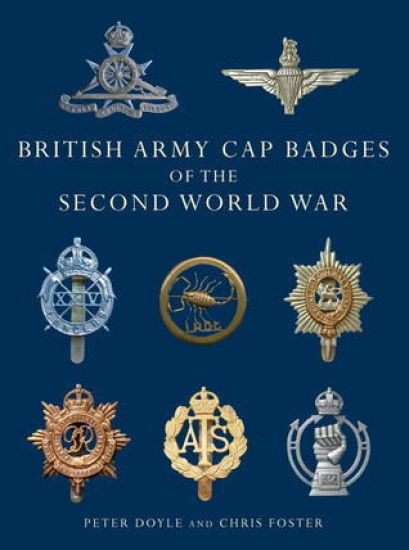
In their companion volume to British Army Cap Badges of the First World War, authors Peter Doyle and Chris Foster present an overview of the main cap badges worn by the British Army during the Second World War, which continued the rich and varied tradition of British regimental insignia. This book describes and illustrates, for the first time in high quality full colour, the main types of cap badge worn. With many amalgamations, war-raised units and special forces, British military insignia from the period have a surprising range that differs substantially from that worn by the soldiers of the previous generation. As in the first book, this volume contains contemporary illustrations of the soldiers themselves wearing the badges. Employing the skills of an established writer (and collector) and artist, it provides a unique reference guide for anyone interested in the British Army of the period.
Innovation in Marketing is a unique collection of empirical material describing both systems innovation and the launch of new products. This ranges from the development of new high tech items such as the Organiser from Psion, to the transfer of a major brand such as Virgin Direct to a new market. Based on this the authors have developed a clear analytical model for managing innovation with a marketing perspective. Doyle and Bridgewater illustrate the key themes using case materials and the entirely new new work it contains on the linkage between innovation and shareholder value. This gives the student and professional a new decision making perspective. The key themes that structure the book are: Marketing and innovation - the model, innovation and strategy, marketing strategies and shareholder value, best practice in innovation management, effectiveness in innovation.
It was a war that shaped the modern world, fought on five continents, claiming the lives of ten million people. Two great nations met each other on the field of battle for the first time. But were they so very different? For the first time, and drawing widely on archive material in the form of original letters and diaries, Peter Doyle and Robin Schäfer bring together the two sides, ‘Fritz’ and ‘Tommy’, to examine cultural and military nuances that have until now been left untouched: their approaches to war, their lives at the front, their greatest fears and their hopes for the future. The soldiers on both sides went to war with high ideals; they experienced horror and misery, but also comradeship/Kameradschaft. And with increasing alienation from the people at home, they drew closer together, ‘the Hun’ transformed into ‘good old Jerry’ by the war’s end. This unique collaboration is a refreshing yet touching examination of how little truly divided the men on either side of no-man’sland during the First World War.
The British Army in the First World War was not only the largest the country had placed in the field but also the biggest single organisation created by the nation up to that time. Nearly 6 million men served in its ranks between August 1914 and November 1918. A remarkable 2.5 million of those who enlisted were volunteers responding to appeals issued by Field Marshal Lord Kitchener, then the Secretary of State for War. This book tells the amazing story of ‘Kitchener’s Army’ and its volunteer soldiers, the men of the ‘First Hundred Thousand’ and the many Pals’ battalions that were later raised across Britain, in its industrial heartlands and leafy shires alike. Their journey to the Somme and the tragedy of July 1916 had a huge impact on the communities these men left behind. Through artefacts and original documents, this moving tribute bears witness to the indelible imprint this memorable ‘mob’ made on our history.
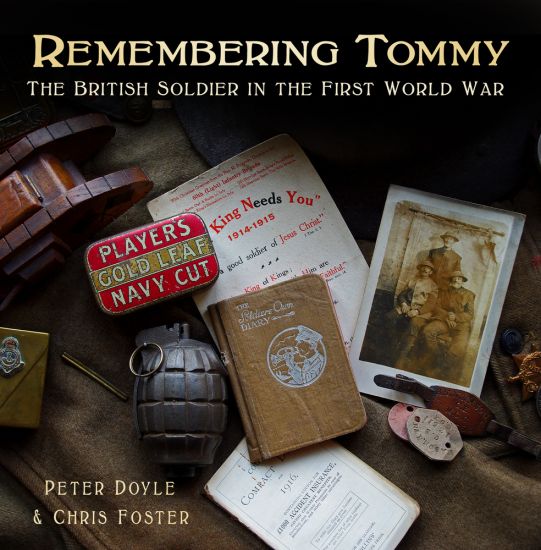
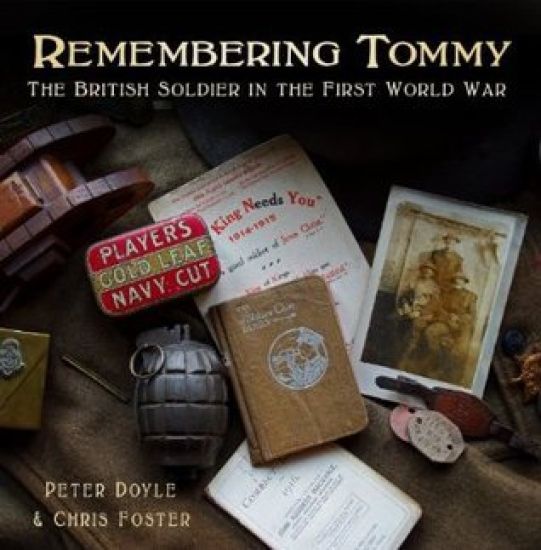
The British soldier of the Great War has been depicted in many books. Invariably, a pen picture paints him as stoic, joining the army in a wave of patriotic fervour, and destined to serve four years on the Western Front in some of the most costly battles in history. Yet often the picture is difficult to resolve for the reader. How did the soldier live, where did he sleep? What was it like to go over the top, and when he did, what did he carry with him? For many, the idea of trench life is hazy, and usually involves ‘drowning in mud’, in, as one writer put it, ‘the pitiless misery’ of Passchendaele. Remembering Tommy pays tribute to the real British soldier of the Great War. In stunning images of uniforms, equipment and ephemera, it conjures the atmosphere of the trenches through the belongings of the soldiers themselves – allowing us almost to reach out and touch history.
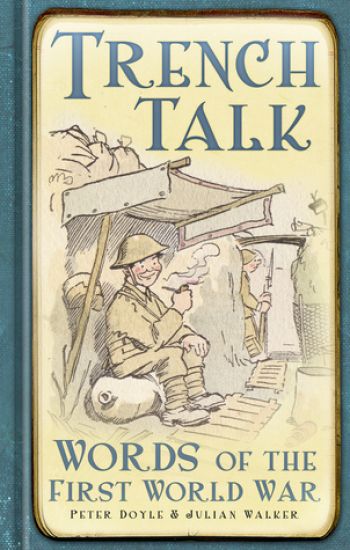
The First World War largely directed the course of the twentieth century. Fought on three continents, the war saw 14 million killed and 34 million wounded. Its impact shaped the world we live in today, and the language of the trenches continues to live in the modern consciousness. One of the enduring myths of the First World War is that the experience of the trenches was not talked about. Yet dozens of words entered or became familiar in the English language as a direct result of the soldiers’ experiences. This book looks at how the experience of the First World War changed the English language, adding words that were both in slang and standard military use, and modifying the usage and connotations of existing words and phrases. Illustrated with material from the authors’ collections and photographs of the objects of the war, the book will look at how the words emerged into everyday language.
The British soldier of the Great War has been depicted in many books. Invariably, a pen picture paints him as stoic, joining the army in a wave of patriotic fervour, and destined to serve four years on the Western Front in some of the most costly battles in history. Yet often the picture is difficult to resolve for the reader. What was it like in the trenches? How did the soldier live, where did he sleep? What was it like to go over the top, and when he did, what did he carry with him? For many, the idea of trench life is hazy, and usually involves ‘drowning in mud’, in, as one writer put it, ‘the pitiless misery’ of Passchendaele. Recently, military historians have presented an alternative picture, a picture in which the hopelessness of the First World War is given new life and purpose. Remembering Tommy pays tribute to the real life British soldier of the Great War from the moment of joining up to their final homecoming. Using original artefacts in historic settings, the men and their words are brought to life. The uniforms they wore, the equipment they carried, the letters they wrote home, their personal possessions, mementos and photographs come together in a powerful tribute to the indomitable Tommy. Each one of these precious artefacts bears witness to the men who left them behind – allowing us to almost reach out and touch history.
Innovation in Marketing is a unique collection of empirical material describing both systems innovation and the launch of new products. This ranges from the development of new high tech items such as the Organiser from Psion, to the transfer of a major brand such as Virgin Direct to a new market. Based on this the authors have developed a clear analytical model for managing innovation with a marketing perspective.Doyle and Bridgewater illustrate the key themes using case materials and the entirely new new work it contains on the linkage between innovation and shareholder value. This gives the student and professional a new decision making perspective. The key themes that structure the book are: Marketing and innovation - the model, innovation and strategy, marketing strategies and shareholder value, best practice in innovation management, effectiveness in innovation.
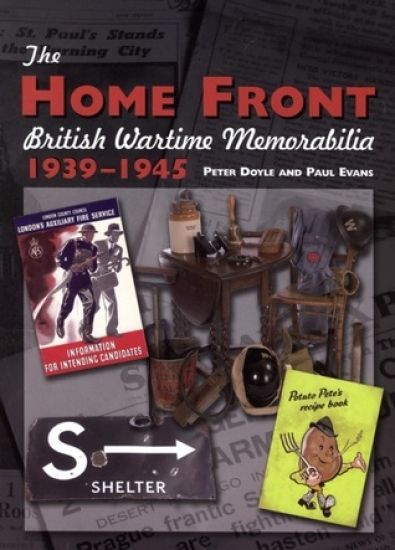
For those living in Britain between 1939 and 1945, the war was an ever-present reality; reminders were to be found everywhere. Huge numbers of objects relating to the war effort at home - some functional, like gas masks, ARP uniforms and ration books, and others less so, like Hitler chamber pots and toys and games - were manufactured and became commonplace in homes up and down the land.
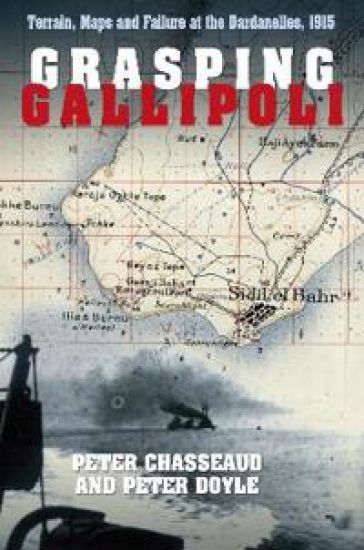
The failure of the Gallipoli campaign was instantly blamed on a great untruth – that the War Office was unprepared for Dardanelles operations and gave Sir Ian Hamilton little in the way of maps and terrain intelligence. This myth is repeated by current historians. The Dardanelles Commission became a battleground of accusation and counter-accusation. This book, incorporating much previously unpublished material, demonstrates that geographical intelligence preparations had indeed been made by the War Office and the Admiralty for decades. They had collected a huge amount of terrain information, maps and charts covering the topography and defences, and knew a great deal about Greek plans to capture the Gallipoli Peninsula. At least one plan was Anglo-Greek!Much of this material, which is here identified and evaluated, was handed over to Hamilton’s Staff. Additional material was obtained in theatre before the landings, T. E. Lawrence playing a part. Grasping Gallipolli, which is the first book to examine the intelligence and mapping side of the Dardanelles campaign, looks closely at its terrain, and describes the production and development of new operations maps, and clarifies whether the intelligence was properly processed and efficiently used. It also examines the use of aerial photos taken by the Royal Naval Air Service during the campaign, and charting, hydrographic and other intelligence work by the Royal Navy.
The failure of the Gallipoli campaign was instantly blamed on a great untruth – that the War Office was unprepared. This book, incorporating information unavailable elsewhere, shows that in fact the WO and the Admiralty had amassed a huge amount of data. Aerial reconnaissance had played a part – even Lawrence of Arabia had done his bit! The War Office knew all about Greek plans to capture the peninsula and one plan was even Anglo-Greek. The authors examine all the intelligence and how it was used or ignored and in the process, in the words of the late Richard Holmes they ‘illuminate a wildly beautiful landscape, which never fails to charm and shock me in equal measure.’
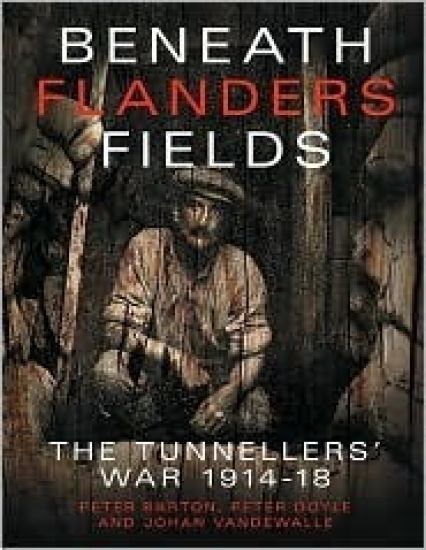
Beneath Flanders Fields
Peter Barton; Peter Doyle; John Vandewalle
McGill-Queen's University Press
2014
nidottu
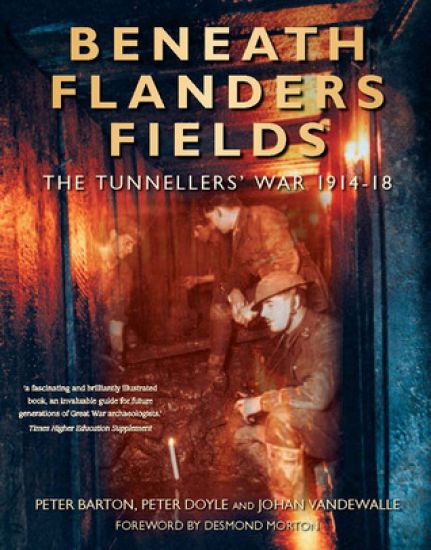
The result of over twenty-five years of research, Beneath Flanders Fields reveals how this intense underground battle was fought and won. The authors give the first full account of mine warfare in World War I through the words of the tunnellers themselves as well as plans, drawings, and previously unpublished archive photographs, many in colour. Beneath Flanders Fields also shows how military mining evolved. The tunnellers constructed hundreds of deep dugouts that housed tens of thousands of troops. Often electrically lit and ventilated, these tunnels incorporated headquarters, cookhouses, soup kitchens, hospitals, drying rooms, and workshops. A few dugouts survive today, a final physical legacy of the Great War, and are presented for the first time in photographs in Beneath Flanders Fields.
Beneath Flanders Fields
Peter Barton; John Vandewalle; Peter Doyle
Spellmount Publishers Ltd
2003
sidottu
This highly illustrated, definitive, important, book is the first full account of the British and German mine warfare of the Ypres Salient combining personal testimonies of the tunnellers themselves with details of the workings, giving the reader a new insight into this most secret of all Great War battles and incorporating a host of previously unpublished archive photographs.
Beneath Flanders Fields
Peter Barton; John Vandewalle; Peter Doyle
Spellmount Publishers Ltd
2007
nidottu
Whilst the war raged across Flanders fields, an equally horrifying and sometimes more dangerous battle took place underground. Beneath Flanders Fields tells the story of the tunnellers’ war, which still remains one of the most misunderstood, misrepresented and mystifying conflicts of the Great War.A wealth of personal testimonies reveal the engineering, technology and science behind how this most intense of battles was fought – and won. They speak of how the tunnellers lived a relentless existence in the depths of the battlefield for almost two and a half years, enduring physical and mental stresses that were often more extreme than their infantry counterparts. Their lives were reduced to a complex war of silence, tension and claustrophobia, leading up to the most dramatic mine offensive in history launched on 7 June 1917 at Messines Ridge. Yet, Messines was not the end of their story, which continued with the crafting of a whole underground world of headquarters, cookhouses and hospitals, housing the innumerable troops who passed through this part of the Western Front.Here, this extraordinary, hidden world is revealed and the fragile legacy it has left behind on Flanders fields is brought to light.Peter Barton, like so many others, derived his passion for the Great War from his grandfather, who served in a veterinary unit near Ypres, and from veteran friends like Bert Fearns, to whom this book is dedicated. He is a filmmaker and writer, and secretary of the All Party Parliamentary War Graves and Battlefields Heritage Group.Peter Doyle is a geologist – and latterly an archaeologist – with a special interest in the role of geology and terrain in the outcome of battles. Amongst others, he has made studies of the Great War battlefields of the Western Front, Gallipoli and Salonika. With Peter Barton, he is co-secretary of the All Parliamentary War Graves and Battlefields Heritage Group.Johan Vandewalle was born and bred in Zonnebeke. He grew up surrounded by the legacy of the Great War, and many childhood adventures involved things subterranean. Although today a skilled carpenter, his working life began as a professional civil engineer tunneller, and the combined knowledge of both disciplines has created a passion and technical understanding of the underground war which has made him the foremost explorer of the tunnels and dugouts in Flanders. Johan can be found on most evenings at his other business, the Café De Dreve on the corner of Polygon Wood, the home of the underground war in the Ypres Salient.
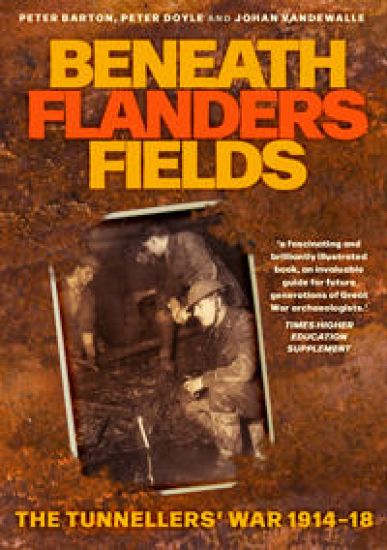
Beneath Flanders Fields
Peter Barton; John Vandewalle; Peter Doyle
THE HISTORY PRESS LTD
2026
nidottu
Whilst the war raged across Flanders fields, an equally horrifying and sometimes more dangerous battle took place underground. Beneath Flanders Fields tells the story of the tunnellers’ war, which still remains one of the most misunderstood, misrepresented and mystifying conflicts of the Great War. A wealth of personal testimonies reveal the engineering, technology and science behind how this most intense of battles was fought – and won. They speak of how the tunnellers lived a relentless existence in the depths of the battlefield for almost two and a half years, enduring physical and mental stresses that were often more extreme than their infantry counterparts. Their lives were reduced to a complex war of silence, tension and claustrophobia, leading up to the most dramatic mine offensive in history launched on 7 June 1917 at Messines Ridge. Yet, Messines was not the end of their story, which continued with the crafting of a whole underground world of headquarters, cookhouses and hospitals, housing the innumerable troops who passed through this part of the Western Front. Here, this extraordinary, hidden world is revealed and the fragile legacy it has left behind on Flanders fields is brought to light.