This textbook is suitable for students from seven to ten years. Each left-hand page shows methods with worked examples. The corresponding right-hand page gives questions for the student to try. Topics covered include: counting and number sequences; addition; subtraction; and shapes.
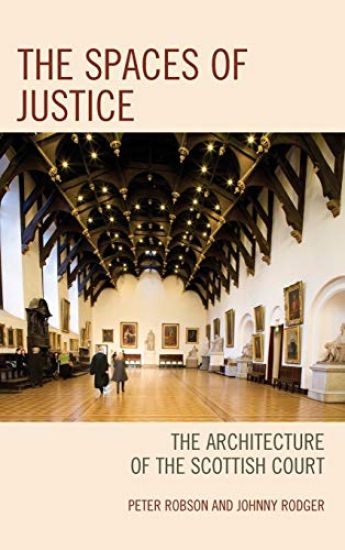
This book looks at the architecture of the courts in Scotland and the importance of these civic spaces. Given the importance of courts to the legal experience it starts by exploring why scholars have been so reticent in examining spaces in which the administration of justice takes place. It notes the major changes already unfolding in Scotland and puts these into a historical and cultural context. The authors trace the emergence of the notion of the dedicated courtroom space in 19th century Scotland and the ways in which the courtroom setting affected the exercise of power through law. They show what factors led to the adoption of different architectural styles. They examine the changes in the legal, political and social world which drove such changes and how these changed in the 20th and 21st centuries. They also examine the symbolic functions of courts both internally and externally. They note the changes in the decision-makers and their goals in the 21st century and how this will lead to a very different kind of courtroom in the near future. They examine the wider factors affecting the process of litigation and trends in dispute resolution. They conclude that the goals of transparency and civil dignity have serious implications for the kinds of spaces which will serve as halls of justice in the future. Since these are driven, it seems, by financial imperatives it does not bode well for the retention of civic pride and community which the courts of justice might be said to embody.
This title was first published in 2001. Inspired by the thirtieth anniversary of Shelter Scotland, this volume provides an overview of Scottish housing policies and legislation, looks back at the changes to major tenures, eviction policies and homelessness over the past thirty years and explores the potential of the new Scottish Parliament to bring about change in this important social, political and economic arena.
This title was first published in 2001. Inspired by the thirtieth anniversary of Shelter Scotland, this volume provides an overview of Scottish housing policies and legislation, looks back at the changes to major tenures, eviction policies and homelessness over the past thirty years and explores the potential of the new Scottish Parliament to bring about change in this important social, political and economic arena.
Described by Richard Sherwin of New York Law School as the law and film movement's 'founding text', this text is a second, heavily revised and improved edition of the original Film and the Law (Cavendish Publishing, 2001). The book is distinctive in a number of ways: it is unique as a sustained book-length exposition on law and film by law scholars; it is distinctive within law and film scholarship in its attempt to plot the parameters of a distinctive genre of law films; its examination of law in film as place and space offers a new way out of the law film genre problem, and also offers an examination of representations of an aspect of legal practice, and legal institutions, that have not been addressed by other scholars. It is original in its contribution to work within the wider parameters of law and popular culture and offers a sustained challenge to traditional legal scholarship, amply demonstrating the practical and the pedagogic, as well as the moral and political significance of popular cultural representations of law. The book is a valuable teaching and learning resource, and is the first in the field to serve as a basic guidebook for students of law and film.