Kirjojen hintavertailu. Mukana 12 402 875 kirjaa ja 12 kauppaa.

Kirjahaku

Etsi kirjoja tekijän nimen, kirjan nimen tai ISBN:n perusteella.

45 kirjaa tekijältä Rob White

Crimes Against Nature

Crimes Against Nature

Rob White

Willan Publishing
2008
sidottu
Crimes Against Nature provides a systematic account and analysis of the key concerns of green criminology, written by one of the leading authorities in the field. The book draws upon the disciplines of environmental studies, environmental sociology and environmental management as well as criminology and socio-legal studies, and draws upon a wide range of examples of crimes against the environment – ranging from toxic waste, logging, wildlife smuggling, bio-piracy, the use and transport of ozone depleting substances through to illegal logging and fishing, water pollution and animal abuse.The book is divided into three parts: Part 1 sets out theoretical approaches and perspectives on the subject; Part 2 explores the (national and international) dimensions of environmental crime and the explanations for it; Part 3 deals with the range of responses to environmental crime - environmental law enforcement, regulation, environmental crime prevention and the role of global institutions and movements.
Transnational Environmental Crime

Transnational Environmental Crime

Rob White

Willan Publishing
2011
nidottu
This book provides a comprehensive introduction to and overview of eco-global criminology. Eco-global criminology refers to a criminological approach that is informed by ecological considerations and by a critical analysis that is global in scale and perspective. Based upon eco-justice conceptions of harm, it focuses on transgressions against environments, non-human species and humans. At the centre of eco-global criminology is analysis of transnational environmental crime. This includes crimes related to pollution (of air, water and land) and crimes against wildlife (including illegal trade in ivory as well as live animals). It also includes those harms that pose threats to the environment more generally (such as global warming). In addressing these issues, the book deals with topics such as the conceptualization of environmental crime or harm, the researching of transnational environmental harm, climate change and social conflict, threats to biodiversity, toxic waste and the transference of harm, prosecution and sentencing of environmental crimes, and environmental victimization and transnational activism. This book argues that analysis of transnational environmental crime needs to incorporate different notions of harm, and that the overarching perspective of eco-global criminology provides the framework for this.Transnational Environmental Crime will be an essential resource for students, academics, policy-makers, environmental managers, police, magistrates and others with a general interest in environmental issues.
Transnational Environmental Crime

Transnational Environmental Crime

Rob White

Willan Publishing
2011
sidottu
This book provides a comprehensive introduction to and overview of eco-global criminology. Eco-global criminology refers to a criminological approach that is informed by ecological considerations and by a critical analysis that is global in scale and perspective. Based upon eco-justice conceptions of harm, it focuses on transgressions against environments, non-human species and humans. At the centre of eco-global criminology is analysis of transnational environmental crime. This includes crimes related to pollution (of air, water and land) and crimes against wildlife (including illegal trade in ivory as well as live animals). It also includes those harms that pose threats to the environment more generally (such as global warming). In addressing these issues, the book deals with topics such as the conceptualization of environmental crime or harm, the researching of transnational environmental harm, climate change and social conflict, threats to biodiversity, toxic waste and the transference of harm, prosecution and sentencing of environmental crimes, and environmental victimization and transnational activism. This book argues that analysis of transnational environmental crime needs to incorporate different notions of harm, and that the overarching perspective of eco-global criminology provides the framework for this.Transnational Environmental Crime will be an essential resource for students, academics, policy-makers, environmental managers, police, magistrates and others with a general interest in environmental issues.
Teach Us to Pray

Teach Us to Pray

Rob White

Malcolm Down Publishing Ltd
2016
nidottu
Do you find praying easy, or a struggle? Here's some help so it becomes a delight. Based on the Lord’s Prayer, which was always intended to be a model for prayer rather than a prayer we learn by rote, Rob White examines each part of the prayer and shows how we can practically apply these to our everyday lives.
Ghost

Ghost

Rob White; Julie Welch

Vintage
2012
pokkari
When Spurs legend John White was killed by a bolt of lightning in 1964, the football world was rocked by the tragedy. To find answers he set out to speak to White's former teammates, his family and followers, and built up a touching portrait of a gifted young footballer and of a lost era.
Green Criminology

Green Criminology

Rob White; Diane Heckenberg

Routledge
2014
sidottu
Over the past ten years, the study of environmental harm and ‘crimes against nature’ has become an increasingly popular area of research amongst criminologists. This book represents the first international, comprehensive and introductory text for green criminology, offering a concise exposition of theory and concepts and providing extensive geographical coverage, diversity and depth to the many issues pertaining to environmental harm and crime.Divided into three sections, the book draws on a range of international case studies and examples, and looks at the conceptual and methodological foundations of green criminology, before examining in detail areas of environmental crime and harm, and how they are addressed, including: climate change and social conflict; abuse and harm to animals; threats to bio-diversity; pollution and toxic waste; environmental victims; environmental regulation, law enforcement and courts; environmental forensic studies; environmental crime prevention. Green Criminology is packed with pedagogical features, including dialogue boxes, case examples, discussion questions and lists of further reading and is perfect for students around the world engaged with green criminology and crime against the environment.
Green Criminology

Green Criminology

Rob White; Diane Heckenberg

Routledge
2014
nidottu
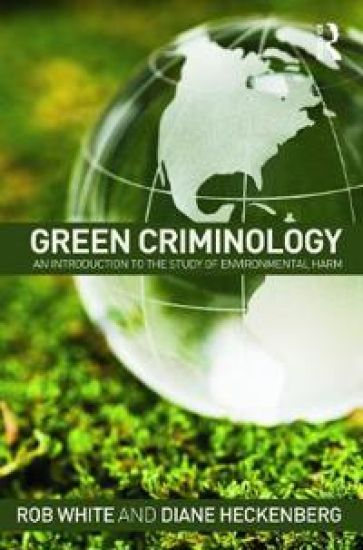
Over the past ten years, the study of environmental harm and ‘crimes against nature’ has become an increasingly popular area of research amongst criminologists. This book represents the first international, comprehensive and introductory text for green criminology, offering a concise exposition of theory and concepts and providing extensive geographical coverage, diversity and depth to the many issues pertaining to environmental harm and crime.Divided into three sections, the book draws on a range of international case studies and examples, and looks at the conceptual and methodological foundations of green criminology, before examining in detail areas of environmental crime and harm, and how they are addressed, including: climate change and social conflict; abuse and harm to animals; threats to bio-diversity; pollution and toxic waste; environmental victims; environmental regulation, law enforcement and courts; environmental forensic studies; environmental crime prevention. Green Criminology is packed with pedagogical features, including dialogue boxes, case examples, discussion questions and lists of further reading and is perfect for students around the world engaged with green criminology and crime against the environment.
Working With Offenders

Working With Offenders

Rob White; Hannah Graham

Willan Publishing
2010
nidottu
This book provides a theoretically informed guide to the practice of working with offenders in different settings and for different purposes. It deals with topics such as offender rehabilitation, case management, worker-offender relationships, working with difficult clients and situations, collaboration, addressing complex needs, and processes of integration. The book offers a unique perspective on working with offenders in that it incorporates three key elements. As part of the latter, it provides different types of data, including descriptions of programs and selected statistics from each jurisdiction, and presents this information in easy-to-read formats. The chapters are structured around a dual focus of workers and their environments on the one hand, and the nature of the offenders with whom they work on the other. The condition and situation of workers is thus considered in the context of the condition and situation of offenders, and the relationship between the two. The book is intended to be relevant and familiar to those already working in the field, as well as to introduce contemporary principles and practices to those wishing to do so in the future. Each chapter concludes with two key features. The first, Further Reading, is oriented toward concepts and the 'why' questions of practice. The second, Key Resources, alerts readers to appropriate manuals and handbooks, and the 'how' questions of practice. This includes reference to evidence-based examples of good practice and specific intervention models.
Working With Offenders

Working With Offenders

Rob White; Hannah Graham

Willan Publishing
2010
sidottu
This book provides a theoretically informed guide to the practice of working with offenders in different settings and for different purposes. It deals with topics such as offender rehabilitation, case management, worker-offender relationships, working with difficult clients and situations, collaboration, addressing complex needs, and processes of integration. The book offers a unique perspective on working with offenders in that it incorporates three key elements. As part of the latter, it provides different types of data, including descriptions of programs and selected statistics from each jurisdiction, and presents this information in easy-to-read formats. The chapters are structured around a dual focus of workers and their environments on the one hand, and the nature of the offenders with whom they work on the other. The condition and situation of workers is thus considered in the context of the condition and situation of offenders, and the relationship between the two. The book is intended to be relevant and familiar to those already working in the field, as well as to introduce contemporary principles and practices to those wishing to do so in the future. Each chapter concludes with two key features. The first, Further Reading, is oriented toward concepts and the 'why' questions of practice. The second, Key Resources, alerts readers to appropriate manuals and handbooks, and the 'how' questions of practice. This includes reference to evidence-based examples of good practice and specific intervention models.
Crime and Criminology

Crime and Criminology

Lauren Eisler; Rob White; Fiona Haines

OXFORD UNIVERSITY PRESS, CANADA
2022
nidottu
The fourth edition of Crime and Criminology is a concise, comprehensive overview of criminological theory. By relating classical and contemporary theories to current criminological concerns through case studies and examples - such as racial profiling, sex trafficking, domestic violence, and cybercrime - the fourth edition is an up-to-date and remarkably accessible introduction to the study of theory in Canadian criminology.
Media and Crime

Media and Crime

Katrina Clifford; Rob White

OUP Australia and New Zealand
2017
nidottu
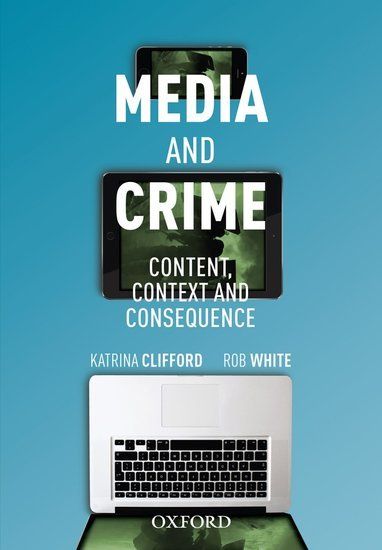
Public knowledge of crime and criminal justice often develops through the media to the extent that, for some people, the media may be their sole source of information on these issues and systems. The role that the media plays in shaping public perceptions of crime and criminality, and framing debates about criminal justice and responses to crime, is therefore undeniable. For these reasons, questions of media influence have become a prominent aspect of criminological theorising and inquiry. Media and Crime offers a new and innovative approach to these debates and analysis by combining the skills and expertise of journalism and media studies with criminological knowledge to critically interrogate the nexus between the media and crime, and the linkages between process, practice and representation. Wide-ranging in subject matter, and international in scope, it provides a theoretically informed analysis of media constructions of crime, criminality and criminal justice. Media and Crime will be of interest to scholars, practitioners and students of journalism, media studies, criminology, sociology, and the general reader.
Innovative Justice

Innovative Justice

Hannah Graham; Rob White

Routledge
2014
sidottu
This book showcases innovative justice initiatives from around the world which engage offenders, practitioners and communities to reduce reoffending and support desistance and positive change. It is groundbreaking in bringing together inspiring ideas and pioneering practices to analyse how ‘justice done differently’ is making a difference. The voices and experiences of the people at the forefront of these innovative initiatives are presented throughout the book, including offenders, corrections staff and directors, the judiciary, scientists and academics, volunteers and community organisations. Strengths-based research methods are used to investigate and celebrate best practices and ‘good news stories’ from the field. The authors raise critical questions about what is considered innovative and effective, for whom and in what context, presenting their own conceptual approach for analysing innovation. With initiatives drawn from diverse jurisdictions and cultures – including the UK, Europe, Australia, Asia, the US and South America – this book showcases original ideas and refreshing developments that have the potential to transform rehabilitation and reintegration practices. The book’s substance and style will resonate with practitioners, students and academics across the interdisciplinary fields of criminology and criminal justice.
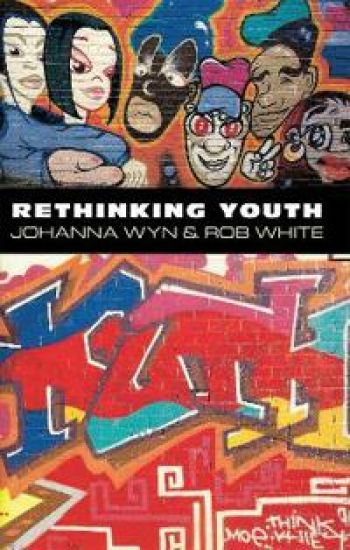
Rethinking Youth

Rethinking Youth

Johanna Wyn; Rob White

SAGE Publications Inc
1996
nidottu
Young people grow up in varied circumstances with different priorities and perspectives. While youth does not exist as a single group we need to understand what is happening in young people's lives. Rethinking Youth challenges the conventional wisdoms surrounding the position and opportunities of young people today and provides a systematic overview of the major perspectives in youth studies.
Innovative Justice

Innovative Justice

Hannah Graham; Rob White

Routledge
2015
nidottu
This book showcases innovative justice initiatives from around the world which engage offenders, practitioners and communities to reduce reoffending and support desistance and positive change. It is groundbreaking in bringing together inspiring ideas and pioneering practices to analyse how ‘justice done differently’ is making a difference. The voices and experiences of the people at the forefront of these innovative initiatives are presented throughout the book, including offenders, corrections staff and directors, the judiciary, scientists and academics, volunteers and community organisations. Strengths-based research methods are used to investigate and celebrate best practices and ‘good news stories’ from the field. The authors raise critical questions about what is considered innovative and effective, for whom and in what context, presenting their own conceptual approach for analysing innovation. With initiatives drawn from diverse jurisdictions and cultures – including the UK, Europe, Australia, Asia, the US and South America – this book showcases original ideas and refreshing developments that have the potential to transform rehabilitation and reintegration practices. The book’s substance and style will resonate with practitioners, students and academics across the interdisciplinary fields of criminology and criminal justice.
The Extinction Curve

The Extinction Curve

John Velden; Rob White

Emerald Publishing Limited
2021
nidottu
Global communities have arrived at a critical crossroads. The planet is heating up at a historically unprecedented rate and the ecological conditions sustaining vast species, including our own, are poised at irreversible tipping points. Time is up to avoid climate and ecological catastrophe. In such dire circumstances, 'business as usual' - and by extension 'politics as usual' - can no longer be accommodated. The Extinction Curve charts the dynamics of the economic and social relations driving this perilous climate endgame. Recent economic crises have fractured consent over the consequences of growth and globalisation, and political fracturing is now at a defining moment. Ultra-right nationalism, shaped by the vested interests of a tiny minority at the expense of the global majority, threatens descent into a darker and more fortressed world. In contrast, enhanced progressive and environmental activism presents hope of an alternative course. The 50-year attempt by the mainstream environmental movement to create a greener capitalism has failed to reach the required objectives. This book argues that reversing the extinction curve requires ending the growth pandemic embedded within the core of capitalism as a mode of production and consumption. It maps fresh directions for a democratic social, economic and sustainable ecological transformation in the interests of the global majority and, crucially, demonstrates how this can be achieved.
Rethinking Youth

Rethinking Youth

Johanna Wyn; Rob White

Allen Unwin
1997
nidottu
Young people grow up in varied circumstances with different priorities and perspectives. While youth does not exist as a single group we need to understand what is happening in young people's lives. Rethinking Youth challenges the conventional wisdoms surrounding the position and opportunities of young people today and provides a systematic overview of the major perspectives in youth studies.The authors demonstrate how the concept of youth involves a tension between the social significance of age, which gives young people a common status, and the significance of social divisions. Drawing upon studies from different societies, they examine debates surrounding youth and economy, youth development, youth subcultures, youth transitions and youth marginalisation.Rethinking Youth offers a provocative critique of mainstream conceptions of youth, the programs and strategies designed for 'at risk' young people, and policy development in youth affairs. It calls for greater sensitivity to the complexities of youth, and greater emphasis on democracy and equality in dealing with the problems experienced by young people in a rapidly changing world.Johanna Wyn is Director of the Youth Research Centre at the University of Melbourne. Rob White lectures in Criminology at the University of Melbourne.
Space Criminology

Space Criminology

Jack Lampkin; Rob White

Springer International Publishing AG
2023
sidottu
As humans expand the frequency and scale of interactions off-planet, Space Criminology ponders the nature of crime, harm and transgression in outer space and possible responses to these. The first book of its kind, it discusses the dynamics of space crime, from those involving powerful elites through to those associated with the mundane interactions of people living and working in space. It is essential reading for anyone interested in extra-terrestrial crime, space law, and criminal justice.
Space Criminology

Space Criminology

Jack Lampkin; Rob White

Springer International Publishing AG
2024
nidottu
As humans expand the frequency and scale of interactions off-planet, Space Criminology ponders the nature of crime, harm and transgression in outer space and possible responses to these.
Crime Prevention

Crime Prevention

Adam Sutton; Cherney Adrian; Rob White

Cambridge University Press
2013
pokkari
Crime Prevention: Principles, Perspectives and Practices is a concise, comprehensive introduction to the theory and practice of crime prevention. The authors contend that crime prevention strategies should include both social prevention and environmental prevention. It embraces these strategies as an alternative to policing, criminal justice and 'law and order'. Part I presents an overview of the history and theory of crime prevention, featuring chapters on social prevention, environmental prevention and evaluation. Part II explores the practice of crime prevention and the real life challenges of implementation, including policy making, prevention in public places, dealing with social disorder and planning for the future. Crime Prevention provides readers with an understanding of the political dimension of crime prevention and the ability to critically analyse prevention techniques. It is essential reading for undergraduate students of criminology, crime prevention and public policy.